
WE WORKED FOR IT” NIGERIAN SOLDIERS PROTEST UNPAID ECOWAS ALLOWANCES MONTHS AFTER RETURNING HOME
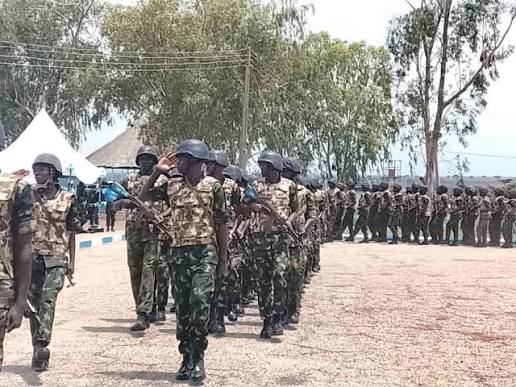
Nigerian soldiers who returned from ECOWAS missions in The Gambia and Guinea-Bissau are demanding payment of outstanding operational allowances they say have remained unpaid months after their return. The soldiers claim Ghanaian and Senegalese colleagues who served in the same missions received their entitlements, while Nigeria's Defence Headquarters says payment will be made once funds are received from ECOWAS.
Nigerian soldiers who served on ECOWAS missions in The Gambia and Guinea-Bissau are protesting over outstanding operational allowances, with some of the troops questioning why they remain unpaid months after returning home while colleagues from other West African countries were allegedly settled before leaving their mission areas.
The renewed complaints are coming from soldiers who reportedly returned to Nigeria approximately four months ago.
According to accounts provided to SaharaReporters, troops who served in The Gambia received payment covering six months but are allegedly still owed another six months.
Those deployed to Guinea-Bissau reportedly received three months of allowances but claim another seven months remain outstanding.
The soldiers say the prolonged delay has become increasingly difficult to understand.
“We are only asking for what we worked for and what is owed to us,” the affected soldiers said.
But there is a significant dispute over where the money currently is.
The soldiers claim ECOWAS has already released the necessary funds and allege that the Nigerian authorities have yet to ensure the money reaches them.
Nigeria's Defense Headquarters says otherwise.
Director of Defense Information Major General Samaila Uba has confirmed that Nigerian troops participated in missions in The Gambia and Guinea-Bissau, but says responsibility for funding the operational allowances lies with ECOWAS rather than the Nigerian government.
According to Uba, Nigerian personnel are paid when the relevant international organization releases the funds.
“Those who came back from Gambia and Guinea Bissau will be paid on receipt of funds from ECOWAS,” Uba said.
He added that Defense Headquarters is working to ensure the funds are released so the affected personnel can be paid immediately.
That explanation directly conflicts with what some of the soldiers are alleging.
They insist the money has already been made available.
And they are asking a politically uncomfortable question.
If troops from Ghana and Senegal who participated in the same ECOWAS operations have allegedly received their full allowances, why are Nigerian soldiers still waiting?
The soldiers told SaharaReporters that their Ghanaian and Senegalese colleagues were paid all their allowances before departing the mission areas.
That specific comparison currently rests principally on the accounts of the affected Nigerian soldiers and has not been independently established by VNTV.
ECOWAS records do confirm, however, that Nigerian, Ghanaian and Senegalese contingents served together under its stabilization mission in Guinea-Bissau.
In May, ECOWAS held a combined medal presentation ceremony recognizing personnel from all three countries for their service.
But the soldiers' claims about the payment status of the Ghanaian and Senegalese contingents remain allegations from the Nigerian personnel.
The dispute becomes even more controversial because of what happened to Nigerian soldiers returning from another international deployment.
Troops who served in Sudan under a United Nations-led operation had also complained about outstanding allowances.
Defense Headquarters subsequently confirmed that funds for the Sudan mission had been received and that the affected personnel were paid.
Some soldiers now argue that the Sudan payment demonstrates that public pressure can accelerate action.
One soldier alleged that payment was made following media attention surrounding the issue.
Defense Headquarters has not accepted the suggestion that it was withholding money already released for the ECOWAS missions.
Instead, the military says the distinction between the operations is important.
The Sudan deployment was conducted under a United Nations-led mission.
The operations in The Gambia and Guinea-Bissau are ECOWAS-led.
According to DHQ, the UN and ECOWAS are responsible for funding the operational allowances attached to their respective missions.
Uba said the payments are separate from the normal salaries and allowances Nigerian military personnel receive from the Armed Forces.
He also insisted that troop welfare remains a priority for Defense Headquarters.
But for the affected soldiers, the argument over which institution currently holds the money does not change their immediate reality.
They served outside Nigeria.
They returned home months ago.
And according to their accounts, substantial portions of their mission allowances remain unpaid.
Earlier reports indicated that more than 200 Nigerian soldiers involved in international deployments were affected by outstanding payments, with some claims putting individual arrears at millions of naira.
The latest complaints specifically concerning The Gambia and Guinea-Bissau now leave three competing accounts requiring clarification.
The soldiers say ECOWAS has already released their money.
Defense Headquarters says it will pay the troops when it receives the money from ECOWAS.
And the soldiers say their Ghanaian and Senegalese counterparts serving under the same regional missions have already been fully paid.
At present, publicly available information does not independently establish that ECOWAS has transferred the disputed funds to Nigerian Defense Headquarters.
That makes the location and status of the money the central unanswered question.
If ECOWAS has not yet released it, the delay requires an explanation from the regional organization.
If it has been released, then questions will inevitably turn to why Nigerian troops have allegedly waited months for their entitlements.
Either way, soldiers who served on regional security missions are asking to be paid.
Their message is straightforward.
They are not asking for a bonus that was never promised.
They say they are asking for money they earned while serving outside their country.
“We are only asking for what we worked for and what is owed to us.”