TESLA WINS SOUTH KOREA FSD REFUND BATTLE AS COURT REJECTS OWNERS’ CLAIMS
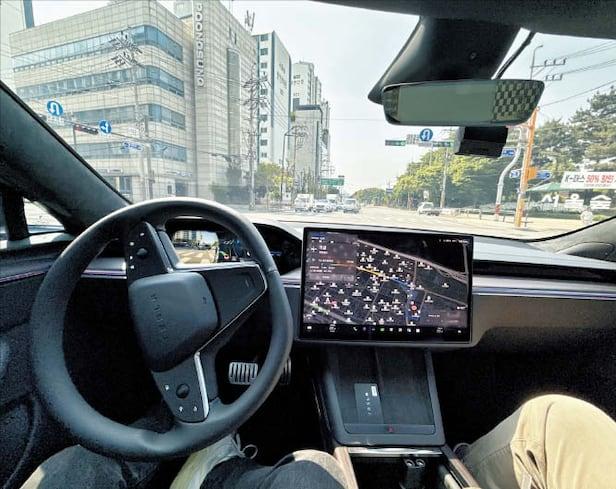
The Seoul Central District Court has rejected a lawsuit by 88 Tesla owners seeking refunds for the company’s Full Self-Driving package. Judges ruled that the FSD option did not guarantee Level 5 autonomous driving without human supervision and found that Tesla had already provided some promised functions through Autopilot, Enhanced Autopilot and subsequent software updates. The court also said additional capabilities depended partly on technological development and regulatory approval.
A South Korean court has rejected a lawsuit brought by dozens of Tesla owners seeking refunds for the company’s Full Self-Driving software package, handing the electric-vehicle manufacturer an important legal victory in a dispute over whether customers were promised fully autonomous vehicles capable of operating without human supervision.
The Seoul Central District Court ruled on Thursday against 88 plaintiffs who argued that Tesla had failed to deliver the autonomous-driving capabilities they believed they were purchasing when they paid for the Full Self-Driving option. The court concluded that Tesla had not breached its contractual obligations and said the wording and circumstances surrounding the package did not establish a guarantee that customers would eventually receive Level 5 autonomous driving requiring no intervention from a human driver.
The ruling addresses one of the central controversies surrounding Tesla’s Full Self-Driving product, commonly known as FSD. Despite its name, the technology has historically required drivers to remain attentive and prepared to intervene, while Tesla has continued developing additional automated-driving functions through software updates and newer generations of vehicle hardware.
The South Korean owners argued that the company had sold the FSD package for years without providing what they regarded as its essential promised function. They sought cancellation of their purchase agreements for the option and refunds of the money they had paid, contending that the long delay amounted to a failure by Tesla to fulfil the contract.
The court rejected that interpretation. Judges found that the FSD package could not reasonably be understood as a contractual promise that Tesla vehicles would achieve complete Level 5 autonomy, the highest level generally used in automated-driving classifications, in which a vehicle can perform the entire driving task without requiring a human driver to supervise or intervene.
Instead, the court treated Tesla’s FSD offering as a package of driver-assistance and progressively developing automated functions that could be expanded over time. It said Tesla had already delivered portions of the package to customers and that the provision of additional capabilities was dependent on factors including technological progress and regulatory approval.
The court pointed to basic Autopilot and Enhanced Autopilot functions that owners had already received. Those features include assistance with steering, maintaining distance from other vehicles, lane changes, parking and other driving functions depending on the vehicle, software version and market.
Judges also cited more recent software improvements that brought additional features to older Tesla vehicles equipped with Hardware 3 computers. Those updates included recognition of traffic lights and road signs as well as additional city-driving capabilities, supporting Tesla’s argument that the FSD package had continued to develop rather than being completely undelivered.
The court found that customers purchasing the option understood, or should have understood from the way the product was sold, that not every planned capability would become available immediately. Some functions were explicitly dependent on future development and legal authorization, and buyers could not know exactly when those features would be released.
That finding was particularly important to Tesla’s defense because autonomous-driving software does not operate solely according to a manufacturer’s technical capability. Companies must also comply with national vehicle-safety rules, road regulations, certification requirements and restrictions on automated-driving functions, which can differ substantially from one country to another.
South Korea has developed its regulatory framework for autonomous vehicles gradually, meaning certain capabilities available elsewhere could not necessarily be deployed immediately to Korean customers. The court found that Tesla should not automatically be held responsible for delays attributable to compliance with those regulatory requirements.
The plaintiffs had argued that Tesla’s inability to deliver all the functions associated with FSD after years of sales demonstrated that the company had failed to perform the fundamental purpose of the agreement. Tesla began marketing the option in South Korea years before some of the more advanced supervised FSD capabilities became available.
The case was filed in 2024 after owners grew increasingly frustrated that the package they had paid for had not developed into the level of autonomous driving they expected. Some local Korean reports said 89 owners originally participated in the litigation, while Reuters reported that Thursday’s judgment was issued against 88 plaintiffs.
The owners had purchased vehicles equipped with Tesla’s Hardware 3 platform, also known as HW3. Tesla has since introduced newer Hardware 4 systems with upgraded cameras and computing technology, creating additional concerns among earlier buyers about whether older vehicles would eventually be capable of delivering all of the automated-driving functions offered on newer models.
The court nevertheless concluded that customers who purchased FSD for Hardware 3 vehicles had not been contractually guaranteed that their cars would receive capabilities identical to those later offered on Hardware 4 vehicles. The relevant question, according to the ruling, was whether Tesla had failed to provide the functions promised under the contracts actually signed by those buyers.
Judges found that it had not. Tesla had provided some of the package at the time of purchase, continued providing software updates and had not guaranteed a specific date on which every possible future feature would be completed.
The ruling gives Tesla a significant victory at a time when its autonomous-driving claims continue to generate legal and regulatory scrutiny internationally. The company and Chief Executive Elon Musk have for years promoted the prospect of vehicles becoming increasingly capable of driving themselves, while timelines for achieving full autonomy have repeatedly shifted.
Musk has made ambitious public predictions about autonomous vehicles and Tesla’s ability eventually to operate cars with little or no driver input. Those statements have attracted enormous investor and consumer interest but have also contributed to disputes over whether customers were given unrealistic expectations about when fully autonomous technology would become available.
Tesla has increasingly used the term FSD Supervised for its current system, reinforcing that drivers remain legally responsible for the vehicle and must stay attentive even when the software is handling steering, acceleration, braking and navigation.
The distinction between supervised automation and fully autonomous driving has become central to regulatory debates worldwide. A vehicle capable of navigating urban roads, changing lanes and responding to traffic lights can appear highly autonomous to consumers, but that does not necessarily mean it qualifies as a system that can operate without human oversight.
Under widely used automated-driving classifications, lower levels of automation still require the driver to monitor the environment and take control when necessary. Level 5 would represent complete automation under all driving conditions without requiring a conventional human driver.
The Seoul court found that Tesla’s FSD package had not guaranteed that standard. That conclusion substantially weakened the owners’ argument that the company had failed to deliver the product they purchased simply because their vehicles could not yet drive entirely without supervision.
The ruling could influence how similar contractual disputes are argued in South Korea, although it does not automatically determine cases in other countries. Consumer-protection laws, advertising regulations, contract language and the way Tesla marketed FSD differ across jurisdictions.
Tesla faces similar complaints elsewhere. Chinese owners have pursued claims involving delays or alleged discrepancies surrounding FSD capabilities, while litigation in the United States has examined statements made about Autopilot and Full Self-Driving technology.
A U.S. effort to pursue certain claims through class-action litigation has faced procedural obstacles, although separate legal disputes involving Tesla’s driver-assistance systems remain active. Regulators have also scrutinized crashes involving vehicles using Autopilot or FSD and whether drivers adequately understand the limitations of the technology.
Thursday’s South Korean judgment concerned the contractual refund claim rather than determining whether Tesla’s technology is fully autonomous or making a broad safety judgment about the software. The court essentially decided that the specific customers had not demonstrated that Tesla violated the purchase agreements in a manner that entitled them to full refunds.
That legal distinction is important. The judgment does not establish that FSD is equivalent to driverless technology, nor does it say that every past statement made by Tesla about autonomous driving was necessarily accurate. It resolves the narrower question of whether the contracts held by the plaintiffs required Tesla to provide the form of complete autonomy they demanded.
The court said they did not.
Tesla’s recent expansion of supervised FSD in international markets also formed part of the backdrop to the dispute. The system has become increasingly capable of navigating complex city roads, responding to traffic signals, choosing lanes and carrying out turns while the driver remains responsible for monitoring the vehicle.
South Korean roads provide an especially demanding environment for automated-driving systems because of dense urban traffic, complex intersections, pedestrian activity, buses, motorcycles and frequent lane changes. Tesla’s introduction of more advanced supervised driving functions in the market has therefore been watched closely by both vehicle owners and competitors.
Supporters of the technology argue that continuous software improvements demonstrate the advantage of vehicles that can receive major functionality updates without mechanical modification. Critics contend that consumers who paid substantial amounts for FSD years ago should not have to wait indefinitely for capabilities they believed were central to the product.
The Seoul court largely accepted Tesla’s contractual position on that dispute. It found that customers knew further development could take considerable time and that the delivery timetable could depend on circumstances beyond the manufacturer’s immediate control.
The decision also addresses the importance of how product names are interpreted legally. The phrase Full Self-Driving can sound to an ordinary consumer like a promise of complete autonomous operation, but Tesla has historically accompanied the product with warnings requiring active driver supervision.
The court effectively concluded that the product name could not be considered in isolation from those limitations, the accompanying contractual information and the staged nature of the promised software development.
That interpretation may be welcomed by companies developing rapidly evolving software-based vehicle features because it recognizes that future functions can be sold subject to technological and regulatory conditions. Consumer advocates, however, may continue to argue that manufacturers should use clearer terminology when products require substantial human supervision.
The owners who brought the case could still have options under South Korea’s legal system depending on whether they choose to challenge the first-instance judgment. The immediate ruling is a victory for Tesla Korea, but the dispute could continue if the plaintiffs appeal.
Tesla did not immediately issue a public response to the Reuters report on the judgment. The company has often defended FSD by emphasizing that its capabilities are continuously improving and that drivers must supervise the system.
The case also arrives as autonomous-driving competition intensifies globally. Tesla is competing with traditional automakers, Chinese electric-vehicle companies and specialized technology businesses developing various approaches to automated driving, robotaxis and driver-assistance systems.
Some companies rely on combinations of cameras, radar and lidar, while Tesla has strongly emphasized camera-based artificial intelligence and neural-network training. Musk has argued that this approach can ultimately enable vehicles to understand and navigate roads at a scale that supports widespread autonomous operation.
Whether Tesla achieves that ambition remains separate from the contractual issue decided in Seoul. The court did not attempt to predict when or whether the company will reach full autonomy. It ruled only that the owners involved in the case were not contractually entitled to refunds based on the current state of FSD.
The decision therefore removes one immediate legal threat to Tesla in South Korea but does not end wider scrutiny of the company’s autonomous-driving claims. Regulators, consumers and courts in multiple countries are continuing to examine how advanced driver-assistance systems are marketed, how safely they perform and what manufacturers are obligated to deliver when customers pay in advance for future software capabilities.
For Tesla owners in South Korea, the judgment establishes that waiting years for additional FSD functions does not, at least under the contracts examined in this case, automatically amount to a breach that requires the company to refund the purchase price. The court accepted that some functionality was already provided and that further capabilities could legitimately depend on technology and regulation.
The broader debate is unlikely to disappear. Tesla’s decision to use the term Full Self-Driving has created expectations that extend far beyond ordinary cruise control or lane assistance, and each new software release will continue to be measured against the company’s long-term promise of increasingly autonomous vehicles.
For now, however, the legal outcome in Seoul is clear. The owners seeking their money back lost the first-round court battle, Tesla was found not to have breached its contractual obligations, and the court rejected the argument that buying the FSD option amounted to buying a guaranteed future vehicle capable of driving entirely without human supervision.