CHINESE YUAN HITS FOUR-YEAR HIGH AS GLOBAL MARKETS BRACE FOR MAJOR CENTRAL BANK DECISIONS
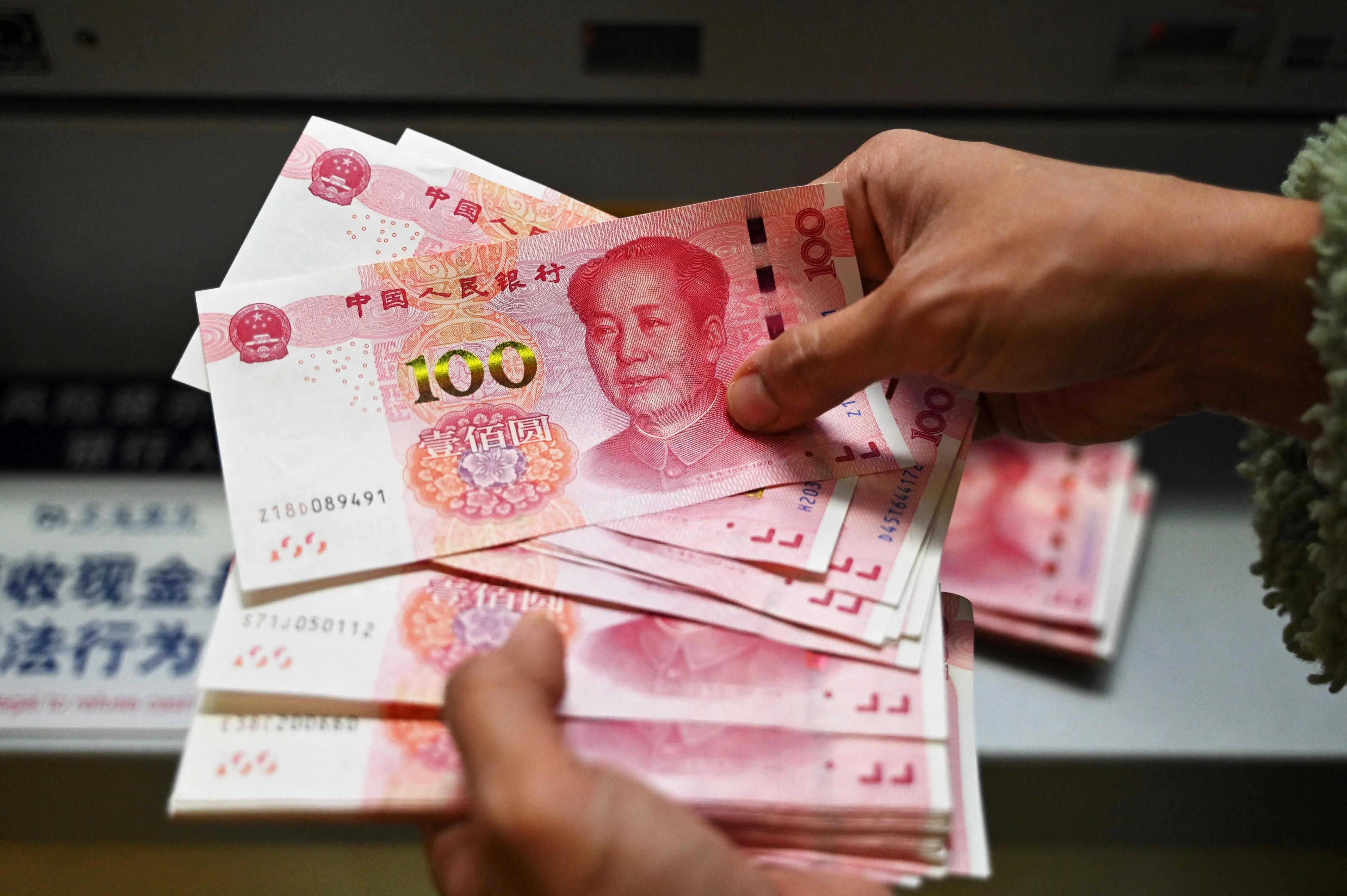
China’s yuan strengthened to 6.6682 per U.S. dollar on October 26, its strongest level since June 2022, supported by softer oil prices, falling U.S. Treasury yields and broader dollar weakness. The People’s Bank of China set its daily midpoint at 6.7162, the strongest fixing since February 2023, but weaker than market expectations, suggesting authorities want appreciation to continue gradually rather than accelerate sharply. Investors are now awaiting policy decisions from the U.S. Federal Reserve, Bank of Japan and European Central Bank, while China’s Communist Party fifth plenum is being watched for new economic-policy signals.
China’s yuan strengthened to its highest level against the U.S. dollar in more than four years on Monday, October 26, extending a sustained rally as falling U.S. Treasury yields, softer oil prices and growing expectations of gradual appreciation supported the Chinese currency. The onshore yuan briefly reached 6.6682 per dollar during Asian trading, its strongest level since June 2022, before easing slightly to around 6.6691 in early trading and roughly 6.6703 later in the day. The offshore yuan, which trades more freely outside mainland China, also strengthened and hovered close to the same level, reinforcing expectations that the currency may be entering a more durable period of appreciation after years in which Chinese policymakers frequently resisted excessive upward pressure.
The move places the yuan at the centre of a busy week for global financial markets because investors are preparing for major policy decisions from the U.S. Federal Reserve, Bank of Japan and European Central Bank while simultaneously watching China’s political leadership for signals about future economic support. China’s Communist Party opened its fifth plenum on Monday, a closed-door gathering expected to shape broad economic and development priorities, while the People’s Bank of China continues to use its daily reference rate to manage the pace at which the yuan moves. This combination of domestic policy guidance and international monetary decisions is giving currency traders several major factors to assess at the same time.
Monday’s rally also extended one of the yuan’s strongest stretches of the year. Reuters reported that, if the gains were maintained through the close, the onshore currency would record an eighth consecutive session of appreciation, its longest winning streak since May. The yuan has strengthened by nearly 5 percent against the dollar so far this year, reflecting a combination of changes in global interest-rate expectations, improving sentiment toward some Chinese assets and a gradual shift in how Beijing is managing the exchange rate.
One of the most important immediate drivers has been weakness in the U.S. dollar. U.S. Treasury yields fell as investors reassessed expectations for future Federal Reserve policy, reducing some of the yield advantage that previously supported the greenback. A weaker dollar generally makes emerging-market and Asian currencies more attractive, and the yuan has benefited alongside several regional peers even though many Asian currencies remained relatively subdued on Monday.
Lower oil prices have also helped. China is one of the world’s largest crude-oil importers, meaning falling energy prices can reduce demand for dollars by Chinese companies that need foreign currency to pay for imported oil. Lower energy costs can also ease inflationary pressure and improve China’s trade position, indirectly supporting the yuan at a time when Beijing is trying to stabilise domestic growth without allowing the currency to weaken excessively.
The People’s Bank of China continues to play a decisive role in determining how quickly the currency is allowed to appreciate. Before Monday’s market opening, the central bank set its daily midpoint at 6.7162 per dollar, the strongest official fixing since February 2, 2023. China allows the onshore yuan to trade within a band of 2 percent on either side of that daily reference point, making the midpoint one of the central bank’s most important tools for signalling its preferred direction for the currency.
However, the midpoint was still considerably weaker than market expectations. Reuters calculated that Monday’s fixing was 471 pips weaker than the market estimate of approximately 6.6691, representing the largest weak-side deviation since September 23. That difference suggests the central bank is comfortable with gradual yuan appreciation but remains reluctant to allow the currency to strengthen too rapidly.
Barclays analysts interpreted the fixing in that way, saying the PBOC appeared to be resisting a faster pace of appreciation even while maintaining a stronger floor under the currency. In practical terms, Beijing appears to want a stronger and more stable yuan without producing a sudden rally that could damage Chinese exporters by making their products more expensive in international markets. This balancing act has become increasingly important as China’s trade surplus remains large and foreign governments intensify pressure on Beijing over the competitiveness of Chinese exports.
A stronger yuan can help China in several ways. It increases the purchasing power of Chinese companies and households buying goods priced in foreign currencies, reduces the local cost of imported energy and commodities and can make Chinese financial assets more attractive to international investors. It can also help Beijing counter accusations from trading partners that the currency is being deliberately held down to provide Chinese exporters with an unfair competitive advantage.
At the same time, excessive appreciation carries risks for an economy that still depends heavily on manufacturing and exports. A stronger yuan raises the foreign-currency price of Chinese goods, potentially squeezing profit margins for exporters already dealing with tariffs and intense competition. Beijing therefore has an incentive to allow appreciation gradually rather than permit the currency to surge sharply over a short period.
That tension has become more visible during 2026. European policymakers have increasingly complained that China’s large trade surplus and competitive exchange rate are adding pressure to European manufacturers, particularly in industries such as electric vehicles, machinery, solar equipment and consumer goods. Chinese officials have rejected accusations that they deliberately weaken the yuan for trade advantage and have argued that exchange rates should be determined primarily by market forces and economic fundamentals.
People’s Bank of China officials have also pushed back against the idea that currency appreciation alone can solve global trade imbalances. Governor Pan Gongsheng has argued that exchange-rate adjustments cannot substitute for broader changes in savings, investment and domestic demand. That position reflects Beijing’s concern that foreign governments may expect China to solve trade tensions simply by allowing a much stronger yuan even while structural differences between major economies remain unresolved.
Goldman Sachs has taken a comparatively bullish view of the currency. Its analysts said Monday that they believe a gradual but sustained appreciation cycle is under way and that consensus forecasts may underestimate how far the yuan can strengthen from what they consider an undervalued starting point. The bank maintained a 12-month forecast of 6.40 yuan per dollar, although it stressed that currency appreciation alone would not address China’s deeper economic challenges without additional measures to strengthen domestic demand.
That domestic-demand problem remains one of the biggest constraints on China’s economy. Weakness in the property sector, cautious household spending, demographic pressures and uneven private-sector confidence continue to weigh on growth even as exports and selected technology industries remain comparatively strong. A stronger currency may improve purchasing power, but it cannot by itself persuade households to spend more or resolve long-standing problems in property and local-government finance.
The Communist Party’s fifth plenum is therefore attracting significant market attention. The meeting brings together senior Chinese leaders and is expected to provide direction on economic growth, industrial policy, technology, fiscal support and longer-term development priorities. Investors are watching closely for indications that Beijing may increase support for consumption and private-sector activity rather than continuing to rely so heavily on manufacturing, exports and infrastructure investment.
The yuan’s strength also reflects changing expectations around U.S. monetary policy. The Federal Reserve begins a two-day policy meeting on Tuesday, with markets widely expecting policymakers to leave the federal funds rate unchanged at around 4 percent after raising rates by 25 basis points in September. The September increase was the Fed’s first rate hike in more than three years and came as officials attempted to contain inflation that remained above the central bank’s 2 percent target.
Although a rate hold is widely expected this week, traders will focus heavily on Federal Reserve Chair Kevin Warsh’s comments for clues about whether additional tightening remains possible. If the Fed signals that rates could remain high for longer or rise again, the dollar could regain support and slow the yuan’s advance. If policymakers sound more cautious, lower U.S. yields could give the Chinese currency additional room to strengthen.
Investors will also receive important U.S. economic data this week, including third-quarter gross domestic product and the September Personal Consumption Expenditures price index, which is the Federal Reserve’s preferred inflation measure. Strong growth or persistent inflation could strengthen the case for tighter U.S. policy, while weaker figures could reinforce expectations that the Fed is approaching the end of its tightening cycle.
Japan presents another major source of currency-market uncertainty. The Bank of Japan is widely expected to hold its benchmark rate at 1.25 percent after raising rates twice during 2026, but investors anticipate that policymakers may maintain a relatively hawkish outlook because inflation remains persistent. Markets are already looking toward another possible increase later in the year, particularly as changes to fuel subsidies threaten to add further upward pressure to Japanese prices.
The European Central Bank is similarly expected to leave rates unchanged this week, placing the emphasis on guidance about future policy rather than the immediate decision itself. European officials are balancing concerns about inflation against weak growth in parts of the euro zone, while also dealing with the economic effects of international trade tensions and a changing relationship with China.
The simultaneous meetings create the possibility of significant currency volatility because exchange rates depend heavily on relative interest-rate expectations. If the Federal Reserve remains more hawkish than the ECB or Bank of Japan, the dollar could regain strength. If U.S. policymakers appear increasingly concerned about growth while other central banks maintain tighter positions, the dollar could weaken further and provide additional support to currencies such as the yuan.
The yuan’s appreciation is also being watched carefully by companies involved in international trade. A stronger Chinese currency lowers the local-currency cost of imported oil, machinery and raw materials, which can benefit manufacturers relying on foreign inputs. However, exporters earning dollars may receive fewer yuan when overseas revenue is converted back into the domestic currency, potentially reducing profitability.
Chinese companies with large dollar-denominated debts may benefit from appreciation because the local-currency cost of servicing those obligations declines. Conversely, companies heavily exposed to export markets may become more cautious about pricing and production if the currency continues strengthening toward the 6.40 level forecast by some analysts.
For global consumers, a stronger yuan can gradually increase the dollar or euro cost of Chinese exports if manufacturers pass the currency effect through to prices. That could become politically important in the United States and Europe, where policymakers have spent years criticising China’s trade surplus while consumers and businesses simultaneously depend on relatively inexpensive Chinese goods.
Foreign investors are also watching whether the currency rally translates into stronger demand for Chinese stocks and bonds. Currency appreciation can improve returns for overseas investors because gains in the yuan add to any investment return earned on the underlying asset. Reuters has reported during 2026 that some global investors increasingly view Chinese assets as moving differently from U.S. and European markets, potentially offering diversification during periods of international volatility.
The yuan’s behaviour also has implications for other Asian currencies because China is the largest trading partner for many economies in the region. A stronger yuan can give neighbouring currencies more room to appreciate without making their exports dramatically less competitive relative to China. Conversely, a sudden yuan depreciation can place pressure on other Asian central banks because they may fear losing export competitiveness.
Monday’s rally therefore carries importance beyond China’s foreign-exchange market. The yuan serves as an important reference point for regional trade, global commodity demand and international investor sentiment toward the world’s second-largest economy. Sustained appreciation could signal improving confidence in Chinese assets, but traders will need to distinguish genuine economic improvement from movements caused largely by a weaker dollar.
That distinction becomes especially important because China’s domestic economy continues to face mixed signals. Strong exports have supported the currency during recent months, but domestic growth remains uneven and Beijing may still need to provide additional monetary or fiscal support. Aggressive monetary easing could eventually place downward pressure on the yuan if Chinese interest rates fall relative to those in the United States and other major economies.
This explains why the PBOC is attempting to maintain a carefully controlled path. Policymakers want enough currency strength to support confidence, reduce imported inflation and respond to external trade pressure, but not so much that exporters are suddenly placed at a disadvantage or monetary policy becomes constrained.
The daily fixing system gives the central bank considerable influence over that process. Even when market demand pushes the currency higher, a deliberately weaker fixing can signal that authorities do not want appreciation to accelerate. Monday’s fixing therefore provides one of the clearest indications that Beijing is accepting yuan strength while still managing the pace closely.
The difference between onshore and offshore trading also remains important. The onshore yuan, known as CNY, trades in mainland China under the PBOC’s daily band, while the offshore yuan, known as CNH, trades more freely in international financial centres. When the two rates remain close, as they did on Monday, it generally suggests that domestic and international markets hold broadly similar expectations about the currency.
The offshore yuan traded around 6.6688 per dollar in early Asian trade, almost identical to the onshore market. That convergence suggests investors were not aggressively betting against the central bank’s preferred direction and reinforces the view that the current appreciation is being driven by a combination of policy guidance and broader market forces rather than speculative pressure alone.
The longer-term outlook remains uncertain because currencies can reverse quickly when interest-rate expectations or geopolitical conditions change. A sudden rise in oil prices, stronger U.S. inflation, renewed trade tensions or a deterioration in Chinese growth could strengthen the dollar or reduce demand for the yuan. Conversely, continued weakness in U.S. yields and stronger Chinese policy support could extend the rally.
Trade relations with the United States will remain another important factor. The yuan strengthened to multi-year highs earlier in 2026 around high-level U.S.-China diplomatic engagements, and investors have repeatedly interpreted currency policy as part of the broader economic relationship between Beijing and Washington. A more stable or gradually stronger yuan could help reduce some trade friction, particularly if U.S. officials believe China is allowing greater market adjustment.
China, however, is unlikely to manage its currency solely to satisfy foreign governments. Beijing’s primary objectives remain domestic financial stability, export competitiveness, capital-flow management and the international credibility of the renminbi. Currency policy therefore must balance external political pressure against internal economic needs.
Monday’s four-year high is significant because it suggests that balance has shifted, at least temporarily, toward accepting a stronger currency. The yuan has moved from levels above 7 per dollar seen during earlier periods of weakness to around 6.67, representing a meaningful change in the value of the currency and the expectations surrounding it.
Whether that appreciation continues will depend heavily on this week’s policy signals. The Federal Reserve, Bank of Japan and European Central Bank can all influence the dollar’s relative attractiveness through their interest-rate guidance, while China’s fifth plenum and PBOC fixings will provide clues about how much further appreciation Beijing is prepared to tolerate.
For now, the most important verified development is that the onshore yuan briefly strengthened to 6.6682 per dollar on October 26, its strongest level since June 2022, while the offshore rate remained at a similar level. The move extended a strong run for the Chinese currency and came as lower oil prices and falling U.S. Treasury yields weakened the dollar.
The next stage of the rally will depend on whether global monetary policy reinforces those conditions or reverses them. A more hawkish Federal Reserve could restore support for the dollar, while softer U.S. guidance and continued Chinese policy confidence could push the yuan toward levels not seen since before the major global tightening cycle of the past several years.
China’s currency therefore enters the final days of October at an important crossroads. It is stronger than at any point in more than four years, but policymakers are clearly signalling that they prefer appreciation to occur gradually rather than rapidly. The outcome of this week’s central-bank meetings and China’s own political deliberations will help determine whether 6.6682 marks a temporary high or another stage in a broader revaluation of the yuan.