US-BACKED $400 MILLION UNDERSEA INTERNET CABLE EXCLUDES CHINESE SUPPLIERS AS TECHNOLOGY RIVALRY INTENSIFIES ACROSS SOUTHEAST ASIA
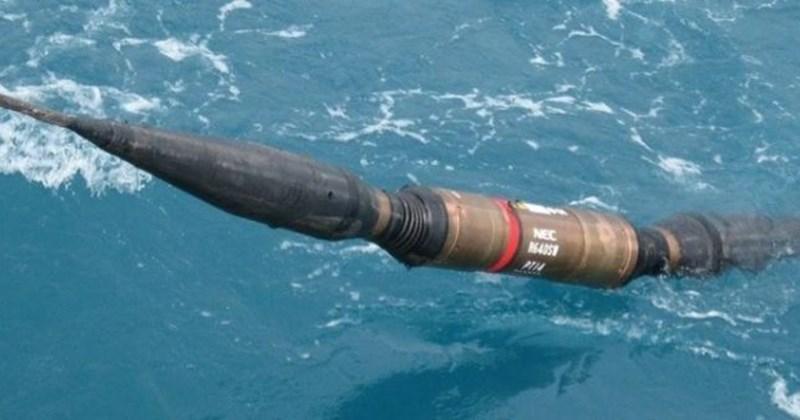
The US-backed MViSTA undersea cable project linking Malaysia, Vietnam, Singapore and Thailand is preparing to choose between Japan’s NEC and France’s Alcatel Submarine Networks as its principal supplier. Chinese companies were excluded from bidding, while the route has also been designed to avoid areas of the South China Sea claimed by Beijing. The approximately US$400 million cable will span around 2,500 kilometres, use 16 fibre pairs and is expected to begin operating in late 2028. The project highlights how competition between the United States and China is increasingly influencing the companies, routes and security standards used to build the physical infrastructure of the global internet.
A new US-backed undersea internet cable linking Malaysia, Vietnam, Singapore and Thailand is preparing to select either Japan’s NEC or France’s Alcatel Submarine Networks as its principal technology supplier after Chinese companies were excluded from the bidding process, underscoring how strategic competition between Washington and Beijing is increasingly shaping the physical infrastructure of the global internet. The approximately $400 million MViSTA cable will stretch for roughly 2,500 kilometres across Southeast Asia, carry 16 fibre pairs and is expected to begin commercial operations in late 2028 if construction remains on schedule.
The project is being developed by a group that includes Vietnamese conglomerate Stavian Group, Tokyo-based investment firm Midas Capital and Malaysia’s OMS Group through its LitUp Network subsidiary. OMS is expected to handle the marine installation work required to lay the cable across the seabed, while the developers are currently deciding which company will supply the cable system itself. NEC and Alcatel Submarine Networks have emerged as the two finalists, while American cable manufacturer SubCom was also invited to participate but declined because of existing commitments.
Chinese suppliers were deliberately left out of the tender, according to project executives involved in the development. That decision was not presented merely as a commercial preference but as part of the cable’s broader technology and security strategy. The MViSTA project is being developed around what its backers describe as trusted infrastructure standards intended to appeal to global cloud companies, artificial-intelligence operators and other customers concerned about the security and geopolitical exposure of critical communications networks.
The route itself has also been designed to avoid the large section of the South China Sea claimed by Beijing. Instead of following paths that would place the infrastructure through some of the most politically disputed maritime areas in Asia, MViSTA will connect coastal landing points across Malaysia, Vietnam, Singapore and Thailand through a route intended to reduce both geopolitical risk and dependence on infrastructure passing through contested waters.
That routing decision is particularly significant because undersea cables are among the most important but least visible pieces of modern infrastructure. Almost all international internet traffic travels through fibre-optic cables resting on or buried beneath the seabed rather than through satellites. Banking transactions, cloud computing, video calls, artificial-intelligence services, financial-market data and government communications all depend heavily on these physical networks.
The companies that manufacture, install, repair and operate those cables therefore possess access to infrastructure that can carry enormous volumes of sensitive information. Governments have increasingly begun treating submarine telecommunications networks as strategic national-security assets rather than ordinary commercial projects.
The MViSTA decision shows how that shift is changing the commercial market. Chinese companies have become major suppliers of telecommunications infrastructure around the world, offering equipment and construction services at competitive prices. American officials, however, have repeatedly raised concerns that reliance on Chinese suppliers in sensitive infrastructure could create security vulnerabilities or opportunities for foreign government access.
China has rejected accusations that its technology companies pose inherent security threats and has repeatedly criticised US restrictions as attempts to suppress Chinese competition. Nevertheless, Washington has expanded efforts to persuade governments and private companies to use what it calls trusted technology in telecommunications, cloud computing, artificial intelligence and undersea cables.
Vietnam has become one of the most important countries in that competition. Its economy is deeply connected to China through trade and manufacturing supply chains, while the United States has simultaneously developed stronger economic and strategic ties with Hanoi. Vietnam therefore frequently has to balance commercial relationships with China against growing technology and investment partnerships with the US, Japan, Europe and other countries.
That balancing act is visible in Vietnam’s telecommunications decisions. Chinese companies Huawei and ZTE received contracts connected to parts of Vietnam’s 5G network, demonstrating that Hanoi has not adopted a blanket ban on Chinese telecommunications technology. At the same time, projects such as MViSTA are being structured without Chinese suppliers, particularly where international investors and American-backed programmes are involved.
Washington has previously encouraged Vietnam to reduce its reliance on Chinese companies in submarine cable projects. The US has raised concerns that Chinese participation in cables carrying large volumes of international traffic could create cybersecurity and intelligence risks, especially if companies are involved in equipment manufacturing, landing stations or maintenance operations.
MViSTA’s developers appear to be positioning the project squarely within that trusted-infrastructure approach. American telecommunications consultancy APTelecom helped assemble the shareholder group, worked on feasibility planning and is helping secure commercial customers for both the cable and a connected data-centre development in Vietnam.
The US connection extends beyond the cable itself. Stavian is separately developing a large artificial-intelligence and data-centre campus in southern Vietnam, and the US Trade and Development Agency is funding a feasibility study for that project. The planned campus is intended to support hyperscale cloud providers and AI infrastructure operators and could eventually reach approximately one gigawatt of capacity.
Project developers have said Chinese companies will not be involved in any key technology deployed at that campus either. The strategy effectively links the undersea cable to a wider digital ecosystem built around non-Chinese core infrastructure, creating a direct connection between international data transport and large-scale cloud and artificial-intelligence computing facilities inside Vietnam.
That combination could become increasingly valuable as AI demand accelerates. Training and operating advanced artificial-intelligence systems requires enormous computing power, and the data centres housing those systems need very high-capacity internet connections to exchange information with other markets.
A modern undersea cable can therefore make a country more attractive to global technology companies deciding where to place billions of dollars of servers and related infrastructure. Vietnam already has a large population, rapidly expanding digital economy and growing manufacturing sector, but international companies have sometimes cited connectivity and regulatory limitations as obstacles to major data-centre investment.
The MViSTA cable is intended to improve that connectivity by providing another high-capacity route between some of Southeast Asia’s most important digital markets. Singapore is already one of the world’s largest data-centre and connectivity hubs. Malaysia, particularly Johor, is experiencing rapid data-centre expansion, while Thailand is attempting to establish itself as another regional cloud and AI hub.
Vietnam is trying to join that group. Connecting those markets directly could reduce latency, improve redundancy and give companies more options when existing cables suffer outages.
Vietnam has suffered repeated submarine cable disruptions in recent years, at times leaving multiple international connections damaged simultaneously. Those failures have slowed internet traffic and exposed the vulnerability created when a fast-growing digital economy depends on a relatively small number of ageing international cable systems.
The Vietnamese government consequently plans to expand the number of submarine cables serving the country to at least 15 by 2030, up from roughly six currently in operation. MViSTA is expected to become one component of that broader expansion.
The planned cable will use 16 fibre pairs, giving operators substantial capacity for leasing entire fibre pairs or sections of spectrum to telecommunications companies, cloud providers and large technology customers. High fibre-pair counts have become increasingly important because cloud and AI companies are no longer satisfied with purchasing only ordinary telecommunications capacity. Some prefer controlling dedicated fibre resources that provide predictable performance and greater flexibility.
MViSTA is expected to operate under an open-access model, allowing multiple customers to purchase capacity rather than reserving the system for a single technology company or telecom operator. That structure could make the cable commercially attractive to companies that want regional connectivity without financing their own dedicated submarine systems.
The project’s developers are targeting late 2028 for the cable to enter service. That timetable remains ambitious because submarine cable construction involves extensive permitting, seabed surveys, equipment manufacturing, specialised cable-laying vessels and approvals from every jurisdiction where the infrastructure lands.
Delays are common. Manufacturing capacity for advanced fibre-optic submarine systems is limited, while the number of specialised vessels capable of laying and repairing long-distance cables is also constrained. Geopolitical tension can create additional delays if routes require regulatory approvals near disputed maritime zones.
Avoiding the contested portions of the South China Sea could therefore provide operational benefits in addition to political ones. Disputes involving China, Vietnam, Malaysia, the Philippines, Brunei and Taiwan have made the sea one of the world’s most sensitive maritime regions. Routing a cable away from the most contested areas may reduce the likelihood that territorial disagreements complicate permitting or future maintenance.
It does not remove every risk. Cables can still be damaged by anchors, fishing activity, earthquakes and undersea landslides, while sabotage and deliberate interference have become growing concerns globally. Governments have paid much closer attention to submarine infrastructure after several high-profile cable and pipeline incidents in European waters.
The security debate is particularly important because cables are difficult to protect physically. Thousands of kilometres of infrastructure can lie unguarded beneath the ocean, and repair operations may take days or weeks depending on the location of a break and availability of specialised ships.
Countries therefore increasingly prioritise redundancy rather than assuming any single cable can remain permanently secure. Building multiple independent routes allows data to be redirected when one system fails.
That is one reason Southeast Asia is experiencing a surge in new cable investment. The region sits between some of the world’s largest markets and hosts rapidly expanding cloud, financial and technology industries. Singapore already serves as a major internet exchange point, while Malaysia, Thailand, Vietnam, Indonesia and the Philippines are all investing heavily in digital infrastructure.
Artificial intelligence is accelerating that trend. AI applications require movement of enormous volumes of information between data centres, making connectivity almost as important as electricity supply when companies select locations for new computing facilities.
Submarine cables have therefore become part of a larger race involving data centres, semiconductors, telecommunications equipment and cloud services. The same geopolitical competition affecting advanced computer chips is increasingly influencing the networks transporting the data those chips process.
The United States has used infrastructure financing, technical assistance and diplomatic engagement to promote American and allied technology providers. Washington’s definition of trusted infrastructure often favours companies from the US, Japan, Europe and partner countries while discouraging dependence on Chinese suppliers.
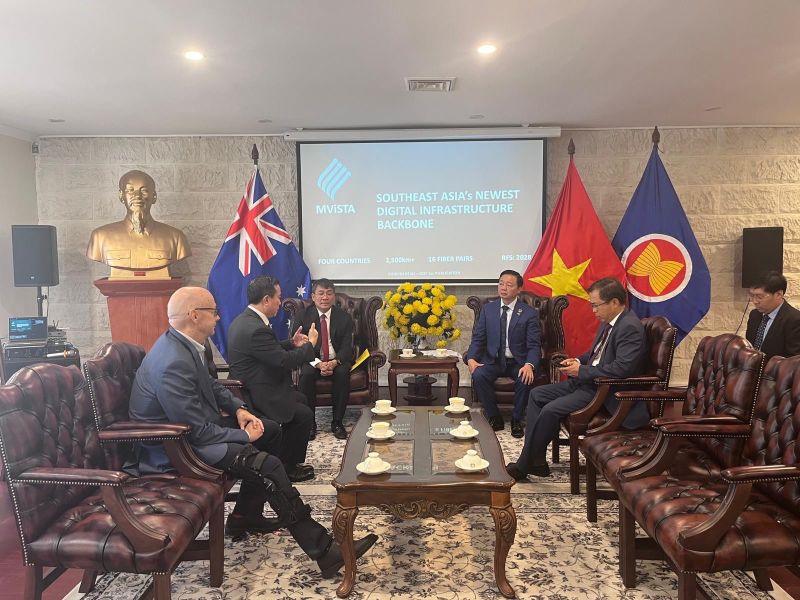
MViSTA illustrates that strategy even though no American cable supplier currently appears likely to win the main system contract. NEC is Japanese and Alcatel Submarine Networks is French, but both are considered acceptable within the US-aligned trusted technology ecosystem.
NEC already has extensive experience building Asian submarine cables and supplied several major regional systems, including the Asia Direct Cable. Alcatel Submarine Networks is one of the oldest and most established companies in the global submarine communications market and operates manufacturing and cable-laying capabilities of its own.
Either company would bring significant technical experience to MViSTA. The developers are expected to select the winner later in October, making the supplier decision one of the project’s next major milestones.
For China, exclusion from the tender represents another example of geopolitical pressure limiting opportunities for Chinese telecommunications firms overseas. HMN Technologies, formerly part of Huawei’s marine cable business, has grown into an important global supplier and has competed successfully for projects across Asia, Africa and other regions.
US policymakers have tried to prevent HMN and other Chinese companies from gaining dominant positions in strategic international cable routes. Their concerns centre on the possibility that equipment could be compromised or that Chinese legal obligations might force companies to cooperate with state security agencies.
Chinese officials and companies dispute those arguments and maintain that commercial suppliers should be judged on technology, cost and reliability rather than nationality. Beijing has accused Washington of politicising technology and using national-security concerns to preserve Western commercial advantages.
The dispute means infrastructure projects that might once have been awarded largely on price, engineering and financing are increasingly shaped by alliances. Developers may accept higher costs or narrower supplier choices in exchange for government support, access to Western financing or reassurance for cloud customers.
MViSTA’s estimated $400 million price demonstrates the scale of those decisions. Submarine cables require large upfront investment but can generate revenue for decades by selling capacity to carriers, internet companies and data-centre operators.
The project’s shareholders are betting that Southeast Asia’s demand for connectivity will grow fast enough to justify that spending. Digital commerce, streaming, online gaming, financial technology and cloud services are all expanding across the region, while AI could create another major surge in bandwidth consumption.
Singapore’s importance makes the route particularly attractive because many regional networks ultimately connect through the city-state. Singapore hosts landing stations for numerous global submarine cables and is home to major facilities operated by the world’s largest technology companies.
Malaysia has rapidly developed a complementary role. Johor has attracted billions of dollars of data-centre investment partly because land and electricity are more readily available than in Singapore while the two markets remain geographically close.
Thailand is also encouraging hyperscale computing investment and new international cable routes, while Vietnam sees digital infrastructure as part of its effort to move beyond low-cost manufacturing toward higher-value technology industries.
Connecting all four markets through one regional system creates commercial opportunities independent of the geopolitical considerations surrounding the project.
The cable could also improve resilience if existing links are damaged. Instead of sending traffic along longer alternative routes, network operators could use MViSTA to move data directly between major Southeast Asian landing points.
For businesses, improved redundancy can reduce the risk of costly outages. For governments, it improves national digital resilience. For technology companies, additional routes create more flexibility when designing cloud and AI networks.
The US-backed character of MViSTA also demonstrates how Washington is attempting to influence infrastructure without necessarily owning or building it directly. American involvement can come through feasibility funding, consultancy, financing support and standards rather than majority ownership.
APTelecom’s involvement is an example of that softer approach. The US company helped organise the commercial structure and is working to attract customers, while the actual ownership remains distributed among Asian investors and the cable supplier will likely be Japanese or French.
The related Stavian Digital Park follows a similar model. American development assistance is supporting project preparation while US companies may later compete to provide servers, networking equipment, cybersecurity systems, cooling technology and other infrastructure.
The aim is to create an ecosystem in which Western technology becomes the default option before procurement decisions are made.
That approach could become increasingly common as countries attempt to build AI infrastructure without becoming fully dependent on either Washington or Beijing. Southeast Asian governments generally prefer maintaining economic relationships with both powers rather than choosing one side across every technology sector.
Vietnam illustrates this most clearly. It can award some 5G contracts to Chinese companies while developing separate cable and data-centre projects aligned with US security standards. Rather than adopting a completely pro-American or pro-Chinese infrastructure policy, Hanoi appears willing to make different decisions depending on the project.
That pragmatism will continue to be tested as the technology rivalry deepens. The United States is restricting China’s access to advanced AI chips, while China is strengthening its own semiconductor and telecommunications industries. Both sides understand that control of data infrastructure can be almost as strategically important as control of computing hardware.
Undersea cables sit at the centre of that contest because digital economies cannot function without them. Satellites receive far more public attention, but fibre-optic cables beneath the oceans carry the overwhelming majority of international data traffic.
A cable linking Southeast Asian data centres can therefore become strategically significant even if most internet users never know its name.
MViSTA is relatively short compared with trans-Pacific systems stretching thousands of kilometres between Asia and North America, but its regional role could be substantial. It is designed as a high-capacity backbone connecting the emerging computing centres of four countries and linking them into wider international networks.
Its route also provides another pathway that does not depend on the most politically sensitive areas of the South China Sea. That may become increasingly valuable if territorial disputes intensify or if companies become more concerned about security requirements associated with operating infrastructure there.
The project’s developers are now approaching the moment when those strategic plans become engineering commitments. Selecting NEC or Alcatel Submarine Networks will determine who manufactures much of the cable equipment and helps deliver the physical system that will remain on the seabed for decades.
After that decision, the project will move deeper into manufacturing, marine surveys, permitting and construction, with OMS expected to handle the cable-laying work.
If everything proceeds according to the current schedule, MViSTA should begin carrying commercial data in late 2028.
By then, Southeast Asia’s technology landscape could be considerably different. More hyperscale data centres are expected to be operating, AI computing requirements will probably have grown sharply and governments may be even more focused on the security of digital infrastructure.
That makes the supplier decision about far more than a single $400 million contract.
The MViSTA project shows that the competition between the United States and China is moving beneath the ocean itself. Governments and companies are increasingly deciding not only where cables should land and how much data they should carry, but which countries’ technology should be trusted to build the networks through which future economies will communicate.
For Southeast Asia, that competition can bring investment and more infrastructure, but it can also complicate procurement and force companies to navigate political expectations from rival powers.
For Chinese telecommunications suppliers, projects like MViSTA demonstrate the growing commercial cost of security restrictions in markets where Washington retains substantial influence.
For American policymakers, the project offers an example of how partnerships can shape regional infrastructure even when the final equipment comes from allied companies rather than the United States itself.
And for ordinary internet users in Malaysia, Vietnam, Singapore and Thailand, the result may ultimately be much less political: another high-capacity route designed to make connections faster, more resilient and capable of supporting an increasingly data-intensive economy.
Yet beneath that commercial purpose lies a much larger strategic reality. The cables carrying the world’s internet are becoming part of the competition over global technological power, and MViSTA’s decision to exclude Chinese suppliers while avoiding Beijing-claimed waters shows just how deeply that rivalry is now embedded in the infrastructure of the digital age.