SPAIN TRAIN DISASTER KILLS 68 AS MINISTER REVEALS RED-SIGNAL PROTOCOL FAILURE
At least 68 people have died and 80 have been injured after a Renfe high-speed train collided with a stationary Iryo service near Toledo. Transport Minister Óscar Puente said a computer communications failure initially caused trains to stop automatically, but the Renfe service was later incorrectly authorized to continue despite an active red signal and the stationary train ahead, breaching operating procedures. Fifteen injured passengers were reported in very serious condition, while rescue teams continued searching the wreckage.
At least 68 people have been killed and 80 others injured in a catastrophic collision involving two high-speed passenger trains in central Spain, as Transport Minister Óscar Puente revealed that a Renfe service was authorized to continue its journey despite an active red signal and a stationary train ahead. The disclosure has sharply intensified scrutiny of the decisions taken in the minutes before the collision, although investigators have not yet issued a final finding on individual responsibility. Fifteen of those injured were reported to be in very serious condition, leaving open the possibility that the death toll could rise further as hospitals continue treating critically injured passengers and rescue teams search the wreckage.
The collision occurred near Toledo after a computer communications failure affected the railway’s safety and signaling systems, automatically bringing several trains on the Madrid–Seville high-speed corridor to a halt. According to Puente, the automated system initially responded as intended by stopping traffic when communications were disrupted. The critical sequence began afterward, when the Renfe train was authorized by the rail traffic control center to restart even though a red signal remained active and an Iryo service was stationary farther ahead on the same line.
Puente said the decision to allow the Renfe train to resume its journey breached established operating procedures. Under railway safety rules, a train affected by a signaling or communications failure would normally remain stopped or proceed only under a restricted operating mode requiring the driver to travel at a significantly reduced speed and remain prepared to stop immediately if an obstacle or another train appeared ahead. The minister said the Renfe service was instead permitted to continue without being placed under that restricted procedure, creating the circumstances that ultimately led to the collision.
The transport minister described the decision as incorrect and said investigators would need to establish precisely why the authorization was issued despite the red signal. His statement represents the most important official disclosure so far about the circumstances surrounding the disaster, but it does not amount to a final determination of legal responsibility. Investigators are examining traffic-control records, digital signaling data, communications between railway controllers and train drivers, onboard event recorders and the sequence of instructions issued before the impact.
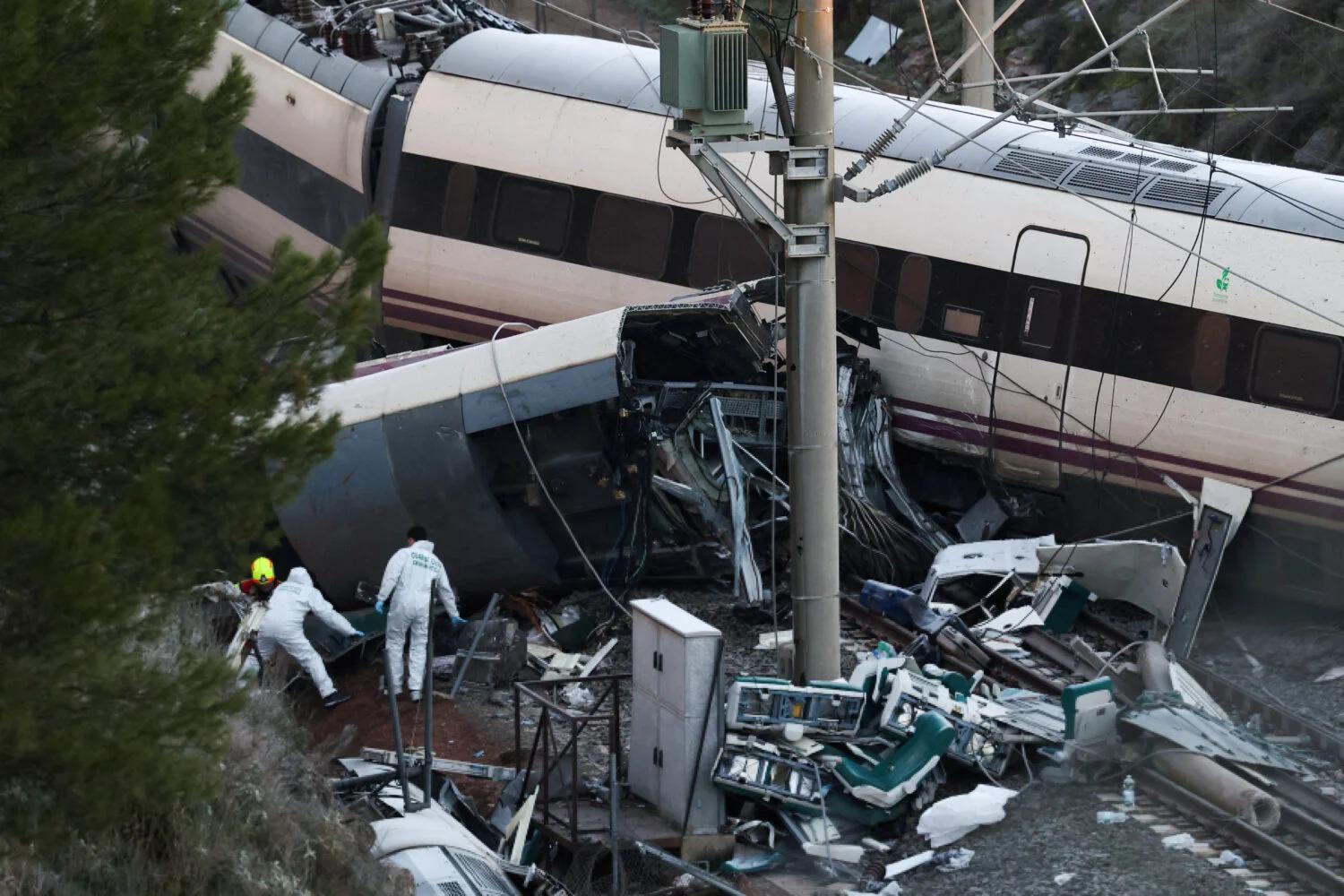
The stationary Iryo train was carrying 147 passengers, including a baby, while the Renfe service behind it had nearly 400 people on board. Both trains had initially been affected by the communications failure. The Renfe service was later allowed to resume its journey and traveled for several kilometers before crashing into the rear of the Iryo train. Several carriages were derailed by the force of the impact, while parts of the wreckage were thrown down an embankment beside the railway.
Emergency images from the scene showed badly damaged carriages surrounded by firefighters, police officers, medical teams and specialist rescue personnel. Passengers described being violently thrown from their seats as luggage, broken glass and parts of the train interior were sent across the carriages. Some survivors reportedly broke windows to escape, while others remained trapped inside twisted sections of the train until rescue workers could reach them.
Authorities deployed ambulances, helicopters, fire crews, police units and emergency medical personnel to the crash site as the scale of the disaster became clear. Rescue workers continued searching damaged carriages for survivors and victims throughout the day, while hospitals across the region were placed on emergency footing to receive the injured. Blood donation appeals were also issued as medical facilities treated passengers with severe trauma.
The regional government of Castilla-La Mancha confirmed that the death toll had risen to at least 68 as rescue operations continued. Health authorities said 80 people had been injured, with 15 classified as being in very serious condition. Officials warned that casualty figures could still change because some parts of the wreckage remained difficult to access and several passengers were being treated for life-threatening injuries.
Prime Minister Pedro Sánchez expressed condolences to the families of those killed and said Spain was confronting a national tragedy. He promised a full investigation into the collision and said authorities would establish whether technical failures, operating decisions or other factors contributed to the disaster. The government has urged the public to avoid speculation while investigators reconstruct the sequence of events.
The collision has placed Spain’s railway safety system under intense pressure because it is the country’s second major high-speed rail disaster of 2026. Earlier in the year, another deadly accident involving high-speed services killed dozens of people near Adamuz in Córdoba province. Investigators examining that earlier crash have considered possible track and infrastructure failures, while authorities have emphasized that the circumstances of the latest disaster appear to be different.
In the Toledo collision, the emerging focus is the interaction between an initial technical failure and the human decisions that followed it. According to Puente, the computer communications fault caused the LZB railway protection system to stop several trains automatically across a substantial stretch of the high-speed network. That shutdown itself was a safety response. The central question is why one of the stopped trains was later authorized to proceed when the warning signal remained active and another train had not yet moved from the track ahead.
Once the automated system was no longer functioning normally, responsibility for train movements shifted more heavily toward human traffic-control procedures. Railway protocols in such circumstances require extremely cautious operation because trains traveling at high speed cannot rely solely on visual observation to identify hazards in time. If automatic train protection is unavailable, speed restrictions and direct control instructions become essential safeguards.
Puente said the Renfe train should either have remained stopped or proceeded under a restricted system known as movement by sight, which would have required the driver to travel at a very low speed and be prepared to stop immediately. Instead, the service was allowed to continue at a much higher operating speed. Investigators will now examine whether the controller who issued the authorization had accurate information about the position of the Iryo train and whether any additional technical system should have prevented the Renfe service from accelerating.
The collision occurred after enough time had passed for the Renfe train to travel a significant distance following the authorization. That interval is now an important part of the investigation because authorities must determine whether there were further opportunities to identify and correct the error before impact. Communications records between the control center and both train crews are expected to be central to establishing what information was available and how decisions were made.
The disaster has also drawn attention to Adif, Spain’s state-owned rail infrastructure manager, which is responsible for the railway network and traffic-control systems. The company is expected to provide investigators with detailed records from the control center, including signaling logs, train-location data and communications between controllers and drivers. Renfe has said its train proceeded after receiving authorization, while Iryo has said it activated emergency procedures following the collision.
High-speed services between Madrid and parts of southern Spain were suspended after the crash, disrupting one of the country’s most heavily used passenger corridors. The line links the capital with cities across Andalusia and carries millions of passengers each year. Authorities will need to inspect the damaged track, signaling equipment and surrounding infrastructure before full operations can resume.
Spain has one of the largest high-speed railway networks in the world, extending across thousands of kilometers and linking Madrid with major cities including Barcelona, Seville, Valencia and Málaga. The system has long been presented as one of the country’s major infrastructure achievements, but two deadly accidents within the same year are likely to trigger wider questions about maintenance, investment, traffic-control systems and emergency operating procedures.
The latest collision is particularly significant because the initial safety system appears to have done what it was designed to do by stopping the trains when communications failed. The potential breakdown occurred afterward, when the operating response overrode that precaution. That distinction will be crucial in determining whether the disaster resulted from a single mistaken instruction, multiple procedural failures or a combination of technical and human factors.
Modern high-speed rail depends heavily on automated signaling because trains can travel at speeds that make traditional visual signaling insufficient. Systems such as LZB continuously monitor train movement, track occupancy and permitted speeds, allowing automatic intervention if unsafe conditions develop. When those systems fail or lose communications, operators must switch immediately to conservative fallback procedures.
Investigators are expected to analyze the event recorders from both trains, which should contain information on speed, braking, acceleration and driver inputs. They will also examine the exact timing of the communications failure, the red signal, the restart authorization and any warnings received by the driver before the collision. Those records will allow investigators to reconstruct the final minutes with much greater precision than eyewitness accounts alone.
Spanish authorities have not publicly identified the individual who authorized the Renfe train to continue, and no criminal charges have been announced. Even if investigators confirm that operating procedures were violated, further work will be needed to establish whether the decision resulted from misunderstanding, incomplete information, equipment problems, inadequate training or negligence.
The disaster has already generated political pressure on the government and the Transport Ministry. Opposition parties are expected to demand explanations about the operation of the railway system, safety procedures and whether weaknesses identified after earlier incidents were properly addressed. Puente has said the immediate priority remains rescue operations and establishing the facts rather than assigning political blame before the investigation is completed.
The accident also raises broader questions about investment in Spain’s expanding high-speed network. The country has spent heavily on new railway infrastructure, but debates have continued over whether maintenance and modernization of existing lines have received sufficient resources. Wednesday’s collision may intensify those discussions, although the information currently available points more directly toward an operating decision following a signaling failure than toward a confirmed maintenance-related cause.
For passengers and families, however, the technical questions are secondary to the human consequences. Relatives gathered at assistance centers and hospitals seeking information about missing family members, while authorities began the difficult process of identifying those killed. The scale of the casualty figures has made the collision one of Spain’s worst railway disasters in recent history.
The crash is also likely to renew comparisons with the 2013 Santiago de Compostela derailment, in which 80 people were killed when a high-speed train entered a curve at excessive speed. That tragedy led to years of legal proceedings and scrutiny of both driver behavior and railway safety systems. The latest disaster is different in its circumstances, but once again investigators will need to determine how a modern railway network allowed a sequence of failures to result in mass casualties.
Rescue operations remained active as night approached, with emergency teams continuing to work through damaged carriages and surrounding terrain. Authorities said the wreckage was unstable in some areas, making recovery operations difficult and dangerous. Specialist equipment was required to lift parts of the train and allow rescuers to reach sections that could not be safely accessed by hand.
The investigation is expected to continue for weeks or months, but the immediate sequence disclosed by Puente has already narrowed the central area of focus. A communications failure stopped the trains, a red signal remained active, a stationary train was still occupying the track, and the Renfe service was nevertheless permitted to proceed. The unanswered question is why that decision was made and why no subsequent intervention prevented the collision.
Spain’s government has said it will publish the findings of the investigation and take corrective action where necessary. If investigators determine that operating procedures were breached, authorities will need to consider whether changes are required in training, control-room procedures, automated safeguards or the rules governing train movements during communications failures.
For now, the confirmed toll stands at at least 68 dead and 80 injured, with 15 people in very serious condition. Rescue workers are still searching the wreckage, hospitals are treating survivors and investigators are working to establish exactly how a high-speed train was allowed to continue despite a red signal before striking another passenger train that remained stationary ahead.