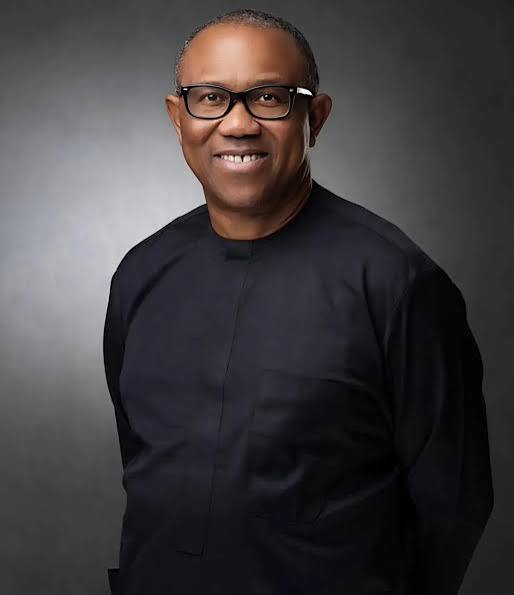
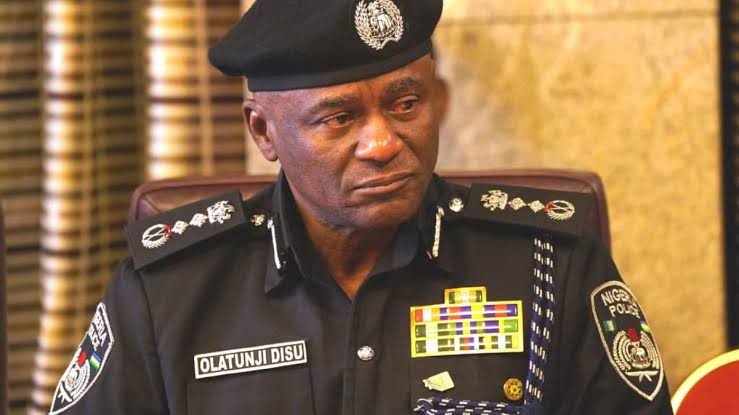
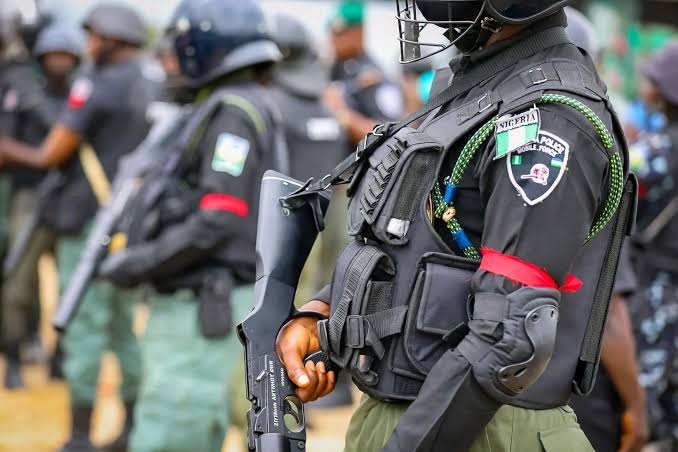
SIMON EKPA FREED FROM FINNISH PRISON, SAYS ALOY EJIMAKOR, AS QUESTIONS GROW OVER WHAT HIS RETURN MEANS FOR THE SOUTH EAST
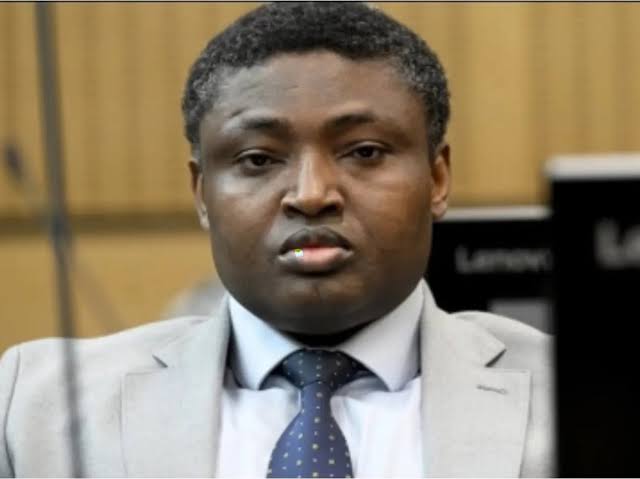
Simon Ekpa, the Finland-based Biafra separatist agitator whose sit-at-home directives were widely blamed for violence and economic paralysis in Nigeria's South East, has been freed from prison in Finland, according to Aloy Ejimakor, special counsel to detained IPOB leader Mazi Nnamdi Kanu. Reports circulating among his supporters indicate that his final release date was 17 November 2026, following an earlier brief release after which he returned to prison before his final discharge. Ekpa was arrested in Finland in November 2024 and later convicted by a Finnish court on terrorism-related offences linked to his online agitation. His release comes at a sensitive moment. Nnamdi Kanu remains in custody after his conviction in Nigeria, his legal team is pursuing fresh challenges to that judgment, and the South East is still recovering from years of enforced lockdowns, killings and economic losses tied to separatist agitation. The precise legal basis for Ekpa's release has not been fully set out in public, and the conditions attached to his freedom remain unclear. What is clear is that his return to public life will test security agencies in the South East, revive tensions within the Biafra movement and complicate the political conversation around Kanu's case. Much will depend on whether Ekpa resumes the inflammatory messaging that defined his rise, or whether the restrictions of Finnish law and the lessons of his conviction temper his conduct.
Simon Ekpa, the self-styled leader of the Biafra Republic Government in Exile and one of the most polarizing figures in the long-running agitation for a separate Biafran state, is out of prison in Finland. The announcement came from Aloy Ejimakor, special counsel to Mazi Nnamdi Kanu, the detained leader of the Indigenous People of Biafra. Messages shared by Ekpa's supporters put the date of his final release at 17 November 2026. They also indicate that this was not his first step outside prison walls in recent days. He had previously been allowed out briefly and then returned to prison, reportedly before an evening deadline, before he was finally discharged. That sequence suggests a structured release process rather than a sudden or unexpected one, and it is consistent with how many European prison systems handle the transition of inmates back into society. Still, the exact legal grounds for his freedom, including whether it involves parole, conditional release, a reduced sentence on appeal or another mechanism, have not been fully detailed in public. For a man whose name has been tied to fear, disruption and bloodshed across the South East, those details matter enormously.
To understand why Ekpa's release is drawing such intense attention, it helps to understand who he is and how he became a central figure in a conflict thousands of kilometers from the country he now calls home. Ekpa is a Nigerian-born Finnish citizen who built a life in Finland long before he became a household name in South East Nigeria. He was once a competitive athlete and later entered local politics in the city of Lahti, where he was involved with the center-right National Coalition Party. In those years, few people in Nigeria had heard of him. That changed as he increasingly aligned himself with the Biafra cause, positioning himself as a disciple of Nnamdi Kanu and using social media to reach a large and passionate audience at home and across the diaspora. His platform grew quickly after Kanu's re-arrest and extraordinary rendition to Nigeria in June 2021, an event that left the separatist movement without its most powerful voice and created a vacuum that more radical figures rushed to fill.
Ekpa filled that vacuum with uncompromising rhetoric. Through daily broadcasts and posts on X, Facebook and other platforms, he issued directives to residents of the South East, declared lockdowns, announced the "Biafra Republic Government in Exile" and styled himself as its prime minister. His messaging often blurred the line between political advocacy and open incitement. Critics in Nigeria, including state governors, traditional rulers, clergy, business leaders and security officials, accused him of using the safety of a European country to give orders that ordinary people in Enugu, Anambra, Imo, Abia and Ebonyi were forced to obey at great personal cost. Supporters saw him as a fearless voice who kept the Biafra struggle alive when Kanu could not speak for himself. That divide between admiration and anger has followed him ever since.
Nothing defined Ekpa's influence more than the sit-at-home orders that paralyzed the South East. The Monday sit-at-home began in August 2021 as an IPOB protest against Kanu's detention. IPOB later announced that it had suspended the weekly order, but compliance continued, largely because residents feared attacks by enforcers loyal to more hardline factions. Ekpa repeatedly issued his own directives, including extended lockdowns lasting several days and orders that coincided with sensitive moments such as elections and school examinations. On those days, markets in Onitsha, Aba and Nnewi stood empty, schools closed, banks shut their doors, and roads that normally carry some of the busiest commercial traffic in West Africa fell silent. Those who defied the orders sometimes paid with their property and, in tragic cases, their lives. Vehicles were set ablaze, traders were attacked and security personnel were ambushed by armed men widely described as "unknown gunmen." Business groups and economists estimated that the region lost huge sums in commerce, investment and productivity over the years of enforced shutdowns, while students and workers lost countless days they will never recover.
IPOB's own leadership grew uneasy with Ekpa's role. The group publicly distanced itself from several of his directives, insisting that he did not speak for the movement and accusing him of acting outside its command structure. At various points, Kanu's camp signaled that his sit-at-home orders were not authorized and were harming the very people the movement claimed to defend. Ekpa, for his part, continued to insist that he was acting in Kanu's interest and in the cause of Biafran freedom. That tension between the official IPOB line and Ekpa's independent operation created confusion for residents, who often could not tell which orders were real, which were rumors and which carried the threat of violence. It also gave the Nigerian government ammunition to argue that the agitation had drifted from political protest into criminal intimidation.
The Nigerian government had long wanted Ekpa stopped. Federal officials and security agencies repeatedly identified him as a key driver of insecurity in the South East and pressed Finnish authorities to act. Nigerian diplomats raised his activities with their Finnish counterparts, and senior officials in Abuja made clear that they regarded his broadcasts as a direct threat to national security. For a time, Finland's response frustrated Abuja. Freedom of expression is strongly protected in Finnish law, and the authorities moved cautiously in dealing with a citizen whose activities were directed at events in another country. That changed in November 2024, when Finnish police arrested Ekpa along with others on suspicion of terrorism-related offences, including public incitement to commit crimes with terrorist intent. The arrest was welcomed in Abuja and across much of the South East, where many residents hoped it would loosen the grip of fear that the sit-at-home enforcement had created. After trial, a Finnish court convicted him on terrorism-related charges and handed him a substantial prison sentence, a decision that marked one of the most significant legal blows to the most radical wing of the Biafra agitation.
That is why his release now lands with such force. For his supporters, it is a moment of celebration, proof that their leader has survived prosecution and will return to the struggle. Social media pages sympathetic to him have greeted the news with jubilation, and some posts have framed his freedom as a victory over both the Nigerian state and its allies abroad. For his critics, the news brings dread. Traders, transporters and families in the South East who endured years of lockdowns will want to know whether the same voice that once emptied their streets will soon be issuing orders again. Security analysts will be watching closely to see whether his release emboldens armed groups that previously cited his directives to justify violence. Governors in the region, several of whom have invested heavily in campaigns to end sit-at-home compliance and restore commercial life, will be acutely aware that a single broadcast could undo months of progress.
There are reasons for caution on all sides. Ekpa's conviction in Finland, and the time he has spent behind bars, may have changed the calculations that once guided his behavior. Conditional release in European systems often comes with restrictions, supervision requirements or the risk of being returned to custody for further violations, though the specific terms in his case have not been made public. Finnish authorities now have a clear legal precedent for treating incitement directed at Nigeria as a serious crime, and any return to his earlier messaging could carry swift consequences. At the same time, the South East itself has changed. Many residents have grown openly weary of sit-at-home orders, and civic, religious and business leaders have become more vocal in rejecting them. Compliance has eased in several cities as confidence in security has gradually improved. Whether Ekpa can regain the influence he once held is far from certain, and his release does not automatically restore the conditions that allowed his rise.
The timing also places his freedom in sharp contrast with the situation of Nnamdi Kanu. Kanu, the figure in whose name Ekpa built much of his following, remains in custody following his conviction in Nigeria on terrorism charges, a judgment that has drawn fierce criticism from his supporters and legal team. Aloy Ejimakor has been among the most active voices challenging that outcome, arguing in public that aspects of the trial, including Kanu's decision to represent himself after parting ways with his lawyers, may have fatally undermined the conviction. The image of Ekpa walking out of a Finnish prison while Kanu remains locked up in Nigeria is certain to fuel emotional arguments within the Biafra movement and beyond. Some supporters will ask why a man accused of far more inflammatory conduct is free while the IPOB leader remains behind bars. Others will argue that Ekpa's release demonstrates the value of due process and judicial review, and that Kanu deserves the same opportunity for his case to be fully and fairly reconsidered.
Ejimakor's decision to announce Ekpa's release is itself significant. As Kanu's special counsel, he speaks for the most important figure in the Biafra movement, and his words carry weight with IPOB members and the wider public. Given the history of public friction between IPOB and Ekpa, his announcement may be read by some as a sign of thawing relations, or at least as recognition that Ekpa remains a figure the movement cannot ignore. It may also reflect a broader strategy by Kanu's legal and political team to keep international attention on questions of justice, detention and the rights of Biafra agitators. Whatever the motive, the announcement ensures that Ekpa's release will be discussed not as an isolated Finnish legal matter but as part of the larger story of Kanu, IPOB and the future of separatist agitation in Nigeria.
For the Nigerian government, Ekpa's freedom presents a difficult challenge with limited options. As a Finnish citizen convicted and released under Finnish law, he falls outside the direct reach of Nigerian authorities. Abuja can register concern, request information from Finnish counterparts and monitor his activities, but it cannot easily compel his extradition or silence his broadcasts. Federal officials are likely to press Finland to ensure that any conditions attached to his release are strictly enforced. They may also intensify security deployments in the South East if there are signs that his supporters intend to revive sit-at-home enforcement. The government will need to balance firmness with restraint, because heavy-handed responses have historically deepened resentment in the region and handed separatist voices new grievances to exploit.
The deeper issue, which no single release or conviction can settle, is the set of grievances that gave the Biafra agitation its emotional power in the first place. Many people in the South East feel politically marginalized, economically neglected and underrepresented in key federal institutions. Infrastructure gaps, unemployment among young people and painful memories of the civil war continue to shape public sentiment. Figures like Ekpa have drawn strength from those feelings, even when their methods brought suffering to the very communities they claimed to defend. Lasting peace in the region will depend less on whether one agitator is in prison or out, and more on whether federal and state governments address the underlying frustrations through dialogue, investment, inclusion and justice. Leaders in the South East have increasingly argued that a political solution to Kanu's case could help calm tensions, and Ekpa's release is likely to sharpen that debate.
In the days ahead, all eyes will be on Ekpa's first public statements. A message focused on peaceful advocacy, legal processes and the welfare of South East residents would ease fears and could reshape how he is perceived. A return to lockdown directives, threats and inflammatory rhetoric would almost certainly trigger a strong response from security agencies, renewed diplomatic pressure from Abuja and the possibility of fresh legal trouble in Finland. The people of the South East, who have borne the cost of years of agitation, will judge him by what he does next rather than by the celebrations of his supporters online. His freedom has reopened a chapter many hoped was closed, and how that chapter unfolds will shape security, commerce and politics in the region for months to come.