Peter Obi Says His Anambra Model Can Work for Nigeria. His 2027 Campaign Will Depend on Whether Voters Agree
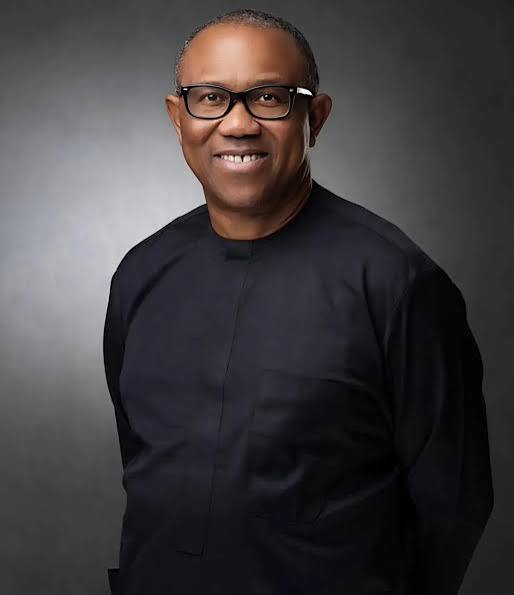
Peter Obi, the 2027 presidential candidate of the Nigeria Democratic Congress (NDC), has declared that the governance model he used as governor of Anambra State can be replicated across Nigeria. He made the declaration on Monday as he launched a 10-day series titled Record of Service, which documents his administration's achievements between 2006 and 2014. The first instalment, "Governance as a Public Trust," describes the Anambra he inherited as a state with weak institutions and leadership disconnected from its people. Obi said his government was guided by four principles: character, competence, capacity and compassion. He pointed to the creation of a Ministry of Economic Planning to fill the absence of a coordinated development blueprint, and to the rebranding of the state from "Home for All" to "The Light of the Nation" as an effort to restore public confidence and civic pride. "What we accomplished in Anambra can also be accomplished in Nigeria," he said, arguing that capable leadership, effective planning, responsible management and accountable institutions can make the country work for all its citizens. The series is a clear attempt to anchor his 2027 campaign in a verifiable record rather than promises. That record is also exactly what his opponents will contest. Obi has faced persistent scrutiny over claims about the savings he left behind, debts owed to contractors, the Pandora Papers revelations of 2021, and fresh allegations about his handling of problems such as erosion in Anambra. Whether a state-level record can persuade a national electorate facing insecurity, high living costs and deep political divisions will define the months ahead.
On Monday, the 2027 presidential candidate of the Nigeria Democratic Congress began a 10-day series called Record of Service. It is a structured, day-by-day account of what his administration did during nearly eight years as governor of Anambra State. The first instalment carried a title that doubled as a campaign philosophy: "Governance as a Public Trust."
The central claim was simple. The approach that guided his government in Anambra, Obi said, can work for the whole of Nigeria.
"What we accomplished in Anambra can also be accomplished in Nigeria," he stated. "With capable leadership, effective planning, responsible management and accountable institutions, Nigeria, too, can work for all its citizens."
The statement captures both the strength and the risk of Obi's strategy. His time as governor remains the most concrete evidence he can offer voters about how he would govern. It gives his campaign a story built on things that can be checked. But records invite checking, and Obi's critics have spent years disputing parts of his. By putting Anambra at the center of his 2027 bid, he is inviting a national audit of his past.
A Campaign Built Around a Record
The Record of Service series reflects a deliberate choice of format.
Rather than a single manifesto launch or a large rally, Obi is releasing his case in instalments over 10 days, each focused on a part of his record. The format suits his political brand. Throughout his career, he has presented himself as a manager of public resources more than a traditional politician. His public appearances often feature statistics on spending, debt, education and health, delivered in the tone of an accountant reviewing a balance sheet.
The series also extends a message his supporters have used for years. During the 2023 election, the phrase "go and verify" became a rallying cry among Obi's base. It was an invitation for Nigerians to check his claims about his time in Anambra rather than take his word for them. Record of Service turns that slogan into a campaign structure.
The timing is significant. The 2027 general elections are drawing closer, and the political field is taking shape. President Bola Tinubu is widely expected to seek a second term under the All Progressives Congress. Opposition parties are competing for space and voters. Obi, now carrying the NDC flag, needs to remind Nigerians why millions backed him in 2023 and convince new voters that his promise is more than rhetoric.
"Governance as a Public Trust"
The first instalment set out the foundation of Obi's argument.
He described the Anambra he inherited in 2006 as a state at a critical point. According to Obi, government institutions were weak and leadership had become disconnected from the people it was meant to serve. That description will resonate with many who remember the period. Anambra in the early 2000s was known for political turmoil, godfather politics and bitter fights over control of state resources. In 2003, a sitting governor was briefly abducted in a dispute tied to those struggles. Public services suffered as the state's political class battled for power.
Obi's own route into office reflected that instability. He contested the 2003 governorship election but was not declared the winner. He spent nearly three years in the courts before the Court of Appeal ruled in his favor, and he was sworn in as governor in March 2006. His troubles did not end there. He was impeached by the state House of Assembly later that year, a decision later overturned by the courts. In 2007, he was briefly removed again after a new governor was sworn in following that year's election, until the Supreme Court ruled that his four-year term began when he first took office in 2006. He was re-elected in 2010 and left office in March 2014.
Against that backdrop, Obi framed his administration as an effort to restore the basic purpose of government.
"Leadership was not a platform for self-promotion, political slogans, or the pursuit of personal acclaim," he said. "Its purpose was to improve the circumstances of ordinary citizens."
The language is pointed. In a political culture where governors often attach their names and photographs to public projects, Obi has long cultivated an image of austerity and restraint. He frequently talks about traveling light, refusing expensive convoys and avoiding unnecessary spending. Critics call it a carefully managed public image. Supporters see it as evidence of a different kind of politician. Either way, it has become central to his appeal.
Four Principles: Character, Competence, Capacity, Compassion
Obi said his administration was guided by four principles: character, competence, capacity and compassion.
Each principle speaks to a different weakness that many Nigerians see in their leaders. Character addresses integrity and personal conduct. Competence speaks to the ability to understand and manage complex problems. Capacity refers to the strength of the systems and people a leader brings into government. Compassion signals a focus on the welfare of ordinary citizens.
Together, they form a values-based framework that Obi is now offering as a national template. The challenge for any campaign built on principles is turning them into policy. Voters will want to know what character and competence mean in practice when facing inflation, unemployment, insecurity and debt.
Obi's answer, at least in the opening instalment, was planning.
The Ministry of Economic Planning
Obi disclosed that his government established a Ministry of Economic Planning to address the absence of a coordinated development blueprint and to ensure proper allocation of public resources.
It is a detail that may seem technical. It is also central to his argument. In Obi's account, Anambra's problem was not only a shortage of money but a shortage of direction. Projects were started without long-term plans. Spending decisions were not linked to clear priorities. Resources were spread thin or wasted.
A dedicated planning ministry was meant to change that. Its role was to coordinate development goals, guide the state budget and make sure public funds followed a strategy. Under Obi, Anambra adopted a development framework known as the Anambra Integrated Development Strategy, which set priorities across sectors such as education, health, infrastructure, agriculture and security. Obi's allies have long pointed to that framework as evidence that his government operated with a plan rather than improvising.
The national relevance of the argument is clear. Nigeria has produced many development plans over the decades, from national rolling plans to Vision 20:2020 and the National Development Plan. Critics argue that the problem has rarely been the absence of plans but the failure to follow them. Obi's pitch is that the difference lies in leadership and discipline. Whether a national government can match planning with execution across 36 states and the Federal Capital Territory is a much larger test than managing one state.
From "Home for All" to "The Light of the Nation"
Obi also pointed to a symbolic decision. His administration rebranded Anambra from "Home for All" to "The Light of the Nation."
He described the change as part of an effort to restore public confidence and promote civic pride. Slogans may seem minor next to budgets and roads, but they carry weight in Nigerian politics. State slogans appear on vehicle license plates, government documents and public signs. They express how a state sees itself and how it wants to be seen.
"The Light of the Nation" reflected an ambition to restore Anambra's reputation as a center of commerce, education and enterprise. The state is home to major commercial hubs such as Onitsha and Nnewi and has produced many of Nigeria's best-known business figures. After years of political crisis, the rebrand was meant to signal a fresh start.
The symbolism also connects to Obi's national message. Much of his appeal rests on the idea that Nigeria needs not only new policies but a renewed sense of public purpose. His supporters often describe his movement as an attempt to restore hope among young Nigerians frustrated by the country's direction.
The Claims Behind the Anambra Story
Obi's supporters credit his administration with a range of achievements. These include improvements in education, investment in health facilities, road construction, prudent financial management and savings left for his successor.
Education has been one of the most prominent parts of that story. In 2009, his administration returned many mission schools to their original church owners while continuing to support them with public funds. His government also supplied equipment to schools, including computers, buses and laboratory materials. Obi has repeatedly cited improvements in Anambra's performance in national examinations as proof that the investment worked.
Health is another area his camp highlights. His administration partnered with church-owned and private institutions to improve hospitals and support their accreditation. It also invested in health facilities across the state.
On finances, Obi has long maintained that he left substantial savings for his successor, including funds held in local and foreign currency and investments. He has also said he did not leave the state burdened with heavy debt. These claims have become a cornerstone of his political identity.
The Record of Service series is expected to revisit many of these areas. Reporting on the series indicates that it will cover sectors including health, education, infrastructure and security. Each instalment gives Obi a chance to present his record in detail. Each also gives his opponents a target.
The Scrutiny Obi Faces
No part of Obi's political brand has been more contested than his record in Anambra.
His claims about savings left for his successor have been disputed repeatedly. Some critics, including politicians from rival parties and officials linked to later state administrations, have argued that the figures were overstated or that part of the money consisted of investments rather than cash available to spend. Others have said the savings came at the expense of projects that should have been completed or contractors who should have been paid. Obi and his supporters have rejected those claims, insisting that the records support his account.
His education claims have also been examined by fact-checkers. Some found that Anambra did perform strongly in national examinations during parts of his tenure, while noting that rankings varied by year and by the measure used. Such nuance rarely survives political debate, where both sides tend to present the most favorable or unfavorable version.
Obi's personal finances drew attention in 2021, when the Pandora Papers investigation reported that he had held offshore companies that were not declared in official asset filings. Obi said he had done nothing illegal and argued that the companies were family-related business interests. Critics said the revelations undermined his image as a model of transparency. Supporters said he had been unfairly targeted.
The Record of Service series has itself been framed by fresh controversy. Reporting around its launch linked the series to allegations about his record in the state, including claims related to erosion. Gully erosion is one of the most serious environmental problems in Anambra, threatening homes, roads and farmland across the state. Successive governments have faced criticism over their response to it. Any suggestion that Obi's administration fell short in this area strikes at the heart of his claim to effective management.
Obi's decision to respond with a detailed, multi-day account suggests he sees these attacks as a serious threat. It also shows that he is willing to fight on the ground of his record rather than avoid it.
From State House to Aso Rock
Even if Obi's Anambra record is accepted in full, a larger question remains. Can success in one state be translated to the national level?
Anambra is one of Nigeria's smaller states by land area, though densely populated. It has a strong commercial culture, a large diaspora and relatively high literacy. Governing it presents real challenges, but they differ in scale and complexity from those facing the federal government.
A Nigerian president must manage a population of more than 220 million people, a federal budget that depends heavily on oil revenue, and a debt burden that has grown significantly in recent years. The president commands the armed forces and oversees national security at a time when insurgency, banditry, kidnapping and communal violence affect almost every region. The president must also manage relations with 36 governors, a National Assembly with its own interests, and a political system shaped by ethnic, religious and regional divisions.
The national policy environment is also changing. The constitutional amendment to establish state police has just cleared all 36 state Houses of Assembly and awaits presidential assent. The next president will oversee its implementation. The economic reforms introduced by the Tinubu administration, including the removal of fuel subsidies and changes to the exchange rate, continue to shape the cost of living for millions of Nigerians. Any candidate must explain how he would handle these realities.
Obi's argument is that the principles of good governance do not change with scale. Planning, prudence, accountability and competent appointments matter in Awka just as they do in Abuja. His critics argue that national leadership requires coalition building and political skills that state experience alone cannot prove.
Both arguments have merit. Former governors have reached the presidency in Nigeria before, and their state records have often been used as evidence of what they might do nationally. Voters have rarely found the comparison simple.
The Politics of the NDC Bid
Obi enters the 2027 race as the candidate of the Nigeria Democratic Congress. His decision to run on a new platform reflects the fluid state of opposition politics in Nigeria.
In 2023, he ran as the candidate of the Labour Party and finished third in the official results, with more than six million votes. He won Lagos, the Federal Capital Territory and several states in the southeast and south-south, a performance that disrupted Nigeria's traditional two-party dominance. His campaign energized young voters and urban professionals, many of whom were participating in elections for the first time. He challenged the outcome in court, but the Supreme Court upheld Tinubu's victory.
The challenge for 2027 is to build on that base while broadening it. Obi needs to win support in regions where he performed poorly in 2023, particularly in the north. He also needs a party structure capable of protecting votes at polling units across the country. Enthusiasm on social media has not always translated into organized support on the ground.
The Record of Service series appears designed partly for that purpose. By focusing on governance rather than identity, Obi is attempting to speak to voters across regional lines. His message is that competence and integrity matter more than ethnicity or religion. Whether that message can overcome Nigeria's deeply rooted voting patterns is one of the biggest questions of the coming campaign.
Why the Message Resonates
Despite the scrutiny, Obi's message continues to connect with many Nigerians.
The country faces severe economic pressure. Inflation has eroded incomes. Unemployment and underemployment remain high, especially among young people. Many skilled workers have left the country in search of opportunity abroad. Insecurity affects travel, farming and business across large parts of the country.
In that environment, a candidate who promises prudent management, careful planning and an end to waste speaks directly to public frustration. Obi's emphasis on reducing the cost of governance, investing in education and health, and moving the economy from consumption to production aligns with what many voters say they want.
His personal style also matters. In a political culture often associated with extravagance, his image of frugality stands out. Supporters see him as an outsider to the political establishment, even though he has held high office and has been part of major parties, including running as vice presidential candidate of the Peoples Democratic Party in 2019.
That combination of a managerial message and an outsider image is the core of his appeal. It is also what his opponents will try hardest to puncture.
What the Rest of the Series Must Show
The opening instalment laid out principles and broad claims. The remaining instalments will need to provide substance.
For the series to strengthen his campaign, Obi will need to present detailed, verifiable evidence. That includes budget figures, project records, education and health data, and a clear account of the finances he left behind. He will also need to address his critics directly, particularly on disputed claims about savings and debts and on recent allegations involving erosion and other projects.
The series will also be measured by how well it connects Anambra's past to Nigeria's future. Voters will want to know how a state-level approach to planning would work across the federation. They will want specific proposals on security, power supply, job creation, inflation and public debt.
The media and fact-checkers are likely to examine each instalment closely. Every figure Obi presents may be challenged. That scrutiny could strengthen his case if his claims hold up. It could weaken it if they do not.
The Bottom Line
Peter Obi has made his record in Anambra the foundation of his 2027 presidential campaign. In the first instalment of his 10-day Record of Service series, "Governance as a Public Trust," he described inheriting a state with weak institutions and disconnected leadership. He set out four guiding principles: character, competence, capacity and compassion. He pointed to the Ministry of Economic Planning as the backbone of a coordinated development strategy and to the rebrand from "Home for All" to "The Light of the Nation" as a symbol of renewed civic pride.
His central message is clear. "What we accomplished in Anambra can also be accomplished in Nigeria."
That message carries real appeal for a country weighed down by economic hardship and insecurity. It also carries real risk. Obi's record has been disputed for years, and his opponents will use every instalment of the series to challenge it. Questions about savings, debts, offshore holdings and environmental management will not disappear.
The coming months will test more than the accuracy of his claims. They will test whether Nigerian voters believe that the lessons of one state can guide an entire nation, and whether Obi can build the political coalition needed to put those lessons into practice. He has asked Nigerians to judge him by what he has done. In 2027, they will have the chance.