Nigeria Is About to Hand Its Governors Guns, Badges and Power. All 36 States Just Said Yes
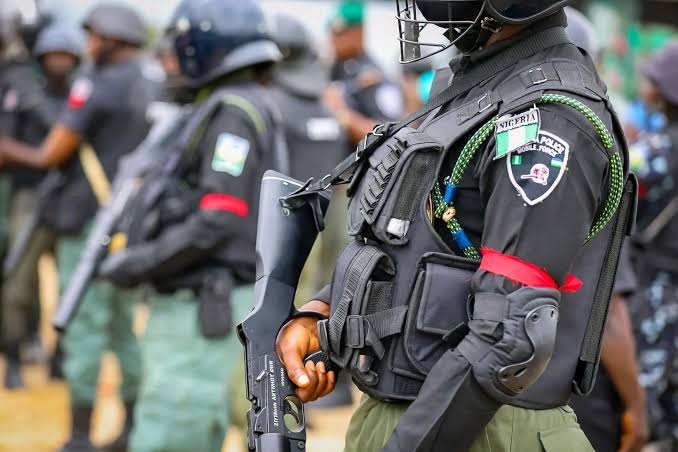
All 36 state Houses of Assembly in Nigeria have approved the proposed constitutional amendment to establish state police, according to a Monday statement from the Clerk to the National Assembly, Kamoru Ogunlana. He described the unanimous endorsement as an unprecedented demonstration of cooperation between the federal and state legislatures. The approval far exceeds the threshold in Section 9(2) of the 1999 Constitution, which requires backing from at least two-thirds of the states, or 24 of 36. The bill now awaits formal transmission to President Bola Tinubu for assent. If signed, it would end more than five decades of a single, centrally controlled police force and mark one of the most significant changes to Nigeria's security architecture since the return to civilian rule in 1999. The reform arrives against a backdrop of persistent insurgency in the northeast, mass kidnappings and banditry in the northwest, farmer-herder violence in the Middle Belt, and separatist-linked unrest in the southeast. Supporters argue that decentralized policing will bring officers closer to communities and fill dangerous gaps left by an overstretched federal force. Critics warn that governors could turn state police into political weapons, that many states cannot fund them, and that weak safeguards could deepen abuse rather than reduce crime. Tinubu, a longtime advocate of state policing, is widely expected to sign. The harder test will be the enabling laws, funding models, and oversight structures that determine whether state police make Nigerians safer or simply create new instruments of power.
For more than half a century, every police officer in Nigeria has answered, ultimately, to Abuja.
A constable patrolling a market in Maiduguri, a detective investigating a kidnapping in Zamfara, and a traffic officer directing cars in Lagos all belong to the same institution. They are recruited, posted, promoted, paid and disciplined by the federal government. Governors, though often described as the chief security officers of their states, have no police force to command. They can request, plead and negotiate. They cannot order.
That arrangement is now on the verge of ending.
All 36 state Houses of Assembly have approved the proposed constitutional amendment to establish state police. The Clerk to the National Assembly, Kamoru Ogunlana, disclosed the result in a statement on Monday. He described the unanimous endorsement as an unprecedented demonstration of cooperation between the federal and state legislatures. The bill now awaits transmission to President Bola Tinubu for assent.
The scale of the vote matters. The 1999 Constitution sets a high bar for amendments. Under Section 9(2), a proposed alteration must win the support of at least two-thirds of the states, which means 24 of 36 Houses of Assembly. The state police bill did not merely clear that bar. It secured 100 per cent approval.
In a country where constitutional amendments routinely stall, where state legislatures are often accused of rubber-stamping or ignoring national reforms, and where regional suspicions shape almost every major policy debate, unanimity is rare. On state police, an idea that once divided the north from the south and politicians from security chiefs, every state has now said yes.
The question is no longer whether Nigeria wants decentralized policing. It is whether the country can build it without repeating the mistakes of its past.
A Unanimous Verdict Nobody Predicted
Constitutional reform in Nigeria is slow, expensive and often disappointing.
Since 1999, successive National Assemblies have launched review processes that consumed years of hearings, committee meetings and public consultations. Many proposals died at the National Assembly. Others passed there but failed in the states. Some cleared both stages only to stall at the presidency. The result has been a constitution that many Nigerians regard as overcentralized, yet one that has proved remarkably resistant to change.
Against that history, the state police vote stands out. A few months ago, reporting showed 28 states had approved the bill as the National Assembly prepared for transmission. That number alone was enough to meet the constitutional threshold. The final eight states did not need to act for the bill to advance. They acted anyway.
The completion of the tally sends a political message beyond the legal requirement. It tells the presidency that there is no meaningful bloc of state legislatures opposed to the reform. It tells the security establishment that the debate over whether to decentralize policing is effectively over at the subnational level. And it tells Nigerians that, on at least one issue, their federal and state lawmakers have found common ground.
Ogunlana's description of the vote as an "unprecedented demonstration of cooperation" reflects that significance. The National Assembly and the state assemblies have often been at odds, particularly over issues involving the distribution of power and resources. Local government autonomy, judicial independence and fiscal arrangements have all exposed tensions between the two tiers of legislature. On state police, those tensions gave way.
There are several reasons for that shift. The most powerful is fear. Insecurity has spread to every geopolitical zone, and no state can credibly claim to be immune. Governors who once worried that state police would weaken national unity now worry more about the bandits on their highways and the kidnappers in their forests. State lawmakers face constituents who want action, not constitutional theory.
The second reason is politics. Support for state police has grown across party lines and regions. Opposing the bill would have meant defending a status quo that few Nigerians believe is working.
The third reason is leadership. The president himself has long been associated with the cause of state policing. For state assemblies, many of them closely aligned with their governors and with the ruling party, voting for the bill carried little political risk and potentially significant reward.
What Section 9(2) Requires, and Why 36 Matters
The 1999 Constitution provides a demanding process for its own amendment.
Section 9(2) states that an Act of the National Assembly to alter the constitution must be supported by at least two-thirds of all members of each chamber. It must then be approved by resolution of the Houses of Assembly of at least two-thirds of all the states. With 36 states, that means a minimum of 24.
The threshold is designed to ensure that constitutional change reflects broad national consensus rather than a narrow majority. It protects minority regions from being outvoted on issues that affect the structure of the federation. It also explains why so many amendment efforts fail. Securing two-thirds support in the Senate, two-thirds in the House of Representatives, and two-thirds of state assemblies is a formidable task in a country of deep ethnic, religious and regional diversity.
The state police bill has now cleared every legislative stage. The 36-state approval is not legally required, but it carries weight. It strengthens the bill's legitimacy. It weakens any argument that the reform is being imposed by one region on another. And it raises the political cost of any decision by the presidency to withhold assent.
Constitutionally, the amendment is focused on removing the central barrier to state policing. Section 214 of the 1999 Constitution currently provides that there shall be a police force for Nigeria, known as the Nigeria Police Force, and that no other police force shall be established for the federation or any part of it. Police matters also sit on the Exclusive Legislative List, which reserves certain subjects to the federal government. Any meaningful move toward state police requires changing those provisions. That is what the bill seeks to do.
The final step in the legislative process is presidential assent. After the National Assembly completes authentication, the Clerk transmits the bill to the president. Under the general framework for bills in Section 58, the president has 30 days to sign or withhold assent. Whether presidential assent is strictly required for constitutional amendments has been debated by Nigerian lawyers for years. In practice, the National Assembly has treated assent as part of the process, and previous presidents have both signed and declined to sign constitutional alteration bills.
In this case, the debate may be academic. Few observers expect Tinubu to refuse.
A Police Force Built for Control, Not Communities
To understand why state police has become such a powerful idea, it helps to understand the institution it would challenge.
The Nigeria Police Force traces its modern form to 1930, when British colonial authorities merged separate northern and southern police forces into a single national body. Colonial policing was designed primarily to protect the administration, secure trade and suppress dissent. Community service was not its founding purpose.
Alongside the national force, colonial and early independent Nigeria also had local police. In the north, Native Authority police operated under traditional rulers. In the west, local government police served similar functions. These forces were close to communities in a way the national police was not. They knew local languages, customs and terrain.
They also became tools of political repression. In the turbulent years of the First Republic, regional governments and ruling parties used local police forces against opponents. Political rivals were harassed, arrested and intimidated. In the Western Region, crises in the early to mid-1960s were marked by violence and partisan law enforcement. In the north, Native Authority police were accused of serving the interests of the dominant party and traditional elites.
When the military seized power in 1966, it began dismantling the local police system. By the late 1960s and early 1970s, local forces had been absorbed or abolished, and policing was consolidated under federal control. Successive military governments maintained that structure. Centralized police fit naturally with centralized military rule.
When Nigeria returned to civilian rule in 1999, the new constitution preserved that model. Its drafters were shaped by memories of First Republic abuses and by the military's preference for a unified command structure. The result was one police force for a country that is now home to more than 220 million people.
That history explains both sides of today's debate. Supporters of state police point to the failures of the centralized system that replaced local policing. Opponents point to the abuses that led to its abolition in the first place.
An Overstretched Force in a Nation Under Siege
The case for state police rests heavily on a single claim: the federal police cannot cope.
The Nigeria Police Force has roughly 370,000 officers, a figure frequently cited by officials and analysts. For a population of more than 220 million, that is far below the commonly referenced United Nations benchmark of one officer for every 450 people. A significant share of officers are also deployed to guard politicians, business executives, banks and other private interests. That further reduces the number available for patrols and investigations.
The force faces other well-documented problems. Funding is inadequate. Equipment is often outdated or scarce. Officers frequently work in poor conditions for low pay. Training is uneven. Allegations of extortion, abuse and extrajudicial killings have damaged public trust. In October 2020, the #EndSARS protests against police brutality drew hundreds of thousands of young Nigerians into the streets and became one of the largest youth movements in the country's history.
Centralization compounds these weaknesses. Officers are often posted far from their home regions, to communities whose languages they do not speak and whose terrain they do not know. Decisions on deployment, recruitment and promotion are made in Abuja. Governors who face public pressure over insecurity have limited authority to direct the officers operating in their states. State police commissioners report to the Inspector-General, not to the governor.
That structure has produced a widening gap between the security problems Nigerians face and the institutions meant to address them.
Boko Haram and the Long War in the Northeast
The most enduring of those problems is the insurgency in the northeast.
Boko Haram launched its violent campaign in 2009. In the years that followed, it killed tens of thousands of people and displaced millions across Borno, Yobe and Adamawa, with violence spilling into neighboring countries around Lake Chad. The April 2014 abduction of 276 schoolgirls from Chibok drew global attention. In 2016, the group split, with the faction known as the Islamic State West Africa Province becoming one of the most capable jihadist organizations on the continent.
The Nigerian military has led the fight, supported by regional partners and local vigilante groups such as the Civilian Joint Task Force. The insurgency has been pushed back from many of the territories it once controlled. But attacks continue, and large parts of the northeast remain insecure.
The northeast experience offers lessons for the state police debate. Local knowledge has proved essential. The Civilian JTF, made up of young men from affected communities, became valuable precisely because its members knew the people and the terrain. Supporters of state police argue that formal, trained, accountable local forces could provide similar advantages without the risks of informal militias.
Critics counter that an insurgency is a military problem, not a policing problem. State police, they argue, will not defeat ISWAP. That may be true. But the insurgency has also produced a wider breakdown of law and order that ordinary policing must eventually address.
Banditry, Kidnapping and the Collapse of Rural Security
If the northeast is defined by insurgency, the northwest is defined by banditry.
Over the past decade, armed groups have terrorized communities across Zamfara, Katsina, Sokoto, Kebbi, Kaduna and Niger states. They raid villages, steal cattle, impose levies on farmers and abduct people for ransom. Some groups control large areas of forest and rural land. In many communities, bandits have become a parallel authority.
Mass school abductions have become a defining feature of the crisis. Students were seized in Kankara, Katsina State, in December 2020. Schoolgirls were taken from Jangebe, Zamfara State, in February 2021. Pupils were abducted from Kuriga, Kaduna State, in March 2024. In late 2025, a new wave of mass abductions struck schools and communities in Kebbi and Niger states, prompting national outrage and a renewed push for security reforms. Each attack has deepened the sense that the federal security system cannot protect rural Nigeria.
Kidnapping for ransom has also spread far beyond the northwest. Highways linking major cities have become dangerous. The Abuja-Kaduna corridor has seen repeated attacks, including the March 2022 assault on a passenger train. Kidnappings have hit communities in the southwest, the south-south and the Federal Capital Territory itself.
Governors in affected states have responded in various ways. Some have negotiated with bandits. Others have armed community guards. Several have created state security outfits operating in a legal gray area. All have faced the same limitation. They cannot command the police.
The Middle Belt, the Southeast and a National Crisis
The violence extends well beyond the north.
In the Middle Belt, conflicts between farmers and herders have killed thousands of people over the past decade. Benue and Plateau states have suffered especially devastating attacks. In June 2025, an attack on Yelwata in Benue State killed scores of people and drew national condemnation. Communities have demanded protection, and state governments have pushed for greater control over security in their territories.
In the southeast, separatist agitation and the violent activities of so-called unknown gunmen have disrupted daily life. Police stations, electoral offices and security personnel have been attacked. Sit-at-home orders associated with separatist groups have paralyzed commerce in parts of the region for extended periods.
In the south-south, oil theft, piracy, cultism and militancy have long challenged security agencies. In the southwest, kidnapping and conflicts over land and grazing have intensified.
The result is a national security crisis without a single center. Nigeria's armed forces are deployed in almost every state. Soldiers routinely perform internal security tasks that would normally fall to police. That arrangement strains the military, blurs the line between policing and combat, and often leaves communities exposed once troops move on.
The unanimous state assembly vote is, in part, a recognition that this situation cannot continue.
Amotekun, Ebube Agu and the Rise of State Security Outfits
Long before the constitutional amendment, states had begun building their own security structures.
In January 2020, governors in the southwest launched the Western Nigeria Security Network, known as Amotekun. The outfit was created in response to kidnappings and attacks in the region. It initially faced resistance from the federal government, which questioned its legality. Each southwest state eventually passed its own law to establish an Amotekun corps.
Other regions followed. Southeast governors launched Ebube Agu in 2021. Several northern states built community guard or vigilante structures, sometimes with state funding. In Kano and other states, religious enforcement agencies known as Hisbah have operated for years. Benue State created community volunteer guards. Zamfara and Katsina have established community protection forces.
These outfits have had mixed results. Supporters credit some of them with improving intelligence gathering and response times. Critics have documented allegations of abuse, poor training and partisan deployment. Their legal status has remained uncertain. They cannot carry the same weapons as the police. Their personnel do not have the full powers of arrest and prosecution enjoyed by police officers.
Their existence, however, shaped the state police debate in two ways. First, it showed that states were willing to spend money on security when the federal system failed. Second, it gave Nigerians a preview of what decentralized security could look like, for better and for worse.
The constitutional amendment opens the door to converting these informal and semiformal structures into fully fledged police forces, or replacing them entirely. How states handle that transition will be one of the most important tests of the new system.
The Case for State Police
Supporters of state police make a compelling argument rooted in geography, accountability and practicality.
The first argument is proximity. Officers recruited from local communities speak local languages, understand local customs and know local terrain. They are more likely to gain trust and gather intelligence. In a country as diverse as Nigeria, a constable posted from far away can struggle to understand the community he is meant to protect.
The second argument is accountability. Under the current system, governors are often blamed for insecurity they cannot directly address. State police would align responsibility with authority. Voters could hold governors accountable for the performance of police forces they control.
The third argument is capacity. The federal police are too small for the country's population and too thinly spread across its vast territory. State forces could add tens of thousands of officers without requiring the federal government to fund them all.
The fourth argument is speed. A governor facing a kidnapping or a village attack must currently coordinate through federal command structures. Supporters argue that state police would allow faster decisions, quicker deployments and more flexible responses to emerging threats.
The fifth argument is international practice. Many federal countries use multilevel policing. The United States has federal, state, county and city police forces. Canada, Australia, Germany, India and Brazil all combine national and subnational policing in various forms. Supporters argue that Nigeria, as a federation, should not be an exception.
The sixth argument is federalism itself. For decades, advocates of what Nigerians call "restructuring" have argued that the country is too centralized. They want more power and resources devolved to states and regions. State police has become one of the most visible demands in that broader campaign.
The Case Against State Police
Opponents raise concerns that are equally serious.
The most common is abuse of power. Nigerian governors already wield enormous influence within their states. Critics argue that giving them control of armed police forces could allow them to intimidate opponents, suppress dissent and manipulate elections. That fear is rooted in history. It was the abuse of local police in the First Republic that led to their abolition.
The second concern is funding. Many Nigerian states struggle to pay salaries and pensions. Some rely heavily on monthly federal allocations. Building, equipping and sustaining a professional police force is expensive. Critics warn that poorly funded state police could become poorly trained, poorly paid and prone to corruption, possibly worse than the federal force they are meant to supplement.
The third concern is national unity. In a country with deep ethnic and religious divisions, some fear that state police could become instruments of sectarian or ethnic agendas. Minority communities within states could face discrimination from forces dominated by majority groups. Settlers and migrants could be targeted.
The fourth concern is coordination. Multiple police forces could create confusion over jurisdiction, duplicate efforts and weaken intelligence sharing. Criminals often operate across state lines. Without strong coordination, state police could create gaps rather than close them.
The fifth concern is the proliferation of weapons. Arming state forces raises questions about firearms control, procurement and oversight. In a region already awash with illegal weapons, critics worry about weapons leaking from poorly managed state armories.
The federal police leadership has voiced several of these concerns. In 2024, the Inspector-General of Police argued that Nigeria was not yet ready for state police, warning of the risk of abuse by political leaders. That position reflected long-standing institutional resistance within the force.
These arguments have not stopped the reform. But they will shape how it is implemented.
The Shadow of Local Government Capture
One example looms over the debate more than any other: local government.
Nigeria's constitution recognizes local governments as a third tier of government. In practice, many states have long controlled them through state-appointed caretaker committees, control of local government funds, and state electoral commissions that often deliver landslide victories for the governor's party.
In July 2024, the Supreme Court ruled that local governments must receive their federal allocations directly and that states cannot run them through unelected caretaker committees. The ruling was widely celebrated as a blow against state overreach. Implementation has been slow and contested.
Critics of state police point to local government as evidence of how governors use power when they have it. If governors can capture local councils, they argue, they can capture police forces. A governor who controls state police could, in theory, deploy officers to harass opposition politicians, disrupt rallies, or influence elections.
Supporters respond that the solution is strong safeguards, not continued centralization. They note that the federal police have also been accused of partisan behavior and of serving the interests of whoever controls Abuja. Centralization, they argue, does not prevent abuse. It simply concentrates it.
The truth is that both tiers of government in Nigeria have records of misusing security forces. The design of state police, including its oversight, appointment processes and legal protections, will determine which risks prevail.
Safeguards That Will Make or Break the Reform
The constitutional amendment is a framework, not a finished system. The details that will matter most will come later.
Debates over state police in recent years have focused on several possible safeguards. One is independent oversight. A state police service commission, insulated from direct political control, could handle recruitment, promotion and discipline. The more independent that body is, the harder it would be for a governor to purge or pack the force.
Another is security of tenure for state police commissioners. If a governor can fire the head of state police at will, the force will likely bend to the governor's preferences. Fixed terms and clear removal procedures could reduce that risk.
A third is federal minimum standards. Common rules on training, use of force, firearms, detention and human rights could prevent a race to the bottom. A national framework could also ensure that state forces meet basic professional requirements.
A fourth is a clear division of responsibilities. Many proposals envision federal police retaining responsibility for national and interstate crimes, such as terrorism, organized crime and threats to federal institutions. State police would focus on local crime, community safety and public order. Clear rules would be needed for joint operations and disputes.
A fifth is restrictions during elections. Some advocates have suggested limits on the role of state police during elections, with federal agencies taking the lead on electoral security. That could reduce the risk of governors using police to influence votes.
A sixth is judicial and legislative oversight. State Houses of Assembly could play a stronger role in monitoring police budgets and conduct. Courts would need the independence and capacity to hold state forces accountable.
Without these safeguards, state police could deepen the problems it is meant to solve. With them, Nigeria could build a system that is closer to communities and more accountable to citizens.
Who Pays for State Police?
Money may prove to be the hardest problem of all.
Nigerian states vary enormously in their fiscal capacity. Lagos generates substantial internal revenue and operates a budget larger than those of many African countries. Other states depend heavily on monthly federal allocations and have limited ability to raise their own funds.
Building a police force requires recruiting and training officers, paying salaries and pensions, buying vehicles and weapons, building stations and barracks, and investing in communications and forensic capacity. Sustaining it requires steady funding year after year.
Several states already face pressure from the new national minimum wage, which rose to ₦70,000 in 2024. Many have struggled with pension arrears and debt. Adding a police force to those obligations will strain budgets further.
There are several possible responses. Some states may phase in police forces gradually, starting with small units in high-risk areas. Others may convert existing security outfits, such as Amotekun or community guards, into state police and build from there. Some advocates have proposed federal support or dedicated security funding for states that meet certain standards. Others have suggested regional cooperation, with neighboring states sharing training facilities and resources.
The danger is that richer states will build capable forces while poorer states build weak ones. That could create an uneven security map, with criminals shifting operations to states with the weakest policing. National coordination and support will be essential to prevent that outcome.
Funding also raises questions of revenue allocation. States may argue that if they are to take on greater security responsibilities, they should receive a larger share of federal revenue. That argument could revive long-running debates over the revenue sharing formula and fiscal federalism.
Tinubu's Long Road to State Police
For President Bola Tinubu, state police is not a new idea. It is one he has championed for decades.
As governor of Lagos State from 1999 to 2007, Tinubu was among the most prominent advocates of true federalism. He clashed repeatedly with the federal government over the rights and powers of states. He called for state police and argued that governors should have the tools to secure their territories. His political identity was built, in part, on the case for a less centralized Nigeria.
As president, Tinubu has continued to signal support. In February 2024, after a meeting with state governors on rising insecurity, the federal government and governors agreed to explore the establishment of state police. In late 2025, amid a wave of mass abductions, Tinubu publicly urged lawmakers to review the country's laws to allow states to set up their own police forces. He also declared a security emergency and ordered expanded recruitment into the federal police.
Those signals make presidential assent highly likely. Refusing to sign a bill backed by the National Assembly, all 36 state assemblies and the president's own past advocacy would be politically baffling.
That does not mean Tinubu will be passive. As president, he will be responsible for shaping how the federal government responds to the new system. He will have to manage the concerns of the federal police leadership, the military and other security agencies. He will have to decide how much federal money and support to offer states. And he will have to balance his federalist convictions with the risks of empowering governors, some of whom are political rivals.
His approach will also reflect the political calendar. Nigeria heads into the 2027 general elections, and Tinubu is widely expected to seek a second term. Signing the state police bill would allow him to claim credit for a historic reform and to present himself as a leader acting decisively on insecurity. It would also hand governors new power at a time when their political loyalty will matter greatly.
The Politics of Assent
The timing of the reform carries obvious political implications.
Insecurity is among the most important issues for Nigerian voters, alongside inflation, unemployment and the cost of living. A government that can show progress on security gains a powerful campaign message. State police allows the federal government to share both responsibility and credit with the states.
For the ruling All Progressives Congress, which controls the presidency and a majority of state governments, the reform could reinforce its national dominance. Many governors have joined the APC in recent years, strengthening the party ahead of 2027. A state police system implemented under APC governors would be closely tied to the party's political fortunes.
For opposition parties, the reform presents both opportunity and risk. Opposition governors would gain control of state forces, potentially strengthening their hand within their states. But opposition politicians in APC-controlled states may fear that state police could be used against them, especially during election seasons.
That dynamic makes timing important. If state police forces are established quickly, they could be operational before or during the 2027 elections. That would raise immediate questions about their neutrality. If implementation is slower, the reform's political impact may be felt mainly in later election cycles.
Civil society groups and election observers will be watching closely. Any sign that state police are being used to intimidate voters, opposition candidates or journalists would trigger fierce criticism and could undermine the reform's legitimacy.
The Federalism Debate Reignited
The state police vote is about security. It is also about the shape of the Nigerian federation.
For decades, Nigerians have argued over how power should be divided between Abuja and the states. Critics of the current system say it gives the federal government too much control over resources, security and policy. They argue that Nigeria's diversity requires more flexibility for states and regions to manage their own affairs. Some call for regional governments with greater autonomy. Others call for a review of the revenue sharing system, control of natural resources or the creation of new states.
Defenders of the current structure argue that a strong central government is needed to hold the country together. They point to the civil war of 1967 to 1970 and to the dangers of fragmentation. They warn that devolving too much power could empower regional elites, deepen ethnic divisions and weaken the state's ability to respond to national threats.
State police sits at the heart of this debate. Security is one of the most fundamental powers of government. Allowing states to maintain police forces represents a meaningful shift toward decentralization.
The unanimous vote suggests that the balance of opinion has moved. Regions that once feared state police now see it as necessary. Political leaders who once defended centralization now accept that it has failed to protect citizens.
That shift could have consequences beyond policing. If state police works, it could strengthen the case for further devolution in areas such as fiscal policy, natural resources and local government. If it fails, it could become a cautionary tale used to resist future reforms.
What Happens to the Nigeria Police Force?
The creation of state police does not mean the end of the federal force.
Under most proposals, the Nigeria Police Force would continue to exist alongside state forces. It would likely retain responsibility for federal crimes, national security matters, interstate offenses and the protection of federal institutions. It would also continue to operate in states that choose not to establish their own forces or that build them slowly.
The relationship between federal and state police will be complex. Officers from both forces may operate in the same areas. They will need protocols for cooperation, intelligence sharing and joint operations. Disputes over jurisdiction will need clear resolution mechanisms. Training standards and equipment may differ.
The federal force will also face pressure to reform. If state police perform well, critics will ask why the federal force cannot do the same. If state police attract recruits with better pay or conditions, the federal force could lose personnel. Competition could drive improvement, or it could deepen existing weaknesses.
Some officers currently serving in the federal force may transfer to state forces, especially those working in their home states. That could provide experienced personnel for new state police but could also create gaps in the federal force.
The transition will require careful management to avoid confusion and to ensure that security does not deteriorate during the changeover.
Lessons From Other Federations
Nigeria is not the first country to grapple with these questions.
India operates a system in which policing is primarily a state responsibility, with federal agencies handling specific national tasks. Indian state police forces vary widely in quality. They have faced persistent criticism over political interference, with state governments often accused of using police to target opponents. Indian courts have pushed for police reforms, including independent oversight bodies, with uneven results.
Brazil combines federal police with state military and civil police forces. State forces handle most day-to-day policing. They have been credited with responding to local needs but have also faced severe criticism over violence and human rights abuses.
The United States relies heavily on decentralized policing, with thousands of local and state agencies. The system allows communities to shape their own policing but has also produced wide disparities in standards, training and accountability.
Germany offers a contrasting model. Its states run their own police forces under strong legal frameworks, independent courts and robust oversight. German state police are generally regarded as professional and accountable.
The lesson from these examples is that decentralization alone does not determine outcomes. Strong institutions, clear laws, independent courts and active civil society matter as much as the structure of the police itself. Nigeria's success will depend less on whether it decentralizes policing and more on how well it builds the institutions that govern it.
The Human Rights Question
Any discussion of policing in Nigeria must confront the issue of human rights.
The #EndSARS protests of 2020 exposed widespread anger over police brutality, extortion and extrajudicial killings. Panels of inquiry set up in several states documented numerous cases of abuse. Many victims and families are still waiting for justice and compensation.
Critics worry that state police could reproduce or worsen these abuses. Newly created forces may lack experience, training and oversight. Recruitment processes could favor political loyalists rather than qualified candidates. Weak accountability systems could allow abuses to go unpunished.
Supporters argue that state police could improve human rights outcomes. Officers recruited from local communities may be less likely to abuse residents they know. Governors facing local voters may have stronger incentives to address misconduct. State assemblies and courts could provide closer oversight than distant federal institutions.
The outcome will depend on design. Human rights groups have called for strong legal protections, clear rules on the use of force, independent complaint mechanisms, and training that emphasizes community policing and respect for rights. They have also called for transparency, including public reporting on complaints, disciplinary actions and use-of-force incidents.
How seriously the federal and state governments take these demands will shape public trust in the new system.
Expectations Versus Reality
The unanimous vote has generated enthusiasm, but expectations need to be measured.
State police will not end insurgency in the northeast. It will not immediately stop banditry in the northwest or violence in the Middle Belt. It will not fix the deep economic, social and political drivers of insecurity, including poverty, unemployment, climate pressures, land disputes and weak governance.
Building effective police forces takes years. States will need to pass enabling laws, design institutions, recruit and train officers, procure equipment and establish oversight structures. Some will move quickly. Others will be slow. Mistakes will happen.
During that transition, insecurity may continue or even worsen in some areas. Public frustration could grow if Nigerians expect immediate results. Political leaders will face pressure to show progress quickly, which could lead to rushed recruitment and inadequate training.
Managing expectations will be as important as managing implementation. The reform should be seen as a long-term structural change, not a quick fix.
A Turning Point for Nigeria's Security Architecture
Despite the risks, the significance of the moment is difficult to overstate.
For more than 50 years, Nigeria has relied on a single, centralized police force. That system was built under military rule and preserved under civilian rule. It has struggled to meet the needs of a large, diverse and increasingly insecure country.
The unanimous approval by all 36 state Houses of Assembly marks a decisive break with that history. It reflects a broad consensus that the old model has failed. It opens the door to a new system in which states share responsibility for protecting their citizens.
That system could make Nigeria safer. It could bring police closer to communities, improve intelligence gathering and allow faster responses to threats. It could also make Nigeria more dangerous if it empowers abusive governors, creates poorly funded forces or fragments national security efforts.
Which outcome prevails will depend on choices made in the coming months and years by the president, governors, lawmakers, courts, security agencies and citizens.
What Comes Next
The immediate next step is transmission. After authentication by the National Assembly, the Clerk will formally send the bill to President Tinubu. The president is then expected to sign it into law.
Once signed, the focus shifts to implementation. The National Assembly may need to pass legislation establishing national frameworks for state police, including standards on training, firearms, coordination and oversight. State Houses of Assembly will need to pass laws creating their own police forces and governing institutions.
Governors will face decisions about timing, structure and funding. Some may move quickly to establish forces, especially in states facing severe insecurity. Others may take a more cautious approach. States with existing security outfits may seek to convert them into police forces.
Federal security agencies will need to adjust. The Nigeria Police Force will have to define its new role. Intelligence sharing systems will need updating. Training institutions may need to expand to support state forces.
Civil society, the media and the courts will play critical roles in monitoring the process. They will need to scrutinize state police laws, recruitment practices and conduct. Early abuses, if left unchecked, could undermine the entire reform.
The 2027 elections will provide an early test. How state police behave during campaigns and voting will shape public perception of the reform for years.
The Bottom Line
All 36 state Houses of Assembly have approved the constitutional amendment to establish state police. The bill has exceeded the Section 9(2) requirement of 24 states and now awaits President Bola Tinubu's assent. The Clerk to the National Assembly, Kamoru Ogunlana, has called the vote an unprecedented demonstration of cooperation between federal and state legislatures. In a country where constitutional reform is notoriously difficult, it is a genuine milestone.
The reform responds to a real crisis. Boko Haram and ISWAP continue to threaten the northeast. Banditry and kidnapping have devastated the northwest. Farmer-herder violence has scarred the Middle Belt. Separatist-linked unrest has disrupted the southeast. The federal police, overstretched and underfunded, have struggled to respond.
State police offers a chance to rebuild Nigeria's security system around local knowledge and local accountability. It also carries risks rooted in the country's own history: political abuse, uneven funding, ethnic tension and weak oversight.
Tinubu, a longtime champion of state policing, is expected to sign. When he does, the real work begins. The success of state police will not be measured by the unanimity of a legislative vote. It will be measured in safer roads, protected schools, secure farms and communities that trust the officers sworn to protect them.
Nigeria has decided to change how it polices itself. Now it has to prove it can do it well.