SERBIA TURNS TO DOCTORS ECONOMISTS AND SPORTS FIGURES AS STUDENT MOVEMENT PREPARES TO GOVERN
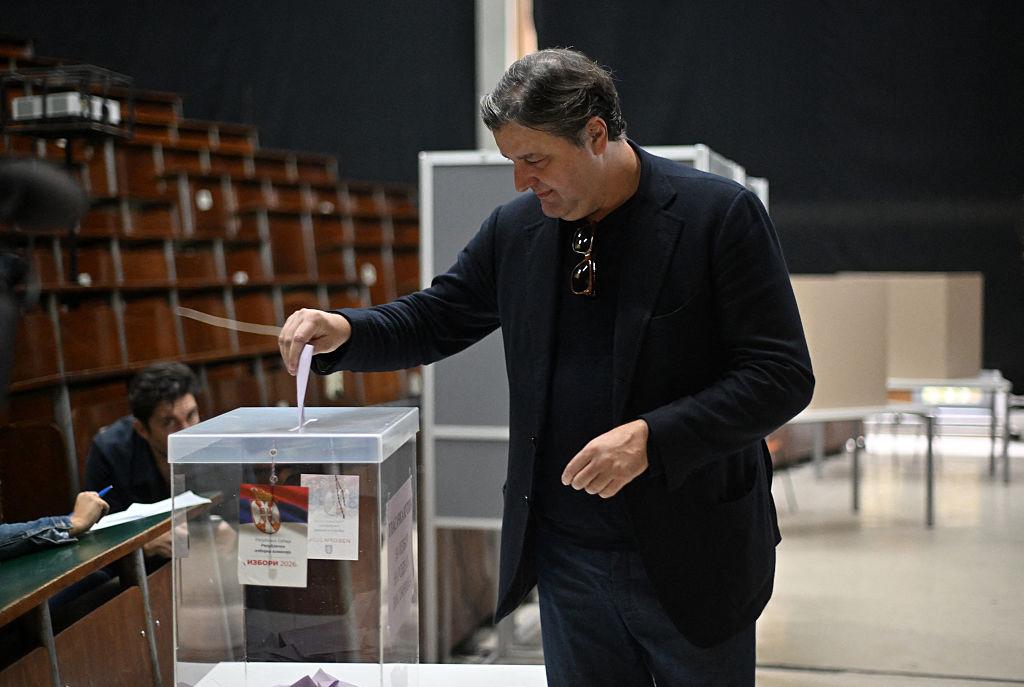
Serbia’s Student List is preparing to form a government after winning about 52.7 percent of the vote and securing roughly 139 seats in the 250 seat parliament. The movement has not yet named a prime minister, but prominent figures include cardiologist Ilija Srđanović, former central bank governor Dejan Šoškić, basketball legend Dejan Bodiroga and chemistry professor Radomir Šaičić. The incoming administration faces major challenges involving corruption, public finances, Kosovo and Serbia’s relationships with the European Union and Russia.
Serbia is entering one of the most significant political transitions in its modern history after a student backed movement won a commanding parliamentary majority and ended the long dominance of the political camp associated with former President Aleksandar Vučić. With the election now over, attention has moved rapidly from the protest movement that brought down the old order to the far more difficult question of who will actually govern, with a cardiologist, a former central bank governor, a basketball legend and a chemistry professor among the most prominent names associated with the victorious Student List.
The movement secured approximately 52.7 percent of the vote in Sunday’s snap parliamentary election, giving it about 139 seats in Serbia’s 250 member National Assembly. Vučić’s Serbian Progressive Party led alliance won roughly 39.2 percent and about 97 seats, leaving the Student List with a clear parliamentary majority and the ability to form a government without depending on the former ruling bloc. The scale of the result marked a decisive political break after more than a decade in which Vučić and his allies dominated Serbian politics.
The victory was the culmination of nearly two years of protests that began after the collapse of a railway station canopy in Novi Sad in November 2024 killed 16 people. The disaster became a national symbol of public anger over alleged corruption, weak oversight and failures in state institutions. Students initially organised demonstrations demanding accountability for the deaths, but the movement gradually expanded into a wider campaign calling for political reform, stronger institutions and an end to what protesters described as systemic corruption.
Unlike traditional political parties, the movement developed without a single dominant leader. Student assemblies selected candidates from a wide range of professions, including doctors, academics, economists, artists, athletes and farmers. That approach helped the movement present itself as an alternative to conventional party politics, but it has also created uncertainty about who will occupy the most important positions in the next government.
Reuters reported that Serbia is now waiting to hear who the Student List will nominate as prime minister and who will take control of major ministries. Several figures have emerged as possible leaders or senior members of the new administration, but none has been formally confirmed for a cabinet position.
One of the most prominent is Ilija Srđanović, a 55 year old cardiologist and professor at the University of Novi Sad Faculty of Medicine. Srđanović became the lead candidate on the Student List when the electoral slate was finalised in September and developed a high public profile during the campaign.
His political rise grew directly out of the anti corruption protests. Srđanović frequently appeared at demonstrations and took part in the Guardians of the Constitution bicycle tour across the northern province of Vojvodina. His medical background and university career gave him a profile very different from the professional politicians who dominated Serbia’s previous governments.
During the campaign, Srđanović focused heavily on public services and healthcare. He argued for a more decentralised health system in which access and quality would not depend heavily on where patients live or their social position. He said his objective was to build a better Serbia and repeatedly presented institutional reform as more important than traditional partisan politics.
His campaign also reflected the Student List’s broader emphasis on corruption. The movement argues that weaknesses in public institutions allowed political influence and patronage to shape decisions across healthcare, construction, education and public administration. Srđanović has suggested that restoring professional standards and public confidence should be among the first priorities of the new government.
However, his foreign policy positions indicate that the movement may not immediately shift Serbia dramatically toward the European Union. Srđanović has supported the Student List position that Kosovo remains part of Serbia despite its 2008 declaration of independence. He has also said that European Union integration is not the country’s most urgent priority and that the incoming government should concentrate first on domestic reform and what he described as national survival.
Another important figure is Dejan Šoškić, a 59 year old economist who served as governor of the National Bank of Serbia between 2010 and 2012. Šoškić resigned after legislative changes that he argued weakened the independence of the central bank, and he later became a vocal critic of institutional weaknesses under Vučić.
Šoškić has spent much of his academic and public career arguing that Serbia needs stronger independent institutions, disciplined public finances and economic policies capable of improving the country’s competitiveness. His presence on the Student List gives the movement an experienced economic voice at a time when it will immediately face difficult decisions involving government spending, debt, wages and investment.
During the election campaign, Šoškić proposed adjustments to Serbia’s exchange rate policy to improve export competitiveness. The Serbian dinar operates under a managed floating system against the euro, and Šoškić argued that a somewhat weaker currency could make Serbian goods cheaper for foreign buyers and help exporters compete internationally.
That proposal could become controversial if he receives a senior economic role. A weaker dinar can support exports, but it can also make imported goods more expensive and increase the burden of foreign currency debt. Serbia’s next government will therefore have to balance competitiveness with inflation, household purchasing power and financial stability.
Šoškić has also emphasised prudent public finances. He argues that sustainable wage and pension growth depends on a stable fiscal foundation rather than politically motivated spending. That position could become important as the new government prepares its first budget and attempts to meet campaign promises without worsening public debt.
Dejan Bodiroga represents a very different type of political figure. The 53 year old former captain of the Yugoslav national basketball team is one of the most recognisable sports personalities in Serbia and one of the Student List’s most prominent public supporters.
Bodiroga built a legendary basketball career that included world championship victories in 1998 and 2002 and an Olympic silver medal in Atlanta in 1996. He later moved into sports administration and became president of the EuroLeague in 2022.
His reputation gave the student movement access to an audience beyond traditional political activists. During the campaign, Bodiroga appeared at rallies, travelled through towns and rural communities and used his popularity to encourage voters who might not otherwise have supported a new political movement.
Bodiroga described the election as a struggle to reclaim a country that he said had been captured by the old political system. His language reflected the Student List’s argument that Serbia’s institutions had become too closely connected to one political network and needed to be rebuilt around professional standards and public accountability.
His popularity makes him politically valuable, but Reuters has not reported that he has been selected for any particular ministry. He could remain an influential public figure without joining the cabinet, or he could potentially take a role connected to sports, youth policy or another area if the movement decides to bring him directly into government.
Chemistry professor Radomir Šaičić is another figure who has emerged at the centre of speculation. The 64 year old academic is an organic chemistry professor and a member of the Serbian Academy of Sciences and Arts. His research has focused on medicinal chemistry, including the development of treatments connected to cancer and viral diseases.
Šaičić became one of the most visible academic supporters of the student protests after the Novi Sad disaster. He signed a petition with other academics calling for Vučić’s resignation and later protested publicly against senior government officials.
When the Student List won the election, Šaičić became one of the faces of the victory. He addressed supporters at the movement’s headquarters after Vučić conceded defeat and described the result as a victory for Serbian citizens.
Political analysts and local media have suggested that Šaičić could eventually become a candidate in the presidential election that must follow Vučić’s resignation. Reuters reported that his name is being discussed as a possible presidential contender, although the Student List has not formally confirmed such a plan.
His foreign policy views are also notable. Šaičić has said Kosovo should be regarded as Serbian territory under temporary occupation and has supported continuing energy ties with Russia. Those positions demonstrate that the Student List’s victory should not automatically be interpreted as a complete shift away from some long standing Serbian positions.
The incoming government will inherit a foreign policy environment that requires careful balancing. Serbia has pursued European Union membership while maintaining close political, cultural and energy links with Russia. It also has major economic ties with China and continues to refuse recognition of Kosovo’s independence.
The Student List has indicated that it does not intend to immediately abandon relations with Russia. Reuters has reported that the movement opposes sanctions on Moscow and wants Serbia’s future relationship with the European Union to be decided through a referendum rather than treated as an automatic political objective.
Kosovo will remain one of the most sensitive issues facing the new administration. Serbia continues to regard Kosovo as part of its territory, while Kosovo considers itself an independent state. The Student List has said it supports dialogue and peaceful approaches but has maintained Serbia’s traditional position on sovereignty.
Domestic reform may prove even more difficult than foreign policy. The Student List won office by campaigning against corruption and institutional weakness, meaning expectations for rapid change are extremely high.
Its candidates have promised reforms involving the judiciary, police, public procurement and public administration. Implementing those promises could be difficult if parts of the bureaucracy remain loyal to the political networks that controlled state institutions under the previous government.
The movement also faces the challenge of governing cohesively. Its candidates come from very different professional and ideological backgrounds and were selected through student assemblies rather than through a traditional party hierarchy. That diversity helped it win the election, but it could make decision making more difficult once disputes emerge over budgets, appointments and policy.
The absence of a single dominant leader is therefore both a strength and a potential weakness. Supporters argue that it reduces the risk of replacing one powerful political figure with another. Critics question whether a leaderless movement can maintain discipline once it controls ministries, public agencies and a parliamentary majority.
The incoming administration also has limited governing experience. Many of its leading figures have distinguished careers in medicine, economics, science or sport but have never managed major government institutions.
That does not necessarily mean they will be ineffective, but it creates a steep learning curve. Managing ministries requires control over large budgets, bureaucracies, legislation and international negotiations, skills that differ considerably from leading protests or professional organisations.
The movement will also face resistance from the Serbian Progressive Party, which remains the largest opposition force despite its defeat. Vučić’s political network spent years building influence across municipalities, state institutions, public companies and the media.
Removing or reforming those networks could generate political conflict. The new government will have to decide whether to pursue rapid changes in senior appointments or adopt a slower approach intended to preserve administrative continuity.
Public finances represent another immediate challenge. The government will need to pass a budget while meeting public expectations for better healthcare, education and social services. Those promises require money, and Serbia must balance new spending with debt and fiscal stability.
The Student List will also have to reassure investors. Political transitions can create uncertainty, particularly when a new government promises major investigations into previous contracts and public projects.
Supporters of the movement argue that cleaner institutions could eventually make Serbia more attractive to investors by reducing corruption and improving legal certainty. The short term transition could nevertheless be disruptive if major projects are reviewed or contracts are challenged.
The railway station collapse in Novi Sad will remain politically significant. The disaster that gave birth to the movement continues to symbolise the failures its supporters want investigated.
Any new government is likely to face pressure to reopen or deepen investigations into procurement, construction oversight and responsibility for the collapse. The handling of those investigations could become an early test of whether the Student List can translate anti corruption promises into functioning legal processes.
Media reform is another major issue. Critics of the previous government accused pro Vučić outlets of operating as part of a broader political system that attacked opponents and protected the ruling party.
The Student List has promised greater media freedom, but it will need to avoid replacing one form of political control with another. Reforming media regulation through independent institutions will be closely watched both inside Serbia and internationally.
The movement must also manage expectations among the young people who drove the protests. Students spent nearly two years organising demonstrations, marches and civil actions, often without the structures or financing of a traditional party.
Many of them see the election victory as the beginning rather than the end of the movement. They expect the new government to deliver accountability for the Novi Sad deaths and broader institutional change.
If reforms move slowly, that same activist base could become impatient with the people it helped elect. The movement that brought down a government may therefore remain capable of putting pressure on its own administration.
The transition also has regional significance. Serbia is the largest country in the Western Balkans and plays an important role in regional politics.
Changes in Belgrade can affect relations with Bosnia and Herzegovina, Montenegro, North Macedonia and Kosovo. Serbia’s approach to Russia, China and the European Union also influences wider geopolitical competition in the Balkans.
European governments are likely to watch the new administration closely. Brussels has long linked Serbia’s membership prospects to democratic reform, rule of law and normalisation of relations with Kosovo.
The Student List’s commitment to institutional reform may improve some aspects of Serbia’s relationship with the European Union, but its reluctance to prioritise EU membership and its support for continued ties with Russia may limit expectations of an immediate geopolitical shift.
The United States will also monitor the transition, particularly on Kosovo and regional security. Washington has traditionally supported Serbia’s European integration while pressing Belgrade to normalise relations with Pristina.
The new government will therefore have to demonstrate that a major domestic political transition does not produce regional instability.
For now, however, the most immediate question remains who will lead Serbia’s next government.
Srđanović’s position at the head of the Student List makes him one obvious candidate, but Reuters has stressed that no decision has been announced. Šoškić brings economic expertise, Bodiroga brings national popularity and Šaičić has become one of the movement’s most recognisable political voices.
Other figures may also emerge as the movement moves from election celebrations into formal coalition and cabinet planning.
Serbia’s constitution gives the process a clear institutional framework, but political negotiations within the Student List could determine how quickly a government is formed. The movement has a comfortable parliamentary majority, so the main negotiations are likely to take place inside the victorious camp rather than with rival parties.
That gives the Student List a strong position but also puts responsibility squarely on its own candidates. It cannot blame coalition partners if internal disagreements delay appointments or weaken reform.
The election has already transformed Serbia’s political landscape. A movement that began with university protests after a deadly infrastructure failure now controls a parliamentary majority and must decide who will run the state.
Its next challenge is fundamentally different from the one it has just completed. Protest movements can unite around opposition to corruption and demands for accountability. Governments must make compromises, set budgets, appoint officials and choose between competing priorities.
That transition will determine whether the Student List’s victory becomes a lasting political transformation or simply a dramatic electoral break followed by internal division.
Serbia now waits to see whether a doctor, an economist, a scientist, a sports icon or another candidate entirely will emerge at the centre of the new administration.
What is already clear is that the next government will look very different from the system it replaces. Its leading figures come largely from professional and academic backgrounds rather than long careers inside traditional party structures, and they have been given a powerful parliamentary mandate to change how Serbia is governed.
The scale of that mandate creates an opportunity for major reform, but it also creates enormous expectations. The new administration will be judged on whether it can convert the energy of the student movement into functioning institutions, credible economic management and a political system capable of delivering the accountability protesters demanded for nearly two years.