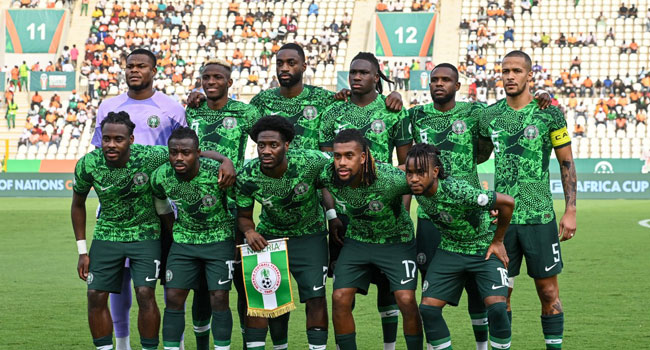

SENEGAL REINSTATED AS 2025 AFCON CHAMPIONS AFTER CAS OVERTURNS CONTROVERSIAL CAF RULING AS MOROCCO VOWS TO FIGHT DECISION
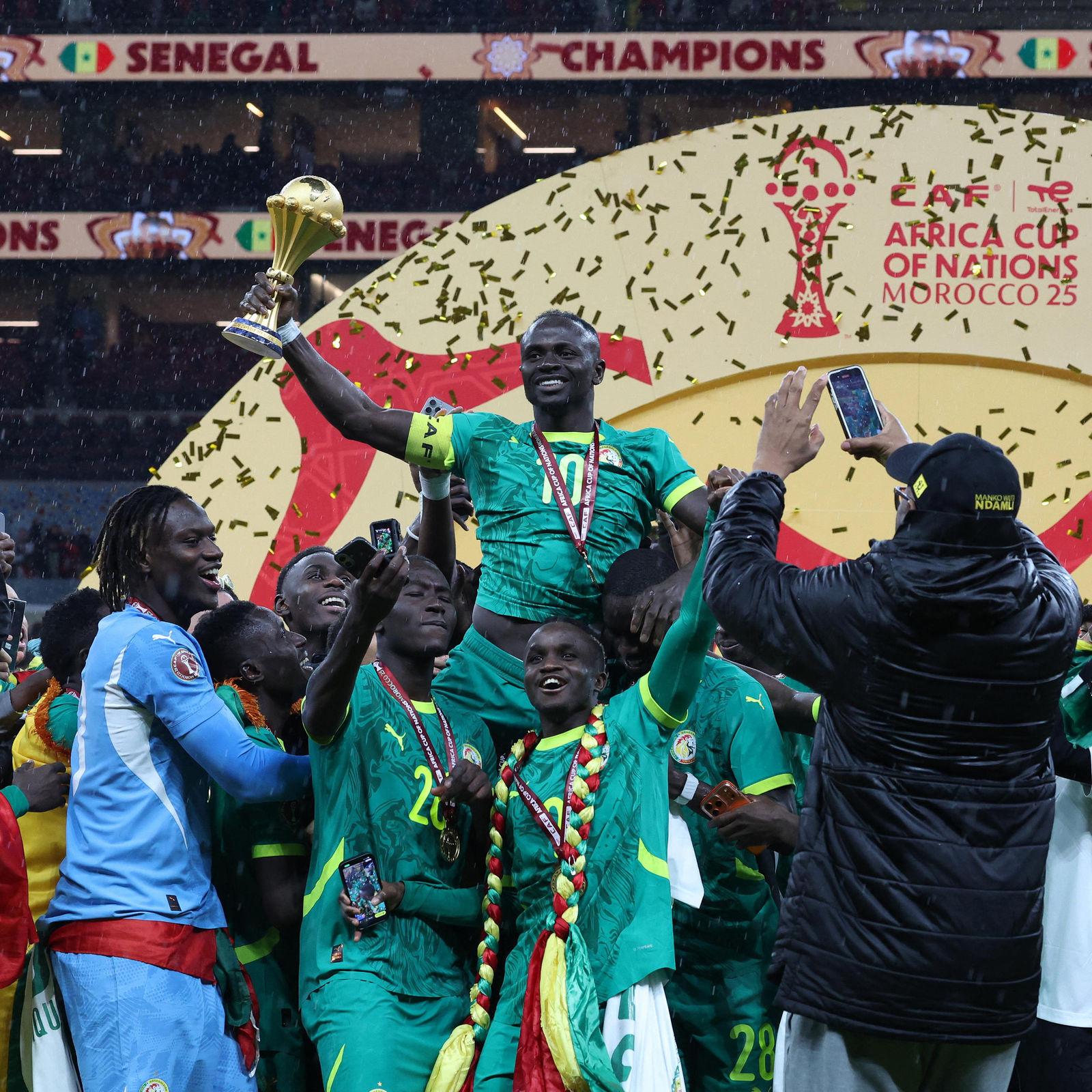
Senegal have officially regained their 2025 Africa Cup of Nations championship after the Court of Arbitration for Sport unanimously overturned CAF's controversial March decision awarding Morocco a 3–0 administrative victory following Senegal's temporary walk-off during the January 18 final in Rabat. The tribunal determined that referee Jean-Jacques Ndala acted within his authority by allowing the match to resume, restoring Senegal's original 1–0 extra-time victory secured by Pape Gueye. CAF has accepted the ruling and confirmed Senegal as African champions for the second time, while the Royal Moroccan Football Federation has announced its intention to pursue further legal action over disputed allegations concerning the arbitration process.
Senegal have officially been reinstated as the champions of the 2025 Africa Cup of Nations following a landmark ruling by the Court of Arbitration for Sport, overturning one of the most controversial disciplinary decisions in the history of African football and restoring the result of their dramatic victory over Morocco in January. In a unanimous judgment announced in Lausanne, Switzerland, on Tuesday, November 24, 2026, the international sports arbitration tribunal upheld an appeal filed by the Senegalese Football Federation against the Confederation of African Football and the Royal Moroccan Football Federation, setting aside the decision that had stripped the Teranga Lions of their continental crown. The ruling restores Senegal's original 1–0 extra-time victory over tournament hosts Morocco, confirming the West African nation as African champions for the second time in its history. Although the decision has been welcomed by Senegalese football authorities and accepted by CAF, the controversy may not be entirely over, with Morocco announcing its intention to pursue further legal action and raising disputed allegations concerning the integrity of the arbitration proceedings.
The judgment represents a major reversal of the decision taken by CAF's Appeal Board on March 17, 2026, when the continental football governing body determined that Senegal had forfeited the final following the temporary departure of several players from the pitch in protest against a controversial refereeing decision. That ruling transformed Senegal's victory into an administrative 3–0 defeat and recognized Morocco as the tournament winners, generating considerable disagreement across African football. Senegal immediately rejected the decision and subsequently appealed to CAS, arguing that the match had been completed under the authority of the referee and that its sporting result should therefore remain valid. After examining the arguments presented by both national federations and CAF, the arbitration panel concluded that the circumstances of the match did not justify replacing the result obtained on the field with an administrative forfeiture.
The final, played on January 18, 2026, at the Prince Moulay Abdellah Stadium in Rabat, had already become one of the most dramatic matches in the tournament's history before the subsequent legal dispute. Senegal and Morocco entered the closing stages of regulation time without either team having scored, with the hosts hoping to secure their first continental championship since 1976 and Senegal seeking to add another title to the historic victory they achieved at the 2021 edition of the tournament, which was played in 2022. The atmosphere inside the stadium became increasingly tense as both teams approached the possibility of extra time. However, a late decision by Congolese referee Jean-Jacques Ngambo Ndala to award Morocco a penalty following a Video Assistant Referee review triggered a confrontation that would ultimately overshadow the sporting achievements of both teams.
The penalty was awarded after Morocco's Brahim Díaz went down following a challenge inside the Senegalese penalty area, prompting widespread protests from the Teranga Lions. Senegal's players and coaching staff disputed the referee's interpretation of the incident, with several players subsequently leaving the field as the confrontation intensified. The interruption created considerable uncertainty over whether the final would continue, while disturbances involving spectators and security personnel added to the difficulties confronting match officials. With the outcome of Africa's most prestigious international football competition hanging in the balance, the referee was required to manage an extraordinarily tense situation involving players, coaches, supporters and competition officials while determining whether the conditions necessary for continuing the match could be restored.
Senegal eventually returned to the pitch, allowing the referee to resume the final and Morocco to take the disputed penalty. Díaz attempted to score with a delicately chipped effort, but Senegal goalkeeper Édouard Mendy remained in position and collected the ball, preventing the hosts from securing what might have been a decisive victory in the closing moments of regulation time. The missed opportunity sent the contest into extra time, where Senegal midfielder Pape Gueye produced a powerful left-footed strike that proved sufficient to separate the two teams. Morocco were unable to find an equalizer during the remaining period, and Senegal celebrated a second Africa Cup of Nations title after the referee brought the match to its conclusion.
The immediate celebrations reflected the significance of the achievement for Senegal, whose national team had established itself among the strongest footballing nations on the continent during the preceding decade. Players received their medals and lifted the trophy in Rabat before returning home to a country celebrating another major sporting achievement. However, the controversy surrounding the temporary departure of Senegalese players from the field ensured that attention soon shifted from the result itself to the interpretation of competition regulations. Morocco maintained that the circumstances of the interruption amounted to a violation serious enough to justify awarding the match to the hosts, while Senegal argued that the referee had exercised his authority to resume the contest and that the completed result could not simply be disregarded.
CAF initially addressed the incidents through its disciplinary mechanisms, imposing sanctions on individuals and football authorities associated with both countries. The governing body announced penalties on January 28 involving Senegal's then-head coach Pape Thiaw, certain Senegalese players and members of the Moroccan delegation. Thiaw received a five-match suspension from official CAF competitions for unsporting conduct, while Moroccan international Achraf Hakimi received a two-match suspension, one of which was suspended for a specified period. The disciplinary measures demonstrated that the governing body considered conduct surrounding the final sufficiently serious to justify sanctions, but those penalties were separate from the question of which country should be recognized as the tournament champion.
The controversy escalated considerably in March when CAF's Appeal Board accepted Morocco's challenge and determined that Senegal should be regarded as having forfeited the match. The board relied on provisions of the Africa Cup of Nations regulations governing circumstances in which teams refuse to play or leave the field before the conclusion of a match. Under its interpretation, Senegal's temporary departure constituted sufficient grounds for replacing the actual score with a 3–0 administrative result in Morocco's favor. The decision effectively reversed the outcome of a final that had been completed almost two months earlier, creating an extraordinary situation in which one country had celebrated with the trophy while another was subsequently declared the official champion through a disciplinary ruling.
The Senegalese Football Federation rejected that interpretation and registered its appeal with the Court of Arbitration for Sport on March 25. Its central argument was that the referee's decision to allow both teams to resume play fell within the authority granted to match officials and should be protected by an established principle of sports law commonly known as the field-of-play doctrine. Under that principle, sporting tribunals generally refrain from reassessing decisions made by referees and other officials during competition unless exceptional circumstances, such as arbitrary conduct or bad faith, can be established. Senegal maintained that because the referee had permitted the match to continue and both teams had completed the final, the result should remain valid notwithstanding any disciplinary consequences arising from the earlier interruption.
Morocco presented a fundamentally different legal argument, maintaining that the dispute concerned the disciplinary consequences of Senegal's behavior rather than merely the referee's interpretation of an incident during play. The Royal Moroccan Football Federation argued that Senegal's departure had breached Articles 82 and 84 of the tournament regulations and should have resulted in the termination of the match. Its position was that the referee had incorrectly applied the relevant rules and that his decision to resume the final should not prevent football authorities from subsequently imposing a forfeiture. The competing arguments therefore required the arbitration panel to examine where the referee's sporting authority ended and the disciplinary powers of football institutions began.
An in-person hearing was conducted behind closed doors at CAS headquarters in Lausanne on October 8, approximately six and a half months after Senegal registered its appeal. The arbitration panel consisted of French legal expert Gérald Simon, German professor Ulrich Haas and Italian international law specialist Luigi Fumagalli. The proceedings were conducted in French, and the parties did not agree to an accelerated timetable, meaning the case proceeded according to the tribunal's standard procedural arrangements. The extended duration of the dispute left the championship's official status unresolved for much of 2026, even as both national teams continued participating in international competitions and preparing for future tournaments.
In its November 24 announcement, CAS concluded that the decision to resume or permanently terminate the match belonged exclusively to the referee under the circumstances presented. The panel determined that both teams had returned to the field and demonstrated their willingness to continue, providing the referee with grounds to restart the contest. It also concluded that the forfeiture provisions relied upon by Morocco were intended to govern situations in which a team's conduct caused the referee to permanently abandon a match. Because the final had resumed and reached its sporting conclusion, the arbitrators determined that those provisions did not apply in the manner adopted by CAF's Appeal Board.
The arbitration panel acknowledged that the referee was operating under exceptionally difficult conditions when he made his decision. Nevertheless, it found no sufficient basis for concluding that his judgment had been arbitrary or influenced by considerations unrelated to the match. The distinction was crucial because the field-of-play doctrine does not provide unrestricted protection for every decision made by a sporting official. Rather, it establishes a relatively high threshold for external intervention, helping ensure that the normal operation of sporting competitions is not repeatedly undermined by retrospective legal challenges to decisions made during play. The panel concluded that the circumstances surrounding the final did not satisfy the conditions necessary for overturning the referee's decision to continue.
The ruling does not mean that CAS approved the conduct of Senegalese players who temporarily abandoned the pitch or concluded that footballers should be permitted to disregard refereeing decisions without consequences. The arbitrators specifically acknowledged that CAF had already addressed disciplinary aspects of the incident through separate proceedings involving the Senegalese federation, its coach and certain players. The tribunal's decision instead established that disciplinary action against individuals and the determination of a completed match's result are distinct matters requiring different legal assessments. Senegal's restoration as champions therefore should not be interpreted as an automatic cancellation of every sanction associated with the controversial final.
That distinction could have substantial importance for football competitions beyond the Africa Cup of Nations. Sporting organizations regularly confront situations involving protests, interruptions, disagreements over refereeing decisions and disciplinary violations, but relatively few disputes result in the retrospective reassignment of a major international championship. The Senegal-Morocco case required a tribunal to consider whether competition authorities could impose a forfeiture after a referee had resumed a disrupted match and allowed it to reach its conclusion. Its outcome reinforces the importance of clearly defined responsibilities between match officials and disciplinary institutions while leaving governing bodies with the ability to impose appropriate sanctions for misconduct.
CAF responded to the judgment by confirming that it would recognize and implement the decision. The governing body acknowledged that its March 17 Appeal Board ruling had been set aside and that its earlier disciplinary determination dated February 11 had been reinstated. It subsequently recognized Senegal as the legitimate winners of the 2025 tournament, providing institutional confirmation that the Teranga Lions had regained their championship status. CAF President Patrice Motsepe also emphasized the organization's commitment to respecting the arbitration process and maintaining the credibility of African football, reinforcing the governing body's official acceptance of the outcome despite the controversy generated by its previous decision.
For Senegal, the judgment represents the restoration of an achievement that players and supporters had already celebrated following the final in Rabat. The Senegalese Football Federation welcomed the ruling and described it as an important affirmation of sporting fairness. Federation President Abdoulaye Fall indicated that Senegal was prepared to move forward while maintaining positive relations with Morocco and its football authorities. His response emphasized the importance of ensuring that the prolonged legal dispute did not permanently damage relationships between two countries whose footballing achievements have contributed substantially to the international reputation of African sport.
Senegalese forward Sadio Mané also expressed respect for Morocco and its national team following the decision, emphasizing the value of maintaining friendly relations between the two countries. His intervention was particularly significant given his prominent position within Senegalese football and the attention his conduct during the original final had received. Rather than treating the legal outcome as an opportunity to intensify hostility toward Morocco, Mané acknowledged the achievements of the Moroccan players and expressed hope that football would continue strengthening relations between their respective populations. Such messages may help reduce tensions among supporters after a dispute that has generated extensive disagreement across social media and football communities.
Morocco's football authorities, however, have indicated that they are not prepared to accept the matter as conclusively resolved. The Royal Moroccan Football Federation announced that it intended to examine further legal avenues and challenge the CAS ruling, expressing dissatisfaction with aspects of the arbitration process. Its objections included an allegation that German arbitrator Ulrich Haas had been in communication with Senegalese federation president Abdoulaye Fall approximately 48 hours before the decision was announced. The allegation introduces a separate controversy concerning the integrity of the proceedings rather than the original interpretation of the Africa Cup of Nations regulations.
Both Senegal's football federation and Haas have rejected the allegation of direct communication. A Senegalese federation spokesperson denied that the reported telephone contact had taken place, while CAS communicated that Haas denied having direct contact with any party involved in the arbitration. The conflicting statements mean that Morocco's accusation cannot responsibly be presented as an established instance of improper conduct. No independent judicial determination establishing that the arbitrator breached his obligations or that the outcome was influenced by unauthorized communication had been identified when the decision was announced.
Morocco's potential legal challenge would also operate within a different framework from the original appeal submitted by Senegal. Because CAS is based in Switzerland, challenges to its arbitral awards generally fall within the jurisdiction of the Swiss Federal Supreme Court and are restricted to specified legal and procedural grounds. Such proceedings do not ordinarily provide an unrestricted opportunity for parties to repeat every argument concerning the sporting merits of the original dispute. Morocco would therefore face the task of identifying an applicable legal basis for challenging the arbitration award, while the relevant judicial authorities would need to determine whether any alleged procedural irregularity had been established.
The announcement that Morocco intends to pursue further legal action does not automatically reverse or suspend Senegal's reinstatement. At present, CAF recognizes Senegal as the champions following the CAS judgment, and no subsequent judicial ruling has overturned that position. Whether Morocco formally files a challenge, obtains any interim relief or ultimately succeeds in establishing grounds for intervention remains uncertain. The current championship status must therefore be distinguished from the possibility of future legal developments, which could generate additional proceedings without necessarily changing the existing outcome.
The dispute has been particularly painful for Moroccan football because the country had entered the tournament with considerable expectations as host nation. Morocco's national team had established itself as a formidable international competitor, particularly after reaching the semifinals of the 2022 FIFA World Cup in Qatar and becoming the first African country to achieve that distinction. The opportunity to win the continental championship at home represented a potentially historic milestone for a footballing nation whose only previous Africa Cup of Nations title came in 1976. Losing the final after missing a late penalty was already a difficult sporting outcome before the subsequent administrative and legal decisions created further uncertainty over the championship.
For Senegal, the restored victory further strengthens a period of considerable achievement for its national team. The country's first Africa Cup of Nations triumph came in February 2022 when the Teranga Lions defeated Egypt in a penalty shootout at the conclusion of the tournament hosted by Cameroon. That victory marked the realization of an ambition Senegal had pursued through multiple generations of talented footballers, following previous unsuccessful appearances in the final. The restoration of the 2025 championship means the country now possesses two continental titles, reflecting the sustained competitiveness of a national team that has combined experienced international players with emerging talent.
Senegal's success also carries importance within the broader development of West African football. The region has historically produced some of Africa's most influential national teams, with countries including Ghana, Nigeria, Ivory Coast and Senegal establishing strong records in continental competitions. The increasing strength of North African national teams, particularly Morocco, Algeria and Egypt, has contributed to an intensely competitive environment in which regional rivalries regularly produce compelling football. The final in Rabat brought together two of the continent's leading contemporary teams, demonstrating the quality and international relevance of African football even though the controversy subsequently diverted attention away from their sporting performances.
The circumstances surrounding the final have also renewed questions about the responsibilities of football officials when players strongly dispute refereeing decisions. The introduction of video technology was intended to improve the accuracy of significant decisions, but its application continues to generate disagreement over interpretation, consistency and communication. Players may believe that a review has produced an incorrect outcome, while officials must maintain their authority and ensure that a match continues under the applicable rules. The availability of video evidence does not eliminate every subjective judgment involved in determining whether particular contact constitutes an offense, making effective communication and professional conduct essential to managing controversial decisions.
The Senegal-Morocco dispute illustrates how quickly disagreements over an individual decision can develop into circumstances threatening the completion of an entire match. National teams competing in major finals face intense emotional pressure, while supporters frequently regard the outcome as a matter of national pride. Nevertheless, the professional responsibilities of players and coaches require them to manage disagreements within the established structures of the competition. Temporary or permanent abandonment can create uncertainty not only for opponents and officials but also for spectators, broadcasters, sponsors and other stakeholders with legitimate interests in the completion of sporting events.
Football governing bodies may consequently face increasing pressure to ensure that competition regulations address interrupted matches with sufficient clarity. Rules governing abandonment, temporary departures, disciplinary consequences and administrative forfeiture must provide officials and participating teams with an understandable framework for responding to exceptional circumstances. The disagreement between CAF's disciplinary institutions and CAS in this particular case demonstrates how different interpretations of regulatory language can produce substantially different outcomes. Reviewing those provisions could help reduce uncertainty in future competitions without preventing governing bodies from responding firmly to conduct that violates sporting standards.
The extended period between the original final and the CAS decision has also highlighted the challenges associated with resolving major sporting disputes promptly. For several months, African football was confronted with an unusual situation in which the team that had won the match disputed an administrative decision recognizing its opponent as the champion. Although legal proceedings require sufficient time for parties to prepare arguments and present evidence, prolonged uncertainty can affect competition records, public confidence and the reputations of the institutions involved. Finding an appropriate balance between procedural fairness and timely resolution remains particularly important when a case concerns the winner of an international championship rather than an individual disciplinary sanction.
CAS explained that the parties had not agreed to expedite the Senegalese appeal, resulting in the use of its standard procedural timetable. That explanation provides relevant context for the duration of the proceedings without independently establishing whether every stage of the process could have been completed more quickly. The tribunal has supplied its detailed reasoning to the parties and indicated that the full arbitration award may subsequently be published unless confidentiality is requested. Publication would allow legal specialists and football administrators to examine the reasoning in greater detail, providing additional insight into how the panel assessed the competing interpretations of competition regulations and the authority of the referee.
The case also carries wider implications for CAF's institutional credibility as African football continues expanding its commercial and international presence. The Africa Cup of Nations has become an increasingly significant product for broadcasters, sponsors, tourism authorities and supporters across the world, with its reputation depending partly on confidence in the administration of competitions. Controversies surrounding championship outcomes can attract international attention while raising questions about consistency and transparency within the governing body's decision-making structures. CAF's commitment to implementing the CAS ruling represents an acknowledgment of the established sports arbitration framework, although the circumstances that produced the original contradictory decisions may continue attracting scrutiny.
Maintaining that institutional credibility will require football authorities to distinguish between criticism of an individual refereeing decision and broader allegations concerning the integrity of the sport. Supporters are entitled to express disappointment with sporting and administrative outcomes, but accusations of corruption, improper influence or deliberate manipulation require reliable evidence. The competing statements surrounding the alleged communication between an arbitrator and Senegalese federation officials demonstrate the importance of this distinction. Establishing confidence in the process requires appropriate investigation of substantive complaints while avoiding the assumption that an unfavorable decision necessarily indicates misconduct.
Attention will now increasingly turn toward the next Africa Cup of Nations, scheduled to be hosted jointly by Kenya, Tanzania and Uganda in 2027. Both Senegal and Morocco have secured qualification for the competition, creating an opportunity for the two teams to redirect attention toward football rather than litigation. Senegal will enter the tournament as the reigning champions under the current CAS ruling, while Morocco will have another opportunity to pursue the continental title that has remained beyond its reach since 1976. Whether the two nations encounter each other again during the competition will depend on the tournament draw and their subsequent performances, but their participation will inevitably attract additional interest following the events of the previous final.
The approaching tournament also provides African football authorities with an opportunity to demonstrate that lessons have been learned from the controversy in Rabat. Preparing referees for difficult situations, communicating disciplinary requirements clearly and establishing effective arrangements for resolving disputes could help strengthen confidence among participating teams. The importance of those preparations extends beyond Senegal and Morocco because every national federation has an interest in understanding how competition regulations will be applied when exceptional circumstances arise. A credible and consistent regulatory framework helps ensure that the focus remains on sporting performance rather than uncertainty surrounding administrative intervention.
For Senegal's players, the ruling restores formal recognition of the victory they achieved through their performances during the tournament, including Mendy's crucial penalty save and Gueye's decisive extra-time goal. For Morocco, the decision represents another difficult development in a dispute that began with the disappointment of losing a final on home soil and subsequently expanded into an international legal confrontation. The respective responses of both national federations demonstrate that the consequences of the championship have extended beyond the immediate sporting result, touching questions of national pride, institutional authority and confidence in the administration of football competitions.
Although Morocco has announced that it intends to pursue further legal action, Senegal currently stands officially recognized as the 2025 Africa Cup of Nations champion, with CAF confirming its acceptance of the arbitration judgment. The original 1–0 result has been restored, the country's second continental title has been reinstated, and the principle that guided the referee's decision to complete the match has received the support of a unanimous CAS panel. The remaining challenge for African football is ensuring that the controversy does not overshadow the achievements of the two outstanding national teams or undermine relationships between their supporters. After more than ten months of disagreement, the restoration of the result offers an opportunity for the continent's football community to reaffirm its commitment to sporting excellence, fair competition and credible institutional oversight while allowing any remaining legal questions to be addressed through the appropriate judicial channels.