FIFA'S BOSS JUST TOLD NIGERIA IT ISN'T READY FOR THE WORLD CUP. THE HARDER TRUTH IS THAT EVERY NIGERIAN ALREADY KNEW IT
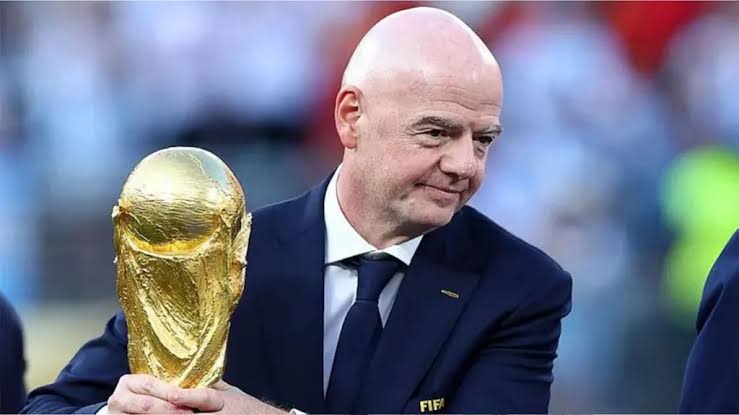
FIFA President Gianni Infantino has said Nigeria is not currently ready to host the FIFA World Cup. In an interview with Arise News that aired on Monday, November 23, 2026, he was asked what it would take for a country like Nigeria to stage the tournament. His answer focused on infrastructure. Nigeria, he said, would need major investment in stadiums, hotels, airports and transportation. Arise summarized the message as a verdict that Nigeria lacks the infrastructure to host the World Cup "yet," but that "tomorrow holds possibilities." The remarks came during a Nigeria visit that included a tour of the renovated Warri City Stadium in Delta State, which Infantino reportedly described as "fantastic." That praise and his broader assessment tell the same story. Nigeria has pockets of quality, but it does not yet have the network of venues, hotels and transport links a modern World Cup demands. Infantino did not rule Nigeria out, and he did not set a timeline. Hosting a 48-team World Cup would require at least a dozen or more large, modern stadiums, thousands of hotel rooms and reliable travel between host cities. Africa has hosted only once, in South Africa in 2010. Morocco will co-host in 2030. For Nigeria, the comments land at a painful moment. The Super Eagles missed out on the 2026 World Cup, while Ghana qualified. The question now is whether Infantino's words become a wake-up call or another headline that fades.
Gianni Infantino did not say anything most Nigerians would find surprising. That is exactly why his words sting.
Asked by Arise News what it would take for a country like Nigeria to host the FIFA World Cup, the FIFA president gave a direct answer. Nigeria, he said, is not ready now. It would need serious investment in stadiums, hotels, airports and transportation infrastructure before it could stage the world's biggest sporting event. The interview aired on Monday, at the end of a Nigeria trip that included a stop in Warri.
Arise framed his message in two parts. Nigeria lacks the infrastructure to host the World Cup yet, the broadcaster reported, but tomorrow holds possibilities. The first part is a diagnosis. The second is an invitation. Both deserve attention.
It is worth being clear about what Infantino said and what he did not. He did not say Nigeria could never host. He did not say Nigerians lack the passion, the football history or the talent. He did not attach a date, a dollar figure or a specific list of projects. He did not announce any FIFA plan, partnership or bid process involving Nigeria. Based on public reporting, his comments were a general assessment in response to a hypothetical question, not a formal FIFA ruling.
He also did not single Nigeria out for criticism. Very few countries in the world could host a World Cup tomorrow. The tournament has grown so large that even wealthy nations now share it. The 2026 edition is spread across the United States, Canada and Mexico. The 2030 edition will be shared by Morocco, Spain and Portugal, with opening matches in Uruguay, Argentina and Paraguay to mark the centenary. Being told you are "not ready" puts Nigeria in the company of most of the planet.
Still, the words carry weight because of who said them and where. Infantino is the most powerful man in world football. He spoke to a Nigerian broadcaster, to a Nigerian audience, after walking through Nigerian venues. His verdict will be quoted in sports ministries, football federation offices and state government houses across the country. Some will treat it as an insult. Others will treat it as a challenge. The more useful reading is to treat it as a checklist.
Start with the stadium that got his praise.
During his visit, Infantino toured Warri City Stadium in Delta State. The venue has been renovated under Governor Sheriff Oborevwori's administration. Footage circulated by Nigerian media showed the FIFA president describing it as "fantastic." That is high praise from a man who has seen the best arenas in the world, and Delta officials will rightly take credit for it.
But one good stadium is the exception that proves the rule. Warri shows what is possible when a state commits money and attention to a single venue. It also highlights how few venues in Nigeria have received the same care. A World Cup does not need one fantastic stadium. It needs many, in different cities, all at the same standard, all connected by roads, rail and flights that work.
Consider the two stadiums that once symbolized Nigerian sporting ambition.
The National Stadium in Surulere, Lagos, opened in the early 1970s and hosted the 1973 All-Africa Games. For years, it was the beating heart of Nigerian football. Fans packed its stands to watch the Green Eagles and, later, the Super Eagles. Over time, it fell into neglect. Seats broke. Facilities decayed. Grass grew where crowds once roared. For many Nigerians, the abandoned Surulere stadium became a painful symbol of how the country treats its public assets. Renovation plans have been announced at different times, and the facility has seen some recent work, but it has a long way to go before it matches modern international standards.
The Moshood Abiola National Stadium in Abuja tells a similar story. Built for the 2003 All-Africa Games, it was one of the most impressive venues on the continent when it opened, with seating for about 60,000 people. In 2019, it was renamed in honor of the late Chief MKO Abiola, the presumed winner of the annulled 1993 presidential election. Yet for long stretches, parts of the complex suffered from poor maintenance. Pitch conditions, power, plumbing and surrounding facilities have all drawn complaints over the years. A stadium that once showcased Nigeria's capacity became a lesson in what happens when building is not followed by upkeep.
The Super Eagles have, in recent years, played many home matches at the Godswill Akpabio International Stadium in Uyo, a well-regarded modern venue. Other states have their own stadiums, some in good shape and others struggling. But there is no national network of World Cup-grade arenas. There is a scattering of decent venues, some fine ones and too many in need of serious repair.
That is the reality Infantino was pointing to. And stadiums are only the first item on the list.
What would a World Cup bid actually require?
For recent tournaments, FIFA's bidding rules have called for at least 14 stadiums. Several must already exist when the bid is submitted. Most need a minimum capacity of around 40,000 seats. Semi-final venues need more. The stadiums hosting the opening match and the final must hold roughly 80,000 people. Every venue must meet strict standards for pitch quality, lighting, broadcast facilities, media areas, security, medical services, accessibility and spectator comfort.
Nigeria does not currently have a single stadium that holds 80,000 people. It has very few that hold 40,000 and meet FIFA's modern standards. Building or rebuilding a full set would cost billions of dollars.
Then come the training sites. Each of the 48 teams needs a base camp with a hotel and a high-quality training pitch nearby. Referees need facilities. Media need accommodation and work centers. FIFA itself needs offices and logistics hubs.
Hotels are the next major gap. A World Cup brings hundreds of thousands of visitors, along with teams, officials, sponsors, broadcasters and journalists. FIFA requires large guaranteed hotel inventories in and around host cities. Lagos and Abuja have a growing number of quality hotels, but outside a few major cities, international-standard accommodation is limited. Even in Lagos, room prices spike and availability tightens during big events and the festive season.
Airports matter too. Fans and teams must fly in from around the world and then move between host cities. Nigeria's main international gateways, Murtala Muhammed International Airport in Lagos and Nnamdi Azikiwe International Airport in Abuja, have seen new terminals and upgrades in recent years. But travelers still complain about delays, power issues, congestion and customer service. Domestic aviation faces its own troubles, including high fares, flight cancellations and aging aircraft. A World Cup would demand reliable, frequent and safe flights between multiple cities, every day for more than a month.
Ground transport may be the toughest challenge of all. Lagos traffic is notorious. The city's Blue Line and Red Line rail projects are steps forward, but they cover only part of a huge metropolis. Abuja has a light rail system that has struggled to operate consistently. Intercity rail lines, such as Lagos-Ibadan and Abuja-Kaduna, have improved travel on some routes, but the national network is still limited. Many highways are in poor condition. Moving tens of thousands of fans from hotels to stadiums, on time, under heavy security, is a task that would test any Nigerian city.
Beneath all of this sits power and security. Stadiums, hotels, broadcast centers and transport systems need constant, reliable electricity. Nigeria's grid has a long history of failures, and many businesses depend on generators. FIFA would also need strong assurances on security for teams, fans and officials. Insecurity in parts of the country, from kidnapping in the northwest to violence in other regions, would weigh heavily on any assessment, even if host cities were chosen carefully.
None of this means Nigeria lacks the ability to build. It means the country would have to plan, fund and finish a large number of complex projects on a fixed schedule. That has not been Nigeria's strongest suit.
Africa's own World Cup history shows both the promise and the price.
In 2010, South Africa became the first African nation to host the World Cup. It was a proud moment for the whole continent. The opening match in Johannesburg, the vuvuzelas, Shakira's "Waka Waka" and the sight of fans from every corner of Africa celebrating together remain powerful memories. South Africa proved that an African country could stage the tournament well.
But South Africa started from a stronger base than most African countries. It already had large rugby and football stadiums, a developed road network, major international airports and a sizable hotel industry. Even so, it spent billions of dollars on new and upgraded stadiums, airport terminals, roads and the Gautrain rapid rail link in Gauteng. After the tournament, several stadiums struggled to fill seats or cover their maintenance costs. Critics called some of them white elephants. Economists still debate whether the long-term gains justified the spending. Supporters point to lasting improvements in transport and to the boost in South Africa's global image.
Morocco's path is a lesson in persistence. The country bid unsuccessfully for the World Cup five times: for 1994, 1998, 2006, 2010 and 2026. Each defeat was followed by more investment. Morocco built high-speed rail, expanded airports, developed modern stadiums and grew its tourism industry. It hosted major club and continental tournaments, including the Africa Cup of Nations. In 2030, it will finally co-host the World Cup alongside Spain and Portugal. It is also building a giant new stadium near Casablanca, planned as one of the largest in the world.
Morocco's story matters for Nigeria because it shows that hosting is rarely won in one attempt. It is built over decades. Morocco treated every failed bid as a step forward, not a final answer. Its government tied football infrastructure to broader national plans for tourism, transport and investment. By the time it won, the country looked ready.
Egypt offers a harder lesson. In the race for 2010, Egypt received no votes from FIFA's executive committee. Ambition alone was not enough. Without a strong, credible plan, even a football-mad country with deep history can be left with nothing.
Nigeria's own hosting record is real, even if it falls short of a senior World Cup.
The country hosted the Africa Cup of Nations in 1980 and won the trophy on home soil. It co-hosted the 2000 edition with Ghana, reaching the final in Lagos before losing to Cameroon on penalties. It hosted the 1999 FIFA World Youth Championship, now known as the U-20 World Cup. It hosted the 2009 FIFA U-17 World Cup. Those events showed Nigeria could organize international tournaments and draw big crowds.
The senior World Cup has remained a dream. Nigeria showed interest during the race for the first African World Cup in 2010 but was not among the serious final contenders. Nigerian officials and football figures have since floated the idea of a bid, either alone or with West African neighbors, at various times. More recently, a joint Nigeria-Benin bid to host the Africa Cup of Nations did not succeed. Morocco was chosen to host the 2025 edition, and the 2027 tournament went to a joint bid from Kenya, Uganda and Tanzania. If Nigeria could not win the right to host the continental championship, a World Cup is a much larger leap.
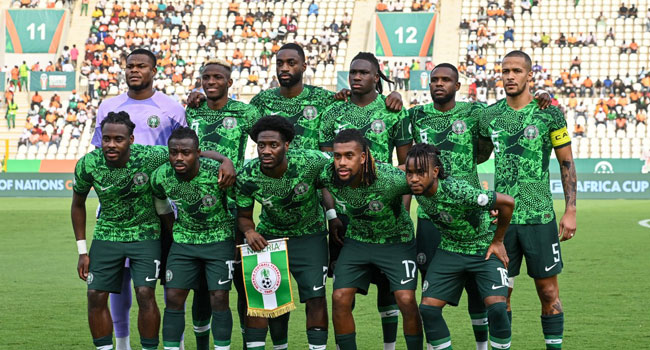
Infantino's comments also arrive at an awkward moment on the pitch. The Super Eagles failed to qualify for the 2026 World Cup, missing out in the African playoff stage. For a country that reached its first World Cup in 1994 and has produced stars from Jay-Jay Okocha and Nwankwo Kanu to Victor Osimhen and Ademola Lookman, watching the tournament from home is painful. Being told that the country also cannot host adds a second blow. It is a reminder that football success, on the field and off it, rests on planning and investment.
There is a strong economic case for Nigeria to aim higher, as long as it is honest about the costs.
A World Cup brings global attention like nothing else. Billions of people watch. Host cities become household names. For Nigeria, a country often covered abroad for its problems, hosting would be a chance to show its energy, culture, music, food and hospitality. Nigeria's creative industries, from Afrobeats to Nollywood, already have global reach. A World Cup would be a stage for all of it.
The tournament would also bring visitors, spending and jobs. Construction of stadiums, roads, rail lines and hotels would employ large numbers of workers. Tourism, hospitality, transport and retail businesses would see a surge in demand during the event. If planned well, the infrastructure would serve Nigerians long after the final whistle. Better airports, rail links, roads and power systems would help businesses and households for decades.
But the risks are just as real. Many past host countries have found that the costs outran the benefits. Stadiums built for a month of matches can sit half-empty for years. Debt taken on for the event can strain public finances. Money spent on football may be money not spent on hospitals, schools or water supply. For a country where many families still struggle with inflation and basic services, those choices would be heavily debated. Projects can also become magnets for inflated contracts and corruption, a concern Nigerians know well.
The wiser path, many analysts argue, is to invest in infrastructure that Nigeria needs anyway. Airports, rail, roads, power and hotels serve the economy whether or not a World Cup arrives. Stadiums can be built or renovated with a plan for long-term use by clubs, schools and communities. If that foundation is laid, a World Cup bid becomes a natural next step rather than a desperate gamble.
Ghana faces a similar mix of ambition and limits.
Ghana co-hosted the 2000 Africa Cup of Nations with Nigeria and hosted the 2008 edition on its own. In 2024, it hosted the African Games, staging events across several venues. The Black Stars are one of Africa's most respected teams, with memorable World Cup runs, including the 2010 quarterfinal in South Africa. Ghana has also qualified for the 2026 World Cup, a source of pride that contrasts with Nigeria's absence.
Yet Ghana's infrastructure gaps are familiar. In 2024, the Baba Yara Sports Stadium in Kumasi was ruled unfit to host international matches, forcing the Black Stars to play some home games outside the country. That was an embarrassment for a nation with Ghana's football pedigree. Renovation work followed, but the episode showed how quickly venues can fall below international standards without regular maintenance. The Accra Sports Stadium, Cape Coast Stadium and Essipong Stadium in Sekondi-Takoradi have all faced questions over pitch quality and facilities at different times.
Ghana's hotel stock, airport capacity and transport network are smaller than Nigeria's. Hosting a full World Cup alone would be even harder. That is why the idea of a joint West African bid keeps returning in football conversations. Nigeria and Ghana have co-hosted before. Shared hosting is now the norm at World Cup level. A bid involving Nigeria, Ghana and possibly other neighbors could spread costs and draw on each country's strengths.
Such a partnership would bring its own challenges. Coordinating visas, transport, security and currency between countries is complex. Political will would need to last across several election cycles. Rivalries on the pitch would have to give way to cooperation off it. But if Africa's largest economy and one of its most stable democracies could build a credible joint plan, it would be hard for FIFA to ignore.
Timing is another factor. FIFA uses a rotation principle that generally prevents a confederation from hosting the World Cup soon after it has just hosted. With Morocco co-hosting in 2030 and Saudi Arabia hosting in 2034, an African-led bid would likely not be eligible for some time. Realistically, a Nigerian or West African World Cup is a project for the 2040s. That may sound distant. In infrastructure terms, it is just enough time to do the work properly.
That brings the story back to the phrase "tomorrow holds possibilities."
Arise's summary of Infantino's remarks suggests a FIFA president who sees potential in Nigeria, not a closed door. That fits his broader approach to Africa. Infantino has often spoken about the continent's place in the future of football. FIFA has funded development projects across Africa through its Forward program, supporting pitches, training centers and administration. African players fill the rosters of Europe's top clubs. Africa's young population and its passion for the game make it one of football's most important growth markets.
For FIFA, Nigeria is a natural target. With more than 200 million people, it is Africa's most populous country. Its football fan base is huge. Its diaspora is spread across Europe, North America and the Middle East. Its media and entertainment industries have global reach. Commercially, a Nigerian World Cup would be a powerful story.
But possibility is not a promise. Infantino's words suggest FIFA would welcome a credible Nigerian bid in the future. They do not suggest FIFA will lower its standards. The tournament's requirements are set out in detailed technical rules, and those rules apply to every bidder. Nigeria would have to meet them in full.
There is also a gap between FIFA's diplomatic language and the hard decisions governments must make. Presidents of international sports bodies often speak warmly about future hosts during visits. Their words create goodwill. They cost nothing. The real test comes years later, when bid documents are scored and stadium plans are inspected. Nigerian leaders should be careful not to treat a hopeful phrase as a guarantee.
What would it take for Nigeria to turn "not ready" into "ready"?
The first step is a long-term national plan for sports infrastructure, linked to wider plans for transport, power and tourism. That plan would need to survive changes of government. Too many Nigerian projects have been started by one administration and abandoned by the next.
The second step is maintenance. Building stadiums is the easy part. Keeping them in shape is harder. Surulere and Abuja show what happens when maintenance is neglected. A serious plan would include long-term funding and management for every venue, possibly through partnerships with private operators.
The third step is proof through smaller events. Morocco won the right to co-host the World Cup after years of hosting major tournaments successfully. Nigeria could follow the same path by bidding for and delivering the Africa Cup of Nations, FIFA youth tournaments, women's competitions and continental club finals. Each event would build experience, infrastructure and credibility.
The fourth step is investment beyond football. Airports, roads, rail, hotels and reliable power are the foundation of any bid. They are also the foundation of economic growth. Nigeria needs them regardless of the World Cup. A future bid would simply give the country a deadline and a reason to deliver.
The fifth step is partnership. Whether with Ghana, other West African neighbors or private investors, Nigeria does not have to do everything alone. Shared hosting is now how the World Cup works.
For now, the facts are simple. FIFA President Gianni Infantino told Arise News that Nigeria is not currently ready to host the FIFA World Cup. He pointed to the need for investment in stadiums, hotels, airports and transportation. During his visit, he praised the renovated Warri City Stadium as "fantastic." Arise summarized his view as one in which Nigeria lacks the infrastructure "yet," but tomorrow holds possibilities. He set no timeline and announced no plan.
What Nigeria does with that message is up to Nigeria. It can take offense. It can shrug. Or it can treat Infantino's words as a clear, public list of what needs to change. Morocco lost five times before it won. South Africa had to build before it could celebrate. Nigeria has the people, the passion and the football history. The question is whether it can build the rest.
The World Cup will not come to a country because it loves football. It will come to a country that is ready. Infantino has told Nigeria where it stands. The next move belongs to the people who govern it.