SUPER EAGLES FLY TO ZANZIBAR SEEKING SECOND WIN OVER TANZANIA AS AFCON 2027 RACE TIGHTENS
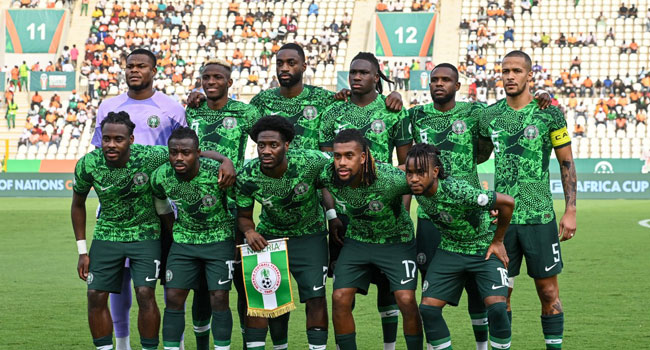
Nigeria’s Super Eagles are scheduled to depart Uyo on Sunday aboard a chartered flight from Victor Attah International Airport to Zanzibar City ahead of Tuesday’s AFCON 2027 qualifier against Tanzania. The return fixture will be played at the Amaan Stadium on November 17, with kickoff at 2 p.m. Nigerian time.
UYO, NIGERIA — Nigeria’s Super Eagles will leave Uyo on Sunday aboard a chartered flight to Zanzibar City with their 2027 Africa Cup of Nations qualification campaign delicately poised, carrying fresh confidence from Friday’s 3-1 victory over Tanzania but also knowing that another win in Tuesday’s return fixture could prove considerably more important than the encouraging performance that restored momentum at the Godswill Akpabio International Stadium. Head coach Eric Chelle has already warned his players that the first victory will mean little if Nigeria fails to reproduce the intensity and discipline required at the Amaan Stadium, where the Taifa Stars will attempt to respond in front of their supporters despite already having automatic qualification for the continental tournament as one of its co-hosts.
The Super Eagles are scheduled to travel from Victor Attah International Airport in Uyo directly to Zanzibar, avoiding the additional travel complications that can accompany commercial connections during international windows. The charter arrangement is intended to give the squad as much recovery and preparation time as possible after Friday’s encounter, with the return match scheduled for Tuesday, November 17, at 2 p.m. Nigerian time. Nigeria enter the contest second in Group L with six points from three matches, only one point behind leaders Guinea-Bissau, while Madagascar sit third with two points and Tanzania remain bottom with one.
Those standings make the trip significantly more important than an ordinary return fixture. Tanzania’s position at the bottom of the group does not affect their participation in the 2027 tournament because Kenya, Tanzania and Uganda qualify automatically as joint hosts. CAF’s qualifying format allows the co-hosts to participate in the group stage, but only one additional team from Tanzania’s group can join them at the finals, meaning Nigeria are effectively competing directly with Guinea-Bissau and Madagascar for a single qualification place.
That format leaves little margin for error, particularly after Nigeria’s uneven opening three matches. Chelle’s side began the campaign with a 2-1 victory over Madagascar in Uyo but suffered a damaging 3-0 defeat away to Guinea-Bissau on Matchday Two, a result that immediately placed pressure on the three-time African champions and made the Tanzania double-header potentially decisive. Friday’s victory repaired much of that damage, but the Super Eagles remain behind Guinea-Bissau and cannot assume that qualification will take care of itself simply because of their superior international reputation.
Nigeria’s response against Tanzania was encouraging because it combined resilience with a more decisive second-half attacking performance. Alhassan Yusuf gave the hosts the ideal start after only two minutes, arriving to finish a move created by Ademola Lookman and immediately easing some of the anxiety generated by the earlier defeat to Guinea-Bissau. Tanzania recovered, however, and equalized in the 32nd minute through Alphonce Msanga after Nigeria surrendered possession in midfield, ensuring that the teams entered the interval level despite the hosts controlling much of the play.
The match turned after Chelle made changes at halftime. Tolu Arokodare entered the contest and needed only seven minutes to restore Nigeria’s lead, finishing cleverly from captain Wilfred Ndidi’s pass in the 52nd minute. Eight minutes later, Arokodare struck again after Moses Usor created the opening from the flank, giving Nigeria a 3-1 advantage and effectively ending Tanzania’s hopes of taking something from the game.
The substitute’s brace was particularly significant because Nigeria entered the international window without Victor Osimhen, leaving Chelle without the striker who has so often provided the team’s most reliable cutting edge. Arokodare’s ability to come from the bench and change the contest gave the coach another attacking option and reinforced the importance of squad depth during a qualifying campaign that offers little room for dropped points.
Arokodare could even have completed a hat-trick later in the second half but was denied in a one-on-one situation by the Tanzanian goalkeeper. His overall contribution nevertheless provided exactly the kind of response Nigeria needed, particularly after a first half in which Tanzania had shown that they were capable of exploiting mistakes despite spending long periods without control of the ball.
Chelle was pleased with the result but deliberately refused to treat it as evidence that Nigeria had solved its problems. Speaking after the match, the coach said the Super Eagles had allowed Tanzania back into a contest they initially controlled and warned that a similar lapse in Zanzibar could prove costly. His central message was straightforward: the next game is now the most important one, and Nigeria must travel with the intention of winning rather than protecting the psychological comfort created by Friday’s scoreline.
That warning reflects the unusual competitive situation surrounding Tanzania. The Taifa Stars do not need qualification points in the same way Nigeria do because their place at AFCON 2027 is guaranteed, but that does not make them harmless opponents. They are preparing to host a continental tournament, building competitive experience and attempting to improve the team that will represent the country on home soil, giving the players and coaching staff strong motivation to produce a better performance in Zanzibar.
Tanzania coach Miguel Gamondi acknowledged after the Uyo match that Nigeria deserved to win and described the Super Eagles as one of Africa’s strongest sides, but his team will expect a different contest at home. The Taifa Stars recovered from conceding after two minutes in Uyo, created an equalizer and remained competitive until Nigeria’s halftime substitutions changed the momentum, providing enough evidence that the return leg cannot be treated as a formality.
Nigeria will also travel without Ademola Lookman, creating an immediate tactical challenge for Chelle. The Atlético Madrid forward suffered a knee ligament sprain during Friday’s victory and has been ruled out of Tuesday’s fixture following a medical scan. Lookman had already made an important contribution before his injury, setting up Yusuf’s opening goal before being replaced by Moses Simon late in the first half.
His absence removes one of Nigeria’s most creative attacking players at a moment when the team is already operating without Osimhen. Lookman’s ability to carry the ball, attack defenders individually and create chances from wide positions gives Nigeria a different attacking dimension, and Chelle will have to decide whether to replace him directly with Simon or alter the structure of the forward line.
Simon provides experience and direct running, while Usor strengthened his case for a larger role with an energetic second-half contribution in Uyo. His assist for Arokodare’s second goal demonstrated his willingness to attack the Tanzania defence aggressively, and his performance followed his winning goal against Madagascar earlier in the qualifying campaign.
The injury picture is not entirely negative. Calvin Bassey and Benjamin Fredrick experienced cramping during the Uyo match but are understood to have recovered, reducing concerns about the defensive unit before the trip. Maintaining stability at the back will be important because Nigeria’s defensive lapse before Tanzania’s equalizer was one of the few significant blemishes in Friday’s performance.
Chelle has repeatedly emphasized that Nigeria must eliminate avoidable mistakes. The coach was visibly frustrated by the way his side allowed Tanzania to equalize after starting so well, describing the moment as an unnecessary gift to an opponent that had not created a great deal before the goal. Such lapses become even more dangerous away from home, where the crowd and unfamiliar environment can magnify shifts in momentum.
The Super Eagles will therefore be expected to approach the second leg with greater control rather than simply attempting to recreate the open attacking exchanges of the first encounter. Nigeria’s possession advantage in Uyo was considerable, and the hosts produced seven shots on target from 13 attempts while limiting Tanzania to two shots on target from eight. The challenge now is converting that statistical superiority into another result without exposing the defensive spaces that occasionally appeared in the first match.
Ndidi’s leadership will again be important. The captain was central to Nigeria’s response after halftime and created Arokodare’s first goal with an intelligent pass that allowed the striker to finish from close range. His ability to control midfield transitions will be particularly valuable in Zanzibar, where Tanzania are likely to play with greater aggression and seek quicker forward movement in front of their home crowd.
Yusuf’s early goal also strengthens Chelle’s midfield options. The midfielder took his opportunity confidently in Uyo and provided Nigeria with the kind of late run into the penalty area that can become useful when opponents concentrate their defensive attention on the central striker. With attacking injuries reducing the number of established forwards available, goals from midfield could become increasingly valuable throughout the campaign.
Nigeria’s group position means Tuesday’s match must also be viewed in relation to Guinea-Bissau rather than only Tanzania. Guinea-Bissau were held to a 1-1 draw by Madagascar in their third match, preventing them from creating a larger advantage and leaving Nigeria only one point behind. That result reopened the race after Nigeria’s defeat on Matchday Two and gives Chelle’s side an opportunity to apply pressure by taking maximum points in Zanzibar.
A Nigerian victory would move the Super Eagles to nine points from four matches and guarantee that the qualifying contest remains firmly in their own hands heading into the final phase. Anything less could hand Guinea-Bissau an opportunity to establish a more substantial advantage, depending on their own Matchday Four result.
The mathematics are especially unforgiving because Tanzania’s automatic qualification changes the usual structure. In a conventional group, the top two teams might expect to reach the finals, but CAF’s system for groups containing a tournament host means only one non-host team advances. Finishing second behind Tanzania in the sporting table would therefore not necessarily be enough if another non-host team finishes higher than Nigeria.
That reality has placed additional pressure on a Super Eagles side already carrying significant expectations after recent international disappointments. Nigeria reached the final of the 2023 Africa Cup of Nations in Côte d’Ivoire but subsequently endured a difficult 2026 World Cup qualifying campaign, increasing public scrutiny of the national team and placing greater importance on securing qualification for the next continental tournament without another crisis.
Chelle was appointed with a mandate to restore consistency, but Nigeria’s performances have remained difficult to predict. At their best, the Super Eagles possess a squad containing players from major European leagues and enough attacking quality to compete with the continent’s strongest teams. At their worst, however, the team has struggled to convert possession into goals, surrendered avoidable opportunities and allowed supposedly weaker opponents to dictate important moments.
The 3-0 defeat to Guinea-Bissau exposed those weaknesses sharply. Nigeria were unable to recover once the home side gained control, and the scale of the defeat damaged the team’s goal difference as well as confidence. Friday’s response against Tanzania was therefore important not simply because of the three points but because winning by two goals erased much of the negative momentum surrounding the squad.
The return fixture offers an opportunity to prove that the improvement was not temporary. Consecutive victories would give Nigeria a stronger platform and reinforce Chelle’s argument that the group remains under control, while another inconsistent performance would immediately reopen questions about the team’s ability to handle pressure.
The coach’s selection will therefore attract considerable attention. Arokodare’s brace creates a strong argument for a starting role, particularly with Osimhen unavailable, while Usor’s impact from the bench gives Chelle another decision on the flanks. Simon’s experience may become especially important with Lookman absent, and the coach must balance attacking ambition against the need to maintain midfield control.
There is also the question of whether Tanzania will alter their defensive approach after being punished by Nigeria’s substitutions. Gamondi’s side found it difficult to handle Arokodare’s movement after halftime and was repeatedly stretched once Usor began attacking the wide areas more aggressively. The Taifa Stars are therefore likely to adjust their defensive spacing and may attempt to prevent Nigeria from finding the same central combinations that produced the second-half goals in Uyo.
Tanzania may also play more directly. Nigeria looked comfortable when circulating possession in front of the opposition but less assured when confronted by quick transitions, particularly around the sequence that led to Msanga’s equalizer. A more aggressive counterattacking plan would give the Taifa Stars a way of attacking Nigeria without attempting to dominate possession.
The Amaan Stadium environment will provide another variable. Zanzibar offers a different setting from mainland Tanzania’s major international venues, and the Super Eagles will have limited time to acclimatize before the match. The charter flight should help reduce travel fatigue, but the squad will still need to manage recovery, training and tactical preparation within a short turnaround.
Nigeria’s decision to remain in Uyo for initial recovery before flying directly to Zanzibar reflects the compressed schedule. Tanzania departed Nigeria on Saturday in separate groups after Friday’s match, while Chelle’s squad stayed behind to train and assess injured players before Sunday’s departure.
The travel plan also underlines the level of logistical preparation required during African qualifying windows. Distances between host cities can be considerable, direct commercial routes are not always available and teams frequently have only three or four days between matches. Charter flights have therefore become an important tool for national federations attempting to maximize recovery and avoid unpredictable connections.
For Nigeria, such preparation matters because qualification failure would carry major sporting and financial consequences. The Super Eagles are among Africa’s most commercially significant national teams, and absence from AFCON would affect sponsorship visibility, player exposure and the Nigeria Football Federation’s broader sporting credibility.
The country has also built much of its international football identity around consistent AFCON participation. Nigeria have won the tournament three times and have frequently reached the latter stages, making qualification the minimum expectation rather than an achievement celebrated on its own.
That history creates pressure on every qualifying campaign, but the 2027 race has particular significance because of the format. Tanzania’s automatic place reduces the number of competitive qualification spots in Nigeria’s group and means the Super Eagles cannot afford prolonged periods of poor form.
Guinea-Bissau have already demonstrated that they are capable of exploiting that pressure. Their 3-0 victory over Nigeria changed the group immediately and showed that reputation alone will not protect Chelle’s side from teams willing to attack them aggressively.
Madagascar also remain mathematically involved despite having only two points. Their draw against Guinea-Bissau helped Nigeria in the short term, but it also demonstrated that they can influence the shape of the group and potentially become dangerous in the closing matches.
Nigeria must therefore treat every remaining fixture as potentially decisive. A win in Zanzibar would not secure qualification outright, but it would significantly strengthen the Super Eagles’ position and provide momentum before the final two matches.
The psychological value could be almost as important as the mathematical one. After the Guinea-Bissau defeat, Nigeria needed evidence that the team could respond quickly rather than allowing one poor result to define the campaign. Friday’s performance provided that response, and a second victory over Tanzania would begin to turn recovery into consistency.
Chelle’s post-match comments showed that he understands the distinction. He acknowledged the relief and satisfaction surrounding the victory but immediately redirected attention toward Tuesday, telling his players that nothing had been completed.
That approach is sensible because Tanzania have little reason to play cautiously. Their automatic qualification allows them to approach the match without the same fear of damaging their tournament chances, potentially making them more adventurous than they were in Uyo.
For Gamondi, the match provides an opportunity to test his players against high-level opposition before hosting AFCON. Tanzania need competitive performances against teams such as Nigeria if they are to avoid entering the tournament underprepared, and the coach will likely treat Tuesday’s game as an important measure of progress.
Nigeria, by contrast, have no luxury of experimentation. The Super Eagles need points, and Chelle’s selections will be judged primarily by the result rather than developmental value.
The injury to Lookman increases the importance of Nigeria’s depth at precisely the wrong time, but Arokodare’s emergence offers some encouragement. His two goals showed confidence, intelligent movement and clinical finishing, and the striker now has an opportunity to convert one important substitute appearance into a sustained international role.
If he starts in Zanzibar, Tanzania will have had several days to study his movement and adjust accordingly. That will require Arokodare to demonstrate more than finishing ability, particularly through hold-up play, pressing and combinations with the wide attackers.
Nigeria’s attacking structure will also depend on how Chelle replaces Lookman creatively. The opening goal in Uyo began with Lookman identifying Yusuf’s run and delivering the pass, illustrating the kind of vision Nigeria will miss.
Simon can provide width and experience, while Usor offers pace and directness. Chelle may decide that using both gives Nigeria enough aggression on the flanks, although that would require careful midfield balance to prevent Tanzania exploiting spaces after turnovers.
Whatever the tactical choice, Nigeria’s objective remains straightforward. Victory would keep them close to or potentially ahead of Guinea-Bissau depending on other results and would transform a difficult international window into a highly productive one.
A draw would leave the group far less comfortable, while defeat would undo much of Friday’s progress and place qualification under renewed strain.
The Super Eagles therefore leave Uyo with confidence but little room for complacency. The 3-1 scoreline created a positive atmosphere, Arokodare’s brace provided a new attacking storyline and Guinea-Bissau’s draw with Madagascar prevented the group leaders from pulling away.
Yet the most important match is now the one ahead.
Nigeria’s charter flight to Zanzibar represents more than a routine journey between qualifying fixtures. It carries a team attempting to turn one strong response into a sustained recovery, a coach trying to establish greater consistency and a football nation that expects its place at Africa’s biggest tournament to be secured without drama.
Tuesday’s meeting at the Amaan Stadium will not decide the entire qualifying campaign, but it could determine the direction in which the final phase develops. Another Nigerian victory would place significant pressure on Guinea-Bissau and move the Super Eagles closer to the group’s only available qualification place, while a setback would restore uncertainty immediately.
For Chelle and his players, Friday’s win has therefore created opportunity rather than security. Nigeria have repaired some of the damage caused by the defeat to Guinea-Bissau, but the job remains unfinished, and the trip to Zanzibar will test whether the Super Eagles can reproduce their attacking improvement away from the comfort of Uyo.
The message from the coach is already clear: enjoy the victory, learn from the mistakes and move forward quickly. With Lookman ruled out, Tanzania preparing a response and only one qualification place available to the group’s non-host teams, Nigeria arrive at Matchday Four knowing that another three points would be considerably more valuable than simply completing back-to-back wins over the same opponent.