SECOND OBUASI SHTS COMPLAINANT REPORTS PRESSURE TO WITHDRAW SEXUAL ABUSE ALLEGATION
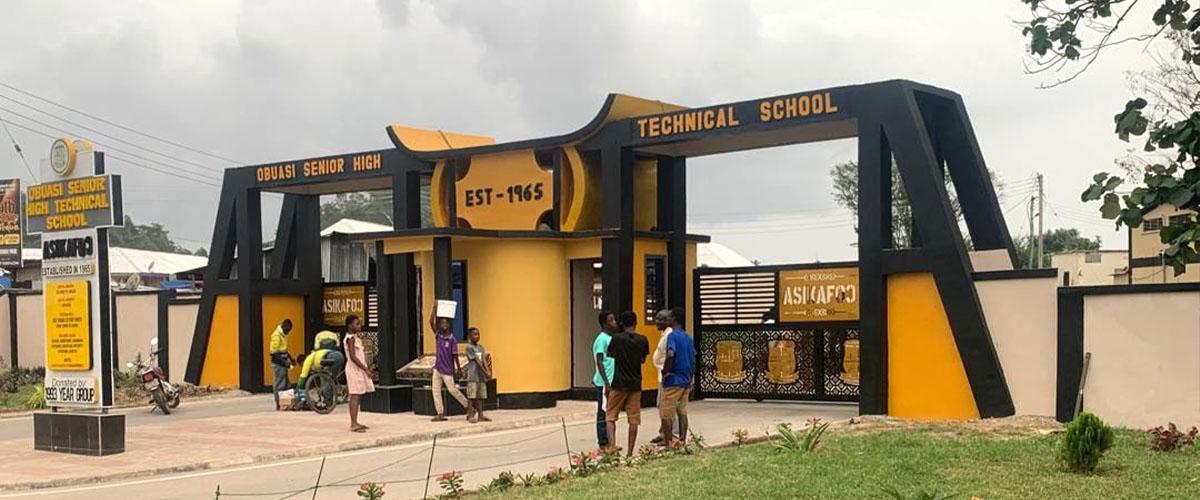
A second complainant in the sexual abuse investigation involving suspended Obuasi Senior High Technical School headmaster Zakaria Abdulai has reportedly told investigators she is facing pressure to withdraw her complaint. Police sources confirmed that one of two former complainants had already withdrawn her case. Gender Minister Agnes Naa Momo Lartey says her ministry is working with DOVVSU and the Ghana Health Service to ensure proper safeguarding, medical screening and reporting procedures are followed. Abdulai has not been convicted, and the allegations remain under investigation.
A second complainant in the sexual abuse investigation involving the suspended headmaster of Obuasi Senior High Technical School has told investigators she is facing pressure to withdraw her complaint, deepening concerns about whether students and former students connected to the case are being adequately protected from intimidation, retaliation or attempts to resolve serious allegations outside the formal justice system.
The latest development emerged after police sources in Bekwai confirmed that one of two former complainants had already withdrawn her case. According to JoyNews, the second complainant subsequently reported that she was also facing pressure to abandon her complaint, adding a new dimension to an investigation that has already raised questions about how earlier allegations were handled by school authorities, education officials and other institutions.
The allegations involve suspended Obuasi SHTS headmaster Zakaria Abdulai, who has been accused by multiple former and current students of sexual misconduct, including allegations of rape. The claims have not been proven in court, and Abdulai is entitled to the presumption of innocence while criminal and administrative investigations continue.
The Ghana Education Service interdicted Abdulai on October 14 to allow investigations to proceed without his continued presence at the school. Education Minister Haruna Iddrisu subsequently referred the criminal aspects of the allegations to the Criminal Investigations Department of the Ghana Police Service, while separate administrative processes are examining how complaints were handled within the education system.
Police have already completed an investigation into one formal rape complaint filed by a student on August 4 and forwarded the case docket to the Attorney-General’s Department for study and legal advice. Bekwai Police Public Relations Officer ASP Lloyd Baidoo said earlier this week that the Ashanti South Police Command was awaiting directions from the Attorney-General on whether and how to proceed with that particular case.
The police have stressed that the docket currently before the Attorney-General relates to one individual complaint rather than the wider group of allegations that has since become public. Authorities say additional allegations can be investigated if complainants formally report them to police or if relevant evidence collected through education-sector investigations is submitted for criminal investigation.
The latest report that one complainant has withdrawn her case, while another alleges pressure to do the same, has therefore intensified scrutiny of the environment surrounding potential witnesses and alleged victims. It has also raised concerns that individuals who come forward may face social, family, community or institutional pressure that could affect their willingness to continue cooperating with investigators.
The father of the second complainant had previously alleged that a traditional ruler in the Obuasi area intervened and asked the family to settle the matter amicably. That allegation has not been independently established as an attempt to obstruct justice, and the traditional leader identified in reporting has not been shown to have directly threatened or coerced the complainant.
Bekwai chief Nana Yaw Anning II confirmed that a delegation approached him in August regarding the controversy at Obuasi SHTS. He said four people visited him at his residence and told him the headmaster’s alleged conduct had brought disgrace to the school. According to the chief, the delegation appealed to him over the matter, and he told them that because an investigation was already underway, he would consider what they had said.
Nana Anning also said the visitors left GH¢200 for schnapps before departing. His account confirms that individuals approached him regarding the case, but it does not by itself establish that he personally pressured a complainant or her family to withdraw from a police process.
The distinction is important because the growing controversy now involves not only the original sexual abuse allegations but also questions about whether influential people may have attempted to intervene after complaints were made.
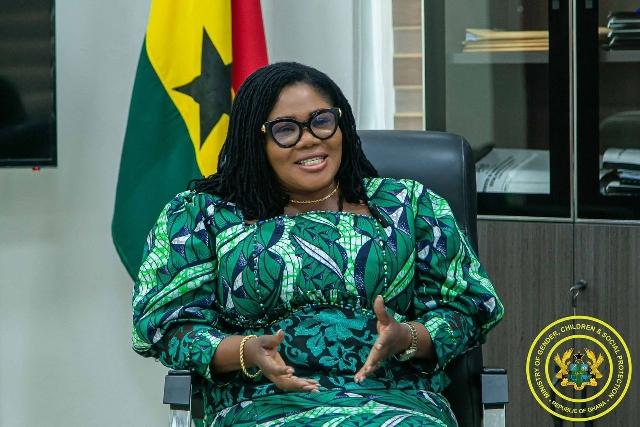
Minister for Gender, Children and Social Protection Dr. Agnes Naa Momo Lartey said her ministry is working with the Domestic Violence and Victim Support Unit of the Ghana Police Service and the Ghana Health Service to ensure that appropriate safeguarding and health procedures are followed.
The minister said authorities are reviewing whether proper protocols were observed when the allegations were first reported, including medical screening, parental or guardian consent where required, formal reporting procedures and steps intended to protect the girls involved.
She stopped short of confirming the allegations that complainants were being pressured, saying the ministry would provide further information after obtaining evidence capable of establishing what occurred.
That cautious position reflects the need to separate reported claims of intimidation from verified findings. Although the second complainant is reported to have told investigators she is facing pressure, authorities have not publicly identified who is allegedly applying that pressure or announced any criminal investigation or arrest specifically connected to witness intimidation.
The case has generated widespread national concern since a JoyNews investigation by journalist Manasseh Azure Awuni brought together allegations involving as many as 19 female students and former students.
The investigation raised questions about whether complaints had been made months before the controversy received national attention and whether officials within the education system responded appropriately when those concerns surfaced.
The Centre for Social Justice said Friday that reports indicating complaints may have been raised with school management in February and the Municipal Education Directorate in March require an independent investigation. The organization said additional alleged incidents were reportedly raised later in June and July.
If those timelines are confirmed, the issue would extend beyond the conduct of one accused individual and into the effectiveness of Ghana’s school safeguarding system, including how complaints against senior school administrators are recorded, escalated and investigated.
The Ghana Education Service conducted an earlier inquiry following disturbances at Obuasi SHTS in August. That committee said allegations of sexual harassment against the headmaster were not substantiated by the evidence presented to it at the time.
According to the committee’s report, the school’s Safe Space Focal Person indicated that 16 girls had been associated with sexual harassment allegations involving Abdulai. All 16 were invited to appear before the committee, but only four attended.
The finding from that inquiry does not amount to a judicial determination that the wider allegations are false. It reflects the evidence available to that particular administrative committee at the time and is separate from the later police investigation, the Attorney-General’s review and fresh investigations triggered by the JoyNews revelations.
The limited participation of students in the August inquiry has become especially significant in light of the latest allegations of pressure. Safeguarding specialists and civil society organizations argue that young people may be reluctant to speak openly about alleged sexual abuse when the accused person occupies a position of authority or when complainants fear retaliation, stigma, disbelief or consequences for their education.
Those concerns have prompted calls for reporting channels that do not require students to make complaints through the same school leadership structures in which an accused person may hold power.
The Ministry of Education announced this week that it is developing direct reporting channels, including a dedicated hotline, through which students, parents, teachers and community members can report sexual abuse allegations directly without first passing through a head teacher or other local authority who could be implicated in the complaint.
Deputy Education Minister Dr. Clement Apaak said the Obuasi SHTS case had exposed weaknesses in the current reporting structure and demonstrated the need for independent routes through which allegations can reach the ministry.
That reform could become one of the most significant institutional consequences of the case if implemented nationally. A direct reporting mechanism could give students an alternative when they believe school-based systems are unsafe, compromised or incapable of protecting their identities.
The Parliamentary Standing Committee on Gender, Children and Social Welfare has also called for a thorough, impartial and timely investigation.
The committee said investigators must establish what happened, determine how earlier complaints were handled and ensure that any person found culpable faces the appropriate disciplinary or criminal consequences.
It has also called for confidential counseling, medical care and other support for affected students and urged authorities to protect complainants, witnesses, families and whistle-blowers from intimidation, retaliation and stigmatization.
The committee emphasized that protecting complainants does not remove the accused person’s right to due process. Abdulai remains legally presumed innocent unless and until a competent court finds otherwise.
That balance between protection and due process has become central to the public debate surrounding the case. Authorities must investigate serious allegations thoroughly without presenting unproven claims as established fact, while at the same time ensuring that potential victims are not discouraged from participating in the process.
The Minority in Parliament has separately demanded an independent parliamentary inquiry into how the allegations were handled and whether political considerations influenced the response.
Abdulai has also been involved in politics as an NDC constituency official in Juaben. The party has said it will not shield him from investigation. He later withdrew from a constituency chairmanship contest amid the controversy.
No evidence publicly released so far establishes that his political affiliation affected police or education-sector investigations. The Minority has nevertheless said the possibility of political interference should be examined as part of a broader inquiry into the institutional response.
Civil society organizations have made similar demands.
The Centre for Social Justice has called for an independent investigation not only into the alleged sexual misconduct but also into any officials who may have ignored, suppressed or mishandled complaints.
The organization says affected students should receive confidential medical, psychosocial, legal and educational assistance and should be protected from victim-blaming or retaliation.
It has also urged Ghanaian media organizations and members of the public to protect the identities of the complainants.
That is particularly important in a case involving students and allegations of sexual violence. Publishing names, photographs or other identifying information could expose complainants to further harm, social pressure and harassment and could interfere with ongoing investigations.
For that reason, VNTV is not publishing the identities or photographs of any of the complainants.
The latest report also raises legal questions about what happens when a complainant withdraws a sexual-offense complaint.
Withdrawal does not necessarily establish that the original allegation was false. People may withdraw complaints for many reasons, including personal choice, reconciliation attempts, fear, family pressure, financial dependence or a desire to avoid prolonged legal proceedings.
Whether authorities can or should continue a criminal investigation after a complainant withdraws depends on the available evidence and applicable Ghanaian law. Police and prosecutors may consider medical evidence, witness statements, documentary records and other material independently of a complainant’s later decision, although cooperation from the person directly involved can be important to a successful prosecution.
The Attorney-General’s advice on the case already forwarded by police will therefore be closely watched.
Authorities have not publicly announced whether the withdrawn complaint is the same complaint whose docket is currently before the Attorney-General. That distinction should remain clear until police provide further information.
The broader controversy has already affected operations at Obuasi SHTS.
The school was temporarily closed following unrest connected to the allegations and is now reopening students in phases. The Ghana Education Service announced that third-year students would return on October 25, while second-year students are expected to return on November 16.
The phased reopening creates an additional safeguarding challenge because students will be returning to an institution that remains at the center of an active national controversy.
Education authorities will be expected to restore normal academic activity while ensuring that students who may have information relevant to investigations can report safely and confidentially.
The case has also increased pressure for systemic reforms beyond Obuasi.
Education advocates argue that Ghana should not treat the allegations as an isolated scandal involving a single school but as an opportunity to review safeguarding procedures across senior high schools.
Such reforms could include mandatory independent reporting channels, stronger training for teachers and administrators, clearer escalation requirements, protection for whistle-blowers and sanctions for officials who fail to act on credible allegations.
The Obuasi case has demonstrated why such mechanisms matter. When an allegation concerns the head of a school, ordinary chains of command can create conflicts of interest or make students fear that reporting could affect their academic lives.
Independent systems are intended to remove some of that risk.
For now, several parts of the case remain unresolved. The Attorney-General has not publicly announced a decision on the police docket already submitted for legal advice. Additional allegations have not all been converted into formal police complaints, and investigators have not announced charges against Abdulai.
The allegation that complainants are being pressured also remains under scrutiny rather than established as a proven offense by any identified person.
What is confirmed is that one of the two former complainants known to police has withdrawn her complaint and that another has reportedly told investigators she is facing pressure to do the same.
That development places the protection of complainants at the center of the investigation alongside the question of whether the original sexual abuse allegations can be proven.
The Gender Ministry, DOVVSU, Ghana Health Service, Ghana Education Service and police now face the task of ensuring that any student or former student who chooses to participate can do so without coercion and with access to appropriate health, psychological and legal support.
The case will also test whether Ghana’s safeguarding institutions can respond effectively when allegations involve a powerful authority figure inside a school.
The next major developments are expected to include the Attorney-General’s legal advice on the existing police docket, further investigation of additional allegations, clarification of the circumstances surrounding the withdrawn complaint and any official findings concerning claims that complainants have been pressured.
Until those processes are completed, the allegations against Abdulai remain unproven. At the same time, the latest reports have strengthened calls for authorities to ensure that the investigation is not compromised by intimidation, informal settlements or institutional failures that could prevent complainants from being heard.