13 WA CENTRAL PRISON INMATES BENEFIT FROM MAHAMA'S 2026 PRESIDENTIAL AMNESTY
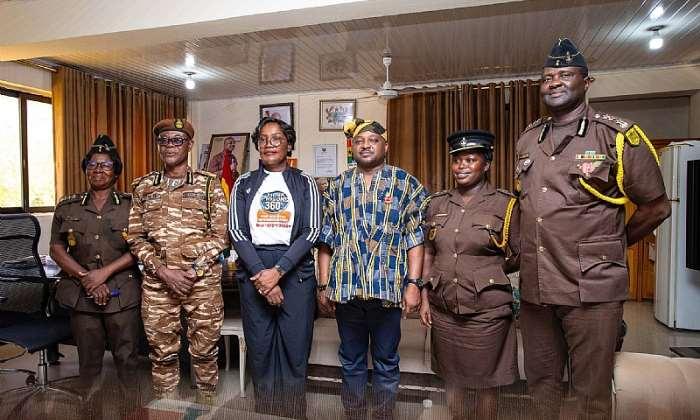
Thirteen first-time offenders at Wa Central Prison have benefited from President John Dramani Mahama’s 2026 presidential pardon. Upper West Regional Prisons Commander DDP Alhaji Ousmane Tasembedo said 18 inmates were recommended, with 13 receiving presidential approval. Only three were physically released at Friday’s ceremony because the remaining 10 had already completed their sentences through the normal remission process before the amnesty documentation reached the facility. Prison authorities also plan to provide startup materials to beneficiaries trained in tailoring and smock-making.
Thirteen first-time offenders at the Wa Central Prison have benefited from President John Dramani Mahama’s 2026 presidential amnesty, with three inmates physically released at a ceremony on Friday while 10 others had already completed their custodial sentences and left the facility before the formal amnesty documentation reached the prison.
Upper West Regional Prisons Commander DDP Alhaji Ousmane Tasembedo disclosed that 18 inmates from the Wa Central Prison were initially recommended for consideration under the presidential pardon exercise, but 13 ultimately received approval. The beneficiaries formed part of a wider national clemency exercise announced by the Presidency earlier this month under Article 72(1) of Ghana’s 1992 Constitution.
Tasembedo explained that although 13 names were officially approved, only three inmates remained in custody by the time the authorization process was completed and could therefore be physically released during Friday’s ceremony. The remaining 10 had already been discharged through the standard sentence-remission process, under which eligible prisoners may leave custody after serving the legally required portion of their sentences and meeting applicable conditions.
The distinction is important because the presidential amnesty formally covered all 13 inmates even though only three walked out of Wa Central Prison as a direct consequence of the Friday ceremony. Prison officials said the administrative timing meant the other beneficiaries had already returned home before their names were finally processed under the presidential exercise.
Tasembedo said the pardon should be understood not simply as an early exit from prison but as an opportunity for beneficiaries to rebuild their lives, avoid further criminal conduct and apply skills acquired while in custody. He said the Wa Central Prison has placed increasing emphasis on rehabilitation and reintegration rather than limiting its role to confinement.
According to the regional commander, the facility has successfully reformed and rehabilitated 34 inmates since 2024 through a combination of vocational training, behavioral programs and other correctional initiatives. Among the 13 beneficiaries of the latest presidential amnesty, two received practical training in tailoring and traditional smock-making while serving their sentences.
Prison authorities said those two beneficiaries will receive startup materials to help them establish livelihoods after release. The planned support is intended to reduce one of the major challenges confronting former inmates after leaving prison: the difficulty of finding stable work and generating lawful income after incarceration.
Officials at Wa Central Prison have increasingly emphasized vocational rehabilitation as part of the institution’s broader reintegration agenda. In September, the prison hosted an inmates’ talent show as part of efforts to identify practical abilities that could be developed into employment opportunities after release. The Upper West Regional Coordinating Council said at the time that prison reform should focus on giving inmates usable skills that can improve their chances of rebuilding their lives after custody.
The latest release follows President Mahama’s decision earlier this month to grant clemency to 863 convicted persons across Ghana as part of activities marking the country’s 70th Independence Anniversary. The Presidency said the exercise was intended as an act of mercy and national reflection and was carried out after consultation with the Council of State.
First-time offenders form the overwhelming majority of those covered by the 2026 pardon. Of the 863 beneficiaries nationwide, 819 were first offenders granted outright release. Thirteen prisoners aged 70 or older were also approved for outright release, along with six seriously ill inmates and two persons considered under special recommendations.
The exercise also affected some inmates serving the most serious sentences. Eleven death sentences were commuted to life imprisonment, while six people serving life sentences had their terms reduced to definite 20-year sentences. Three cases were approved through individual petitions, while another three beneficiaries fell under a separate category described by the Presidency as “others.”
The constitutional authority for such action comes from Article 72(1), which gives the president the power, after consultation with the Council of State, to grant a pardon, delay the execution of a punishment, substitute a less severe punishment or remit all or part of a sentence. The provision forms the legal basis for periodic presidential amnesty and pardon exercises in Ghana.
The October 2026 pardon follows another large clemency exercise undertaken by Mahama in August 2025, when 998 prisoners either received outright release or had their sentences reduced. In that earlier exercise, 787 first-time offenders were approved for release, while death sentences, life sentences and other categories were also reviewed.
The recurrence of large pardon exercises has renewed attention on conditions in Ghana’s prisons, including overcrowding, rehabilitation and the challenge of successfully reintegrating former inmates into society. Clemency can reduce the number of people in custody, but prison officials and criminal justice specialists have repeatedly stressed that release alone does not address the economic and social conditions that can contribute to repeat offending.
Wa Central Prison’s decision to provide vocational startup materials to selected beneficiaries reflects that concern. A prisoner who leaves custody with a marketable skill but no tools or capital may struggle to convert training into income, undermining the rehabilitative work carried out while the person was incarcerated.
By providing equipment connected to tailoring and smock-making, prison authorities say they hope the beneficiaries can immediately begin using their skills rather than returning to communities without a means of livelihood. In northern Ghana, smock production has both cultural and commercial importance, creating opportunities for skilled workers in local clothing production and regional markets.
Officials attending the Wa ceremony also cautioned the beneficiaries that a presidential pardon does not create permanent immunity from criminal law. Daubile Alhassan Ibrahim, Assembly Member for Jonga and chairman of the Wa Municipal Justice and Security Committee, represented the Municipal Chief Executive at the event and urged the former inmates to avoid conduct that could return them to prison.
He stressed that beneficiaries who commit new offenses after release remain subject to arrest, prosecution and punishment like any other person. The amnesty applies to the conviction or sentence covered by the president’s decision and does not exempt beneficiaries from future enforcement of the law.
That message formed part of a broader appeal for the released inmates to view their freedom as a second opportunity rather than simply the end of a sentence. Prison officials said rehabilitation would be incomplete if beneficiaries returned to the same behavior that led to their imprisonment.
One of the beneficiaries, 39-year-old Yakubu Anas, thanked President Mahama and the prison authorities for the opportunity to return to society. Speaking on behalf of the group, Anas also expressed appreciation for the training provided during their imprisonment and said the beneficiaries intended to make constructive use of the skills they had acquired.
Family representatives also welcomed the release. Nuokpem Richard, speaking for relatives of the beneficiaries, thanked prison officers and the government for providing vocational training and expressed hope that the former inmates would use their new freedom to pursue productive lives rather than return to crime.
The reintegration phase may prove as important as the formal pardon itself. Former prisoners can encounter difficulties securing employment, rebuilding family relationships and overcoming the stigma associated with imprisonment. Without support, those obstacles can make successful reintegration more difficult even for people who have completed vocational programs.
Ghana’s Prisons Service has increasingly sought to present correctional institutions as centers of reformation rather than facilities designed solely for punishment. Recent initiatives have emphasized agriculture, industry, education, vocational skills and inmate talent development as possible pathways toward reducing repeat offending.
At Wa Central Prison, the current approach includes tailoring, smock production and programs designed to identify other practical abilities among inmates. Regional prison authorities have appealed to businesses, civil society groups and individuals to support such initiatives by providing equipment, training opportunities and other resources that can help inmates prepare for life after release.
The fact that 10 of the 13 Wa beneficiaries had already been discharged before the presidential paperwork was completed also raises an administrative point about the implementation of national clemency decisions. Tasembedo attributed the situation to the time required for the amnesty process to move through the necessary administrative stages.
Their earlier departure did not invalidate their inclusion in the pardon. Instead, it meant that by the time Wa Central Prison received the final authorization, those inmates no longer required physical release because their sentences had already ended through the normal remission process.
Friday’s ceremony therefore formally recognized 13 beneficiaries even though the visible release involved only three people. That detail helps reconcile what might otherwise appear to be conflicting numbers in accounts of the Wa exercise.
The wider national amnesty is still being implemented across correctional facilities, meaning similar release and sentence-adjustment processes may continue as institutions receive and execute the approvals affecting their inmates.
The Presidency has directed relevant state institutions to give effect to the October 5 decision, and the Ghana Prisons Service is responsible for implementing the releases and sentence changes within its facilities.
For Wa Central Prison, the immediate focus is now shifting from release to reintegration. Authorities say the startup materials promised to beneficiaries with vocational skills are intended to help turn prison training into viable employment after custody.
The success of that effort will depend not only on the beneficiaries themselves but also on whether families, communities and potential employers are willing to accept former inmates and provide them with opportunities to rebuild their lives.
The 13 beneficiaries represent only a small portion of the 863 people covered by Mahama’s 2026 presidential pardon, but the Wa ceremony illustrates how the national exercise is being implemented at the local level. It also shows that the impact of clemency can extend beyond the day a prison gate opens, particularly where correctional authorities link release with vocational training and post-prison support.
For the three inmates physically released Friday, the ceremony marked the immediate end of their time in custody. For the 10 others whose sentences had already expired, the presidential approval formally placed them among the beneficiaries of the national pardon even though they were already back in their communities.
Prison officials say the next stage is ensuring that the opportunity is not wasted. The beneficiaries will be expected to remain law-abiding, use the skills they acquired and rebuild their lives outside the correctional system, while authorities continue efforts to strengthen rehabilitation programs for inmates who remain in custody.