PUTIN TELLS ZELENSKY: COME TO MOSCOW FOR DIRECT TALKS AS UKRAINE PEACE DIPLOMACY INTENSIFIES
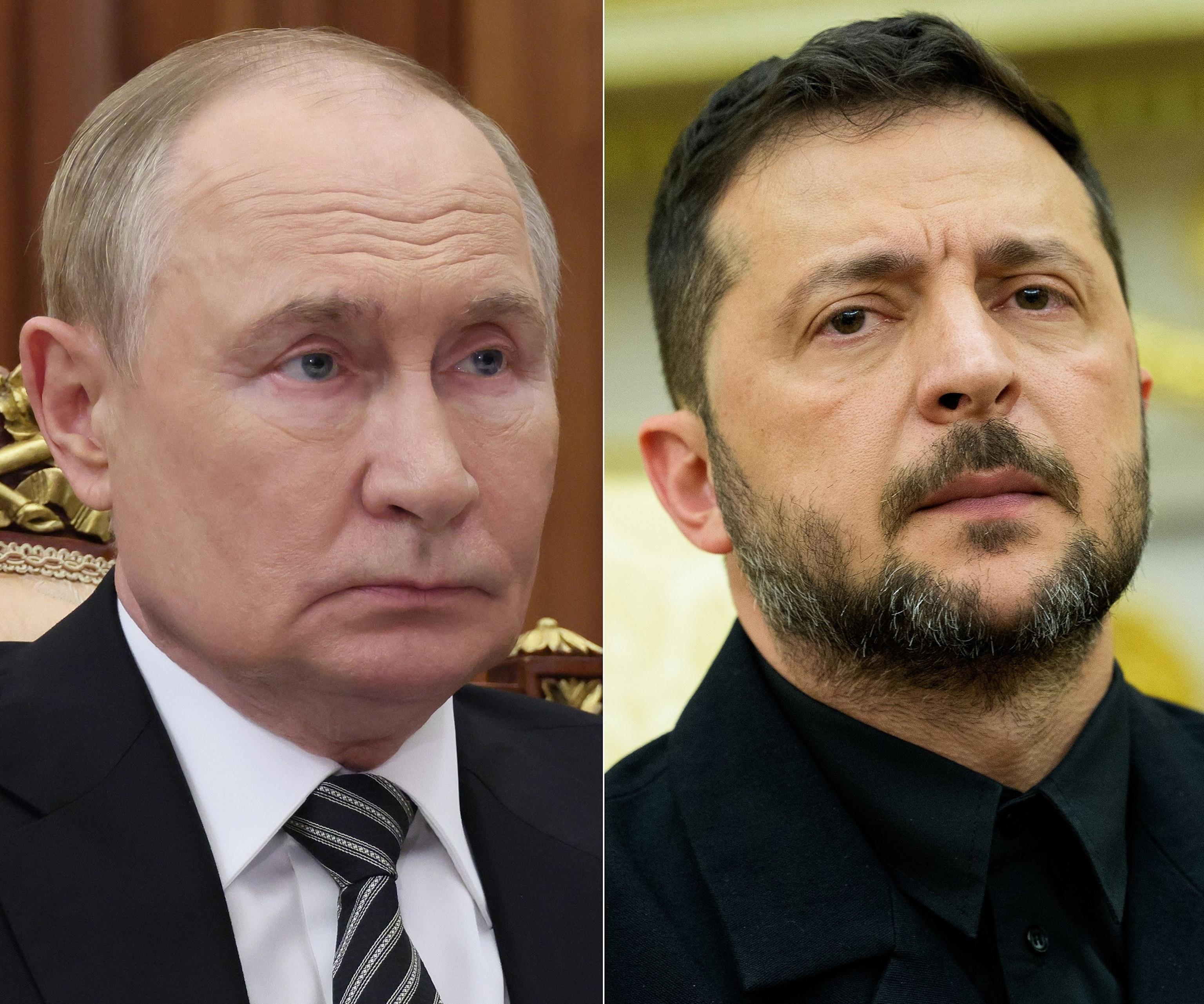
The Kremlin says Vladimir Putin is prepared to receive Volodymyr Zelensky in Moscow for direct negotiations and would guarantee the Ukrainian president’s safety. Kremlin aide Yury Ushakov made the statement after Finnish President Alexander Stubb and Norwegian Prime Minister Jonas Gahr Støre held a roughly 90-minute call with Putin as European leaders sought to influence renewed peace diplomacy. However, no Putin–Zelensky summit has been agreed, and there is no confirmed indication that Ukraine has accepted Moscow as a venue. Russian, Ukrainian and U.S. negotiators are separately preparing for another round of talks, with Abu Dhabi under consideration.
Russian President Vladimir Putin is prepared to receive Ukrainian President Volodymyr Zelensky in Moscow for direct negotiations and would provide security guarantees if the Ukrainian leader agreed to travel to the Russian capital, according to senior Kremlin aide Yury Ushakov, as diplomatic efforts to end the war enter another potentially significant phase. The proposal does not represent an agreed summit between the two presidents, and there is no indication that Kyiv has accepted Moscow as a negotiating venue, but the Kremlin’s public invitation places the possibility of direct leader-level talks back at the center of a peace process that has so far remained largely at the level of negotiators, intermediaries and international partners.
Ushakov said Putin’s position was straightforward: if Zelensky genuinely wanted a direct meeting, he could travel to Moscow, where Russian authorities would provide what the Kremlin described as all necessary conditions, including guarantees for his personal safety. The statement followed a rare 90-minute telephone conversation between Putin, Finnish President Alexander Stubb and Norwegian Prime Minister Jonas Gahr Støre, who contacted the Russian leader as European governments seek a greater role in negotiations that have increasingly been shaped by Washington, Moscow and Kyiv. The Nordic leaders subsequently spoke with Zelensky and said their intervention was intended to ensure that European perspectives were heard as preparations continued for another round of Russian-Ukrainian-American talks.
The Kremlin said Stubb and Støre informed Putin that Zelensky remained interested in direct discussions, although that description comes from the Russian side and should not be interpreted as confirmation that the Ukrainian president has agreed to travel to Moscow. Zelensky has repeatedly said he is prepared to meet Putin if such a meeting can contribute meaningfully to ending the war, but Kyiv has also insisted that the venue, agenda and security arrangements for any summit must be credible and cannot be determined unilaterally by Russia.
For Ukraine, Moscow would be an extraordinarily sensitive location for any presidential meeting. Russia launched its full-scale invasion of Ukraine in February 2022, Russian forces continue to occupy internationally recognised Ukrainian territory and both sides remain engaged in an active war involving missile strikes, drone attacks and combat along a lengthy front. A visit by Zelensky to the Russian capital would therefore involve security, diplomatic and political considerations far beyond those surrounding an ordinary international summit.
Russia says those concerns could be addressed through formal guarantees. Ushakov maintained that Moscow would ensure Zelensky’s safety if he came for talks, presenting the offer as evidence that Putin is not refusing direct dialogue. The Kremlin has used similar language previously when the possibility of a face-to-face meeting has been raised, arguing that Russia is open to negotiations but believes Moscow is an appropriate venue.
Kyiv has historically viewed proposals for Zelensky to travel to Moscow with deep skepticism. From the Ukrainian perspective, holding talks inside the capital of the state that invaded Ukraine could create both security concerns and political symbolism that Moscow might seek to exploit. Ukraine has generally favoured negotiations in neutral countries or locations involving trusted mediators, particularly when sensitive territorial or security questions are being discussed.
The location is therefore not a minor diplomatic detail. A presidential summit can convey legitimacy, power and political momentum simply through where it is held. Zelensky entering the Kremlin for negotiations could be portrayed by Russian authorities as evidence that Ukraine had been forced to come to Moscow for a settlement, while Kyiv would likely want any meeting structured in a way that presents both leaders as negotiating on equal terms rather than one appearing as a guest of the other.
Russia’s invitation also comes as the Kremlin continues to insist that a leader-level meeting should take place only after negotiators have made substantial progress and the basic elements of a settlement are ready. Russian officials have repeatedly said they do not see value in holding a Putin-Zelensky summit simply for the sake of producing photographs or political theatre. Moscow’s position is that technical teams should first resolve or significantly narrow the major disagreements before the presidents meet to approve or sign final arrangements.
That position is important because the remaining disagreements are enormous. Russia and Ukraine continue to hold fundamentally different positions on territory, security guarantees, sanctions, the future size and alignment of Ukraine’s armed forces and the status of areas occupied by Russian troops. Any lasting settlement would have to address questions that have remained unresolved through years of war and repeated negotiating efforts.
Territory remains among the most difficult issues. Russia has declared several Ukrainian regions part of the Russian Federation after referendums that Ukraine and most Western governments reject as illegal. Kyiv maintains that those territories remain part of Ukraine under international law and has resisted formally surrendering sovereign claims to occupied land. Even where negotiations discuss ceasefire lines or temporary arrangements, the legal status of territory remains an explosive issue capable of derailing a wider agreement.
Security guarantees present another challenge. Ukraine wants assurances strong enough to prevent Russia from launching another invasion after any ceasefire, while Moscow has historically opposed arrangements it believes would effectively integrate Ukraine into NATO’s military structure. Western governments have discussed different models involving weapons supplies, training, intelligence cooperation and commitments to assist Ukraine if it is attacked again, but Russia has demanded that any settlement address what it describes as its own long-term security concerns.
The future of sanctions is also unresolved. Western countries have imposed extensive restrictions on Russian banks, companies, technology imports, energy trade and individuals since the invasion began. Moscow wants sanctions relief as part of a settlement, while Ukraine and several European governments argue that lifting restrictions should depend on Russia complying with any agreement and should not reward continued occupation.
Against that background, the suggestion of a Putin-Zelensky meeting in Moscow is significant politically but should not be mistaken for evidence that a peace agreement is close. The two sides remain far apart on central questions, and several previous diplomatic initiatives have generated optimism without producing a final settlement.
The most immediate diplomatic focus is expected to remain on negotiations involving Russian, Ukrainian and U.S. representatives. Zelensky has said Ukrainian, Russian and American negotiators are expected to meet again in early November, with Abu Dhabi among the venues being discussed. Russia has also confirmed its willingness to resume the trilateral format, although Kremlin officials have said scheduling remains dependent on several international factors and no final date has yet been publicly fixed.
The planned talks would represent another attempt to develop a negotiating structure capable of producing more than temporary humanitarian agreements. Earlier discussions have included prisoner exchanges, ceasefire arrangements in specific areas and efforts to establish channels through which the two governments can communicate even while fighting continues.
Washington has increasingly positioned itself as the principal outside mediator between Russia and Ukraine. The Trump administration has held separate contacts with both Moscow and Kyiv and has pushed for a negotiated settlement, while European governments have become concerned that decisions affecting the continent’s security could be shaped without sufficient European participation.
That concern formed part of the background to the unusual call involving Putin, Stubb and Støre. Finland shares a long border with Russia and joined NATO following Moscow’s invasion of Ukraine, while Norway is also a NATO member and an important European energy supplier. Direct contact between Western European leaders and Putin has become relatively rare during the war, making the 90-minute conversation politically significant even though it produced no obvious shift in Russia’s publicly stated position.
Støre said the purpose of the call was partly to make sure Putin heard European views directly rather than receiving diplomatic messages only through Washington. The Nordic leaders urged an end to the war and linked their intervention to preparations for the expected trilateral negotiations. They later spoke with Zelensky, who welcomed their effort to maintain diplomatic communication.
Not all European governments have been equally enthusiastic about renewing direct contact with Putin. Some leaders have questioned whether such conversations produce meaningful results or instead allow the Kremlin to create an appearance of diplomatic engagement while Russian military operations continue. Others argue that wars ultimately end through negotiation and that refusing all direct communication makes it harder to test whether compromise is possible.
The debate reflects a broader dilemma confronting Europe. Governments strongly supporting Ukraine want to avoid legitimising Russian territorial gains or pressuring Kyiv into an unacceptable settlement, but they also recognise the enormous human, military and economic costs of a war that has continued for years. Any credible peace process therefore requires some form of engagement with Moscow while preserving Ukraine’s right to determine the terms it can accept.
The Kremlin’s Moscow proposal must be viewed within that wider diplomatic contest. By publicly saying Zelensky can come to Russia, Putin’s government can present itself as willing to hold direct talks while placing responsibility on the Ukrainian leader to decide whether to accept. Kyiv, meanwhile, can argue that willingness to negotiate does not require accepting conditions or venues chosen by the country that invaded it.
The personal security issue is particularly sensitive. Zelensky has been one of the most heavily protected political leaders in the world since the full-scale invasion began. Ukrainian officials have previously said Russian forces and intelligence services sought to remove or kill the Ukrainian leadership during the early stages of the war, allegations Russia has disputed or rejected in different contexts.
Any visit to Moscow would consequently require security arrangements far beyond a verbal promise from the Kremlin. Ukraine would likely demand detailed guarantees involving transportation, communications, personal protection, emergency procedures and assurances concerning the Ukrainian delegation from the moment it entered Russian-controlled territory until it departed.
Third-party involvement could also become necessary. A neutral government or international organisation might be asked to participate in security arrangements or provide transportation if serious discussions over a Moscow meeting ever developed. No such arrangement has been announced.
The legal and political risks would also be substantial for Putin if he travelled to certain alternative venues. The Russian president remains subject to an International Criminal Court arrest warrant connected to allegations concerning the unlawful deportation and transfer of Ukrainian children. Russia, which does not recognise the ICC’s jurisdiction over the matter, rejects the allegations. The warrant complicates the selection of potential summit locations because countries that are parties to the Rome Statute can face legal obligations concerning an ICC suspect who enters their territory.
This is one reason neutral or carefully selected diplomatic venues have featured repeatedly in discussions about possible high-level meetings. Countries that maintain relations with both Moscow and Kyiv and can provide substantial security have often been viewed as more practical than either capital.
The United Arab Emirates has emerged as one such intermediary. Abu Dhabi has maintained working relationships with Russia, Ukraine and the United States and has previously facilitated prisoner exchanges and other diplomatic contacts. Its involvement in the next planned round of talks therefore fits a broader pattern of Gulf states serving as intermediaries in conflicts where Western and Russian diplomatic channels have become severely strained.
Switzerland and other European venues have also been discussed at different stages, although political and legal complications can make agreement difficult. Turkey has previously hosted Russian-Ukrainian negotiations and remains another country capable of maintaining direct communication with both governments.
Despite those alternatives, Moscow continues to raise the possibility of Zelensky coming directly to Russia. The symbolism is unmistakable. For the Kremlin, such a meeting could reinforce its argument that Russia is a central power whose security demands must be negotiated directly. For Ukraine, agreeing to that setting without major concessions from Moscow could create domestic political difficulties and potentially weaken its diplomatic position.
Zelensky also faces intense pressure at home. Any peace settlement involving territorial compromise would be closely scrutinised by Ukrainians who have lived through years of invasion, displacement and military casualties. A decision to travel personally to Moscow would therefore carry enormous symbolic weight and could be interpreted differently depending on whether the visit followed meaningful Russian concessions or occurred while fighting continued largely unchanged.
Putin faces his own political calculations. The Kremlin has presented the war domestically as a struggle involving Russia’s national security and geopolitical position, meaning any settlement must be framed to Russian audiences as achieving important objectives rather than representing retreat. A meeting in Moscow could help the Russian leadership present negotiations as occurring on its terms, but significant concessions to Ukraine could still be politically difficult.
This explains why both sides have been cautious about moving immediately to a presidential summit. Leaders can sometimes resolve issues negotiators cannot, but an unsuccessful meeting between Putin and Zelensky could harden positions and make subsequent diplomacy more difficult. Governments therefore often prefer to prepare detailed frameworks before placing national leaders across the same table.
Ushakov himself has emphasised that point. The Kremlin aide has said a summit would make the most sense after negotiators have effectively completed their work and settlement documents are ready for the leaders to approve or sign. That approach suggests Russia is not currently proposing that Zelensky simply arrive in Moscow immediately for an open-ended negotiation over every outstanding issue.
The invitation is instead best understood as a statement about where Russia says it would be prepared to hold eventual direct negotiations. It is politically significant, but it does not amount to a scheduled summit.
The war itself continues while diplomacy develops. Russian missiles and drones continue striking Ukrainian cities and infrastructure, while Ukrainian forces continue targeting military and strategic facilities inside Russian-controlled territory and Russia itself. Fighting along the front remains active, demonstrating the gap between diplomatic discussions and conditions on the battlefield.
Every major military development can influence negotiations. Advances or setbacks alter perceptions of bargaining strength, while attacks causing large civilian casualties can generate domestic and international pressure that makes compromise politically harder.
Both sides therefore enter talks seeking to preserve leverage. Russia wants recognition of military and territorial realities it has created since the invasion, while Ukraine wants guarantees that negotiations will not simply freeze a conflict in a way that allows Russia to rearm and attack again later.
The United States faces its own challenge in attempting to bring those positions closer together. Washington has enormous influence because of its military, economic and diplomatic weight, but any proposal perceived as excessively favouring Moscow risks resistance from Kyiv and European governments, while proposals requiring major Russian concessions may simply be rejected by the Kremlin.
European countries are attempting to ensure they are not sidelined from decisions that would directly affect their security. The unusual Nordic call to Putin illustrates that concern and suggests some European leaders are prepared to reopen channels that had largely been frozen following the invasion.
Finland’s involvement is particularly noteworthy because of its history with Russia and its recent decision to join NATO. Stubb has argued that Europe must remain involved in negotiations rather than allowing the peace process to become exclusively a U.S.-Russia discussion with Ukraine attempting to defend its interests between the two powers.
Norway, meanwhile, has played a growing diplomatic role in international conflict mediation and has strongly supported Ukraine during the war. Støre’s participation gave the call additional significance because it demonstrated that countries firmly aligned with Kyiv are nevertheless prepared to communicate directly with Putin when they believe it may contribute to diplomacy.
Whether the initiative changes Russia’s position remains unclear. The Kremlin’s public statements following the conversation showed little evidence of a significant shift on the fundamental issues driving the conflict. Moscow continues to insist that any settlement must address what it calls the root causes of the war and fully take Russian security interests into account.
Ukraine rejects Russia’s framing and says the fundamental cause of the conflict is Moscow’s invasion and occupation of Ukrainian territory. Kyiv insists any durable peace must preserve Ukrainian sovereignty and prevent renewed aggression.
Those contradictory narratives remain at the heart of the war and cannot be resolved simply by arranging a meeting between the two presidents. A summit could accelerate negotiations if significant groundwork had already been completed, but it cannot erase the underlying disputes that have kept the conflict going.
This is why the upcoming negotiator-level talks may ultimately be more important in the immediate term than the dramatic possibility of Zelensky travelling to Moscow. Technical teams can explore ceasefire mechanisms, prisoner exchanges, territorial arrangements, security guarantees and enforcement provisions without the enormous political pressure attached to a presidential encounter.
If those discussions produce tangible progress, the question of a Putin-Zelensky meeting could become considerably more serious. If they fail, the Moscow invitation may remain primarily a political statement rather than a practical diplomatic proposal.
For now, there is no confirmed summit date, no agreed location and no public indication that Zelensky has accepted Putin’s invitation. What has changed is that the Kremlin has again publicly stated that the Ukrainian president could travel to Moscow and that Russia would guarantee his security if he chose to do so.
The statement creates a dramatic possibility at a moment when diplomacy around the war is becoming more active. Ukraine, Russia and the United States are preparing to return to negotiations, European leaders are reopening channels to Moscow and the question of whether Putin and Zelensky could eventually meet directly is once again being discussed publicly.
Whether that meeting could realistically occur in Moscow is a much more difficult question. For Zelensky, travelling to the capital of the country whose forces are fighting Ukraine would involve extraordinary security precautions and enormous domestic political consequences. For Russia, hosting the Ukrainian leader would carry powerful symbolic value but would also create responsibility for ensuring his safety throughout the visit.
A neutral location would avoid many of those complications, which is why countries such as the United Arab Emirates continue to feature prominently in diplomatic planning. Yet Russia’s insistence that Moscow remains available ensures that the proposal will continue to attract attention as negotiations develop.
The coming weeks are likely to show whether the peace process is advancing toward genuinely difficult compromises or simply creating another cycle of talks without agreement. The expected trilateral negotiations will provide the first major test, particularly if negotiators begin addressing territory and security guarantees rather than limiting discussions to humanitarian issues.
Until then, Putin’s message through Ushakov should be understood precisely for what it is: Russia says Zelensky can come to Moscow for direct negotiations and promises that he would be protected, but no summit has been agreed and Ukraine has made no commitment to accept the invitation.
After years of war, even the public discussion of a direct meeting between the two presidents is politically significant. Whether it develops into an actual encounter capable of changing the trajectory of the conflict will depend not on the invitation itself, but on whether Russian, Ukrainian and American negotiators can first narrow the enormous differences that continue to separate Moscow and Kyiv.