OVER 40 NIGERIAN CHEFS HEAD TO GAMBIA AS WAFFEST PUSHES WEST AFRICAN CUISINE ONTO GLOBAL STAGE
More than 40 Nigerian chefs, judges and officials are participating in WAFFEST 2026 in Banjul, The Gambia, from October 15 to 21. Led by Association of Professional Chefs Nigeria President Dr. Eric Mekwuye, Team Nigeria will showcase indigenous dishes, beverages, ingredients and cultural traditions representing the country’s six geopolitical zones. Organizers expect more than 30 countries, over 350 international guests and about 1,000 participants, with masterclasses, cuisine showcases and the Jollof Rice competition among the major attractions. Punch Newspapers
More than 40 Nigerian chefs, culinary judges and officials are traveling to Banjul, The Gambia, for the 2026 West Africa Food Festival, where Team Nigeria will mount a major showcase of indigenous dishes, beverages, ingredients and cooking traditions as part of a wider regional campaign to give West African cuisine stronger international recognition.
The Nigerian delegation is being led by Dr. Eric Mekwuye, National President of the Association of Professional Chefs Nigeria, and will participate in the week-long festival from October 15 to 21. The group is expected to present food traditions drawn from Nigeria’s six geopolitical zones, using regional dishes, locally sourced ingredients, indigenous beverages, cultural attire and traditional cooking techniques to demonstrate the diversity of one of Africa’s largest culinary markets.
The festival, widely known as WAFFEST, is being hosted by The Gambia for the first time and brings together chefs, hospitality professionals, food businesses, culinary students, tourism stakeholders and government representatives from across Africa and beyond. Organizers say more than 30 countries are expected to participate, with approximately 350 international guests and about 1,000 participants attending activities across the week.
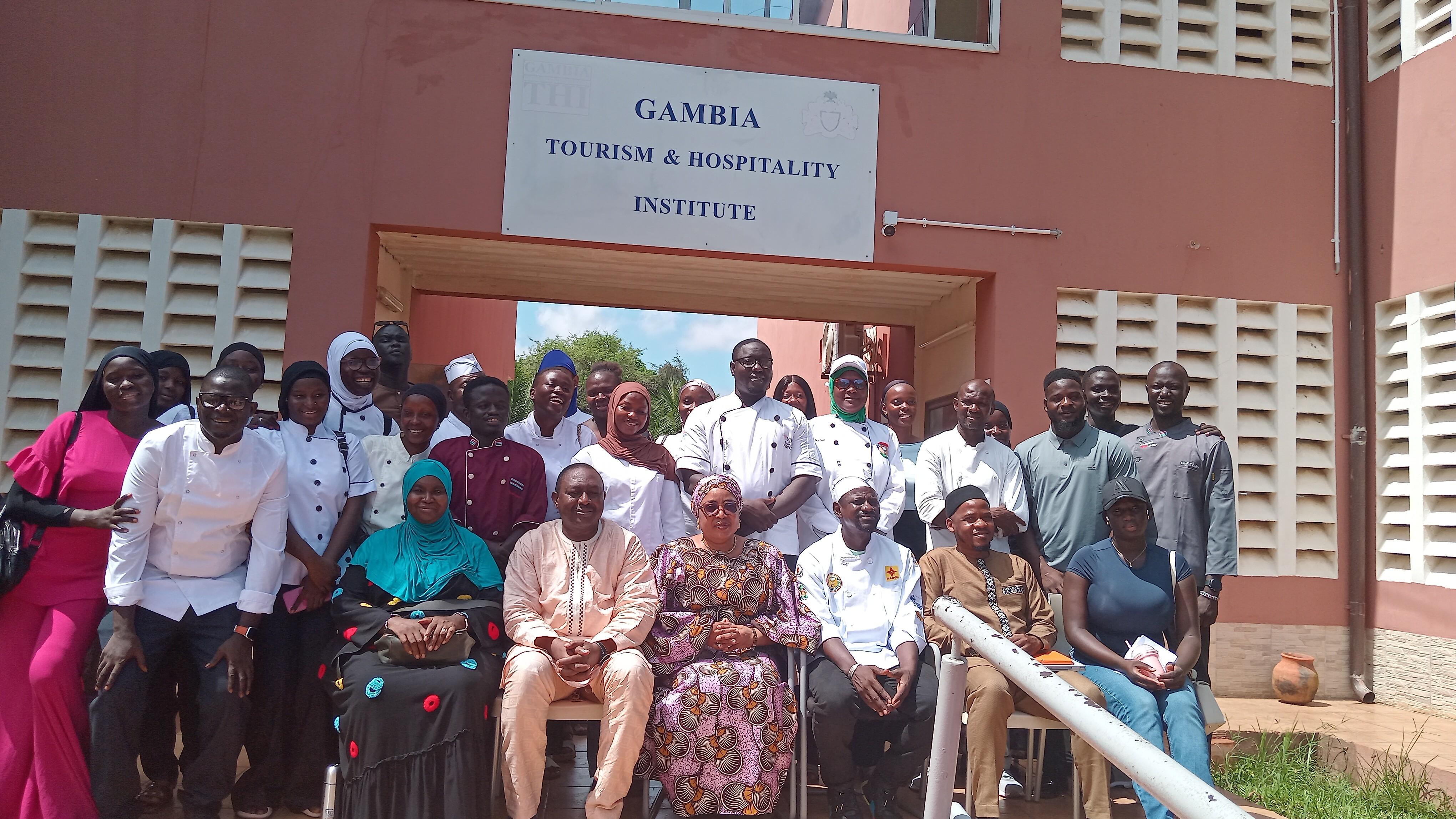
The official opening ceremony is scheduled for October 16 at the Sir Dawda Kairaba Jawara International Conference Centre in Bijilo, while daily competitions and professional activities will take place primarily at the Gambia Tourism and Hospitality Institute in Kanifing. The closing ceremony will be held on October 21 at the same international conference center, ending with a gala dinner and awards presentation.
For Nigeria, the festival is not being treated simply as a cooking competition. The Association of Professional Chefs Nigeria says participation is part of a larger effort to position indigenous food as an economic, cultural and tourism asset capable of attracting international attention, expanding opportunities for chefs and hospitality businesses and preserving traditional cooking knowledge that could otherwise gradually disappear.
Mekwuye has said Nigeria’s culinary diversity remains one of the country’s most underused cultural strengths. With hundreds of ethnic groups and food traditions spread across the country, Nigerian cuisine includes an enormous range of soups, stews, grains, tubers, seafood, meats, spices, fermented products and traditional drinks, many of which remain largely unknown outside West African communities despite the increasing global popularity of a smaller number of Nigerian dishes.
The delegation plans to use WAFFEST to present that diversity in a more structured way. Rather than focusing only on globally familiar dishes such as jollof rice, the team intends to showcase cuisine from different parts of the country and explain the ingredients, preparation methods and cultural histories behind the food.
The strategy reflects a growing belief among Nigerian culinary professionals that international recognition cannot depend only on restaurants or social media trends. They argue that food festivals, chef competitions, hospitality education, professional certification and tourism partnerships are also necessary if traditional dishes are to become part of the global culinary mainstream.
WAFFEST itself has developed around that philosophy. The festival was founded in 2018 through an initiative associated with Ghanaian chef Isaac Sackey and the Chefs Association of Ghana, and has since grown into one of the region’s major culinary gatherings. Previous editions have been held in Ghana, Liberia and Nigeria, with the event expanding beyond a chef competition into a broader platform for gastronomy, professional development, cultural exchange and tourism promotion.
The Gambia’s decision to host the 2026 edition follows its strong performance at last year’s event in Ghana. Gambian chefs won four of seven categories and emerged as champions of the Jollof Rice competition, defeating competitors including Nigeria and Ghana. The home team will now defend that title in Banjul, adding another layer of regional rivalry to one of WAFFEST’s most closely watched contests.
The Jollof Rice competition remains one of the festival’s biggest attractions because of the long-running cultural debate over which West African country produces the best version of the dish. Nigeria, Ghana, Senegal, The Gambia and other countries have distinct preparation styles, and the friendly rivalry has grown into a powerful cultural conversation across social media and international food events.
For Nigeria, reclaiming the jollof title would carry symbolic value, but the APCN says the country’s objectives go much further than one competition. Team Nigeria is expected to participate in several categories and professional exchanges, with organizers seeking to promote food as a serious economic sector rather than only an element of entertainment.
The festival’s program includes seven masterclass sessions led by established culinary professionals, giving participating chefs and students opportunities to exchange technical knowledge and learn new approaches to food preparation, presentation, safety and hospitality management. The event will also include national cuisine showcases, cultural activities and networking sessions designed to connect chefs with tourism operators, investors and hospitality businesses.
The Gambia’s Ministry of Tourism, Arts and Culture has placed significant emphasis on the tourism potential of the event. Officials are promoting WAFFEST under the theme “Taste the Smiling Coast,” linking gastronomy with The Gambia’s wider tourism identity and positioning local food as part of the experience offered to international visitors.
That approach is increasingly common across the global tourism industry. Countries including Thailand, Italy, Mexico, Japan, France and Peru have successfully built elements of their international tourism brands around food, encouraging visitors to travel specifically for culinary experiences. West African governments and hospitality professionals increasingly believe the region can do the same by packaging its food traditions more deliberately for international audiences.
Nigeria possesses obvious advantages in such a strategy. Its large population, global diaspora and rapidly expanding entertainment industry have already given Nigerian culture significant international visibility through Afrobeats, Nollywood and fashion. Culinary professionals argue that food could become another major cultural export if the industry receives sufficient training, branding, investment and institutional support.
Some Nigerian dishes have already gained international followings, particularly in cities with large African populations in Britain, the United States, Canada and parts of Europe. Jollof rice, suya, egusi soup, moi moi, pepper soup, pounded yam and other staples are increasingly appearing outside traditional Nigerian restaurants, while social media creators and celebrity chefs have introduced wider audiences to regional recipes.
The challenge is converting that cultural visibility into a sustainable commercial sector. Many traditional food businesses remain small and informal, while professional culinary training, international standardization, packaging, food safety systems and export infrastructure remain uneven. Industry leaders argue that events such as WAFFEST create a platform for chefs and food entrepreneurs to improve professional standards while learning how to present local food for international markets.
The Nigerian delegation will also use indigenous beverages and ingredients as part of its cultural presentation. That is important because West African culinary identity extends far beyond finished meals. Spices, grains, vegetables, oils, fermented products and traditional drinks can themselves become export products if properly processed, packaged and marketed.
Nigeria’s six geopolitical zones offer particularly wide culinary variety. Northern food traditions draw heavily on grains, meats, milk products and spices, while southern coastal cuisines use substantial quantities of seafood, palm oil and vegetables. The southeast is known for a wide variety of soups and yam-based dishes, while southwestern cuisine includes deeply established dishes built around peppers, vegetables, beans and fermented ingredients.
Presenting those differences within one national delegation allows Nigeria to show international audiences that its food culture cannot be reduced to one or two famous dishes. The APCN says the diversity itself is an asset because it gives restaurants, tourism operators and food manufacturers a larger pool of products and experiences that can be promoted commercially.
The Association of Professional Chefs Nigeria has also secured travel support for its participation through a partnership with ValueJet. The airline agreed to provide discounted fares for association members traveling to the festival, an arrangement the APCN says will support Nigerian participation in international competitions, cultural exchanges and professional training programs.
The partnership illustrates one of the practical challenges facing African culinary professionals. International participation can be expensive, particularly when large delegations must transport chefs, judges, ingredients, equipment and presentation materials across borders. Private-sector support can therefore make the difference between attending major industry events and remaining excluded from them.
ValueJet’s involvement also reflects the relationship between aviation and tourism. Airlines benefit when festivals, conferences and cultural events stimulate regional travel, while culinary organizations depend on affordable transportation to connect professionals and audiences across West African countries.
The festival is expected to bring together participants from well beyond the immediate West African region. Gambian officials have said more than 30 countries are preparing to participate, while Nigerian organizers have referenced delegations from about 35 countries. The exact final number will become clearer as all registered teams arrive, but the international scale is already substantially larger than a traditional regional food fair.
Organizers expect the event to generate economic activity for hotels, restaurants, transport companies, markets and tourism operators in The Gambia. With hundreds of international guests arriving for nearly a week, the festival provides an opportunity for the country to showcase not only its chefs but also its wider hospitality industry.
The Gambia Tourism and Hospitality Institute has been placed at the center of the program, with competitions and training sessions expected to run there throughout the week. Organizers have announced that access to many of the activities at the institute will be free, allowing students, local chefs, hospitality workers and members of the public to observe competitions and engage with visiting professionals.
For Gambian authorities, hosting WAFFEST is also an opportunity to promote the country as more than a beach destination. Tourism has long played an important role in The Gambia’s economy, particularly through visitors from Europe, but officials increasingly want to broaden the range of cultural experiences offered to travelers.
Food tourism provides one possible route. Visitors who travel specifically to experience local dishes, markets, cooking classes, food festivals and traditional preparation methods often spend money across multiple parts of the economy, including restaurants, transportation, accommodation and agriculture.
The festival therefore creates a direct connection between chefs and farmers. Many of the dishes presented during WAFFEST depend on locally grown ingredients, meaning stronger international interest in regional cuisine could eventually create new markets for agricultural producers as well as hospitality businesses.
That relationship is particularly important across West Africa, where agriculture remains a major employer but much of the region’s food production is sold with limited processing or branding. Culinary promotion can add value by turning ingredients into recognizable cultural products linked to particular places and traditions.
The Nigerian delegation is expected to emphasize this connection by highlighting locally sourced ingredients and traditional preparation techniques. APCN officials argue that indigenous food systems contain knowledge developed over generations and should be treated as valuable intellectual and cultural assets rather than outdated practices.
Preservation is becoming increasingly important as urbanization and changing lifestyles alter food habits across the region. Younger consumers frequently rely on faster preparation methods, imported ingredients and standardized restaurant meals, while some traditional recipes require knowledge and techniques that are transmitted mainly within families.
Professional chefs can play a role in preserving those traditions by documenting recipes, training younger cooks and adapting indigenous dishes for contemporary restaurants without removing their cultural identity. WAFFEST provides a forum for those conversations because participating chefs come from different countries facing similar challenges.
The event also creates opportunities for culinary diplomacy. Food can provide a relatively accessible way for countries to communicate culture across borders, particularly where political or economic relationships may be more complicated. National cuisine showcases allow participants to encounter traditions directly through taste rather than through formal diplomatic presentations.
Nigeria’s participation therefore carries both cultural and reputational significance. The country already has one of Africa’s most visible entertainment brands, but professional chefs want food to occupy a similarly strong position in international perceptions of Nigeria.
A successful appearance in Banjul could help individual chefs gain international exposure while strengthening networks between Nigerian culinary schools, hotels, restaurants and regional professional associations. Judges and senior culinary experts attending the festival may also create pathways to international competitions and training opportunities.
For younger chefs, those connections can be particularly valuable. Hospitality is an increasingly competitive industry, and international experience can improve employment opportunities both within Africa and abroad. Professional certification and competition results can also help chefs demonstrate skills that are otherwise difficult to measure.
WAFFEST’s masterclasses are designed partly around that professional-development objective. Rather than focusing solely on spectacle, organizers want students and working chefs to leave the festival with technical knowledge that can improve standards within their home countries.
Food safety, kitchen management and consistent presentation are likely to remain important areas of discussion because global culinary recognition requires more than strong flavors. Restaurants and food producers attempting to enter international markets must comply with increasingly strict safety, labeling and quality standards.
Nigeria’s food industry already has substantial commercial scale domestically, but expanding abroad requires overcoming these regulatory challenges. Packaged indigenous foods must meet importing-country requirements, while restaurants serving international customers must maintain professional systems capable of producing traditional dishes consistently.
Culinary festivals cannot solve those structural problems on their own, but they can create networks connecting chefs with regulators, investors, tourism officials and food manufacturers. APCN’s leadership sees that kind of institutional development as necessary if Nigeria is to turn culinary heritage into jobs and export earnings.
The wider African food market is also changing. International interest in African ingredients and dishes has grown alongside increased attention to the continent’s music, fashion and visual arts. African restaurants have received major international reviews and awards, while chefs of African heritage are increasingly appearing on global television programs and major culinary platforms.
West Africa has a significant opportunity within that trend because the region possesses powerful food identities that already travel well through diaspora communities. The challenge is ensuring that local chefs, farmers and businesses capture a meaningful share of the economic benefits rather than watching overseas companies commercialize African flavors without strong connections to their origins.
Events such as WAFFEST can help establish professional ownership and recognition by putting African chefs themselves at the center of the conversation. The festival gives them space to define how their food should be presented, judged and discussed rather than relying entirely on foreign culinary institutions.
The competitive side of the event is still expected to attract considerable public attention. The Gambia enters the festival with the advantage of competing at home and with confidence from its success at the 2025 edition in Ghana, where it won four of seven categories.
The Jollof Rice competition will almost certainly attract the most social media debate, particularly among Nigerians and Ghanaians accustomed to arguing over which country prepares the dish best. Gambian chefs now enter that rivalry as defending champions, giving the 2026 contest an additional storyline.
For Nigeria’s chefs, however, success will not be measured only by trophies. Mekwuye has said the delegation wants audiences to understand the depth of Nigeria’s regional food traditions and to recognize gastronomy as a serious contributor to tourism, employment and cultural diplomacy.
That ambition aligns with the broader direction of WAFFEST, which has evolved from its early editions into a regional platform connecting professional cooking with economic development. Organizers increasingly speak about culinary heritage in the same language used for other creative industries, emphasizing intellectual property, branding, tourism and international markets.
The 2026 edition in Banjul gives The Gambia an opportunity to demonstrate what a food-centered regional event can contribute to a small tourism economy, while giving participating countries a platform to promote their own culinary identities.
For Nigeria, the presence of more than 40 chefs, judges and officials represents one of its strongest coordinated delegations to the festival. Their task is to present a country whose food culture is vast enough that many Nigerians themselves may be unfamiliar with dishes from regions far outside their own communities.
That internal diversity could become one of the delegation’s greatest advantages. Instead of presenting Nigerian cuisine as a single style, the team can demonstrate how geography, religion, agriculture, history and migration have shaped different food cultures across the federation.
The long-term question is whether that diversity can be transformed into a recognizable global culinary brand without flattening the differences that make it distinctive. Chefs and tourism professionals increasingly believe the answer lies in presenting regional traditions with the same seriousness given to established European and Asian cuisines.
WAFFEST provides one stage for pursuing that goal. Over seven days in The Gambia, chefs will compete, teach, learn and introduce audiences to dishes whose histories extend far beyond the festival itself.
For Nigeria, the trip to Banjul is therefore both a competition and a cultural campaign. The delegation is seeking medals and recognition, but it is also attempting to convince a wider audience that indigenous Nigerian food deserves a permanent place in global gastronomy.
As WAFFEST 2026 unfolds, attention will be divided between the headline competitions, particularly the battle over jollof rice, and the larger conversation about food as a source of tourism, employment and national identity. The presence of more than 30 countries and hundreds of international guests gives that conversation an audience far beyond The Gambia.
If the festival succeeds, its impact will not be measured only by who leaves Banjul with trophies. The more important outcome may be whether chefs, governments and businesses return home with stronger networks and a clearer strategy for turning West Africa’s extraordinary culinary diversity into an internationally recognized cultural and economic asset.