HUNDREDS ARRESTED AS SENEGAL’S TOUGHER ANTI LGBTQ LAW DRIVES PEOPLE INTO HIDING
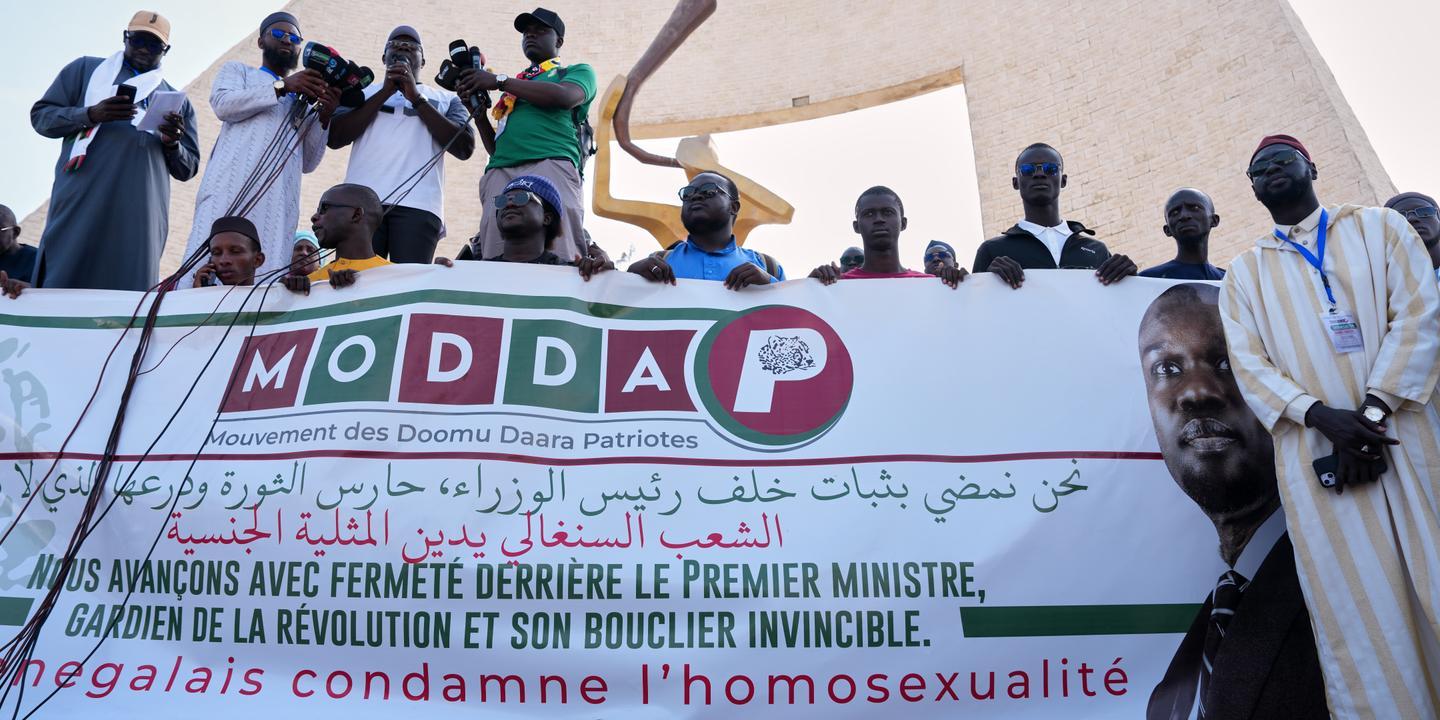
Hundreds of people have been arrested in Senegal this year under laws criminalizing same sex conduct after parliament sharply increased penalties in March. Human Rights Watch says RADDHO documented at least 212 arrests between February and July, while the HIV Justice Network reported more than 300 and current reporting places the wider figure at at least 320. Rights groups say fear of arrest has driven some LGBTQ people into hiding and discouraged others from seeking HIV treatment. Senegal’s government says the tougher law reflects national cultural and social values and has broad political support.
Hundreds of people accused of homosexuality or related offenses have been arrested across Senegal this year as authorities intensify enforcement of a newly strengthened criminal law, driving some LGBTQ people into hiding, discouraging others from seeking HIV treatment and raising growing concerns among human rights organizations about privacy, detention practices and access to lawyers.
The latest assessment by Human Rights Watch describes a significant escalation in arrests following the amendment of Article 319 of Senegal’s Penal Code in March. The organization says data gathered by the Senegalese rights group RADDHO documented at least 212 arrests between February and July, while the HIV Justice Network reported more than 300 during the same broad crackdown. Current reporting based on those monitoring groups places the wider number at at least 320 people detained or arrested on allegations commonly described under Senegalese law as “acts against nature.”
The differing figures reflect the difficulty of independently tracking every arrest across multiple cities and police jurisdictions. Human Rights Watch has said it was unable to independently verify the total number, but concluded that the available data demonstrates a substantial and sustained pattern of enforcement. Arrests have been reported in Dakar, Thiès, Saint Louis, Rosso, Yeumbeul, Ziguinchor and other locations, with some investigations expanding after security forces searched mobile phones belonging to people already in custody.
Senegal has criminalized consensual same sex conduct for decades. Article 319 previously allowed prison sentences of between one and five years and fines ranging from 100,000 to 1.5 million CFA francs for what the law described as acts against nature between people of the same sex. The law was dramatically strengthened this year after President Bassirou Diomaye Faye’s government and Prime Minister Ousmane Sonko backed tougher restrictions.
Parliament approved the amendment in March by an overwhelming 135 votes in favor, no votes against and three abstentions. The government argued that the earlier law was too vague, carried insufficient penalties and failed to address what officials described as promotion and financing of prohibited conduct. Senegal’s Justice Ministry presented the reform as a measure intended to strengthen the country’s legal framework while defending what it called national social and cultural values.
The revised law raises the possible prison term for same sex conduct to between five and 10 years and substantially increases fines. It also creates criminal penalties for what the law describes as promotion, glorification, financing or support of prohibited conduct. People convicted of some of those additional offenses can face several years in prison and substantial financial penalties.
Government supporters have framed the law as an expression of Senegalese sovereignty and social norms rather than a policy imposed by foreign governments or international organizations. Members of the governing PASTEF movement celebrated the parliamentary vote, arguing that the administration was fulfilling a political promise made to voters and strengthening legislation that previous governments had been unwilling to change.
Prime Minister Sonko had publicly pledged before the vote to pursue stronger legislation, while President Faye subsequently approved the measure despite criticism from international human rights bodies. Supporters of the law have repeatedly argued that same sex relations conflict with Senegal’s religious and cultural traditions, a position that enjoys broad political backing in the overwhelmingly Muslim West African country.
Human Rights Watch and other organizations, however, say the effects of the law have gone well beyond the statutory penalties themselves. Interviews conducted with LGBTQ people, lawyers, health workers, journalists and civil society representatives described widespread fear, social isolation and concerns that association with people accused under Article 319 could bring attention from authorities or communities.
Some LGBTQ people interviewed by rights monitors said they had stopped using social media, changed telephone numbers, moved away from their homes or sharply limited their movements. Others said they were staying indoors or living temporarily with friends because they feared arrest, harassment or violence from relatives and neighbors.
One of the most serious concerns raised by Human Rights Watch involves HIV testing and treatment. The organization says some detainees have been tested for HIV without informed consent and that their health status was later used in criminal proceedings or appeared in media reporting. Senegalese law provides confidentiality protections for people living with HIV, including rules against mandatory testing and disclosure of private medical information.
Health workers interviewed by Human Rights Watch said fear created by the arrests has also affected people who were not themselves detained. One medical professional reported a noticeable decline in attendance among patients receiving HIV care, with some disappearing from treatment programs altogether because they feared being identified or associated with the LGBTQ community.
That creates a potential public health problem that extends beyond the debate over homosexuality itself. HIV treatment works most effectively when patients can obtain regular medication, testing and medical support without fear that seeking care will expose them to arrest or public identification. Public health experts have long warned that criminalization and stigma can discourage people from using prevention and treatment services, making infections harder to detect and manage.
The issue became especially contentious after some people detained earlier this year were also accused of intentionally transmitting HIV. Human Rights Watch said dozens of detainees faced such allegations, but a court later dismissed voluntary transmission charges in one major case. Rights groups have argued that a person’s HIV status alone cannot establish intentional transmission and have warned against treating diagnosis as evidence of criminal behavior.
The crackdown began escalating before the tougher law formally took effect. In February, gendarmes arrested 12 men in Dakar on allegations including acts against nature and intentional transmission of HIV. Those arrests became a focal point for wider investigations, with security forces reportedly examining seized phones and using contact information and digital material to identify additional suspects.
By June and July, large numbers of people had been detained through investigations linked to previously seized devices. In one wave, dozens of men were arrested and later referred to court. A court eventually dropped cases against some while allowing charges against others to proceed, illustrating how the crackdown has produced a mixture of convictions, dismissed allegations and prolonged pretrial detention.
Human Rights Watch says that despite the large number of arrests, relatively few cases had resulted in convictions by the time of its October report. One 24 year old man was sentenced in April to six years in prison and fined after being convicted of acts against nature and public indecency. The organization said he did not have legal representation during the proceedings.
Access to lawyers has emerged as another major concern. Attorneys interviewed by Human Rights Watch said some legal professionals were reluctant to represent people accused under Article 319 because they feared social hostility or being accused of promoting homosexuality themselves. The newly created offense involving promotion has intensified those concerns, according to rights advocates.
Senegalese officials have said the promotion provision does not criminalize ordinary journalism or neutral public discussion. Legislative records show that authorities sought to clarify that simply reporting on homosexuality is not in itself an offense. Supporters of the legislation argue that the provision is intended to target active advocacy or financing rather than ordinary legal representation or news reporting.
Rights organizations remain concerned that the wording could nevertheless create a chilling effect. Lawyers, health workers and civil society groups may avoid assisting accused people if they fear that their actions could be interpreted as support. Human Rights Watch says this uncertainty has already contributed to difficulties obtaining legal representation in some cases.
Another serious issue involves privacy. Human Rights Watch reviewed media reports containing highly specific personal information about some detainees, including health status and items allegedly seized during searches. The organization said portions of that reporting closely matched confidential investigative records, raising concerns that sensitive information may have been disclosed to journalists.
People interviewed by the group described consequences including family rejection, threats, stigma and violence after their identities or personal details became public. Some said they could no longer return to their homes safely after being released from custody because relatives or neighbors had learned about allegations against them.
Those effects illustrate why the debate extends beyond whether Senegal has the sovereign authority to define criminal offenses. The legal controversy also concerns how investigations are conducted, whether detainees receive fair hearings, whether medical information remains confidential and whether accused people are protected from abuse while in custody.
Senegal’s Constitution contains protections related to equality and individual rights, while the country is also a party to regional and international human rights treaties. Human Rights Watch argues that criminalizing consensual same sex relations conflicts with international standards protecting privacy, equality and freedom from discrimination. The Senegalese government, by contrast, has maintained that its law reflects domestic social values and democratic political support.
That divide has become sharper as international criticism grows. United Nations agencies and rights organizations have expressed concern about the new law’s potential effect on HIV programs and personal freedoms. Senegalese political leaders have repeatedly pushed back against outside pressure over LGBTQ issues, presenting the subject as one on which foreign governments should not dictate domestic policy.
The crackdown also comes shortly before Senegal hosts the Dakar 2026 Youth Olympic Games from October 31 to November 13, the first Olympic event ever staged on the African continent. Human Rights Watch has raised questions about whether the arrests and strengthened criminal penalties are consistent with the Olympic Charter’s commitments to human dignity and nondiscrimination.
There has been no indication that Senegal intends to reverse the law because of the Games. On the contrary, the legislation passed with almost complete parliamentary support, demonstrating the limited domestic political opposition to stronger criminal penalties. That broad political consensus means international criticism is unlikely by itself to produce a rapid policy change.
The scale of public support for tougher legislation also distinguishes Senegal’s domestic political debate from international rights advocacy. While human rights organizations have focused on individual liberty, public health and due process, many Senegalese religious organizations and politicians have argued that stricter laws are necessary to protect traditional norms. Demonstrations calling for stronger anti LGBTQ legislation have attracted significant participation in previous years.
That domestic context helps explain why lawmakers were able to approve the measure without a single vote against it. The Faye government inherited a political environment in which competing parties had already faced pressure to demonstrate opposition to homosexuality. During earlier parliamentary debates, attempts to strengthen the law had failed, but the underlying political movement supporting tougher restrictions continued growing.
The latest legislation has now transformed that political demand into state policy. Law enforcement agencies possess wider legal authority, penalties have become much more severe and advocacy connected to LGBTQ rights faces new exposure under the law. The result has been a shift from long established criminalization toward a more aggressive enforcement environment.
For LGBTQ people living in Senegal, the immediate concern is not only the maximum sentence written into the law but the uncertainty created by arrests based on phone contacts, allegations from third parties or evidence discovered during searches. Human Rights Watch says several interviewees described losing trust in acquaintances and withdrawing from ordinary activities because they feared that association with another person could draw police attention.
Some have reportedly left Senegal altogether for neighboring countries, while others have remained but moved locations or reduced communication. Rights advocates say these decisions are being made against a wider backdrop of social hostility that can expose suspected LGBTQ people to threats regardless of whether they are ever formally charged.
The crackdown also places journalists in a difficult position. Reporting on arrests and court cases is a legitimate public interest function, but publishing the identities, HIV status or private medical information of people who have not been convicted can produce lasting harm. Human Rights Watch has criticized sections of the local media for publishing confidential details in ways that it says intensified stigma.
Senegalese authorities have not publicly answered all of Human Rights Watch’s allegations. The organization said it wrote in late September to the justice minister, senior gendarmerie leadership and the national police detailing its findings and requesting responses but had not received answers before publication of its October report.
That means several allegations, including claims of forced HIV testing, mistreatment and improper disclosure of investigative information, remain based primarily on testimony gathered by rights organizations rather than findings of a Senegalese judicial inquiry. Those claims should therefore be distinguished from the confirmed facts that the law was strengthened, hundreds of arrests have been reported and multiple criminal cases are proceeding.
The government has not disputed its broader enforcement policy. Officials and governing party figures have publicly defended the tougher legislation and described action by security forces against suspected violations as consistent with the country’s law. The political dispute is therefore less about whether Senegal is enforcing Article 319 than about whether that enforcement respects constitutional and international protections.
The number of people arrested is also likely to remain contested because different monitoring organizations use different datasets. RADDHO documented 212 arrests over a defined period, HIV Justice Network reported more than 300 and current international reporting cites at least 320. Human Rights Watch explicitly states that it could not independently confirm the complete total.
What is clear is that enforcement has expanded substantially since the beginning of the year and that the consequences extend beyond those directly detained. Lawyers report hesitation about taking cases, health workers say some patients are avoiding treatment and individuals interviewed by rights organizations describe hiding, relocating or withdrawing from public life.
The coming months will test whether Senegalese courts narrow the application of the strengthened law or whether arrests continue at the current pace. Pending cases may also clarify how judges interpret new offenses involving promotion and financial support and whether prosecutors must provide evidence beyond association, digital contacts or allegations from third parties.
Public health organizations will be watching the effect on HIV treatment particularly closely. Senegal has spent years building programs designed to encourage testing, confidentiality and adherence to antiretroviral medication. If people at higher risk stop using those services because they fear arrest or disclosure, medical professionals warn that gains in HIV prevention could be undermined.
The Youth Olympic Games will add international scrutiny, but Senegal’s government has shown little willingness to retreat from legislation it considers both culturally justified and politically mandated. With almost unanimous parliamentary backing and strong support among influential religious and political groups, authorities are likely to continue defending the law as a sovereign domestic choice.
Human rights organizations, meanwhile, are likely to intensify pressure over how the law is enforced rather than limiting their criticism to the statute itself. Their strongest concerns involve prolonged detention, access to legal counsel, allegations of involuntary medical testing, exposure of private information and the possibility that fear of arrest is obstructing health care.
The dispute therefore now sits at the intersection of criminal law, public health, culture, privacy and international human rights obligations. Senegal’s government maintains that its strengthened legislation reflects the values of the country and fulfills commitments made by its political leadership, while rights groups argue that enforcement has created widespread fear and exposed vulnerable people to abuses that extend far beyond the punishment of conduct prohibited by law.
For the hundreds of people already caught up in investigations, however, the debate is no longer theoretical. Many remain in legal proceedings or pretrial detention, while others who were released say they cannot easily return to their previous lives. The courts, government and law enforcement agencies will now face increasing scrutiny over whether future prosecutions meet standards of evidence, due process and confidentiality.
The most immediate unresolved question is whether the arrest campaign continues expanding or begins to slow as existing cases move through Senegal’s courts. The wider political question is equally significant: whether the government can maintain its strongly supported domestic policy while responding to mounting concerns over public health, privacy and international obligations. For now, Senegal’s strengthened law remains firmly in place, and rights monitors say fear among LGBTQ communities is deepening rather than easing.