NORTHERN NIGERIA VIOLENCE DRIVES NEARLY 64,000 PEOPLE INTO NIGER AS REFUGEE PRESSURE SPREADS TO BENIN
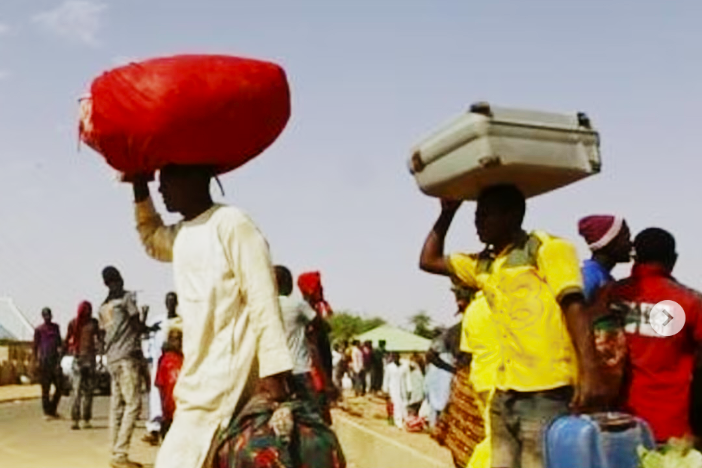
Nearly 64,000 people have fled violence in northern Nigeria into Niger since the beginning of 2026, while several hundred more have sought refuge in neighbouring Benin, according to UNHCR. Most arrivals are settling in Diffa and Tahoua, where host communities are already struggling with insecurity, drought, weak services and food shortages. UNHCR says more than 23,000 people have reached Diffa alone this year, more than two thirds of them children, while severe funding shortages are limiting food, shelter, healthcare, water and registration services. UNHCR
Escalating violence across northern Nigeria is forcing tens of thousands of people to flee across international borders into neighboring Niger and Benin, creating a widening humanitarian emergency in communities that are themselves already struggling with insecurity, climate shocks, food shortages and limited public services. The United Nations refugee agency says nearly 64,000 people have crossed from northern Nigeria into Niger since the beginning of 2026, while several hundred others have sought safety in Benin, highlighting how instability inside Nigeria is increasingly spilling across the wider West African region.
The latest movement represents one of the clearest signs this year that insecurity in northern Nigeria is no longer producing only internal displacement. Families who once might have moved from one Nigerian community to another are increasingly crossing national borders because they no longer believe nearby areas can provide sufficient safety. UNHCR says the resulting influx is placing additional strain on host communities in Niger and Benin that already face their own security threats, climate related pressures and serious shortages of humanitarian assistance.
Most of the Nigerians arriving in Niger have sought refuge in Diffa in the southeast and Tahoua in the west, both regions sharing borders with Nigeria and both already affected by persistent violence and displacement. In October alone, around 1,200 people reportedly entered Diffa while approximately 3,400 crossed into Tahoua as fresh attacks continued to push families from their homes. These movements are adding to a much larger refugee population already present in Niger, where more than half a million refugees and asylum seekers are being hosted alongside people displaced inside the country.
Niger is now home to approximately 327,500 Nigerian refugees, making Nigerians the largest refugee population in the country. That figure reflects years of cross border displacement linked initially to Boko Haram and Islamic State West Africa Province violence in the northeast and, more recently, to expanding banditry, criminal attacks and insecurity affecting parts of northwestern and north central Nigeria. The latest arrivals are therefore joining communities that have already spent years absorbing repeated waves of people fleeing conflict.
In Diffa alone, more than 23,000 people from Nigeria have arrived since the beginning of 2026, and UNHCR says more than two thirds of them are children. Many families are living in makeshift shelters with limited protection from heat, rain and wind, while basic services remain scarce. Women in some refugee settlements reportedly walk several kilometres to collect water because reliable water points are either too distant or unable to meet the needs of rapidly growing populations.
Health conditions are also deteriorating. Humanitarian organisations are reporting high levels of malnutrition, poor sanitation and respiratory illness among newly arrived families, many of whom fled with little more than the clothes they were wearing. Children are particularly vulnerable because displacement interrupts nutrition, schooling and healthcare at the same time, leaving families struggling to meet several urgent needs simultaneously.
Education has become another major challenge. Nigerian children arriving in Niger come from an English language education system, while many schools in host communities teach in French. UNHCR says some refugee locations do not yet have schools or transitional classes capable of bridging that language difference, meaning children who have already experienced violence and displacement risk losing months or years of education.
Registration has also become a serious concern. Only around five percent of Nigerian refugees arriving in Niger this year have reportedly been formally registered because registration operations began late and humanitarian organisations are struggling with limited resources. Without proper documentation, displaced families can face additional barriers when seeking healthcare, food assistance, education and other essential services.
The lack of documentation can also expose refugees to protection risks. People without official registration may find it more difficult to prove their legal status, move safely through local areas or access humanitarian programmes. Women and children can become particularly vulnerable to exploitation, trafficking and abuse where systems for identifying and supporting them are weak.
UNHCR says the growing displacement is being driven by continuing violence across several parts of northern Nigeria. In the northeast, Boko Haram and Islamic State West Africa Province continue to carry out attacks against civilians, security forces and rural communities, while military operations and insecurity along key roads continue to force families from their homes. In the northwest, bandit groups and criminal networks have expanded kidnappings, village attacks, cattle theft and extortion, generating new displacement in states where insecurity has become increasingly difficult to contain.
The situation in the wider Lake Chad Basin remains especially severe. UNHCR reported earlier this year that more than 3.5 million people were forcibly displaced across the basin, which includes parts of Nigeria, Niger, Chad and Cameroon. Security incidents across the region increased sharply between 2024 and 2026, with attacks on civilians, abductions, village raids and armed clashes continuing to undermine efforts to stabilise affected communities.
Borno State remains one of the main centres of that crisis. Repeated attacks by non state armed groups, restrictions on movement and continued military operations have made it difficult for displaced families to return permanently. Some people who attempted to go back to their communities have later fled again because insecurity persisted or because homes, farms and public services had not been restored.
The movement into Tahoua reflects a somewhat different security dynamic. Western Niger sits closer to parts of northwestern Nigeria affected by banditry and organised criminal violence, meaning people fleeing those areas are increasingly moving across routes different from the traditional northeast displacement corridors associated with the Lake Chad conflict. That shift suggests the geographical footprint of Nigeria’s displacement crisis is expanding.
The movement into Benin reinforces that conclusion. UNHCR says several hundred Nigerians have now sought refuge in the neighbouring country, a smaller number compared with Niger but still significant because it indicates families are travelling farther and using additional border corridors in search of safety. Northern Benin itself is already under pressure from spillover insecurity connected to the wider Sahel crisis, meaning host communities there have limited capacity to absorb additional displaced populations.
Benin has also experienced growing insecurity near its northern borders with Burkina Faso and Niger. Armed groups operating across the Sahel have increasingly pushed southward, placing pressure on border communities in Atacora and Alibori and forcing the government to strengthen military deployments. The arrival of Nigerians therefore adds another layer of displacement to an area already dealing with cross border security threats.
Host communities in Niger and Benin are showing considerable solidarity, but UNHCR warns that their capacity is being stretched. In Niger, local authorities and residents have provided land for temporary shelters and helped newly arrived families access basic necessities. However, many of the communities receiving refugees are themselves poor and vulnerable, meaning every new arrival increases competition for water, food, farmland, healthcare and education.
Climate conditions are making the problem worse. Diffa experienced serious drought and irregular rainfall during the 2026 rainy season, reducing agricultural production and damaging pastureland needed for livestock. UNHCR says grain production is expected to be insufficient in hundreds of villages, while roughly 70 percent of pasture in affected areas has reportedly been lost.
Those shortages mean refugees are arriving in communities whose own food systems are already under pressure. Farmers who would normally support their own households may now be producing less, while pastoralists face declining grazing areas and water shortages. Adding thousands of displaced people to that environment increases the risk of food insecurity for both refugees and local residents.
This overlap between conflict and climate stress is becoming one of the defining features of displacement in the Sahel and Lake Chad Basin. Violence forces families to leave their homes, but climate shocks make the places receiving them less able to cope. The result is a cycle in which insecurity and environmental pressure reinforce each other.
Humanitarian funding has not kept pace with the scale of those needs. UNHCR says its response is facing serious funding shortages and is seeking $11.4 million to strengthen assistance across Niger, Nigeria and Benin. Of that amount, approximately $2 million is needed immediately for critical support including water, food, shelter, healthcare, registration and protection.
The funding gap affects nearly every aspect of the response. Water systems cannot be expanded quickly enough, shelters remain inadequate, health facilities are too distant or understaffed and education services are unable to absorb large numbers of newly arrived children. Registration teams also lack sufficient resources, contributing to the low number of refugees formally documented this year.
Food assistance is another pressure point. Families arriving from Nigeria often have little or no income and may have lost farms, livestock, businesses or household possessions during flight. Without regular food assistance or livelihood opportunities, they can become dependent on host communities that already have limited resources of their own.
That dependence can eventually create tension if assistance is perceived as favouring refugees while local residents remain poor. Humanitarian organisations therefore increasingly emphasise programmes that support both displaced populations and the communities hosting them rather than creating separate systems that benefit only newcomers.
UNHCR has called for longer term investment in livelihoods as well as emergency aid. The agency argues that refugees cannot remain permanently dependent on food distributions and temporary shelters, particularly when displacement is lasting for years. Access to work, farming, markets and education is essential if families are to rebuild stable lives.
The challenge is that host areas are themselves affected by instability. In Diffa, more than 70 percent of Niger’s reported security incidents this year have occurred in the region, according to UNHCR. Armed attacks and violence against civilians continue even while the area receives refugees fleeing similar threats in Nigeria.
This creates a difficult reality in which people are escaping from one insecure environment into another. Niger may offer relative safety compared with the communities they left behind, but refugees are still entering regions where armed groups operate, military activity is frequent and public services are weak.
That insecurity also limits humanitarian access. Aid workers may be unable to travel safely to some areas, while transport costs increase when convoys require additional security. Supplies can be delayed and monitoring becomes more difficult, leaving remote communities with less consistent assistance.
The broader security picture across northern Nigeria remains highly fragmented. Boko Haram and ISWAP continue to operate in the northeast, while armed bandit groups dominate parts of the northwest and criminal violence affects sections of the north central region. Communal conflict, farmer herder tensions and organised kidnapping add further layers to the crisis.
These different forms of violence are not identical, but they produce similar consequences for civilians. Families abandon homes, children leave school, farms are left uncultivated and communities lose access to markets and healthcare. Once displacement begins, returning safely can become extremely difficult.
Nigeria still has millions of people displaced within its own borders. UNHCR and Nigerian authorities estimate that more than three million people remain internally displaced, with the largest concentrations in the northeast, northwest and north central parts of the country. The new cross border movement therefore represents only one part of a much larger humanitarian crisis.
Many internally displaced Nigerians live in camps or host communities within the country, while others repeatedly move between villages, towns and urban centres depending on security conditions. Some eventually cross borders after deciding that no nearby Nigerian location offers adequate protection.
The fact that nearly 64,000 people have entered Niger this year suggests that such decisions are becoming more common. The movement is especially significant because it comes after more than a decade of regional displacement linked to Nigeria’s insurgency, meaning existing refugee systems were already under heavy pressure before the latest arrivals.
The total Nigerian refugee population in Niger now exceeds 327,000 people. When combined with Nigerians living as refugees in Cameroon and Chad, the wider regional figure becomes much larger, underlining how deeply Nigeria’s security crisis has affected neighbouring countries.
The regional consequences are economic as well as humanitarian. Border markets can be disrupted, trade routes may become unsafe and communities receiving large numbers of refugees may experience rising demand for food, housing and basic goods. Governments must then spend additional resources on security and social services in areas that were already underfunded.
Niger faces particularly severe constraints because it is simultaneously managing several displacement crises. In addition to Nigerians, the country hosts large numbers of refugees from Mali and other parts of the Sahel, while hundreds of thousands of Nigeriens are internally displaced by violence within their own country.
The state therefore has to respond to incoming refugees while also protecting its own displaced population. That creates intense competition for limited humanitarian funding, especially at a time when international aid budgets are under pressure.
Political instability has further complicated Niger’s response. Since the 2023 military takeover, relations with some international partners have changed, affecting funding and operational cooperation. UNHCR has continued working in the country, but the wider environment remains difficult.
Despite those challenges, local authorities have kept borders relatively open to people fleeing violence. That policy has allowed thousands of Nigerians to find protection rather than being turned back into dangerous areas, but it also increases the responsibility of the international community to support Niger and other host countries.
UNHCR has warned that expecting poor border communities to carry the burden indefinitely is unsustainable. Local solidarity can help during the early stages of an emergency, but food, water, healthcare and education require resources that communities cannot provide on their own.
The displacement into Benin presents similar concerns, although the numbers remain smaller. Northern Benin is already receiving people affected by insecurity originating from the central Sahel, particularly Burkina Faso and Togo. The arrival of Nigerians could further stretch protection and support systems in border regions where poverty and insecurity remain serious.
The movement also raises security concerns for governments trying to distinguish civilians fleeing violence from armed actors crossing porous borders. Refugee protection systems therefore require careful registration and screening, which becomes harder when resources are inadequate and only a small percentage of arrivals have been formally documented.
Registration is essential not only for security but also for planning. Governments and humanitarian agencies need to know how many people are present, where they are living, what services they require and whether vulnerable individuals need specialised protection.
The current five percent registration rate among this year’s Nigerian arrivals demonstrates how far the response is falling behind. Thousands of people may be living in host communities or temporary sites without appearing fully in official assistance databases.
Children are likely to suffer most from those gaps. Many arrive without school records, identity documents or vaccination information, making it harder to enrol them in education or healthcare programmes. Some have also been separated from parents or other relatives during flight.
Women face additional risks, particularly in areas where shelters provide little privacy or lighting. Humanitarian organisations routinely warn that displacement can increase exposure to sexual violence, exploitation and forced marriage, particularly where families are economically desperate.
People with disabilities, older persons and those with chronic illnesses can face even greater difficulties. Long journeys across borders may worsen medical conditions, while remote refugee settlements often lack specialised healthcare.
UNHCR says the international response must therefore address protection as well as material assistance. Providing food and shelter is essential, but refugees also need documentation, legal support, child protection, healthcare and mechanisms for reporting abuse.
The causes of displacement must also be addressed inside Nigeria if the movement is to slow. Humanitarian assistance can protect people after they flee, but it cannot substitute for improved security in the communities they left behind.
Nigeria’s government has deployed military forces and launched repeated operations against insurgents and bandit groups, sometimes killing commanders, rescuing hostages and reopening roads. However, attacks continue in many areas, and armed groups have repeatedly demonstrated an ability to regroup or move into neighbouring regions.
The geographic expansion of insecurity is particularly troubling because it means military pressure in one area can sometimes push armed groups into another. Bandits driven from one forest corridor may move toward a neighbouring state, while insurgents can exploit international borders to escape security forces.
That cross border nature of armed violence makes regional cooperation essential. Nigeria, Niger, Benin, Chad and Cameroon all have an interest in sharing intelligence, coordinating border security and preventing armed groups from exploiting gaps between national jurisdictions.
The Lake Chad Basin Multinational Joint Task Force has provided one framework for such cooperation in the northeast, but the spread of insecurity toward other border areas may require additional coordination mechanisms.
Benin’s growing exposure also illustrates why the security crisis cannot be treated purely as a Nigerian domestic issue. When people flee into neighbouring states and armed groups operate near international frontiers, instability becomes regional.
The humanitarian response must therefore be regional as well. Funding targeted only at Nigeria will not adequately support refugees once they cross into Niger or Benin, while assistance directed only at host countries will not address the conditions forcing people to flee.
UNHCR’s $11.4 million appeal is designed around that reality, covering needs across Niger, Nigeria and Benin rather than treating each country separately. The agency says more partners are needed, particularly in water, health, education, registration and livelihoods.
The international community has repeatedly warned about deteriorating humanitarian conditions across the Sahel, but donor fatigue remains a major concern. Multiple crises in Sudan, Gaza, Ukraine and elsewhere are competing for limited global humanitarian funding, leaving West African emergencies at risk of receiving less attention.
That competition can have direct consequences in refugee settlements. When budgets fall short, food rations may be reduced, shelters may remain incomplete and health programmes may operate with fewer staff.
For people who have already lost homes and livelihoods, such reductions can be devastating. Many refugee families have no savings and few legal opportunities for immediate income, making even modest cuts in support dangerous.
Host communities also suffer when international funding is insufficient. Local clinics and schools may suddenly serve much larger populations without receiving additional equipment or staff, while water sources must support thousands more people.
That pressure can damage social cohesion over time. Residents may initially welcome refugees but become frustrated if they believe newcomers are increasing competition for scarce resources.
UNHCR therefore stresses the importance of supporting both groups together. Building a borehole or expanding a health facility can benefit refugees and local residents at the same time, reducing tension and leaving longer term infrastructure behind.
The current emergency also demonstrates how climate resilience has become inseparable from refugee policy. Host communities in Diffa cannot absorb new arrivals sustainably if drought continues destroying crops and pasture.
Investments in water management, climate resilient agriculture and alternative livelihoods are therefore increasingly seen as part of displacement response rather than separate development projects.
For Nigeria, the latest figures represent another warning about the cost of prolonged insecurity. Every person who crosses into Niger or Benin is not simply a statistic but someone who has concluded that remaining within their home country is no longer safe enough.
That decision has consequences for families, communities and the state. Farms are abandoned, businesses close, children leave school and entire villages can lose significant portions of their population.
Rebuilding those areas becomes harder the longer people remain away. Homes deteriorate, land may be occupied or abandoned and economic networks collapse.
Voluntary return therefore requires more than simply reducing attacks. Refugees need confidence that security improvements will last and that basic services will be available if they go home.
UNHCR has repeatedly warned that returns should not be forced or rushed into areas where danger remains. People must be able to make informed decisions and return voluntarily.
For many Nigerian refugees currently in Niger, that point may still be far away. Continued violence in their home communities means returning could expose them to the same threats that forced them to flee in the first place.
The immediate priority is therefore survival. Families need water, food, shelter, healthcare and protection while governments and security forces work on longer term solutions.
The latest UNHCR warning is ultimately about capacity. Niger and Benin are still receiving people and local communities are still providing space, but the humanitarian system supporting them is falling behind the scale of the movement.
If additional resources do not arrive, the consequences will be felt both by refugees and by host communities. Malnutrition could worsen, water shortages could deepen and children could remain out of school for extended periods.
The pressure could also create new migration movements, with some refugees moving again toward other cities, countries or dangerous routes toward North Africa. Secondary displacement often occurs when people discover that the first place they reached cannot meet their needs.
That possibility gives the international community another reason to invest early. Stabilising refugee communities near their countries of origin can reduce the likelihood of more dangerous onward journeys.
UNHCR’s warning therefore carries implications far beyond Niger’s border regions. It reflects a growing West African displacement crisis created by the interaction of armed violence, poverty, climate shocks and weak humanitarian funding.
The nearly 64,000 Nigerians who have crossed into Niger this year are part of that wider pattern, while the movement into Benin shows the crisis is expanding geographically.
For host communities, the burden is becoming increasingly difficult to carry without greater international support. For displaced Nigerians, crossing a border has brought relative safety but not necessarily security, stability or a normal life.
The challenge now is to prevent emergency displacement from becoming a prolonged regional crisis in which hundreds of thousands of people remain trapped for years without adequate services or realistic prospects of returning home.
UNHCR says that will require immediate humanitarian assistance alongside longer term investment in host communities and stronger efforts to address the violence driving people out of northern Nigeria. Without those measures, the numbers crossing into Niger and Benin are likely to continue growing as families make the same calculation many others have already made: leaving everything behind may be safer than staying.