IMPORTING CHEAP SOUTH AFRICAN WINES DOES NOT MAKE YOU AN ECONOMICS GURU, SHETTIMA TELLS PETER OBI
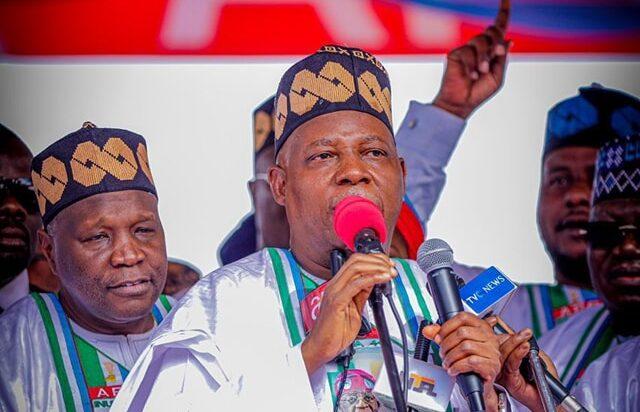
Vice President Kashim Shettima has attacked NDC presidential candidate Peter Obi’s economic credentials, saying the ability to import cheap South African wines does not make anyone an economics expert. Speaking at an APC rally in Akure, Shettima described Obi’s eight years as Anambra governor as mediocre and argued that voters should judge presidential candidates by their records in office rather than television appearances or social media messaging.
Vice President Kashim Shettima has launched another sharp attack on Peter Obi, the presidential candidate of the Nigeria Democratic Congress, questioning his economic credentials and arguing that his record as governor of Anambra State did not justify the reputation he has built around fiscal discipline and economic management. Speaking on Wednesday at the All Progressives Congress presidential campaign rally in Akure, Ondo State, Shettima said Obi had spent much of the current campaign presenting himself as an expert on economics, but insisted that what he described as Obi’s business background and political record did not support that image.
Shettima delivered one of his most pointed lines when he mocked Obi’s background in private business and said the ability to import cheap South African wines did not make anyone an economics guru. The remark drew cheers from supporters at the rally and quickly spread across social media, becoming one of the most discussed moments from the APC event. The Vice President used the comment to frame a broader argument that business experience and political communication should not automatically be treated as proof of competence in managing a national economy.
He then turned directly to Obi’s record in Anambra, where the opposition candidate served two terms as governor. Shettima described Obi’s eight years in office as mediocre and argued that the former governor had failed to produce the level of transformation that would justify the economic reputation he now presents to voters. The Vice President urged Nigerians to examine tangible achievements rather than rely on speeches, statistics, television appearances or social media popularity when deciding which presidential candidate has the strongest record.
The comments form part of an increasingly aggressive APC strategy aimed at challenging Obi’s core political brand. Since the beginning of the 2027 campaign cycle, Obi has continued to position himself as a candidate focused on fiscal responsibility, public sector efficiency, investment, production and lower government waste. Shettima’s remarks were designed to attack that image directly by arguing that Obi’s own record in government should be placed under greater scrutiny.
Obi’s supporters have frequently pointed to his management of Anambra’s finances, savings and public expenditure as evidence that he governed differently from many of his contemporaries. They have also argued that his private sector background gave him a strong understanding of business, investment and economic management before he entered politics. APC leaders have increasingly pushed back against those claims, arguing that the former governor’s reputation has been built partly through political messaging rather than through achievements that distinguish him clearly from other governors of the same period.
Shettima’s attack in Akure therefore went beyond a personal insult and became part of a larger debate over what should count as credible evidence of economic competence in a presidential campaign. The Vice President argued that Nigerians should judge Obi by what happened during his years in Anambra and compare that record with the performance of leaders associated with the APC, particularly President Bola Tinubu.
One of Shettima’s strongest comparisons involved Lagos. He argued that Obi’s decision to make Lagos his home after leaving office in Anambra demonstrated that he was benefiting from the economic and infrastructural environment created by Tinubu during his years as governor. Shettima used that point to support his argument that Tinubu had a stronger record of transforming a state economy and building a larger platform for investment and business growth.
The Vice President described Lagos as Nigeria’s commercial capital and one of Africa’s most important economic centres, crediting Tinubu with helping to lay the foundation for the state’s expansion through infrastructure, increased internally generated revenue and policies that attracted investment. He suggested that Obi’s choice to live and conduct business in Lagos was itself evidence of the advantages created by the political leadership he was now campaigning against.
That argument is politically contested. Lagos had already been Nigeria’s main commercial centre before Tinubu became governor in 1999, and the state’s economic expansion has continued under several administrations after he left office in 2007. Supporters of Tinubu credit him with reforms that strengthened revenue collection, urban administration and investment, while critics argue that Lagos’s advantages also reflect decades of federal investment, population growth, geography and its long established role as the country’s commercial hub.
The same type of debate surrounds Obi’s record in Anambra. Supporters portray him as a disciplined administrator who avoided excessive borrowing and left significant savings, while critics argue that fiscal caution did not always translate into the level of infrastructure and industrial expansion needed in the state. The 2027 campaign is increasingly turning those competing interpretations into central arguments about who has demonstrated the best preparation for managing Nigeria’s economy.
Shettima also accused Obi of relying heavily on public image and social media visibility. He suggested that high profile appearances, viral moments and television commentary were being used to create the impression of stronger political performance than the record of government actually supported. The Vice President urged voters to separate public relations from administrative achievements.
His attack extended beyond economics. Shettima criticised Obi’s recent public appearances and suggested that some were designed more for attention than substantive leadership. He specifically referred to Obi’s interaction with Nigeria’s victorious Flamingos, accusing him of going outside protocol in what he described as an effort to gain political attention.
The criticism reflects a broader APC narrative that Obi is particularly effective at using public events and social media to build visibility among younger voters. Obi remains one of the most active Nigerian politicians online, where his speeches, visits and economic commentary regularly attract large audiences.
The NDC campaign, however, has repeatedly argued that Obi’s popularity is driven by dissatisfaction with the political establishment rather than media performance alone. His supporters say his appeal comes from a message centred on production, accountability, education, healthcare and reducing the cost of governance.
The Akure rally therefore became another stage for the growing confrontation between the APC and NDC ahead of the 2027 presidential election. Both parties are increasingly moving beyond broad policy claims and directly attacking the records and credibility of rival candidates.
Peter Obi is contesting the 2027 election under the banner of the Nigeria Democratic Congress after emerging as the party’s presidential candidate earlier in the year. His latest campaign has focused on presenting the election as a choice between continuity under the APC and what he describes as a new approach to economic management and governance.
The APC is responding by arguing that its own record should be judged against the alternatives rather than against idealised expectations. Shettima’s message in Ondo was that candidates who criticise the government must also be prepared to defend what they accomplished when they previously held executive office.
That standard is especially important because both Tinubu and Obi have records as state governors. Tinubu governed Lagos from 1999 to 2007, while Obi governed Anambra for roughly eight years across two terms. Their supporters have spent years debating which record provides stronger evidence of national leadership ability.
The comparison is not straightforward because Lagos and Anambra have very different economies, populations and revenue bases. Lagos has historically had access to far greater internally generated revenue, a larger private sector and a much bigger concentration of corporate activity.
Anambra, by contrast, has a smaller formal revenue base but has strong commercial centres including Onitsha, Nnewi and Awka. Supporters of Obi argue that the constraints facing Anambra made his fiscal management more impressive, while APC leaders say the state should have achieved more industrial and infrastructural development under his leadership.
These competing claims will likely become increasingly important as the campaign progresses. Economic issues remain among the most significant concerns for Nigerian voters, particularly inflation, unemployment, food prices, exchange rate stability and the cost of living.
The APC is entering the 2027 contest with the advantage of incumbency but also with responsibility for the economic conditions experienced by households. Tinubu’s administration has defended major reforms including the removal of fuel subsidies, exchange rate changes and tax restructuring as necessary measures to correct long standing distortions.
Critics have argued that those reforms imposed severe short term costs on ordinary Nigerians. Rising fuel prices, transportation costs and food inflation created widespread hardship during the earlier years of the administration, even as government officials argued that the reforms were necessary to prevent deeper fiscal problems.
The 2027 campaign is therefore likely to involve two different arguments about economic competence. The APC will argue that difficult reforms were necessary and are now beginning to produce stronger stability, while opposition parties will argue that the government’s policies placed excessive burdens on households and businesses.
Obi has positioned himself strongly within that opposition debate. He frequently argues that Nigeria needs to reduce waste, increase production and redirect public spending toward education, healthcare and infrastructure. He has also criticised excessive borrowing and what he describes as unnecessary government expenditure.
Shettima’s response is to question whether Obi’s own record provides evidence that he can deliver those promises on a national scale. His description of Obi’s Anambra tenure as mediocre is therefore intended to undermine the central argument behind the NDC campaign.
The Vice President also challenged Obi’s relationship with political leaders in Anambra. He argued that several prominent former governors and current political figures in the state were not aligned with Obi’s presidential ambition, suggesting that the opposition candidate had failed to build sufficient political consensus even in his home state.
Shettima mentioned former Anambra governors Chris Ngige and Willie Obiano as well as incumbent Governor Chukwuma Soludo, arguing that Obi could not point to broad support from major political figures who had governed the state. He used that lack of alignment as part of a wider argument that Obi’s national appeal should be questioned.
Political support among former governors, however, is not necessarily a direct measure of public popularity. Nigerian politicians frequently belong to different parties and maintain rival political structures within the same state.
Obi’s support base has often been driven more by younger voters, urban professionals and grassroots supporters than by endorsements from established political figures. That difference became particularly visible during the 2023 election and remains a major part of his political identity.
The APC appears determined to challenge that model by emphasising party organisation, established structures and records of office. The Akure rally brought together senior APC leaders and supporters as the party continues building its campaign machinery across the South West.
Ondo is particularly important to the APC because the South West remains President Tinubu’s strongest regional political base. The party wants to maximise turnout in the region while limiting the ability of opposition candidates to make significant gains.
Shettima’s presence in Akure was therefore part of a broader mobilisation strategy rather than simply an opportunity to attack Obi. APC leaders used the rally to reinforce support for Tinubu’s reelection and encourage party members to intensify grassroots campaigning.
The Vice President’s comments nevertheless became one of the main headlines because of their personal tone. References to wine imports and Obi’s choice of residence gave the speech a sharper edge than a conventional policy argument.
Personal attacks have become increasingly common as Nigeria moves closer to the 2027 election. Candidates and senior party officials are using political rallies not only to present programmes but also to undermine the credibility and reputations of their rivals.
That strategy can energise supporters, but it also risks shifting attention away from policy detail. Nigeria faces serious economic, security and social challenges that will require substantial policy responses from whoever wins the election.
Voters will therefore have to assess both political rhetoric and the specific programmes offered by the competing campaigns. Questions about inflation, public debt, employment, energy, insecurity and investment are likely to remain more consequential than individual campaign insults.
Shettima’s argument that candidates should be judged by their records is likely to resonate as a campaign theme precisely because several leading contenders have held major public offices. Voters have extensive records to examine rather than relying solely on promises.
Tinubu’s record includes eight years as Lagos governor and more than three years as president by the time of the election. Obi’s record includes eight years governing Anambra, while other contenders also have extensive backgrounds in government.
That means the 2027 race will likely involve competing interpretations of past performance as much as competing plans for the future. Each party will highlight achievements that support its candidate while emphasising failures associated with opponents.
For the APC, Lagos remains one of its strongest examples. Tinubu’s allies point to the growth in internally generated revenue, infrastructure development and the expansion of private investment during and after his governorship.
The opposition argues that Lagos’s success cannot be attributed to a single politician and points to continued inequality, congestion, housing pressures and infrastructure deficits despite the state’s enormous revenue.
In Anambra, Obi’s supporters highlight fiscal discipline and improvements in education and public management. Critics say the state needed stronger infrastructure and more aggressive economic expansion.
The debate is therefore unlikely to be settled by simple comparisons. Different voters may value fiscal discipline, infrastructure, social services or economic growth differently.
What Shettima attempted to do in Akure was simplify that debate into a political message. His argument was that Obi’s business background and public presentation should not automatically confer the title of economic expert.
The wine remark was particularly effective as a campaign soundbite because it reduced a complex argument to a memorable line. It was designed to be repeated by supporters and shared widely on social media.
That approach is common in modern campaigns, where short phrases often travel further than detailed policy speeches. Political strategists increasingly design remarks for television clips, online videos and social media posts.
The NDC is likely to respond with its own attacks on the Tinubu administration’s economic record. Opposition campaigners have repeatedly argued that Nigerians should judge the government by the cost of food, fuel and transportation rather than by official claims of economic reform.
That creates a direct contest between two narratives. The APC wants voters to compare the records of rival candidates in previous offices, while the NDC wants voters to assess the current government based on present economic conditions.
Both approaches may influence the campaign. The strongest political arguments are likely to combine historical records with current performance and future policy proposals.
Shettima’s comments about Lagos also illustrate how personal geography has entered the campaign. By highlighting Obi’s residence in Lagos, the Vice President attempted to turn a private or personal decision into a political argument about the quality of governance.
Obi has long maintained business and residential connections in Lagos because of the city’s role as Nigeria’s commercial centre. Like many politicians and business leaders from other states, he spends significant time there.
Whether that choice proves anything about Tinubu’s political record is a matter of interpretation. Shettima presented it as evidence that Obi personally benefits from a city shaped by Tinubu’s leadership, while critics may view it simply as a practical consequence of Lagos’s economic importance.
The broader argument about Lagos will likely continue because the city remains central to Tinubu’s political identity. His supporters regularly cite his governorship as evidence of economic and administrative competence.
Opposition parties frequently challenge that narrative by arguing that Lagos’s development has occurred through the efforts of many administrations and generations of investment.
The 2027 election may therefore revisit debates that have shaped Nigerian politics for more than two decades. Tinubu’s Lagos record, Obi’s Anambra record and the current federal government’s performance are all likely to receive intense scrutiny.
Shettima is expected to remain one of the APC’s most aggressive campaign voices. As Vice President and a senior political figure with experience as Borno governor, he has increasingly taken responsibility for confronting opposition candidates directly.
His political style combines policy arguments with sharp personal criticism, making his speeches highly visible during rallies. The APC may continue using him to deliver attacks while Tinubu focuses more heavily on presidential messaging and policy.
The NDC, meanwhile, will need to decide how directly Obi responds. He has often preferred to frame his campaign around policy and economic statistics, although he has also responded strongly when criticised by senior government officials.
A direct exchange between Obi and Shettima could intensify the campaign further and draw attention away from other opposition candidates.
The political environment is already becoming more confrontational as parties move deeper into campaign season. Rallies, television interviews and social media exchanges are increasingly being used to define rivals before voters make final decisions.
The APC wants Obi to be seen as a candidate whose reputation exceeds his record. The NDC wants Tinubu to be judged by the economic hardship many Nigerians experienced during his presidency.
Those narratives will compete throughout the election.
The Akure remarks also show that the APC intends to make economic competence one of its own campaign themes rather than allowing the opposition to dominate the subject. By attacking Obi’s credentials directly, Shettima is attempting to prevent the NDC candidate from owning the debate over fiscal management.
That strategy carries risks because the incumbent government will also face scrutiny over inflation, debt, unemployment and the naira. Any attack on Obi’s economic record invites comparison with the current administration’s own performance.
The APC appears willing to accept that comparison and argue that reforms implemented under Tinubu will produce stronger long term outcomes.
The NDC will argue that competent economic policy should improve living standards more quickly and with less hardship.
The election will ultimately determine which argument voters find more convincing.
For now, Shettima’s wine comment has ensured that the latest confrontation will remain highly visible. It has given APC supporters a memorable line while providing Obi’s supporters with another example of what they may describe as personal rather than policy based attacks.
What is clear is that the Vice President is not treating Obi as a minor opponent. The frequency and intensity of his attacks suggest the APC sees the NDC candidate as a significant electoral challenger whose economic message must be confronted directly.
That political calculation could shape the tone of the campaign in the months ahead. As rallies move across the country, voters are likely to hear increasingly sharp comparisons between Tinubu’s record, Obi’s Anambra years and the economic conditions Nigerians currently face.
The Akure rally has now added another phrase to that contest. Shettima’s argument is that importing cheap South African wine does not make anyone an economics guru and that political candidates must be judged by what they actually accomplished in public office.
Whether voters accept his judgment of Obi’s record is another matter entirely. That is ultimately a political decision for Nigerians to make after comparing the evidence, the records and the policies offered by all the candidates seeking the presidency in 2027.