TERRORISTS REPORTEDLY KILL KWARA BUSINESSMAN ABDUCTED FROM HOME AFTER HE COULD NOT WALK LONG DISTANCES
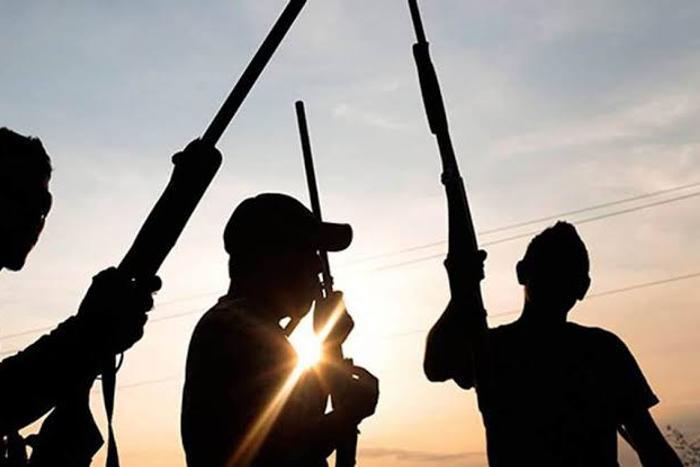
A businessman abducted from his home in Kwara State has reportedly been killed by his captors after he became unable to continue walking the long distances demanded while hostages were being moved through forest areas. The account was reported by SaharaReporters, but security authorities had not yet publicly confirmed every detail of the killing at the time of publication. The incident comes amid a sustained wave of terrorist attacks, kidnappings and killings across several parts of Kwara State.
A businessman abducted from his home in Kwara State has reportedly been killed by his captors after he became unable to continue walking the long distances demanded of hostages being moved through the forest, adding another disturbing case to the growing security crisis confronting communities across the state. The killing was reported on Thursday by SaharaReporters, which said the victim had been seized from his residence by armed men before being taken into the bush, where the abductors allegedly killed him after deciding that his physical condition was slowing their movement.
The circumstances surrounding the businessman’s death remain the subject of developing reports, and security agencies had not issued a detailed public statement confirming every aspect of the account at the time of publication. In particular, the claim that the victim was killed specifically because he could not continue walking should remain attributed to sources familiar with the incident until the Kwara State Police Command or another security agency provides an official account. What is clear, however, is that the reported killing fits a wider and increasingly documented pattern in which kidnapping gangs operating in Kwara move victims through remote forest corridors for long periods while demanding large ransom payments from families.
Victims of abductions across parts of north central Nigeria have repeatedly described being forced to walk for hours or days through forests as kidnappers try to avoid detection by security forces. In previous cases in Kwara, survivors have spoken of travelling dozens of kilometres through rough terrain, sleeping in open forest areas and receiving little food while their abductors shifted camps. The physical demands of captivity can be particularly dangerous for older victims, people with existing medical conditions and those injured during attacks.
The latest case has therefore renewed concern about the treatment of kidnapped civilians whose health deteriorates while in captivity. Where armed groups are constantly moving to evade military patrols, vigilantes or local hunters, victims who are unable to keep pace can become especially vulnerable. Families may continue negotiating or raising ransom money without knowing whether their relatives remain alive, making the abduction economy one of the most traumatic forms of insecurity facing affected communities.
Kwara State has experienced a sharp increase in terrorist and bandit activity across several local government areas during 2026. Communities that once considered themselves relatively insulated from the worst violence affecting parts of the North West and North Central regions have increasingly reported armed raids, killings, kidnappings and attacks on security formations. The trend has forced federal and state authorities to expand military deployments, strengthen local security structures and increase cooperation with vigilante and forest guard groups.
Kaiama Local Government Area has been among the most affected. On November 7, local vigilantes and security forces repelled an attempted attack on Nanu community, killing one suspected terrorist and forcing others to retreat. The incident came after a series of attacks earlier in the year that included the killing of soldiers and police officers as well as mass abductions involving residents of several communities.
The scale of earlier violence has already demonstrated how deeply armed groups have penetrated parts of the state. In February, suspected terrorists attacked Nuku and Woro communities in Kaiama, killing scores of residents and abducting a large number of people, many of them women and children. A significant number of those abducted remained in captivity for months before eventually regaining freedom, highlighting the difficulty security forces face when criminal groups retreat into extensive forest areas spanning state boundaries.
Kwara’s location contributes to the challenge. The state shares boundaries with Niger, Kogi, Ekiti, Osun and Oyo states and also lies close to routes leading toward the Republic of Benin. Criminal groups can exploit forests, rural roads and poorly monitored corridors to move between jurisdictions, complicating search and rescue operations. Communities near those routes have repeatedly complained that armed men can strike, seize residents and disappear before security personnel arrive.
Baruten, Edu and Patigi have also experienced repeated incidents. In previous attacks, businessmen, farmers, traditional rulers, clerics, teachers and other residents have been abducted from homes, shops and roads. Some families have been confronted with ransom demands running into tens or hundreds of millions of naira, forcing them to sell property or seek contributions from relatives and communities.
The economic consequences are becoming increasingly serious. Traders and farmers in affected areas have reduced movement, businesses close earlier and some residents avoid travelling at night because of fear of abduction. Agricultural activity is also vulnerable because many farms are located outside densely populated areas and require workers to travel along rural routes that armed groups can monitor.
Kidnapping therefore creates damage far beyond the immediate victim. When farmers stop going to fields, food production suffers. When traders avoid markets, local commerce weakens. When transporters refuse particular routes, communities become more isolated and the cost of moving goods rises.
The latest reported killing of the businessman is particularly disturbing because it suggests that physical weakness alone may have become a death sentence during captivity. Hostages are often forced to adapt to harsh conditions while their abductors prioritise speed and secrecy. Victims who are injured, elderly or unable to continue moving may face violence if kidnappers believe they have become a liability.
That pattern has appeared in previous kidnapping accounts from Kwara. In one earlier case documented by investigative reporting, a businessman held for ransom was described by captors as too weak to continue walking and unable to leave the forest without assistance. His family was told that he would need help to come out, underscoring the extreme physical deterioration some hostages experience after weeks or months in captivity.
Former hostages have also described walking very long distances through forests while being moved repeatedly. One businessman kidnapped along the Kwara and Ekiti corridor said he and other victims walked about 80 kilometres during captivity and were fed only limited food while constantly changing locations. Such accounts provide important context for why victims with health problems may rapidly become vulnerable once abducted.
Security agencies have attempted to increase pressure on kidnapping networks through raids, arrests and joint patrols. Police, soldiers, forest guards, local hunters and vigilantes have taken part in multiple operations across the state, sometimes killing suspected bandits and rescuing hostages. In July, security forces killed three suspected bandits and rescued a businessman in Kaiama after confronting kidnappers during a joint operation.
The government has also expanded military infrastructure in response to the worsening situation. New army formations and additional deployments have been announced for Kwara as part of efforts to improve response times and deny armed groups freedom of movement in forest areas. President Bola Tinubu previously approved additional troop deployments under Operation Savannah Shield following major attacks in the state.
Despite those measures, kidnappings have continued. Security operations can disrupt individual cells, but the geographical spread of the attacks suggests that several armed groups may be operating across different parts of the state. Their ability to move between forests, recruit informants and obtain weapons has made permanent disruption difficult.
Community intelligence is therefore becoming increasingly important. Security officials have repeatedly urged residents to report suspicious movements, unfamiliar motorcycle riders and individuals believed to be providing logistical support to armed groups. Investigators have long argued that kidnappers often depend on local information to identify wealthy residents, understand travel patterns and select vulnerable targets.
Recent arrests in Kwara have reinforced those concerns. Police have detained suspected members of kidnapping syndicates and recovered weapons while investigating networks believed to have provided information or logistical assistance to armed groups. Such arrests suggest that the fight against kidnapping is not limited to pursuing gunmen in forests but also requires identifying collaborators operating inside towns and villages.
The targeting of businessmen has become particularly common because abductors believe families or business associates may have access to significant ransom money. Business owners can also be easy to track because they often maintain visible shops, warehouses, petrol stations, farms or other commercial operations. In several Kwara cases, kidnappers have gone directly to victims’ homes rather than intercepting them randomly on highways.
That apparent targeting has increased fear among traders and entrepreneurs. Some have reduced their public visibility, changed travel routines or relocated family members from communities considered vulnerable. Others rely increasingly on private security arrangements despite the additional cost.
Ransom payments remain one of the main financial engines behind kidnapping. Families often face impossible choices between cooperating with criminals and risking the lives of relatives. Nigerian authorities officially discourage ransom payments because they finance criminal networks, but relatives confronted with threats of execution frequently feel they have no realistic alternative.
The secrecy surrounding ransom negotiations also makes reliable data difficult to obtain. Families may refuse to disclose how much was demanded or paid because of security concerns, while kidnappers sometimes change their demands repeatedly during negotiations. As a result, the true economic scale of kidnapping in affected states is likely much larger than figures appearing in public reports.
For families whose relatives are killed before negotiations are completed, the emotional impact can be devastating. They may spend days or weeks raising money only to discover that the victim has already died. Previous cases in Kwara have included families who waited for ransom calls only to later recover the bodies of abducted relatives.
The reported death of the latest businessman therefore reinforces longstanding demands for more effective intelligence led operations. Residents increasingly want security forces to identify camps quickly, prevent kidnappers from moving victims across large distances and dismantle the networks that provide food, fuel and information to armed groups.
Improved surveillance could become critical. Forest areas that are difficult to patrol physically may require drones, aerial reconnaissance and better communications between local security formations. Authorities also need faster sharing of information when suspects move between Kwara and neighbouring states.
Local vigilantes remain important because they understand terrain and community networks, but their effectiveness depends on equipment, training and coordination with formal security agencies. In several attacks, vigilantes have confronted heavily armed terrorists while possessing significantly weaker weapons, exposing them to enormous risk.
The state government has continued to support community based security structures, but residents in some areas argue that more needs to be done. Calls for permanent military bases, additional patrol vehicles and stronger intelligence networks have become increasingly common following repeated attacks.
The wider national security environment also matters. Armed groups operating in Kwara may have links to networks active across Niger State and other parts of north central Nigeria, where mass kidnappings and terrorist attacks have also increased. Pressure in one state can push fighters into neighbouring areas, making coordinated regional operations essential.
The authorities therefore face a challenge that cannot be solved by responding only after each kidnapping. Preventive security requires identifying routes, forest camps, informants and financial networks before attackers reach communities. That approach also requires trust between residents and security agencies because local information can be critical to detecting unusual movements.
For the family of the businessman reportedly killed in the latest incident, however, broader security policy offers little immediate comfort. Their loss represents another example of the human cost behind statistics about abductions and terrorist attacks. A man who was reportedly taken from his own home was forced into a violent system of captivity in which his ability to continue walking may have determined whether he lived or died.
The case also illustrates why kidnappings should not be viewed only through ransom negotiations. Captivity itself can be physically destructive even when victims are eventually released. Long marches, poor food, untreated injuries, exposure to weather and psychological trauma can leave survivors with lasting health problems.
Those conditions can become fatal for vulnerable victims. If the latest reports are confirmed, the Kwara businessman was not killed because negotiations collapsed or because security forces attempted a rescue, but because his abductors allegedly decided he was no longer capable of keeping pace with them. That would make the killing an especially stark example of the brutality faced by civilians once they fall into the hands of armed groups.
The Kwara State Police Command and other security agencies are expected to provide further information as the case develops. An official statement would help establish the victim’s identity, the exact location of the abduction, when his body was recovered and whether security forces have identified or tracked the group responsible.
Until those details are confirmed, reports concerning the motive for the killing should remain carefully attributed. The broader security picture, however, is already well established. Kwara is confronting a serious kidnapping and terrorism problem that has expanded across multiple local government areas and has claimed civilians, security personnel and community defenders.
The latest reported killing adds urgency to calls for stronger action. Residents want a security strategy capable not only of rescuing hostages after abductions but also of preventing armed groups from entering communities in the first place. For many families, the fear is no longer confined to isolated highways or remote farms. Kidnappers have repeatedly demonstrated that they can reach homes, businesses, religious gatherings and community leaders.
That shift has changed everyday life across affected areas. People are increasingly adjusting movement, work and social activity around security concerns, while families with the financial means to relocate may leave vulnerable communities entirely. The result can be gradual economic decline and displacement even where no formal declaration of emergency exists.
The killing of a businessman reportedly because he could no longer endure the physical demands of captivity therefore carries significance beyond one family. It reflects a wider crisis in which armed groups increasingly control the conditions of life and movement in parts of rural Kwara, forcing communities to live with the possibility that a routine night at home or journey to work could end in abduction.
Restoring confidence will require visible and sustained security gains rather than temporary deployments after major attacks. Communities need assurance that armed groups are losing access to forests, routes and local collaborators, while families need faster responses when abductions occur.
For now, the businessman’s reported death stands as another reminder of the severity of the crisis. If confirmed by authorities, it would mean that a civilian taken from his home survived the initial attack only to be killed later in captivity because his body could no longer endure the journey imposed by his abductors. It is a brutal outcome that reinforces the urgent need to dismantle the kidnapping networks operating across Kwara before more families suffer the same fate.