NOLLYWOOD LEGEND PETE EDOCHIE DIES AT 79 AFTER PROLONGED BATTLE WITH PROSTATE CANCER
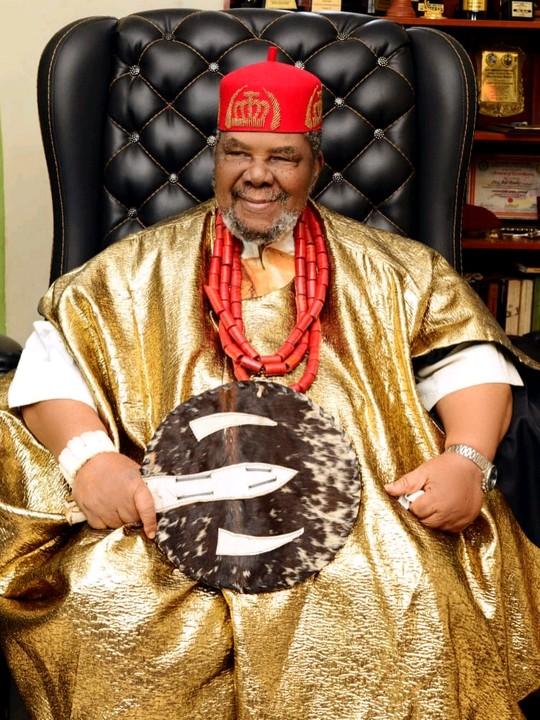
Veteran Nollywood actor and broadcaster Chief Pete Edochie has died at the age of 79 following a prolonged battle with prostate cancer, according to a family statement signed by his son, Leo Pete Edochie. The legendary actor passed away at 12:30 a.m. on Wednesday, November 25, 2026, in Enugu, Nigeria, bringing an end to an extraordinary career that spanned several decades and helped shape the development of African cinema. Best remembered for his iconic portrayal of Okonkwo in the 1987 television adaptation of Chinua Achebe's Things Fall Apart, Edochie became one of Africa's most respected entertainers through his commanding performances, distinctive voice and mastery of traditional African proverbs. He is survived by his wife, Barrister Josephine Edochie, his children and extended family, with funeral arrangements expected to be announced later.
Nigeria’s entertainment industry has lost one of its most distinguished and influential figures following the death of veteran actor and broadcaster Chief Pete Edochie, whose extraordinary career helped shape the identity of Nigerian television and establish Nollywood as a major force in African cinema. Edochie died at the age of 79 in Enugu in the early hours of Wednesday, November 25, 2026, following a prolonged battle with prostate cancer, according to a statement released by his family. His son, Leo Pete Edochie, announced the news on behalf of the family, confirming that the legendary actor passed away at approximately 12:30 a.m. and that arrangements for his funeral would be communicated at a later date. His death brings an end to a remarkable career that spanned several decades, during which he became internationally recognized for his commanding screen presence, distinctive voice, mastery of African proverbs and memorable portrayals of traditional rulers, powerful businessmen, community leaders and family patriarchs.
The family’s announcement described Edochie as a beloved husband, father, brother and member of his extended community, expressing profound sorrow while submitting to the will of God. The statement identified the veteran actor by his traditional title, Ononenyi, and acknowledged his distinguished contributions to broadcasting and entertainment, as well as his national honor as a Member of the Order of the Niger. Edochie, who hailed from Akamnato, Ifite Nteje, in Anambra State, is survived by his wife, Barrister Josephine Edochie, his children, siblings and other relatives. The family appealed for prayers as its members confront the loss, while withholding further details concerning the circumstances of his treatment and the arrangements for his burial. Although the announcement confirmed that he had been battling prostate cancer for an extended period, it did not disclose when he was diagnosed, the stage of the disease or the medical interventions he received before his death.
The announcement carries particular significance because Edochie had been the subject of several false death reports in recent years, including a widely circulated rumor in February 2026 that prompted his family to issue a public denial. At the time, Leo Edochie strongly condemned the claims and assured Nigerians that his father was alive, while the actor’s representatives urged members of the public to obtain information about his health exclusively through authorized family channels. Unlike those earlier rumors, the latest reports are based on a new statement attributed directly to Leo Edochie and published by established Nigerian news organizations, including Punch and News Central TV. The confirmation marks a painful development for generations of admirers who grew up watching Edochie and who had become accustomed to seeing him remain active in public life despite his advancing age.
Born on March 7, 1947, in Zaria, in present-day Kaduna State, Edochie belonged to a generation of Nigerian entertainers whose careers began long before the emergence of the modern commercial film industry. Although his ancestral roots were in Nteje, Anambra State, his early experiences in northern Nigeria exposed him to the country's cultural diversity, while his education helped lay the foundation for a professional career that would eventually span broadcasting, television drama and motion pictures. His formative years coincided with a period of profound political and social transformation in Nigeria, as the country moved from colonial administration toward independence and subsequently confronted the challenges of building a unified national identity. Those historical circumstances provided the background against which Edochie developed the cultural awareness, linguistic confidence and understanding of Nigerian society that would later distinguish his performances.
Before becoming one of Africa's most recognizable actors, Edochie established himself as a professional broadcaster. In 1967, at the age of 20, he joined the Eastern Nigerian Broadcasting Corporation as a junior program assistant, beginning a career that would gradually take him into senior administrative and editorial positions. He subsequently rose through the broadcasting hierarchy and held significant responsibilities within the Anambra Broadcasting Service, including leadership roles connected to program development and management. His broadcasting experience helped refine the vocal delivery, timing, articulation and ability to communicate complex ideas that later became defining characteristics of his acting career. Long before audiences recognized his face through films distributed across Africa, Edochie had already developed the professional discipline and communication skills required to command the attention of radio and television audiences.
His years in broadcasting also positioned him within an important chapter of Nigerian cultural history. During the decades preceding Nollywood's commercial expansion, government-owned broadcasting institutions played a central role in developing local drama, promoting Nigerian languages and introducing audiences to stories reflecting the country's traditions, political experiences and social realities. Television productions frequently relied on experienced broadcasters, theater performers and cultural practitioners who understood the importance of dialogue, character development and authentic storytelling. Edochie emerged from that environment with a professional background that combined administrative responsibility with artistic expression, giving him a foundation that would later allow him to move naturally into increasingly demanding dramatic roles.
The defining breakthrough of his acting career came in the 1980s when he was cast as Okonkwo in the Nigerian Television Authority's adaptation of Chinua Achebe's internationally acclaimed novel, Things Fall Apart. The television production, which aired in 1987, introduced Edochie to a much wider audience and established him as an actor capable of portraying characters whose internal conflicts reflected larger historical and cultural struggles. Achebe's novel explores the consequences of colonial intervention in traditional Igbo society through the experiences of Okonkwo, a respected but deeply conflicted man whose determination to preserve his understanding of masculinity, authority and tradition ultimately contributes to his downfall. Edochie's interpretation of the character captured both the formidable strength and tragic vulnerability of Okonkwo, creating a performance that remains one of the most important milestones in Nigerian television history.
The success of Things Fall Apart was particularly significant because it demonstrated the ability of Nigerian performers to bring internationally respected African literature to the screen without sacrificing its cultural depth. Edochie's performance depended not simply on physical presence or dramatic intensity but on his ability to communicate the complexities of a character whose authority was inseparable from fear, personal ambition and resistance to change. His measured delivery, expressive gestures and understanding of traditional Igbo culture helped make Okonkwo recognizable to audiences who had previously encountered the character only through Achebe's writing. The performance earned Edochie recognition beyond Nigeria and laid the groundwork for a career that would eventually make him synonymous with some of the most authoritative and culturally distinctive characters in African cinema.
That breakthrough also came before Nollywood became the internationally recognized industry it is today. When Nigeria's home-video sector began expanding rapidly during the 1990s, Edochie entered the emerging film market with experience and credibility accumulated through years of broadcasting and television drama. His presence gave productions a sense of authority that extended beyond the particular characters he played, and filmmakers increasingly turned to him when their stories required an actor capable of portraying powerful traditional figures, wealthy family heads, political personalities or respected community elders. His ability to dominate scenes without depending on exaggerated movement or unnecessarily dramatic delivery became one of his most recognizable artistic strengths, allowing him to remain compelling even in performances built largely around dialogue.
Among the numerous productions associated with his career were Igodo, Rituals, Billionaire's Club and other films that became recognizable within the Nigerian home-video era. These productions explored themes that frequently appeared in Nollywood storytelling, including wealth, ambition, spiritual beliefs, family conflict, traditional authority and the consequences of moral compromise. Edochie's characters often occupied positions of influence within those narratives, but his performances were not limited to admirable or morally uncomplicated figures. He demonstrated the ability to portray individuals whose power concealed greed, manipulation or personal weakness, making him equally convincing as a respected leader and as an intimidating antagonist.
His performance in Billionaire's Club, released in 2003, became another example of his ability to inhabit characters associated with wealth, influence and the darker consequences of ambition. The film emerged during a period when Nollywood productions frequently examined the relationship between material success, morality and supernatural beliefs, themes that resonated with audiences confronting economic change and social inequality. Edochie's portrayal drew on the authority that had already become central to his public image, but his effectiveness in such roles depended on more than his imposing voice. He brought conviction to characters whose decisions shaped the lives of everyone around them, demonstrating how an experienced performer could make even highly dramatic narratives feel grounded in recognizable human behavior.
Edochie's longevity was further demonstrated by his ability to remain relevant as Nigerian filmmaking evolved beyond its traditional home-video distribution model. In 2018, he appeared in Genevieve Nnaji's internationally recognized film Lionheart, portraying Chief Ernest Obiagu, the founder of a family-owned transportation business. The film addressed themes of family responsibility, business succession, gender inequality and cooperation across cultural boundaries, introducing Edochie to another generation of viewers through a production distributed internationally by Netflix. His appearance in the film connected different periods of Nigerian screen history, bringing an actor associated with the industry's foundational years into a production that represented Nollywood's increasing engagement with global streaming platforms.
The transition from state television to videotape, DVDs and international streaming services illustrates the exceptional length and adaptability of his career. Many entertainers become closely associated with a particular generation of audiences or a specific period in an industry's development, but Edochie maintained recognition as Nigerian cinema moved through successive technological and commercial transformations. Viewers who encountered him through Things Fall Apart in the 1980s could later watch him in popular home-video productions during the 1990s and 2000s, while younger audiences discovered his work through digital platforms and social media. This continuity helped make him one of the rare Nigerian performers whose cultural influence extended across generations rather than remaining confined to a single era of entertainment.
Perhaps no feature of Edochie's performances became more closely associated with his identity than his extraordinary use of African proverbs. He frequently delivered dialogue containing traditional expressions that communicated ideas about wisdom, responsibility, justice, ambition, family relationships and the consequences of human behavior. His ability to incorporate such expressions into performances helped make his characters culturally recognizable while also exposing audiences outside Nigeria to important elements of African oral tradition. Even when his films explored highly dramatic or fictional situations, his use of proverbial language often provided a connection to familiar social values and cultural practices, giving scenes a depth that extended beyond their immediate narrative purpose.
That distinctive approach eventually made Edochie a prominent figure in internet culture. Clips from his films, photographs of his facial expressions and excerpts of his proverbial dialogue were repeatedly repurposed as memes, reaction videos and humorous social-media posts across Africa and within diaspora communities. Younger audiences sometimes encountered his performances through online jokes before discovering the original films from which the material had been taken. Rather than diminishing his reputation as a serious actor, this digital popularity demonstrated how recognizable his expressions and delivery had become, allowing elements of his earlier work to find renewed relevance in forms of communication that did not exist when his acting career began.
His contributions to entertainment also earned him formal national and international recognition. In 2003, former President Olusegun Obasanjo conferred on him the national honor of Member of the Order of the Niger, acknowledging his contributions to Nigerian cultural life. Edochie also received industry recognition from Africa Magic and the Africa Film Academy, including awards celebrating his longstanding contribution to African cinema. In 2020, he was honored with the African Film Legend Award at the African Film Festival, further reinforcing his reputation as a performer whose influence extended beyond Nigeria's borders. These honors reflected not merely the popularity of individual films but the accumulated impact of a career that had become closely connected to the development of African screen entertainment.
Edochie's significance within Nollywood cannot be understood independently of the industry's remarkable transformation over the past several decades. Nigeria's film industry grew from a production environment characterized by limited financing, modest equipment and informal distribution into a sector capable of producing internationally distributed films, attracting global investment and reaching audiences across continents. Veteran performers such as Edochie helped build public confidence in Nigerian productions at a time when filmmakers were still struggling to establish commercially sustainable methods of financing and distributing their work. His recognizable presence became part of the cultural identity audiences associated with Nollywood, particularly during the industry's early expansion throughout West Africa and other regions of the continent.
In countries including Ghana, Kenya, South Africa and several other African markets, Nigerian films became an important part of household entertainment, circulating through video rental shops, television broadcasts, DVDs and eventually online platforms. Edochie's performances traveled alongside those productions, introducing audiences to characters and stories rooted in Nigerian cultural experiences while exploring themes that resonated far beyond national boundaries. Family disagreements, struggles for wealth, questions of moral responsibility and tensions between traditional and contemporary values became familiar elements of his films, allowing audiences with different cultural backgrounds to recognize aspects of their own societies within the narratives. His international popularity demonstrated the ability of locally produced African stories to connect with audiences without necessarily conforming to foreign cinematic conventions.
As Nigerian filmmaking expanded, Edochie also became an important reference point for younger actors seeking to develop their own professional identities. His performances demonstrated the value of understanding dialogue, respecting cultural context and allowing a character's authority to emerge through controlled expression rather than excessive theatricality. Although Nollywood has developed numerous acting styles across genres ranging from comedy and romance to crime thrillers and historical dramas, Edochie's approach remained distinctive because of the weight he brought to spoken words. His ability to communicate authority through silence, posture and measured delivery helped establish a model of screen performance that continued to influence how traditional leaders and elder figures were portrayed in Nigerian productions.
Beyond his professional accomplishments, Edochie remained closely associated with his family, which became increasingly prominent within the entertainment industry through the careers of some of his children. Actors Yul Edochie and Linc Edochie followed their father into filmmaking, extending the family's presence within Nollywood and introducing its name to additional generations of viewers. Pete Edochie frequently spoke publicly about marriage, parenting, cultural traditions and family responsibilities, drawing considerable attention whenever his comments addressed contemporary social issues. Although some of his opinions generated disagreement, his willingness to discuss such subjects reflected the broader public role he had acquired as an experienced entertainer whose perspectives were sought on matters extending well beyond film.
In the days immediately preceding his death, an excerpt from an interview granted to Ugo Nwokolo TV circulated online, attracting attention because Edochie discussed public criticism surrounding the personal life of his son, Yul. According to Punch, the complete interview had been scheduled for release on Wednesday, November 25, the same day the family announced his passing. The timing gives the interview an unexpected historical significance, although there is no confirmed evidence establishing precisely when it was recorded or whether it was his final media appearance. It nevertheless demonstrates that Edochie continued to attract public interest through his observations about family matters and social issues during the final period of his life.
The confirmation that Edochie had been battling prostate cancer also draws attention to a significant health concern affecting older men across Nigeria and the African continent. Prostate cancer is among the most commonly diagnosed cancers in men worldwide, with the likelihood of developing the disease increasing substantially with age. Its progression varies considerably between individuals, with some forms developing slowly and remaining manageable for extended periods, while others become aggressive and spread beyond the prostate. Treatment options depend on factors including the stage of the disease, the patient's overall health and whether the cancer has spread to other parts of the body. The Edochie family has not released sufficient medical information to establish the precise circumstances of his illness, making speculation about his treatment, diagnosis or chances of recovery inappropriate.
The wider burden of prostate cancer in Africa remains a major public-health concern because access to screening, diagnosis and specialized treatment varies considerably between countries and communities. Financial barriers, limited healthcare infrastructure and shortages of specialist services can contribute to delays in diagnosis and treatment, while insufficient awareness may discourage some men from discussing symptoms or seeking medical evaluation. The disease can also progress without obvious symptoms during its earlier stages, which makes informed discussions with qualified healthcare professionals particularly important for individuals with relevant risk factors. While Edochie's personal experience cannot be used to draw conclusions about his medical care, the family's disclosure may encourage renewed public attention to men's health and the importance of obtaining reliable medical advice.
The entertainment industry now confronts the loss of a figure who represented an important connection between Nigeria's early broadcasting institutions and its contemporary film sector. Edochie belonged to a generation whose achievements helped establish the foundation upon which subsequent filmmakers, actors and producers built their careers, often working during periods when the financial and technical resources available to Nigerian productions were far more limited than those enjoyed by established international industries. His career demonstrated that compelling performances and culturally authentic storytelling could create enduring artistic value even when productions operated under significant constraints. That contribution remains relevant as African filmmakers seek to expand internationally while preserving the distinctive cultural identities that helped their industries attract audiences in the first place.
As news of his death continues to spread, further tributes are expected from actors, filmmakers, broadcasters, cultural organizations and political leaders who encountered his work across different periods of his career. At the time of publication, however, detailed funeral arrangements had not been announced, and the family remained the principal source of information concerning his death and immediate circumstances. Any subsequent announcement regarding memorial services, public tributes or burial ceremonies will need to be confirmed through authorized family representatives and relevant institutions. The scale of Edochie's cultural influence means that his passing is likely to receive considerable attention across Africa, but the immediate priority remains respecting the privacy of his family as it comes to terms with the loss.
For Nollywood, Edochie's death represents more than the departure of a veteran performer whose face became familiar through hundreds of hours of Nigerian screen entertainment. It marks the loss of an artist whose work reflected successive stages in the development of national broadcasting, African literary adaptation, commercial home-video production and internationally distributed cinema. His performances helped preserve elements of traditional African storytelling while demonstrating their relevance within contemporary dramatic narratives, and his distinctive voice became one of the most recognizable instruments of expression in Nigerian popular culture. The characters he portrayed frequently occupied positions of authority, but the authority he acquired as an artist was earned through decades of professional commitment, consistency and an unmistakable understanding of the cultural environment from which his stories emerged.
The enduring significance of his career will remain particularly visible through Things Fall Apart, the television adaptation that introduced his interpretation of Okonkwo to generations of Nigerians and established an artistic association that followed him throughout his professional life. Yet reducing his legacy to that single performance would overlook the remarkable adaptability that allowed him to remain relevant through profound changes in filmmaking, distribution and audience behavior. From his early years behind the microphone to the television dramas that established his reputation, the home-video productions that expanded his popularity and the streaming-era films that introduced him to international audiences, Edochie participated in a cultural transformation that brought Nigerian storytelling to millions of viewers around the world.
Chief Pete Edochie leaves behind a body of work that will continue to serve as an important record of Nigeria's artistic and cultural development long after his death. His films, television appearances, interviews and distinctive interpretations of African proverbial wisdom have become part of a shared cultural memory that extends across national boundaries and generations. Although his passing at 79 brings an end to one of the most recognizable careers in African entertainment, the influence of his performances will remain visible in the work of younger actors, the evolution of Nigerian storytelling and the continued international appreciation of Nollywood. For an industry that grew from modest beginnings into a global cultural phenomenon, his legacy stands as a reminder of the pioneering performers whose talent, discipline and commitment helped make that transformation possible.