

JIMMY ODUKOYA TAKES HIS SISTER AND FOUNTAIN OF LIFE TRUSTEES TO COURT. THE FIGHT OVER BISHOP ODUKOYA'S PULPIT IS NOW A FIGHT OVER WHO OWNS A NIGERIAN CHURCH
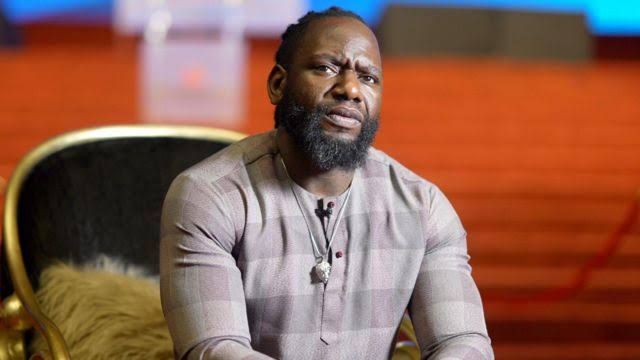
Pastor Jimmy Odukoya, son of the late Bishop Mike Odukoya, founder of The Fountain of Life Church in Lagos, has reportedly taken his sister and the church's board of trustees to the High Court. The suit is said to challenge his alleged removal or sidelining from the church's leadership. The full contents of the court filing have not been widely published. The specific reliefs he is seeking, the grounds for the alleged removal, and the responses of his sister and the trustees have not been independently confirmed. No court has ruled on the merits. The dispute comes roughly three years after Bishop Odukoya died in August 2023. Jimmy, who is also a recognized screen actor, emerged as the face of the church's next generation after his father's death. The reported lawsuit has turned a private family and ministry matter into a public legal contest. It also raises questions that reach far beyond one congregation in Ilupeju. Who controls a church after its founder dies: the family, the trustees, the congregation, or the written constitution? Nigeria's church landscape is built heavily around founder-led ministries. Many of them hold significant property, income and influence, and few have clear, tested succession plans. This case may become a test of how courts, regulators and congregations handle that question.
When a founder dies, a church learns what it really is.
For decades, The Fountain of Life Church in Ilupeju, Lagos, was defined by one voice. Bishop Mike Odukoya built it from a small fellowship into one of the city's best-known Pentecostal congregations. He preached to thousands every week, mentored young ministers, broadcast his sermons and became a familiar figure in Nigerian Christian life. When he died in August 2023, the church faced the question every founder-led ministry eventually faces. It had to decide whether it was a family inheritance, a spiritual movement or a legal institution with rules of its own.
That question has now reportedly reached a courtroom.
According to reports, Pastor Jimmy Odukoya, the late bishop's son, has filed a suit at the High Court against his sister and the church's board of trustees over his removal from the leadership of the church. The exact nature of that removal remains unclear in public reporting. It is not yet known whether he was formally removed from a named office, suspended, asked to step aside, or excluded from decision-making in some other way. The precise reliefs he is asking the court to grant have not been fully published. Neither his sister nor the trustees appear to have made detailed public statements responding to the suit. The church has not, as far as public reports show, released a full official account of what happened.
So the most important facts must be stated carefully. A lawsuit has reportedly been filed. It reportedly concerns Jimmy Odukoya's position in the church's leadership. It reportedly names his sister and the board of trustees as defendants. Beyond that, the allegations on each side are untested. A lawsuit is a claim, not a finding. The trustees may have acted within their powers, or they may not have. Jimmy Odukoya may have a strong case, or he may not. Only the court, after hearing evidence and argument, can decide.
Still, the case is significant even before any ruling. It brings into the open a kind of conflict that Nigerian churches have often tried to manage behind closed doors. It pits a founder's son against members of his own family and against the legal custodians of the institution his father built. And it does so in a country where churches are not only places of worship but also major landowners, employers, broadcasters, schools, charities and centers of social power.
To understand why the dispute matters, it helps to start with the man who built the church and the circumstances that shaped its leadership.
Mike Odukoya was part of the generation of Nigerian Pentecostal leaders whose ministries grew rapidly from the 1980s onward. That period transformed Christianity in Nigeria. Older mission churches, such as the Anglican, Catholic, Methodist and Baptist churches, remained powerful. But a new wave of independent Pentecostal and charismatic ministries drew young, urban, upwardly mobile Nigerians. They offered energetic worship, direct preaching, a strong focus on personal transformation and, in many cases, a message linking faith to success, family and prosperity.
The Fountain of Life Church was founded in the early 1990s by Mike Odukoya and his first wife, Pastor Taiwo Odukoya. The couple became widely known for their ministry to families and marriages. In a society where marriage carries deep social weight, and where couples often face pressure from extended families, finances and cultural expectations, their teaching found a large audience. They ran programs, conferences and media broadcasts that reached far beyond their congregation in Ilupeju.
Then came tragedy. In October 2005, Taiwo Odukoya was among the passengers killed when a Bellview Airlines plane crashed shortly after takeoff from Lagos. The crash killed everyone on board and shook the nation. For the Fountain of Life community, it was a devastating personal loss. The church lost one of its founding pastors. The Odukoya children lost their mother. Mike Odukoya, the public face of a ministry built on family life, now had to carry both grief and leadership in full view of his congregation.
He continued to lead the church. Some years later, he remarried, and his second wife, Nomthi Odukoya, became active in the ministry alongside him. The church continued to grow and maintained its reputation in Lagos Christian circles. Bishop Odukoya's influence extended through mentorship, conferences and his role in wider Pentecostal networks.
When he died in August 2023, tributes poured in from clergy, politicians, entertainers and members of the public. Many remembered him as a gentle, steady preacher with a strong emphasis on family, character and grace. His death also left a practical problem that the church had to solve quickly. Who would lead?
Jimmy Odukoya was, by any measure, an unusual candidate for that role.
He was already known to many Nigerians before he was widely known as a pastor. He built a career as an actor, with screen roles that took him far beyond the Lagos church scene. He has appeared in productions including the Hollywood historical epic The Woman King and the Nigerian crime drama Shanty Town, which streamed on Netflix. His acting work gave him a public profile among younger audiences, including people who had never attended Fountain of Life. He was tall, confident and comfortable before cameras. He also had a long involvement in his father's ministry.
That combination made him a striking figure. In Nigerian Pentecostalism, it is not unusual for a founder's children to take on ministry roles. But a pastor who is also a recognized actor in international and Nollywood productions sits at the meeting point of two powerful cultural forces in modern Nigeria: the church and the entertainment industry. For supporters, that made him a bridge to a new generation. For skeptics, it raised questions about whether the pulpit and the screen could share the same person without conflict.
After Bishop Odukoya's death, Jimmy emerged as the most visible leader of the church's next phase. Reports and church communications at the time presented him as stepping into a senior leadership role. For a while, the transition appeared to many outside observers to be settled. A son had succeeded his father. The ministry would continue under a younger leader who carried the family name.
Now, if reports of the lawsuit are accurate, that settlement appears to have broken down.
What is not yet clear is why. Leadership disputes in churches can arise from many sources. They can involve disagreements over doctrine or direction. They can involve questions about conduct, whether personal, financial or administrative. They can involve competing claims to authority under the church's constitution. They can involve tensions within a founder's family, especially where a founder had children from more than one marriage, or where relatives hold different roles in the ministry. They can also involve plain power struggles over property, funds and influence. In this case, none of these possible causes has been confirmed in public reporting. It would be irresponsible to assume any of them.
What can be said is that the parties named in the suit are revealing. By reportedly naming the board of trustees, Jimmy Odukoya is challenging the legal heart of the institution. By reportedly naming his sister, he is bringing a family relationship into the formal process of litigation. That combination suggests that, whatever the specific trigger, the dispute concerns both the governance of the church and the place of the founder's family within it.
To see why the trustees matter so much, it is necessary to understand how Nigerian churches are structured in law.
Most Nigerian churches are not companies in the usual commercial sense. They do not issue shares, and they are not owned by private investors. Instead, many are registered as incorporated trustees under the Companies and Allied Matters Act, the main law governing corporate bodies in Nigeria. The current version of the law, enacted in 2020, contains a dedicated part dealing with incorporated trustees. That legal form is used by churches, mosques, charities, associations, foundations and many nonprofit organizations.
Under this structure, a group of trustees is registered with the Corporate Affairs Commission. The trustees become a legal body that can own property, sign contracts, open bank accounts, sue and be sued. The church's constitution, which is filed during registration, sets out its aims, the powers of the trustees, how trustees are appointed and removed, how meetings are conducted and how key officers are chosen. In practice, the trustees hold the church's legal identity. Land titles, buildings, vehicles, investments and bank accounts are typically held in the name of the incorporated trustees, not in the name of the founder personally.
This creates a tension that sits at the center of many church disputes. Spiritually, members may see the founder or senior pastor as the leader chosen by God. Socially, they may see the founder's family as the natural heirs of the ministry. Legally, however, authority over the institution often rests with the trustees and the written constitution. If the constitution says the trustees appoint or remove the senior pastor, then the trustees may have legal power that the family, or even the congregation, does not.
Founders often fill trustee boards with people they trust deeply: spouses, children, long-time associates, senior pastors and respected professionals in the congregation. While the founder is alive, the board may rarely act independently. The founder's word is effectively final. After the founder dies, the board suddenly matters in a new way. Members who once deferred to the founder must now make decisions themselves. Old loyalties may clash. Ambiguous clauses in the constitution may become the subject of bitter argument. Unwritten understandings about who was meant to lead may collide with written rules about who has the power to decide.
That is why a suit against the trustees is significant. It suggests that Jimmy Odukoya, according to reports, is contesting not just a personal disagreement but the legal exercise of authority within the church. Courts in such cases often look at a few central questions. Were the trustees properly constituted? Did they follow the procedure set out in the constitution? Was a valid meeting held, with proper notice and a quorum? Was the decision within their powers? Was the affected person given a fair hearing? Were any internal dispute resolution steps required before going to court?
Nigerian courts have generally been cautious about interfering in purely religious or spiritual matters. Judges are unlikely to decide who is the more anointed preacher or whose vision for a ministry is more faithful. But courts have repeatedly been willing to examine whether religious bodies followed their own written rules, especially where property, office, civil rights or contractual relationships are affected. In other words, a court may not decide who God wants to lead Fountain of Life. It may decide whether the trustees acted lawfully under the church's constitution and Nigerian law.
That distinction matters for how the public should read the case. It is tempting to frame the dispute as a simple contest between a son and his family, or between a charismatic heir and a board of elders. But the legal battle is likely to turn on dry documents: the registered constitution, trustee resolutions, minutes of meetings, appointment letters and correspondence. The outcome may depend less on who has more supporters in the pews than on what was written down years ago, and whether those rules were followed.
That is also why many legal and governance experts have long urged Nigerian churches to pay closer attention to their constitutions. In many ministries, these documents were drafted quickly when the church was small. They were often based on templates. Some were never updated as the church grew into a large organization with multiple branches, schools, media operations and significant assets. When a founder dies, gaps in those documents can become fault lines.
The question of succession sharpens those fault lines. Nigeria's Pentecostal movement has been shaped by powerful founders. Their names are closely tied to their ministries. Their followers often joined because of their personal charisma, teaching and testimony. That model has helped churches grow quickly. It has also created a recurring weakness: the absence of strong institutions able to function smoothly after the founder is gone.
Some Nigerian churches have handled succession in ways that strengthened them. The most famous example is the Redeemed Christian Church of God. Its founder, Pa Josiah Akindayomi, chose Enoch Adeboye, a university lecturer who was not his biological son, as his successor. When Akindayomi died in 1980, the transition was not without tension, but Adeboye went on to lead the church through extraordinary global growth. The story is often cited as proof that spiritual succession does not have to follow family lines.
Other transitions have been more difficult. Some older indigenous churches, including branches of the Aladura movement, have experienced long-running leadership disputes, splits and court cases over who rightfully leads. Some of these disputes have lasted years, with rival factions claiming the same name, property and congregations. In such cases, the cost has not only been financial. Members have been divided, worship has been disrupted, and public trust in religious leadership has suffered.
More recently, the death of Prophet T.B. Joshua in 2021 placed the Synagogue Church of All Nations under intense scrutiny. His widow, Evelyn Joshua, emerged as the church's leader. The church later faced serious allegations about Joshua's conduct during his lifetime, which were aired in international media investigations and which the church strongly rejected. That case was different from Fountain of Life in many ways. But it showed how the passing of a founder can expose questions about governance, accountability and family control that were rarely examined while the founder was alive.
Across the continent, similar challenges appear wherever large ministries are built around a single founding figure. In Ghana, Kenya, South Africa, Zimbabwe and elsewhere, churches have faced disputes over leadership transitions, property and the role of founders' families. Some ministries have adopted clearer, institutional succession systems. Others continue to rely on the personal authority of the founder until the day it is no longer available.
Ghana offers a useful comparison. Some of its major churches, such as the Church of Pentecost, operate under structured systems of leadership with defined terms, councils and elections or selection processes. Those systems do not prevent disagreement, but they reduce the risk that a single death will plunge the institution into uncertainty. At the same time, Ghana's many independent charismatic ministries face the same founder-centered risks seen in Nigeria. For Ghanaian readers watching the Fountain of Life case, the lesson is familiar: institutions last longer when authority is written into clear rules rather than carried in one person.
In the Nigerian context, family succession is particularly sensitive. Many founder-led churches are seen, informally, as family enterprises. A founder's spouse may serve as co-pastor. Children may lead youth ministries, music departments, media arms or branches. When the founder dies, the expectation in many quarters is that a family member will take over. Supporters argue that this preserves continuity and the founding vision. The children grew up inside the ministry. They understand its culture. They often carry the trust of long-standing members.
Critics argue that this model treats churches as private inheritances rather than communities of faith. They point out that church buildings and assets are often funded by members' tithes and offerings, not just by the founder's family. In their view, leadership should be determined by calling, character and capacity, through transparent processes, not by bloodline. They also warn that family succession can create conflict within the family itself, especially when more than one child, spouse or relative has a claim to influence.
The reported Odukoya dispute appears to sit right at that intersection. A son reportedly emerged as the face of the post-founder church. Now he is reportedly in court against his sister and the trustees. Without knowing the facts of the case, it is impossible to say whether this is a dispute over the principle of family succession, the conduct of leadership, the interpretation of the constitution or something else entirely. But the mere fact that family members are on opposite sides of a lawsuit shows how fragile family-based arrangements can be when they are not anchored in clear, agreed rules.
It is also worth noting the emotional weight of such disputes. Family conflicts are painful in any setting. In a church, they are magnified. Members may feel forced to take sides. Pastors and workers may worry about their positions. Long-time congregants may feel that the legacy they helped build is being damaged. Online, rumors can spread rapidly, with claims that are impossible to verify. In the case of Fountain of Life, a church long associated with teaching on marriage and family life, the spectacle of a family dispute in court carries a particular irony that critics will not miss.
That irony should not be overstated. Families disagree. Institutions face disputes. Going to court is not in itself a sign of moral failure. In a system governed by law, courts exist precisely to settle disputes that cannot be resolved privately. Some will argue that it is healthier for a contested question of authority to be decided openly and lawfully than for it to be settled through intimidation, quiet exclusion or a split in the congregation. A lawsuit can be a sign that someone believes the rules were not followed and wants an independent judge to decide.
Others will argue the opposite. Many Christians cite biblical teaching that believers should resolve disputes within the church rather than before secular courts. In Nigerian Christian circles, there is often strong pressure to settle such matters through elders, mediation, prayer and reconciliation. Taking a sister and church trustees to court may be seen by some members as a painful breach of that ideal. Whether the suit was a last resort or an early move is not yet known. Reports have not made clear whether internal mediation was attempted, or whether any such efforts failed.
The answer to that question may shape public perception as much as the legal outcome. If it later emerges that every internal avenue was exhausted, many will view the case as a reluctant step to protect legal rights. If it appears that the dispute moved to court quickly, some members may see it as an escalation. Either way, the parties will likely face pressure from fellow clergy, respected elders and members of the congregation to reach a settlement.
Settlement is common in disputes of this kind. Court cases in Nigeria can take years, sometimes moving slowly through adjournments, interlocutory applications and appeals. A suit filed at a High Court can eventually reach the Court of Appeal and even the Supreme Court. During that time, the church may face uncertainty over who has authority to sign documents, manage funds, appoint staff or represent the ministry publicly. Parties sometimes seek interim orders to preserve the status quo, prevent certain actions or protect property while the case is pending. It is not yet clear whether any such orders have been sought or granted in this case.
The practical stakes are high. A church of Fountain of Life's size is not just a weekly gathering. It is likely to involve staff salaries, building maintenance, outreach programs, media operations, partnerships and other commitments. If leadership is contested, those operations can be affected. Banks may hesitate when they receive conflicting instructions. Partners may delay decisions. Members may wait to see which side prevails before committing time or money. The longer a dispute lasts, the greater the risk to the institution itself.
There is also a regulatory dimension. The Corporate Affairs Commission maintains records of incorporated trustees and can play a role in disputes over who is properly registered as a trustee. Under the 2020 law, the regulator gained expanded powers over incorporated trustees, including the power, in certain circumstances, to suspend trustees and appoint interim managers. When the law was passed, those provisions provoked strong opposition from Christian leaders, including the Christian Association of Nigeria and prominent Pentecostal figures. They argued that the government could use the powers to interfere in religious affairs. The government and supporters of the law said the aim was to improve accountability and protect organizations from mismanagement.
That debate remains relevant. Disputes like the reported Odukoya case show why regulators and lawmakers have sought more oversight of incorporated trustees. When internal governance breaks down, someone must decide who has authority. At the same time, the case also shows why churches are wary of outside intervention. A regulator's involvement in a church's leadership dispute could be seen as government interference in faith. For now, there is no public indication that the Corporate Affairs Commission is involved in this matter. But the case illustrates the legal machinery that sits behind church life in Nigeria, usually unseen until a crisis brings it into view.
The dispute also touches on the changing nature of religious leadership in Nigeria. The first generation of Pentecostal founders built their ministries in an age of radio, cassette tapes, crusades and newspaper adverts. Their children are leading in an age of social media, streaming, celebrity culture and intense public scrutiny. A pastor's every word can be clipped and shared. A family disagreement can trend online within hours. Members and critics alike can comment instantly.
Jimmy Odukoya represents that new world in a vivid way. As an actor, he has worked in an industry that thrives on visibility, branding and public image. As a pastor, he leads in a context that also depends heavily on public trust and personal credibility. Some members may see his dual career as an asset that connects the church to young Nigerians and the creative economy. Others may see it as a distraction or a source of tension with traditional expectations of pastoral life. Whether his acting career has anything to do with the reported dispute is unknown. It would be wrong to suggest it does without evidence. But it is part of the public context through which many Nigerians will interpret the case.
Nollywood and the church have long had a complicated relationship. Nigerian churches have produced and promoted Christian films for decades. Many actors are open about their faith. Some pastors have appeared in films, and some actors have become pastors. At the same time, some church leaders have criticized certain portrayals in entertainment as worldly or inappropriate. Jimmy Odukoya's rise as both actor and pastor reflects how those worlds increasingly overlap. His case may prompt fresh debate about how churches view leaders who maintain careers in entertainment, but any such debate should be separated from the legal questions before the court.
Another important dimension is the role of women in church leadership and family succession. The reported suit names Jimmy's sister as a defendant. Public reporting has not detailed her role in the church or her position on the dispute. In many Nigerian churches, women serve as pastors, co-pastors, trustees, administrators and ministry leaders, even as some denominations limit their roles. When a founder dies, daughters may hold significant influence through trustee boards or ministry departments, even if public attention focuses on sons. The presence of a sister as a named party is a reminder that family succession is not a simple matter of sons inheriting from fathers. Authority can be shared, contested and distributed among family members in complex ways.
There may also be questions involving the late bishop's widow and other senior figures in the ministry, though reports have not clearly indicated their roles in the current dispute. Founder-led churches often include several centers of influence after the founder dies: the surviving spouse, the children, senior pastors who served for decades, trustees and major lay leaders. When these groups agree, transitions can be smooth. When they do not, conflict can follow. Speculation about who supports whom in the Odukoya dispute is already likely circulating, but none of it should be treated as reliable without clear evidence.
For the congregation, the most immediate concern is stability. Members of Fountain of Life include families who have attended for decades, young professionals drawn by the church's teaching and people who joined after hearing Bishop Odukoya's messages. Many of them will want to know who is leading, whether services and programs will continue normally, and whether the church's mission will be affected. They may also be deeply uncomfortable with a public dispute involving the family of a leader they loved and respected.
That discomfort is understandable. Churches are built on trust. Members give money, time and loyalty because they believe in the integrity of the institution and its leaders. When disputes become public, that trust can be shaken. Some members may leave. Others may withhold giving until the matter is resolved. Some may form new fellowships around preferred leaders. In the worst cases, a church can split permanently. These risks are not unique to Fountain of Life. They are common to almost every serious leadership dispute in founder-led ministries.
At the same time, crises can also force reforms. A painful dispute can lead a church to review its constitution, clarify the roles of trustees and pastors, strengthen financial controls and adopt better dispute resolution procedures. It can lead members to ask for more transparency about how decisions are made. In the long run, an institution that survives a crisis with stronger rules may be more resilient than one that never faced its weaknesses.
That is why this case matters beyond the Odukoya family. Nigeria is home to thousands of churches, many of them founder-led. Some are small neighborhood congregations. Others are massive organizations with branches across the country and abroad, along with universities, schools, hospitals, camps, broadcasting stations and property portfolios worth vast sums. Many of their founders are now in their sixties, seventies and eighties. Over the next two decades, a generational transition will unfold across the Nigerian church landscape. How these transitions are managed will shape the future of Christianity in the country.
The questions at the heart of the reported Odukoya suit will appear again and again. Does the founder's family have a special claim to leadership? What happens when family members disagree? Who has the final word: the trustees, a council of pastors, the denomination's governing body or the congregation? What role should courts play? How should churches protect property and funds during transitions? How can disputes be resolved without dividing congregations or damaging the faith of members?
Some churches have begun answering those questions in advance. They have created leadership councils, set retirement ages, written detailed succession clauses into their constitutions and trained successors over many years. Others have announced successors publicly while the founder is still alive, allowing a gradual handover. Some have separated spiritual leadership from administrative control, giving professional managers and boards responsibility for finances and property while pastors focus on preaching and pastoral care.
Many others have not. In many ministries, succession is still treated as a sensitive topic, sometimes even a spiritual taboo. Discussing a founder's death or retirement can be seen as disrespectful or faithless. As a result, critical decisions are left unresolved until a crisis forces them. When that happens, the people left behind must make decisions under grief, pressure and public scrutiny. Disputes become more likely.
The reported Odukoya case should prompt church leaders across Nigeria and Ghana to look at their own institutions honestly. A founder may believe that the right successor is obvious. Members may assume that the family will continue the work. Trustees may think they will cooperate easily. But obviousness, assumptions and goodwill are not governance. Clear rules are. Written processes are. Fair hearings are. Transparent records are.
There is also a lesson for congregations. Members often defer completely to leadership, especially in founder-led churches. They may not know what their church's constitution says, who the trustees are or how decisions are made. That lack of awareness can leave congregations powerless when disputes arise. Churches are communities of faith, but they are also institutions. Members have an interest in how those institutions are governed. Asking questions about governance is not disloyalty. It can be a form of stewardship.
For the legal system, cases like this present a delicate balance. Courts must respect religious freedom, which is protected under Nigeria's constitution. They should avoid deciding spiritual questions. But they must also protect legal rights, enforce constitutions and ensure that institutions holding property and public trust act lawfully. A well-reasoned judgment in this case, if it goes to judgment, could provide guidance for other churches facing similar disputes. It could clarify how courts interpret trustee powers, succession clauses and the rights of pastors who claim they were wrongly removed.
That guidance would be valuable. Nigerian law on church governance is shaped by statutes, court decisions and the internal documents of each institution. Because many disputes are settled or abandoned, clear precedents can be hard to find. A detailed ruling in a high-profile case can help clarify the rules for everyone.
Of course, the case may never reach that point. The parties may reach a settlement. They may withdraw the suit after mediation. The court may decide the case on procedural grounds, such as jurisdiction or whether the right parties were sued, without addressing the core dispute. Many Nigerian lawsuits involving religious bodies end without a full judgment on the merits. The public may never learn every detail of what happened.
There is also the question of reputation, which no court can fully resolve. Even if the case ends quietly, the public dispute has already affected how many people see the church and the family. Rumors, partial reports and social media commentary will shape perceptions. That is why the parties, the church and the media all have responsibilities in how the story is told.
For the parties, that means avoiding inflammatory public statements, respecting the court process and remembering that the congregation is watching. For the church, it means communicating clearly with members about practical matters, such as service schedules and pastoral care, without prejudging the case. For the media, it means reporting carefully, separating confirmed facts from rumors, giving all sides the chance to respond and avoiding sensational claims that cannot be verified.
That last point deserves emphasis. Nigerian online media is fast and intensely competitive. Stories about pastors, celebrities and family conflicts attract large audiences. The temptation to exaggerate, speculate or attach unverified claims to a story is strong. In a case involving a church founder's family, that temptation should be resisted. Real people are involved. A congregation's well-being is at stake. Reputations can be destroyed by false or careless reporting. Until court documents are fully available and the parties have spoken, careful restraint is the professional standard.
There is a final dimension to the case: the legacy of Bishop Mike Odukoya himself. He built a ministry known for its teaching on family, love and unity. He lived through deep personal tragedy and continued to lead. He became a respected voice among Nigerian Pentecostals. Many who knew him or followed his ministry will find it painful to see his family and church in a legal dispute.
But legacies are not only about what founders build during their lifetimes. They are also about what their institutions become after they are gone. A legacy that depends entirely on one person is fragile. A legacy protected by strong institutions, clear rules and a culture of fairness is more durable. The current dispute is, in a sense, a test of which kind of legacy Fountain of Life will have.
If the parties can resolve their differences fairly, through the court or through mediation, and if the church emerges with clearer governance and a stable leadership, the episode may become a difficult chapter in a continuing story. If the dispute drags on, divides the congregation and damages the institution, it may become a cautionary tale cited for years in discussions about church succession in Nigeria.
Either way, it is a reminder of a truth that many founder-led ministries would rather not confront. The charisma that builds a church cannot be inherited by law. Authority after a founder dies must come from somewhere else: from rules, from processes, from consent, from trust. When those foundations are weak, even the closest family ties can give way under the weight of power, grief and competing visions.
For now, the essential facts remain limited. Jimmy Odukoya has reportedly sued his sister and the trustees of The Fountain of Life Church over his removal from its leadership. The details of the alleged removal, the grounds for it and the defendants' response have not been fully made public. The court has not ruled. Everyone involved is entitled to be heard.
What is already clear is that the case speaks to something larger than one family and one church. It speaks to how Nigerian Christianity will navigate the passing of its founding generation. It speaks to the difference between spiritual authority and legal control. And it speaks to the uncomfortable fact that institutions built on faith still need rules, because people, even people of faith, will disagree.
Bishop Mike Odukoya spent much of his ministry teaching families how to hold together through conflict. The court will decide the legal questions in his son's case. The harder question, whether his family and his church can hold together through this one, will be answered somewhere else.