NIGERIA HOSTS DELEGATES FROM 126 COUNTRIES FOR WORLD PUBLIC RELATIONS FORUM IN ABUJA
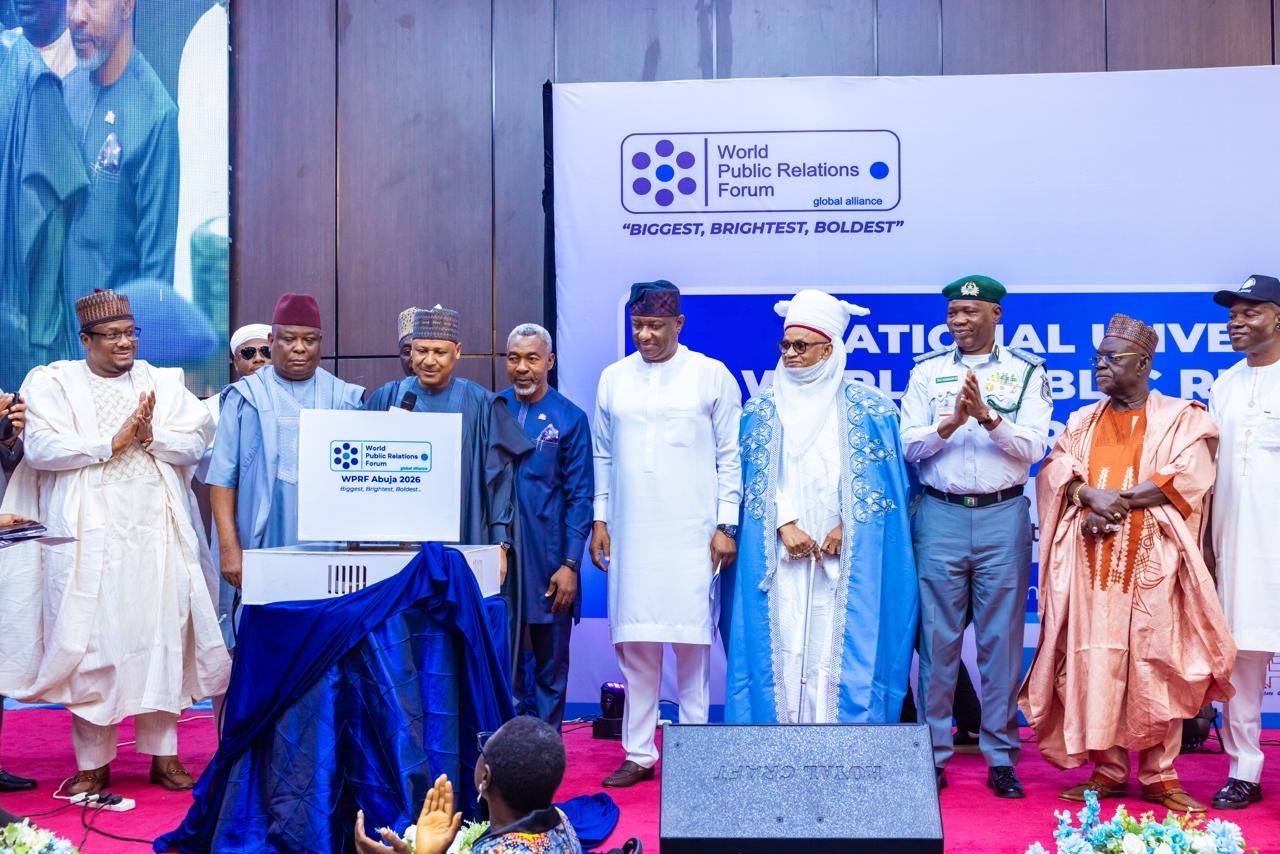
Nigeria is hosting delegates from 126 countries in Abuja for the 2026 World Public Relations Forum, a major international gathering focused on responsible communication, public trust, artificial intelligence, misinformation and the changing global information environment. The forum, organized by the Global Alliance for Public Relations and Communication Management with the Nigerian Institute of Public Relations and held alongside the 37th African Public Relations Association Conference, features President Bola Tinubu as chief host, Zambian President Hakainde Hichilema as a keynote speaker and senior international communication, government and institutional leaders, with one of the major expected outcomes being an Abuja Declaration designed to shape modern ethical communication standards.
ABUJA, NIGERIA — Nigeria has taken center stage in the global communications industry as delegates, public relations leaders, policymakers, academics and strategic communication professionals from 126 countries converge on Abuja for the 2026 World Public Relations Forum, one of the largest international gatherings of its kind and a major test of the country’s ability to host high-level professional diplomacy on a global scale. The week-long forum, being staged at the Transcorp Hilton in the Federal Capital Territory, brings together representatives from governments, international institutions, communication associations, universities, corporations and professional bodies to examine how public communication can rebuild trust, confront disinformation, respond to the growing influence of artificial intelligence and strengthen democratic and institutional accountability in an increasingly fragmented information environment. Nigeria’s hosting of the event is also being presented by organizers and government officials as an opportunity to project the country’s professional capacity, cultural influence and diplomatic importance while giving Africa a stronger voice in shaping the global future of strategic communication.
The gathering is the 13th edition of the World Public Relations Forum and is being organized by the Global Alliance for Public Relations and Communication Management in partnership with the Nigerian Institute of Public Relations, with the African Public Relations Association also playing a major role as the forum runs alongside its 37th continental conference. Organizers say the participation of professionals from 126 countries makes the Abuja gathering one of the broadest international assemblies ever hosted by the global public relations community, with representation expected from every continent. The forum also coincides with the 25th anniversary of the Global Alliance, giving the Abuja event additional symbolic significance for a professional body that has spent a quarter of a century attempting to establish common global standards around ethics, accountability, public trust and responsible communication.
President Bola Tinubu is serving as chief host of the forum, reflecting the Nigerian government’s decision to give the event strong institutional backing. The Presidency had pledged support months ahead of the gathering, with senior officials arguing that successful hosting would help demonstrate Nigeria’s capacity to convene international conversations beyond traditional political or economic summits. Zambia’s President Hakainde Hichilema is scheduled to deliver a major keynote address, while other expected speakers and guests include leading officials from the United Nations, African institutions, professional associations and communication bodies from around the world. Ghana’s Speaker of Parliament, Alban Sumana Kingsford Bagbin, is also expected to address the forum on responsible communication, democracy and the future of African governance, underscoring the extent to which the discussions have moved beyond conventional public relations practice into broader questions of political trust, leadership and institutional legitimacy.
The central theme, “Responsible Communication: The Voice of the World,” reflects growing concern about the speed at which information now travels and the difficulty citizens face in separating verified information from manipulation, propaganda, synthetic media and coordinated disinformation. Public relations professionals are increasingly operating in an environment shaped by generative artificial intelligence, deepfakes, algorithmic amplification and social-media platforms that can push false information across national borders within minutes. Organizers say the forum is designed to examine how governments, businesses, journalists, communication advisers and institutions can respond to that environment without undermining freedom of expression or reducing public debate to official messaging.
That challenge has become particularly urgent because communication failures increasingly carry consequences far beyond reputation. False information can influence elections, fuel communal conflict, undermine public-health campaigns, damage companies, trigger financial panic and weaken confidence in democratic institutions. Governments that communicate poorly can create suspicion even when policies are legitimate, while institutions that withhold information can leave space for rumor and conspiracy to flourish. At the same time, communication professionals themselves face criticism when they are seen as defending powerful institutions rather than serving the public interest. The Abuja forum is therefore attempting to place ethics and accountability at the center of the profession rather than treating communication merely as a tool for persuasion.
Dr Suleiman Haruna, chairman of the forum’s National Planning Committee and Director of Public Relations at the Federal Ministry of Information and National Orientation, said delegates were already arriving in Abuja as accreditation and programme activities got underway. He described the international turnout as evidence of confidence in Nigeria’s ability to host global discussions and said the programme had been structured to bring together academic research and professional practice. According to organizers, scholars from different countries are presenting research on how responsible communication should evolve, while practitioners are examining real-world standards for managing institutional trust, crisis communication and public engagement.
One of the forum’s major anticipated outcomes is an Abuja Declaration intended to capture contemporary global principles around ethical and responsible communication. Organizers say the document is expected to address challenges that were either less developed or virtually nonexistent when earlier international communication declarations were adopted, including artificial intelligence, digital manipulation, social-media misinformation, algorithmic influence and the global collapse of trust in institutions. If adopted with broad international support, the declaration could become one of the most important professional outcomes of the gathering and give Abuja a lasting place in the development of global communication standards.
The programme also includes sessions focused specifically on women, young professionals and traditional institutions, reflecting the belief that responsible communication is not only a matter for governments and large corporations. A women’s conference scheduled during the forum is expected to examine the role of families, communities and female leaders in shaping responsible digital behavior, while the Global Youth PR Summit will focus on the professional and ethical responsibilities of younger practitioners entering an industry increasingly dominated by fast-moving digital platforms. Traditional rulers are also being incorporated into the programme because of the influence they continue to exercise over community attitudes across many parts of Africa, particularly during moments of tension or misinformation.
The decision to include traditional institutions highlights one of the distinctive African dimensions of the forum. Communication systems on the continent often operate through multiple layers at once, combining formal government communication, radio, television, social media, religious leadership and traditional authority. In many communities, a message from a trusted local leader can carry more weight than an official statement released from a national capital. Organizers argue that any serious conversation about responsible communication in Africa must therefore include the institutions that ordinary citizens actually trust and listen to, rather than focusing only on professional communicators based in major cities.
The forum is also giving substantial attention to the relationship between communication and democracy. Ghanaian Speaker Alban Bagbin’s planned intervention on responsible communication and accountable governance reflects a wider concern that democratic institutions across the world are facing declining public trust. Political communication has become more aggressive, elections are increasingly fought through social media and governments are frequently accused of using communication systems to manipulate public opinion rather than provide transparent information. At the same time, opposition parties, activist groups and private actors can also use false or misleading claims to mobilize supporters. The challenge for democratic societies is therefore not simply how governments communicate but how the entire political system maintains a shared commitment to facts.
The Nigerian government has framed the forum as consistent with its wider agenda on national orientation and information integrity. Information and National Orientation Minister Mohammed Idris said ahead of the gathering that the government views communication as more than the transmission of official messages and believes public institutions must also listen to citizens, acknowledge legitimate concerns and provide credible information capable of sustaining trust. He said Nigeria’s selection as host offers the country an opportunity to strengthen its international voice and demonstrate professional leadership in an industry that increasingly shapes diplomacy, governance and national image.
Idris has also linked the event to Nigeria’s broader investment in media and information literacy. The Federal Government is supporting the establishment of a UNESCO Category 2 International Media and Information Literacy Institute in Abuja, an initiative intended to help citizens, particularly younger people, identify misleading information, evaluate online content critically and use digital platforms responsibly. That effort reflects growing awareness that combating disinformation cannot rely only on governments removing false content or platforms policing users. Citizens themselves require stronger skills to distinguish reliable information from manipulation.
The forum also provides Nigeria with a major soft-power opportunity. International gatherings of this scale allow host countries to shape perceptions through direct experience rather than through advertising alone. Delegates visiting Abuja interact with local professionals, hospitality businesses, cultural institutions and government officials, and those encounters can influence how they later speak about the country in their own markets. Organizers have deliberately incorporated cultural and networking activities into the programme, including a golf competition involving international participants and a Jollof Rice festival designed to showcase Nigerian food and social culture.
That cultural dimension is not incidental. Public relations is fundamentally concerned with how institutions and countries are perceived, and Nigeria has long struggled with the gap between its enormous cultural influence and the negative international headlines associated with corruption, insecurity, fraud and political instability. Nigerian music, film, fashion, literature and digital entrepreneurship have achieved extraordinary global visibility, yet the country’s national reputation remains uneven. Hosting the WPRF allows Nigerian officials and professionals to present a more complex image of the country directly to influential communicators who shape institutional and media narratives around the world.
The scale of participation is therefore politically and professionally significant. The Global Alliance represents public relations and communication bodies across dozens of countries, and organizers say the Abuja event has attracted delegates from all 126 countries represented in the broader network. Representatives from major international organizations including the United Nations, World Bank, African Union and European institutions were also expected to participate in discussions over the course of the week. That gives the forum a reach that extends beyond the public relations profession into diplomacy, governance, development and international cooperation.
The event also holds particular importance for Nigeria’s own public relations industry. The Nigerian Institute of Public Relations has spent years attempting to raise professional standards and enforce the legal framework governing public relations practice in the country. NIPR officials have argued that communication should be treated as a professional discipline requiring training, ethics and accountability rather than simply as publicity or political propaganda. Hosting the WPRF gives the institute an opportunity to demonstrate that Nigerian practitioners can operate at the highest international level while exposing local professionals to global trends and standards.
NIPR President Dr Ike Neliaku has described the World Public Relations Forum as the equivalent of a global championship for the profession and has repeatedly argued that hosting rights provide Nigeria with an opportunity not only to receive visitors but to influence the direction of the profession internationally. He has also emphasized that the forum gives African professionals a stronger platform to contribute to global debates that have often been shaped primarily by institutions based in Europe and North America. For him and other African PR leaders, the Abuja gathering is partly about correcting that imbalance.
The simultaneous hosting of the African Public Relations Association conference reinforces that objective. By bringing the continental and global gatherings together, organizers hope African practitioners can engage directly with international counterparts rather than holding separate conversations about the same challenges. Issues such as misinformation, artificial intelligence, crisis communication and public trust affect every region, but their consequences and solutions can look very different depending on political institutions, technological access and cultural context.
Africa’s communication environment is particularly dynamic because of the continent’s young population and rapid adoption of mobile technology. In many countries, citizens who had limited access to traditional media now receive news primarily through WhatsApp, Facebook, TikTok, X and other digital platforms. That expansion has democratized communication but has also allowed rumors and manipulated content to spread rapidly. Governments and professional communicators are therefore under pressure to develop approaches that protect openness without allowing false information to destabilize communities.
Artificial intelligence will likely dominate many of the forum’s discussions because generative tools have made it easier than ever to produce convincing fake images, voices and videos. Deepfake technology can reproduce the appearance or voice of political leaders, executives and public figures with increasing accuracy, raising serious questions about how societies will authenticate information during elections, wars and emergencies. Communication professionals are increasingly expected to understand not only messaging but digital verification, cybersecurity and the ethical implications of AI-generated content.
The implications for journalism are equally significant. Public relations practitioners and journalists often operate on opposite sides of information flows, with one providing institutional information and the other independently testing it. Yet both professions now face the same broader crisis of public trust. If audiences no longer believe news organizations, government statements or corporate announcements, the information environment becomes vulnerable to conspiracy theories and deliberate manipulation. The Abuja forum is therefore expected to explore how professional communicators can rebuild credibility through transparency rather than relying on increasingly sophisticated persuasion.
Another major issue is crisis communication. Governments and companies are routinely judged not only by the original crisis they face but by how quickly and honestly they respond. Delayed statements, contradictory information or attempts to conceal facts can turn manageable events into reputational disasters. Recent global conflicts, public-health emergencies, cyberattacks and corporate scandals have demonstrated that institutions require communication systems capable of functioning under enormous pressure.
Nigeria itself offers many examples of that challenge. Security incidents, economic reforms, elections and public protests frequently generate competing narratives online before official agencies provide detailed explanations. By the time government statements appear, unverified accounts may already have reached millions of people. The government’s participation in the WPRF therefore comes with an implicit challenge: the principles of responsible communication promoted at the conference will also be used to judge Nigerian public institutions themselves.
That is particularly relevant because government communication in Nigeria has often been criticized as defensive, partisan or slow to respond to public concern. Officials have sometimes accused critics of spreading misinformation, while civil-society organizations argue that authorities must become more transparent rather than treating every hostile narrative as disinformation. A serious commitment to responsible communication requires both sides of that debate to distinguish deliberate falsehoods from legitimate criticism.
The forum can therefore only have lasting value if its principles move beyond speeches. Ethical communication requires institutions to correct mistakes, disclose relevant information and avoid manipulating audiences even when doing so might provide short-term political or commercial advantage. It also requires communicators to advise powerful clients against deceptive strategies rather than merely executing whatever message they are given.
The proposed Abuja Declaration could become particularly important in that regard. Organizers say the document will attempt to define contemporary responsibilities for communication professionals in an era shaped by AI, misinformation and declining trust. Its impact will depend on whether professional bodies eventually integrate those principles into codes of conduct, training and disciplinary systems rather than allowing the declaration to remain symbolic.
For young African professionals, the forum also provides access to networks that are often difficult to enter. Direct interaction with senior global communication leaders can create opportunities for training, employment, research collaboration and international partnerships. The youth summit is therefore expected to focus not only on ethics but on preparing emerging professionals for a global industry in which data, AI, behavioral science and digital strategy are becoming as important as traditional media relations.
The participation of women and community leaders similarly broadens the event beyond corporate communication. Responsible communication affects how families discuss politics, how communities respond to emergencies and how citizens evaluate information before sharing it. Organizers are emphasizing that every person with a smartphone can now function as a publisher, making media literacy and personal responsibility central to the wider information ecosystem.
Nigeria’s hosting also comes at a moment when African countries are increasingly demanding greater influence in international institutions. Communications may appear less politically significant than finance, security or trade, but control over narratives plays an important role in diplomacy. Countries that cannot explain their policies effectively can lose international support even when their underlying position is strong, while those capable of communicating persuasively can shape global debate far beyond their economic size.
African leaders have frequently complained that international coverage reduces the continent to conflict, poverty and political instability while giving less attention to innovation, economic growth and cultural achievement. Public relations professionals argue that African institutions must become better at telling their own stories, but responsible communication also requires avoiding the opposite mistake of using positive narratives to obscure genuine problems. Credibility depends on acknowledging challenges while explaining progress honestly.
That balance is likely to be a recurring theme in Abuja. Nigeria has significant achievements to showcase, from its entertainment industry and technology sector to its diplomatic influence and entrepreneurial population, but it also faces serious challenges involving insecurity, governance, infrastructure and inequality. Hosting a global communication forum creates an opportunity to present the country confidently while demonstrating that image-building does not require denial of reality.
The economic benefits of the forum will also be felt locally. Thousands of delegates, speakers, organizers and support staff generate demand for hotels, restaurants, transportation, event services and tourism activities. Abuja’s hospitality industry is expected to benefit directly from the influx of international visitors, while Nigerian companies involved in communications, branding and event production gain exposure to global clients and partners.
For the government, successful organization could strengthen Abuja’s credentials as a destination for major international conferences. Nigeria competes with cities such as Kigali, Nairobi, Cape Town and Accra for high-level African and global events, and logistical performance matters when international organizations decide where future conferences should be held. Security, airport reception, transport, accreditation and hospitality will therefore be closely observed throughout the week.
Delegates began arriving ahead of the main sessions, with Global Alliance executives and other international participants received at Nnamdi Azikiwe International Airport. Registration and accreditation began before the formal programme, while Monday’s activities included knowledge sessions and parliamentary relations discussions focusing on responsible communication and citizen representation in a digitized world. The formal high-level opening programme is scheduled for Tuesday, November 17, with additional sessions continuing throughout the week.
The programme includes professional leadership discussions, academic presentations, high-level dialogue, youth and women’s events and broader conversations about trust, ethics and the future of communication. The structure reflects organizers’ ambition to produce more than a conventional industry conference. By combining professional practice, academic research, political leadership and civic institutions, the forum is attempting to create a more comprehensive conversation about how information affects society.
That ambition will ultimately determine whether the Abuja gathering leaves a meaningful legacy. International conferences often generate impressive speeches and declarations but little practical change. If WPRF 2026 is to justify the scale of attention surrounding it, participants will need to translate its conclusions into professional standards, educational programmes, institutional reforms and measurable commitments to information integrity.
The success of the forum will therefore not be judged only by the number of countries represented or the prominence of its speakers. Its deeper value will depend on whether the global communication profession can agree on principles strong enough to address a rapidly changing digital environment in which truth is increasingly difficult to verify and public confidence increasingly difficult to retain.
For Nigeria, the stakes are similarly broad. The country has been given an unusual opportunity to place Abuja at the center of a global conversation about trust and communication at precisely the moment those issues are shaping politics, business and diplomacy across the world. Hosting delegates from 126 countries allows Nigeria to demonstrate organizational capacity and professional leadership, but it also places the country under the same scrutiny being discussed inside the conference halls.
That may ultimately be the most important aspect of the gathering. Responsible communication is not simply about presenting institutions in a favorable light. It is about creating conditions in which citizens, governments and organizations can trust that the information they receive is accurate, ethical and accountable. As delegates from across the world gather in Abuja, the challenge before them is to decide how those principles can survive in an age of artificial intelligence, political polarization and near-instant global communication.
If the proposed Abuja Declaration succeeds in providing credible guidance for that challenge, the 2026 World Public Relations Forum could be remembered for more than its size or international attendance. It could establish Abuja as the place where a global profession attempted to redefine its responsibilities for a new information era, giving Nigeria a lasting role in a debate that will shape how institutions communicate with citizens for years to come.