ATIKU, MAKINDE ALLIANCE TALKS INTENSIFY AS OPPOSITION SEARCHES FOR COMMON 2027 STRATEGY
Atiku Abubakar and Seyi Makinde are in active negotiations over a possible 2027 opposition alliance, with Makinde publicly confirming talks and APM officials saying discussions now include the structure and concessions required for cooperation. Reports indicate representatives of both camps have held several physical and virtual meetings and made progress, but no final deal, joint ticket, withdrawal or common platform has been formally announced, while Makinde continues parallel consultations with Peter Obi and other opposition figures as efforts to build a broader anti-APC coalition continue. Punch Newspapers
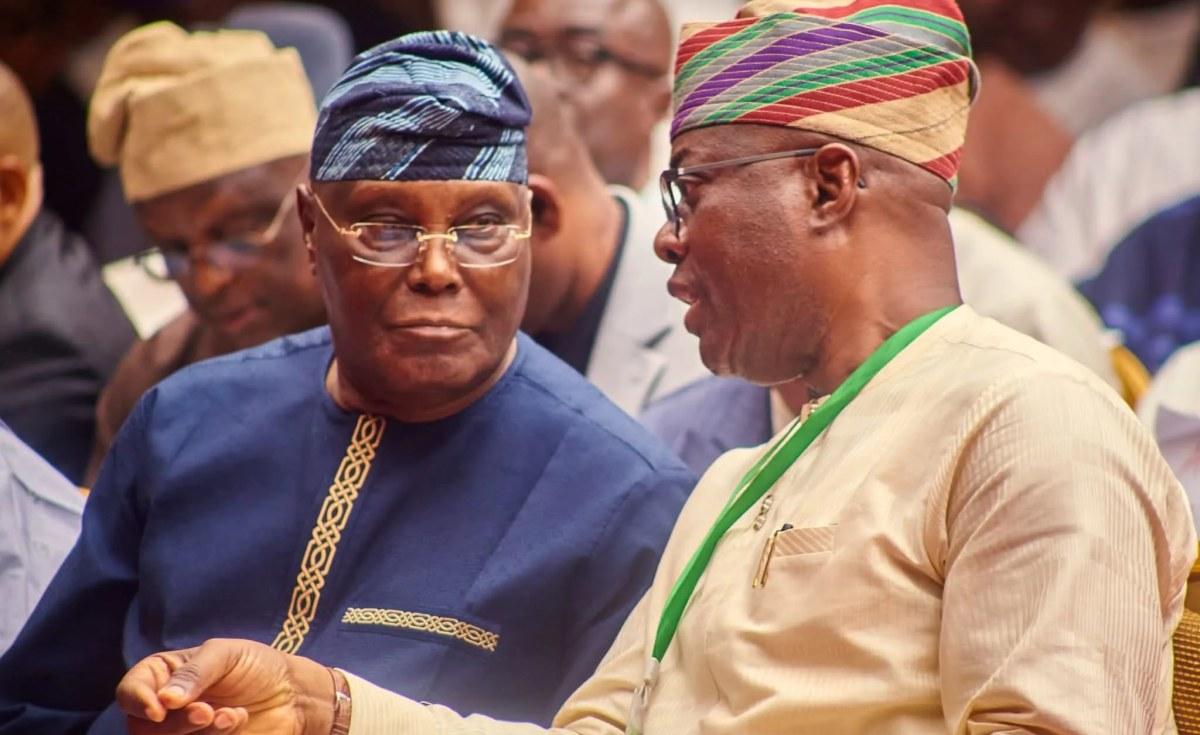
ABUJA, NIGERIA — Former Vice President Atiku Abubakar and Oyo State Governor Seyi Makinde are moving deeper into negotiations over a possible political alliance ahead of Nigeria’s 2027 presidential election, as opposition parties intensify efforts to avoid a fragmented contest against President Bola Tinubu and the ruling All Progressives Congress. The talks, which have been confirmed publicly by Makinde and acknowledged by officials around both camps, have moved beyond casual political contact into discussions about whether competing presidential ambitions can be reconciled around a single electoral strategy, but no final agreement has been reached and neither politician has formally stepped down for the other. The emerging negotiations are unfolding alongside a wider opposition effort involving Peter Obi and other presidential candidates, creating a fluid political environment in which today’s rivals could still become tomorrow’s partners before the January 16 election.
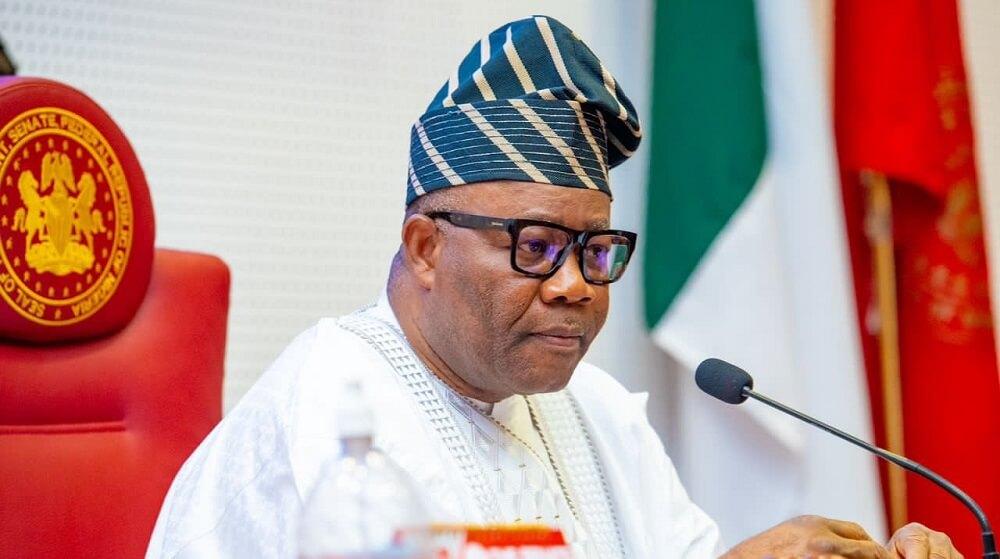
Makinde, the presidential candidate of the Allied Peoples Movement, publicly confirmed during an interview with ARISE News that he is actively engaging Atiku, Peter Obi and other opposition figures over possible cooperation. He rejected the suggestion that he was merely keeping his options open, saying discussions were already taking place and that the final arrangement would depend on data, political realities, voter sentiment and the strength of each candidate’s programme. His remarks were among the clearest indications yet that opposition leaders are seriously exploring whether one or more presidential candidates could step aside, support another contender or enter a negotiated coalition designed to consolidate votes that might otherwise be divided among several anti-APC candidates.
“We’re still discussing,” Makinde said, before adding that he was not simply open to an alliance but was “actively discussing this.” He declined to identify Atiku or Obi as his preferred partner and instead argued that the decision should not be driven by personal loyalty, emotion or regional sentiment. According to him, opposition leaders would need to examine manifestos, previous performance, historical voting patterns and public opinion before deciding how best to cooperate. His position reflects the central difficulty facing the opposition: every major contender believes he has a legitimate claim to lead, but all are also aware that entering the election separately could leave the anti-APC vote divided across several platforms.
Makinde made clear that he would be willing to work with Atiku if the evidence available to opposition leaders showed that the former vice president offered the strongest route toward a common ticket. Asked directly whether he would accept such an arrangement, he answered in the affirmative and said he was prepared to work with any Nigerian where the larger objective justified cooperation. At the same time, he emphasized that no decision had yet been taken, making it clear that the discussions remain exploratory rather than binding.
His comments were reinforced over the weekend by officials within the APM. Michael Ogunsina, the party’s publicity secretary in Oyo State, confirmed that discussions between Makinde and Atiku were ongoing but stressed that there had been no final concession from either side. He said the negotiations were examining both the structure of a possible alliance and the concessions that would need to be made by participating politicians or parties. “As I speak, there is no concession yet. The alliance is yet to be finalised. It’s just a conversation,” he said, adding that details would only be made public after negotiations were concluded.
That clarification is important because Sunday PUNCH reported that representatives of Atiku and Makinde had held a series of physical and virtual meetings and had reached compromises on several issues. Political figures familiar with the discussions told the newspaper that the talks were progressing positively and that both camps could unveil a formal understanding before the election. Those claims suggest momentum, but they do not amount to a formal agreement because the specific terms of any compromise have not been disclosed and named officials from either camp have stopped short of confirming that a joint ticket or political platform has been settled.
Atiku’s camp has similarly acknowledged wider opposition engagement without confirming a closed agreement with Makinde. His senior aide on public communication, Phrank Shaibu, said the former vice president was consulting leaders across the opposition in an effort to build what he described as a common front capable of offering Nigerians an alternative to the current administration. The African Democratic Congress, under which Atiku is contesting, has also said opposition parties remain in talks and that the process is not restricted to one politician or one party.
The distinction between those broader negotiations and the specific Atiku-Makinde discussions is becoming increasingly important. A wider opposition coalition has been under discussion for months, involving the ADC, APM, Nigeria Democratic Congress, Social Democratic Party, Peoples Democratic Party and Peoples Redemption Party, among others. Those consultations emerged from concerns that no single opposition party could easily defeat the APC if several major candidates contested separately. Political actors involved in the G-100 opposition initiative have repeatedly argued that opposition fragmentation would benefit Tinubu, whose party possesses the advantages of incumbency, nationwide structures and control of the Federal Government.
Makinde himself played a major role in expanding that conversation when he hosted an opposition summit at the Oyo State Government House in Ibadan earlier this year. At that gathering, opposition leaders discussed the possibility of presenting a single candidate against the APC and agreed that political parties needed to move beyond individual ambition if they intended to compete effectively at the national level. The summit generated considerable attention but did not immediately produce a consensus candidate, largely because Atiku, Makinde, Obi and other leading figures continued building their own campaigns.
The political landscape has changed significantly since then. Atiku remains the presidential candidate of the ADC, Makinde is flying the APM flag and Obi is contesting under the Nigeria Democratic Congress alongside Rabiu Musa Kwankwaso as his running mate. Those existing nominations make any alliance more complicated because cooperation would now require not just informal political understanding but difficult decisions about who remains on the ballot, which party supplies the candidate and what happens to running mates, party executives and supporters who have already invested in separate campaign structures.
That is one reason Makinde has repeatedly refused to reduce the negotiations to personalities. He says the opposition must first determine the arrangement most likely to produce a viable national challenge before deciding who occupies which position. He has cited the 1999 presidential election as a lesson, noting that Olu Falae dominated the South-West but could not convert regional strength into national victory. For Makinde, the implication is that a candidate strong in one zone may still need alliances elsewhere to assemble a winning national coalition.
Regional arithmetic will undoubtedly shape any Atiku-Makinde arrangement. Atiku brings decades of political experience, strong recognition across northern Nigeria and a national campaign network developed through multiple presidential contests. Makinde, meanwhile, has built a political identity centered on the South-West and has increasingly positioned himself as a critic of both the APC and the established opposition hierarchy. An alliance between them would theoretically seek to combine northern reach with stronger South-West credibility, but whether their supporters could be transferred automatically from one candidate to another remains uncertain.
Makinde’s South-West position is especially politically sensitive because the region is President Tinubu’s home base. Any opposition strategy involving Makinde would therefore be examined partly through the question of whether he can significantly reduce the APC’s advantage in Oyo and surrounding states. Atiku’s supporters would likely view such a partnership as a route toward improving his performance in a region where he has historically faced stiff competition from southern candidates, while Makinde’s supporters would want assurances that any alliance does not simply reduce the governor to a regional mobilizer without substantial influence over the proposed government.
That tension is where negotiations over “concessions” become important. Alliances of this scale typically involve not only the presidential and vice-presidential slots but also agreements over cabinet representation, legislative strategy, party structures and post-election power-sharing. No credible public evidence currently establishes what Atiku and Makinde have agreed on in those areas, and reports claiming a concluded vice-presidential arrangement should therefore be treated cautiously unless confirmed by the candidates or their parties.
There have been speculative reports that Makinde could eventually support an Atiku-led ticket in exchange for a major role, but neither man has publicly confirmed such a structure. Makinde’s current comments leave open the possibility that he could support Atiku, that Atiku could support another candidate, or that the wider opposition could settle on an entirely different configuration. His insistence that decisions must be based on data appears designed partly to preserve his negotiating leverage while avoiding the perception that he has already surrendered his presidential ambition.
Peter Obi remains another major factor complicating the equation. Makinde has openly confirmed engagement with him as well and has said the same principles would apply if available evidence showed that Obi represented the strongest basis for cooperation. Obi’s NDC ticket with Kwankwaso already combines significant political appeal in the South-East and parts of the urban electorate with Kwankwaso’s established base in Kano and sections of the North-West. Any attempt to create a single opposition candidacy would therefore require discussions not only between Atiku and Makinde but also with an NDC ticket that has already invested heavily in its own national campaign.
That reality explains why Makinde has described opposition leaders as potentially being “rivals” in one scenario and “collaborators” in another. Until a final arrangement is reached, all of the major contenders remain competitors for the presidency. Yet the continuing talks indicate that they understand the electoral mathematics may eventually force difficult compromises if they conclude that no single opposition campaign can defeat the APC alone.
The timing adds pressure. Nigeria’s presidential election is scheduled for January 16, leaving opposition leaders only a limited period to negotiate an alliance, reorganize campaign structures and explain any new arrangement to voters. The later an agreement comes, the more difficult it becomes to merge field operations, reconcile supporters and resolve legal or ballot issues. That urgency is one reason the latest Atiku-Makinde contacts are attracting attention even though no final deal has been announced.
An alliance would also need to overcome political history between the two men and their respective camps. During the 2023 election cycle, Makinde was one of the five PDP governors known as the G5 who withheld support from Atiku’s presidential campaign after the party refused their demand that its national chairmanship move to the South. The dispute became one of the major internal crises that weakened the PDP heading into the election, and Makinde was widely viewed as part of a bloc unwilling to campaign for Atiku.
Any 2027 alliance between them would therefore represent a substantial political reconciliation. It would show that both sides are willing to set aside the divisions that shaped the previous election and reorganize around a new opposition strategy. Atiku’s camp would need to persuade supporters who once blamed the G5 for weakening his 2023 campaign, while Makinde would need to explain why cooperation with the same politician he declined to support four years earlier now serves the opposition’s wider objective.
Politics often produces exactly such reversals, particularly where electoral circumstances change. Alliances in Nigeria are frequently built across old rivalries when parties conclude that cooperation is more valuable than maintaining previous grievances. The APC itself emerged before the 2015 election from the merger of several opposition groups that had previously competed against one another, eventually creating the coalition that defeated an incumbent president for the first time in Nigeria’s democratic history.
Opposition strategists frequently cite that precedent when arguing for a united 2027 candidacy. Their view is that the APC remains structurally stronger when opponents are divided and that combining political networks, funding, media operations and regional support would give challengers a more coordinated national presence. Whether today’s opposition can recreate the discipline of the 2015 coalition remains uncertain because the current field includes several high-profile politicians with established personal ambitions and separate parties.
President Tinubu and the APC are already responding to the coalition debate by presenting the opposition talks as an arrangement driven by politicians seeking power rather than by policy differences. APC officials have repeatedly argued that opposition figures lack a coherent ideological programme and are united primarily by their desire to remove the president. Opposition leaders reject that characterization and say the economic, security and governance conditions under Tinubu provide a substantive basis for cooperation.
The policy differences would become more important if an Atiku-Makinde alliance moves forward. Atiku has campaigned on market-oriented economic reforms while also promising to restore or increase certain fuel and electricity subsidies to cushion households, whereas Makinde has emphasized what he calls a reset of Nigeria’s political and economic system. A credible alliance would need to produce a common policy platform rather than merely deciding whose photograph appears at the top of the ticket.
That would include questions surrounding the economy, security, state police, restructuring, education, energy policy and the relationship between federal and state governments. Makinde has praised some Tinubu policies, including movement toward state policing and student-loan initiatives, even while criticizing the administration’s economic performance and accusing the president of failing to honor earlier political agreements. Such positions suggest that any alliance he enters would likely involve negotiation over policy as well as electoral strategy.
The governor’s break with Tinubu has itself become part of the political realignment. Makinde has said the president failed to honor an agreement reached between them around the 2023 election and has accused the administration of using federal institutions to pressure opposition governors. Those claims are denied by Tinubu’s allies, but they have helped push Makinde further into the national opposition camp after a period in which his relationship with the president was frequently described as unusually cordial for politicians belonging to different parties.
Atiku has likewise spent much of the current cycle trying to build a coalition broader than his own ADC platform. His engagement with opposition leaders reflects an understanding that his previous national campaigns have demonstrated both his strengths and limitations. He retains a significant political network but has also faced questions about whether another solo presidential run could reproduce the same regional divisions seen in earlier elections.
That makes Makinde valuable not simply as an individual politician but as a potential bridge into a section of southern opposition politics that has historically been skeptical of Atiku’s presidential ambitions. At the same time, Makinde would benefit from the organizational reach and northern relationships Atiku has built over decades.
The negotiations therefore have a strategic logic even though the ultimate structure remains unsettled. Each politician possesses assets the other could use, while both face the same structural challenge of confronting an incumbent APC president. The unanswered question is whether those complementary strengths outweigh personal ambition, party interests and competing regional expectations.
The APM’s latest comments suggest negotiators have reached the point of discussing precisely those issues. Ogunsina’s reference to concessions indicates that the talks are no longer simply about whether cooperation is desirable but about what each side would have to give up for cooperation to become possible. His insistence that no concession has yet been finalized is equally important because it confirms that the central bargaining remains unresolved.
Those negotiations could still fail. Opposition alliance talks in Nigeria have repeatedly collapsed over presidential tickets, control of party structures and mistrust among political leaders. The broader coalition effort ahead of 2027 has already experienced setbacks as politicians moved between platforms and pursued separate nominations.
Even if Atiku and Makinde reach an agreement, another challenge would be bringing the broader opposition into the arrangement. A two-man understanding may not be enough if Obi, Kwankwaso and other significant candidates continue contesting independently. The objective repeatedly discussed at opposition summits has been a single candidacy, not merely reducing the number of candidates by one.
That makes the Atiku-Makinde negotiations potentially either a building block toward a wider coalition or a separate alliance that could create another competing bloc. Which direction they take will depend heavily on whether the two camps see their agreement as the final opposition structure or as leverage for negotiations with other candidates.
Makinde’s own public language suggests he still favors a broader process. He has repeatedly said that negotiations should not be personal and has framed the eventual decision as a “deal for Nigeria” rather than a private understanding between politicians. That rhetoric leaves room for a wider coalition while also allowing him to keep separate discussions with Atiku moving forward.
For voters, the significance of the talks lies less in political personalities than in what they reveal about the evolving 2027 contest. Nigeria’s opposition landscape is no longer static. Candidates who began the campaign on separate platforms are actively testing whether their support bases can be combined, and political calculations that seemed fixed only months ago may still change before election day.
The APC retains the advantages associated with incumbency and an established nationwide party structure, but opposition leaders believe political dissatisfaction creates an opening if they can avoid splitting their vote. Whether that analysis proves correct cannot yet be known, and no responsible assessment can predict the election from alliance talks alone.
What is established is that negotiations are real and increasingly serious. Makinde has confirmed direct engagement with both Atiku and Obi. Atiku’s aides confirm wider opposition consultations. APM officials acknowledge specific discussions with Atiku’s camp over the structure and concessions required for collaboration. Political sources say multiple physical and virtual meetings have occurred.
What has not happened is equally important. Neither Atiku nor Makinde has withdrawn from the presidential contest. No joint ticket has been announced. No common party has been formally selected. No confirmed vice-presidential arrangement exists, and no written coalition agreement has been made public.
Those facts should define how the developing story is understood. Atiku and Makinde are moving closer politically, but they have not yet crossed the line from negotiation into formal alliance.
The coming days and weeks will therefore be decisive. If their camps settle the questions of leadership, platform and concessions, the two politicians could announce one of the most significant political realignments of the 2027 campaign. Such a development would immediately intensify pressure on other opposition figures to decide whether to join, remain independent or create competing alliances.
If negotiations break down, the failure would reinforce the argument that personal ambitions remain the greatest obstacle to a united opposition front. Either outcome will help clarify a presidential race currently defined as much by negotiations behind the scenes as by speeches delivered at campaign rallies.
For now, Atiku Abubakar and Seyi Makinde remain rivals on paper and potential partners at the negotiating table. Their discussions have advanced enough for both camps to acknowledge that meaningful cooperation is possible, but the most difficult decisions — who leads, what each side gives up and whether the rest of the opposition can be brought into the same arrangement — are still unresolved.
That uncertainty is what makes the developing alliance one of the most important political stories of the 2027 campaign. The opposition’s central challenge is no longer identifying its dissatisfaction with the APC; it is deciding whether its leading figures are prepared to sacrifice individual ambitions for a single national strategy. The Atiku-Makinde talks will provide one of the clearest tests yet of whether that unity can move from rhetoric into an actual electoral agreement.