
MAKINDE PLEDGES SINGLE FOUR YEAR TERM IF ELECTED PRESIDENT IN 2027
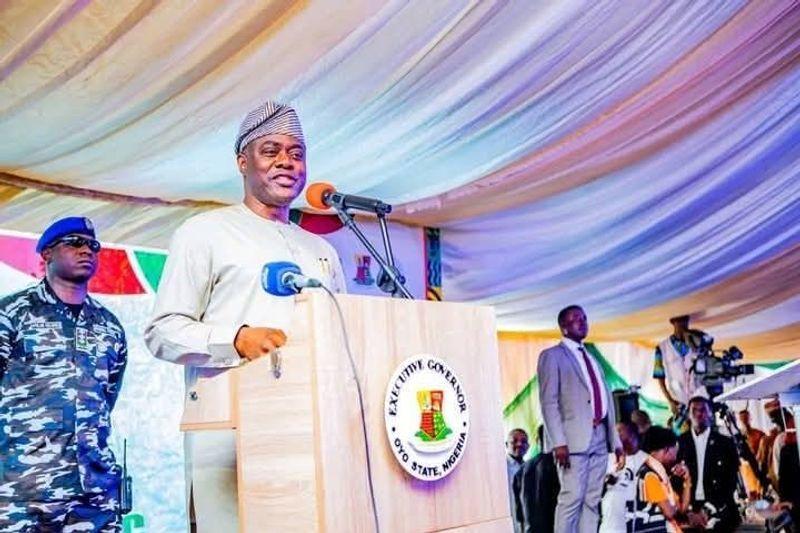
Seyi Makinde has promised to serve only one four year term if elected president in 2027, describing his proposed administration as a transitional government of national unity focused on insecurity, poverty and electricity. The pledge also speaks directly to Nigeria’s informal North South power rotation debate.
Oyo State Governor and Allied Peoples Movement presidential candidate Seyi Makinde has pledged to serve only one four year term if elected president in 2027, presenting his proposed administration as a transitional government of national unity that would focus on insecurity, poverty, electricity and broader economic pressures before handing power over after one term. Makinde made the declaration on Saturday at the APM North East zonal town hall meeting in Yola, Adamawa State, where he said any government he forms from May 29, 2027, would be inclusive and would not remain in office beyond four years.
Makinde told the gathering that Nigeria needs an administration willing to listen to citizens and deal directly with the country’s most pressing problems rather than extending political control for its own sake. He described the government he hopes to form as a transitional Government of National Unity and said its purpose would be to stabilize the country, address worsening insecurity, reduce poverty, improve electricity supply and create a more inclusive political system. He also said the APM had delayed releasing parts of its manifesto because it wanted its town hall meetings to shape the final policy programme around concerns raised by Nigerians across different regions.
The one term pledge immediately adds another layer to Nigeria’s 2027 power rotation debate because Makinde is a southern politician seeking to succeed President Bola Tinubu, another southerner. Nigeria has no constitutional rule requiring presidential power to alternate between North and South, but major parties have often treated regional rotation as an important political balancing principle. Makinde’s promise appears designed in part to reassure northern political actors that a victory for another southern candidate would not necessarily mean presidential power remaining in the South for another eight years.
Makinde’s position also mirrors a similar one term commitment by Peter Obi, who is contesting under the Nigeria Democratic Congress. That means the 2027 opposition debate is increasingly being shaped not only by competing economic and security programmes but also by promises about how long a successful opposition candidate would remain in office.
During the Yola meeting, Makinde also challenged the Federal Government to make its petroleum pricing template public following the introduction of a temporary fuel discount arrangement. He argued that Nigerians should be able to see how petroleum prices are calculated and contribute ideas where alternative solutions exist. His wider criticism of the Tinubu administration focused particularly on electricity, energy policy and the cost of living, while his own campaign is attempting to frame the 2027 election around what he calls a national reset.
The pledge is not entirely new. Makinde had already told an APM town hall meeting in Lafia in September that four years would be enough for his administration to reset Nigeria if elected. The Yola declaration goes further by explicitly describing the proposed government as transitional and stating clearly that it would not seek to remain in office beyond one four year term.
Makinde’s commitment remains a political promise rather than a legally binding restriction. Nigeria’s Constitution allows a president to seek a second term, so any decision to leave office after four years would ultimately depend on the president voluntarily declining to contest again. That distinction is likely to remain part of the political debate as voters assess similar one term pledges from opposition candidates.
The significance of the promise lies in the regional arithmetic surrounding 2027. Tinubu is seeking re election and, if successful, would potentially keep the presidency in the South until 2031. Opposition figures from the South who want to challenge him therefore face the political task of convincing northern voters that their own victories would not necessarily extend southern control of the presidency for another full eight year cycle.
Makinde is attempting to answer that concern directly by presenting himself as a four year transitional candidate. Whether that pledge becomes a major factor in the election will depend on how much importance voters and political blocs place on regional rotation compared with concerns over the economy, insecurity, electricity, employment and governance.
For now, his position is clear. If elected president in 2027, Makinde says he intends to form an inclusive national unity government, serve one four year term and leave office after completing what he describes as a national reset.