
ATIKU SAYS TINUBU’S 30-DAY PETROL DISCOUNT IS AN INCOMPLETE COPY OF HIS PROPOSAL
Atiku Abubakar has accused President Bola Tinubu of copying the principle behind his targeted petrol-subsidy proposal while stripping out its production-linked features. He says the government’s 30-day NNPC discount offers only temporary relief, while his model would subsidize locally refined fuel, exclude imports and subject the support to budget limits and independent audit. The Tinubu administration says its intervention is a temporary response to global price shocks and not a return to fuel subsidy.
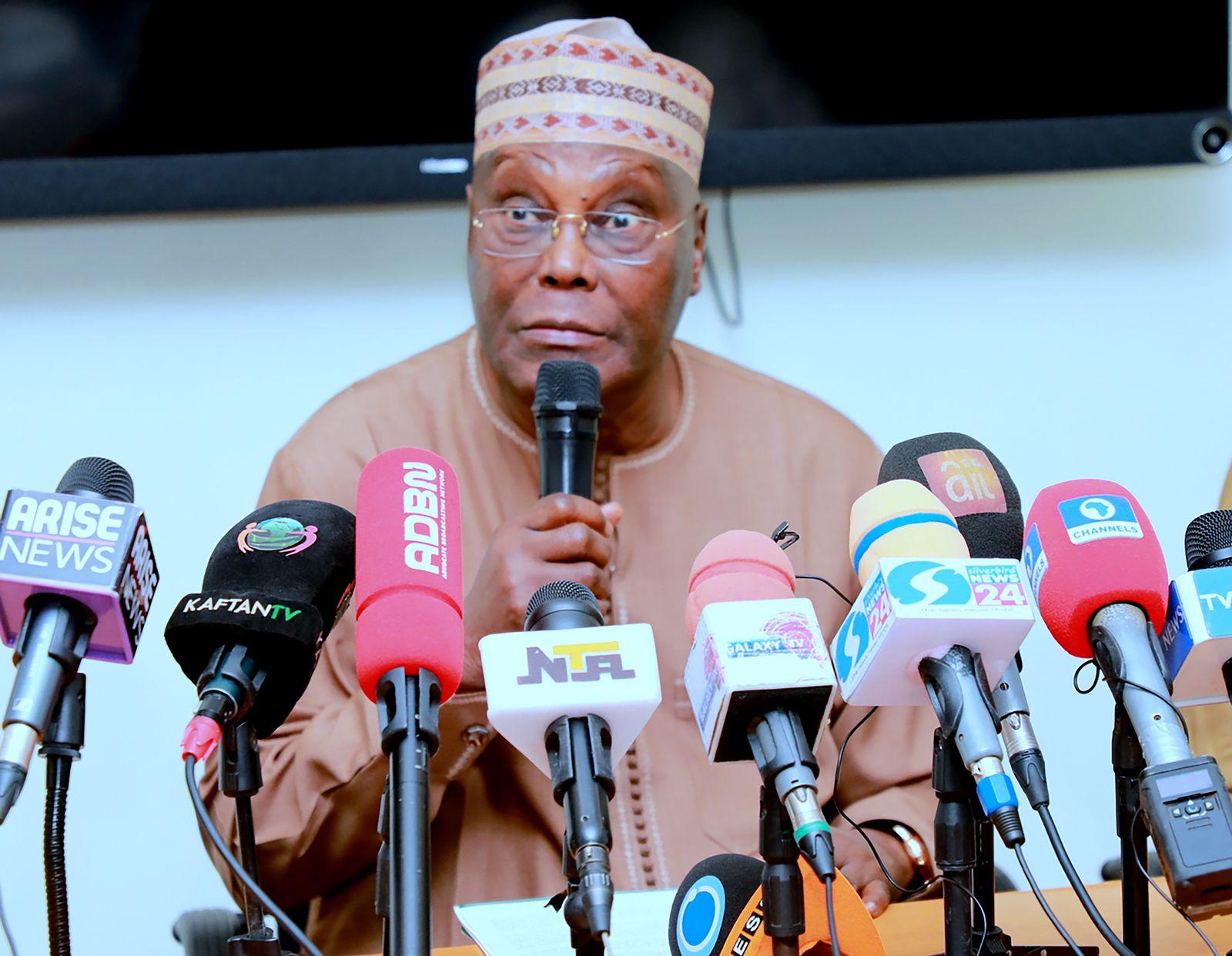
African Democratic Congress presidential candidate Atiku Abubakar has accused President Bola Tinubu of adopting the central idea behind his proposed petrol subsidy model while removing the production-linked features he says are necessary to make the policy sustainable, describing the federal government’s new 30-day NNPC fuel discount as temporary relief rather than a long-term response to Nigeria’s high energy costs. Speaking in Abuja during the inauguration of the ADC Presidential Campaign Council, the former vice president said the Tinubu administration had previously dismissed his proposal for targeted support for locally refined petroleum products but had now accepted the basic principle that government intervention may be necessary to shield households and businesses from extreme fuel-price shocks.
Atiku’s criticism followed the federal government’s announcement that Nigerian National Petroleum Company Limited retail stations would sell petrol at cost for an initial 30-day period, with priority given to public transport operators. The arrangement is part of a wider package announced by Finance Minister and Coordinating Minister of the Economy Taiwo Oyedele as global crude and refined-product prices rise sharply. Under the plan, NNPC Retail will temporarily give up its profit margin, meaning that if the company’s landing or supply cost is ₦1,300 per litre, for example, it would sell petrol at that same cost rather than adding its usual retail margin. The Presidency has repeatedly stressed that the measure should be understood as a temporary discount rather than a restoration of the blanket petrol subsidy removed by Tinubu in May 2023.
The government is also negotiating a separate price-modulation framework built around a proposed ceiling of ₦1,350 per litre on the ex-gantry or landing cost of petrol. Under that proposal, domestic refiners and importers would absorb temporary increases above the ceiling and recover those losses when market conditions improve, with the ceiling reviewed monthly. Officials say the objective is to prevent sudden price spikes without permanently fixing the retail price or returning to the old subsidy system in which government absorbed the difference between market costs and regulated pump prices.
Atiku argues that those measures amount to a partial acceptance of the interventionist principle his campaign has been advocating but stop short of addressing the structural weakness he believes is driving Nigeria’s fuel costs. His proposed model would provide targeted, budgeted government support only to petroleum products refined inside Nigeria and sold to domestic consumers. The subsidy would be capped, disclosed in the federal budget, independently audited and unavailable to imported petrol, with the explicit objective of encouraging investment in domestic refining while lowering consumer prices.
The former vice president’s argument is that a production-linked subsidy differs fundamentally from the broad consumption subsidy Nigeria operated before 2023. Under the old system, government effectively subsidized petrol consumed in Nigeria regardless of whether the product was produced domestically or imported, creating enormous fiscal costs and repeated disputes over volumes, smuggling and payments to marketers. Atiku says his proposal would instead subsidize local production itself, theoretically using public support to increase refinery output, reduce import dependence and strengthen domestic supply rather than simply covering the gap between international prices and regulated pump prices.
At the ADC campaign event, Atiku accused Tinubu of taking the idea of intervention while discarding the features designed to make it productive. He said a 30-day discount might temporarily lower prices for some consumers but would do nothing to give families, transport operators or businesses confidence about what fuel would cost after the month ends. His campaign argues that transport fares, food prices, manufacturing costs and household budgets cannot adjust meaningfully to an intervention with such a short duration because businesses need a longer planning horizon before passing savings through to consumers.
The criticism is politically significant because fuel pricing has become one of the central economic issues ahead of Nigeria’s 2027 presidential election. Tinubu’s decision to remove the petrol subsidy immediately after taking office in 2023 was one of the defining policies of his administration and triggered a major increase in transport and living costs. The government has consistently defended the policy as necessary to end a financially unsustainable system, reduce waste and free public resources for infrastructure and social spending, while opposition parties have argued that the reform was introduced too abruptly and without adequate protection for households.
The latest intervention therefore places the administration in a delicate position. Officials must demonstrate that they can respond to severe price shocks without appearing to reverse the subsidy reform they have defended for more than three years. The Presidency has gone to considerable lengths to insist that NNPC’s temporary margin sacrifice is a commercial discount rather than a subsidy and that the proposed ₦1,350 ceiling is a price-smoothing mechanism rather than formal price control. That distinction is central to the government’s economic argument because officials say returning to the previous subsidy system could once again impose enormous fiscal costs and weaken the currency.
The immediate trigger for the new measures is a sharp rise in global oil and refined-product prices, compounded by geopolitical disruption and higher shipping and supply costs. Nigeria remains a major crude producer, but domestic petrol prices are still influenced by international crude values, refining costs, foreign exchange and the price at which importers and refiners can replace supplies. The government says allowing domestic pump prices to track every sudden movement in those variables would create instability for consumers and businesses, which is why it is considering mechanisms that spread the impact over time.
Atiku’s campaign agrees that Nigerians need protection from price volatility but disagrees with how that protection should be designed. His production-subsidy proposal would concentrate public support on products actually refined in Nigeria, creating an incentive for domestic refineries to expand production and compete for local market share. The policy would exclude imported petrol entirely, according to his campaign, and every naira spent would be budgeted and subjected to independent audit. Atiku argues that such a system could lower prices while ensuring that subsidy spending contributes to investment, employment and domestic industrial capacity.
That model raises its own policy questions. A production-linked subsidy would still require public money, and government would have to determine how much support individual refiners receive, how qualifying production is measured and how to prevent companies from manipulating volumes or costs. It would also need to comply with the Petroleum Industry Act and the existing deregulated downstream framework, issues the Tinubu administration has previously cited when criticizing Atiku’s proposal. The opposition therefore still has to demonstrate how the model would be financed, administered and prevented from becoming another expensive subsidy system under a different name.
The government’s current plan also contains measures that go beyond the 30-day NNPC discount, making Atiku’s comparison only partially direct. In addition to the proposed ₦1,350 landing-cost ceiling, the administration says it intends to increase forward sales of crude oil to local refineries so that domestic producers are less exposed to short-term international price fluctuations. Officials also plan to expand compressed natural gas deployment, increase cash-transfer support, reduce road levies that raise transport costs, consider targeted tax relief and establish a national strategic fuel reserve that could be used during future supply disruptions.
The forward-crude arrangement is particularly relevant because it overlaps with part of the economic logic behind Atiku’s proposal. If local refineries have more predictable access to crude and can operate at higher capacity, Nigeria could reduce dependence on imported refined products and lower exposure to international shipping and financing costs. The disagreement is therefore not simply between government intervention and a completely free market. Both sides are proposing some form of intervention, but they differ over where government support should enter the supply chain, how long it should last and whether direct fiscal support should be tied specifically to domestic production.
The government argues that the market should remain broadly deregulated and that intervention should be temporary and targeted at moments of exceptional volatility. Atiku argues that a more permanent production-linked framework is necessary to reduce costs structurally and create incentives for domestic refining. That policy difference is likely to become one of the clearest economic contrasts between the APC and ADC campaigns as both parties seek to convince voters that they have a credible answer to Nigeria’s fuel-price crisis.
Atiku’s attack on the 30-day discount was delivered in deliberately political language. He said Tinubu had “borrowed the idea but missed the lesson” and accused the president of copying his production-subsidy proposal while stripping away the part that makes it work. He also demanded an apology, saying government officials had previously portrayed his proposal as economically misguided before adopting what he sees as its underlying principle.
The Presidency has not accepted that characterization. Its position is that the latest measures respond to an immediate global energy shock rather than represent a conversion to Atiku’s subsidy policy. Officials say NNPC is simply foregoing its retail margin for a limited period, while the proposed price ceiling is designed to smooth volatility rather than force taxpayers to permanently absorb fuel costs. The government also says domestic-refining support is already part of its broader energy strategy and should not be interpreted as evidence that it has copied an opposition proposal.
The debate becomes more complicated because Nigeria’s petrol market is no longer structured the same way it was before subsidy removal. Dangote Refinery and other domestic producers now play a much larger role in supply, while NNPC’s relationship with marketers and refiners has changed significantly. The government’s challenge is therefore to find a mechanism that prevents extreme pump-price increases without undermining private investment or recreating the fiscal liabilities associated with the old subsidy regime.
For ordinary Nigerians, however, the distinction between a discount, a production subsidy and a price-modulation mechanism may matter less than the amount paid at the pump. Petrol prices feed directly into transport fares, food distribution, electricity generation for businesses and household spending. Small companies that depend on generators are particularly exposed because higher fuel prices raise production costs almost immediately, while transport operators often increase fares when petrol becomes more expensive.
That is why Atiku has focused his criticism on the duration of the NNPC intervention. His argument is that a 30-day measure cannot give households or businesses enough certainty to change their spending or pricing decisions. A transporter who reduces fares because fuel becomes temporarily cheaper may be forced to raise them again a month later, while a manufacturer cannot make long-term investment decisions based on a discount that could disappear before the next production cycle.
The government’s answer is that the 30-day NNPC arrangement is only one component of a broader package and may be adjusted depending on market conditions. The proposed ₦1,350 ceiling is to be reviewed monthly, while crude supply, CNG expansion, tax measures and transport interventions are intended to create more lasting effects. Officials have also said international energy prices may not remain elevated indefinitely, meaning a permanent subsidy response to a temporary external shock could create unnecessary fiscal costs.
The debate also comes as organised labour is demanding a much more aggressive response to petrol prices. The Nigeria Labour Congress has given the government an ultimatum to reduce fuel costs toward earlier levels and reopen minimum-wage discussions, arguing that workers’ incomes have been eroded by inflation and repeated increases in energy prices. The labour movement has not accepted the government’s argument that deregulation alone will eventually produce affordability, and the latest NNPC discount is unlikely to end that pressure.
Tinubu’s administration is therefore being challenged from multiple directions. Labour wants deeper and more immediate relief, opposition candidates want to turn fuel prices into an election issue, while government economic officials are trying to prevent interventions from undermining fiscal reforms. The result is a policy environment in which nearly every change to petrol pricing has major political consequences.
Atiku’s campaign is attempting to use that environment to redefine the subsidy debate. Rather than defending the old system, which became associated with huge fiscal costs and widespread allegations of fraud, the ADC candidate is presenting his proposal as a different category of subsidy designed to build productive capacity. His central claim is that government support is not automatically harmful if it is targeted at domestic output, capped, transparently budgeted and independently audited.
Whether that model would deliver lower prices depends on several factors, including refinery efficiency, crude supply, exchange rates, competition and the size of the subsidy required. If domestic production costs remain high, government could still face substantial fiscal exposure. If the subsidy is too small, consumers may see little benefit. If it is too generous, refiners could become dependent on public support. Those are the practical questions the ADC will have to answer as the campaign develops.
The government faces an equally difficult burden of proof. If the 30-day discount ends without any noticeable reduction in transport fares or living costs, Atiku’s argument that the measure was merely temporary relief could gain traction. If NNPC’s margin sacrifice, the proposed ceiling and other interventions succeed in reducing volatility without large government expenditure, the administration will argue that a permanent production subsidy is unnecessary.
The ₦1,350 ceiling itself should also be described carefully. It is not necessarily a nationwide retail pump-price cap. Government officials have described it as a proposed ceiling on the ex-gantry or landing cost of petrol, meaning the final price paid by consumers can still include distribution, logistics and retail margins. Atiku’s criticism is therefore directed not only at the number but at the limited duration of NNPC’s separate retail discount and the absence of the broader production-linked subsidy structure he has proposed.
The argument is likely to become a recurring feature of the 2027 campaign because it allows both sides to present competing philosophies of economic management. Tinubu can argue that temporary, targeted intervention protects consumers without returning Nigeria to an unsustainable subsidy regime. Atiku can argue that the state should intervene more strategically by rewarding local production and tying any public support to measurable domestic economic benefits.
Neither approach can be judged solely by campaign rhetoric. The government’s current measures will generate real data over the coming weeks on NNPC prices, transport fares, marketer behavior and whether the proposed ceiling stabilizes costs. Atiku’s model, meanwhile, will face scrutiny over its fiscal assumptions, legal structure and how it would prevent abuse. Voters will ultimately have to assess not simply who first proposed intervention but which framework offers credible, durable and affordable relief.
For now, the immediate disagreement is clear. Atiku says the Tinubu administration has accepted the need for petrol-price intervention but reduced what he describes as a structural production policy into a one-month gesture. The government says the 30-day NNPC discount is emergency relief inside a much larger strategy and does not represent a return to subsidy or an adoption of the opposition’s plan.
The political importance of the dispute extends beyond fuel. Nigeria’s cost-of-living crisis is becoming one of the defining issues of the election, and petrol prices sit at the centre of that conversation because they affect almost every other part of the economy. Whoever persuades voters that they have the more credible path to lower transport, food, power and business costs will gain an important advantage in the broader economic debate.
Atiku’s latest attack therefore marks more than a disagreement over a 30-day price cut. It is an attempt to frame the 2027 economic contest around the difference between temporary relief and structural intervention, while forcing Tinubu to defend a policy that appears more interventionist than the administration’s earlier rhetoric on subsidy removal. The government, for its part, is trying to show that it can moderate extreme price shocks without reopening the fiscal problems that accompanied the old subsidy system. How those competing approaches perform in practice will matter far more than the accusation over who copied whom.