
TINUBU TO LAUNCH 2027 RE-ELECTION CAMPAIGN IN KADUNA OCTOBER 24 AS APC MOVES EARLY AGAINST OPPOSITION
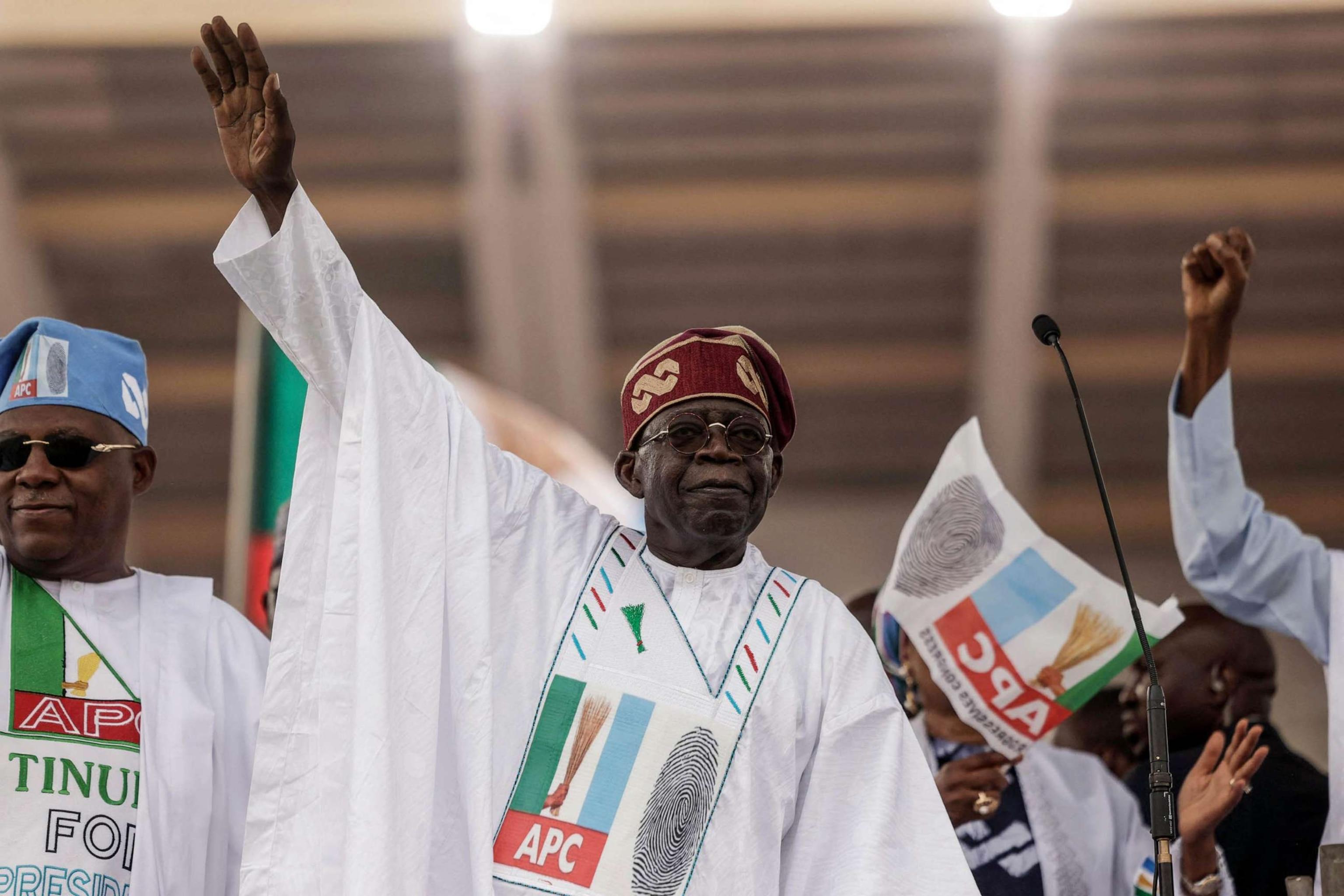
President Bola Tinubu will formally launch his 2027 reelection campaign in Kaduna on October 24 after approving the APC’s proposed timetable for nationwide state visits. Campaign council director-general Abdulaziz Yari said the council will first meet on October 14 at the State House Banquet Hall before moving to Kaduna, with Port Harcourt and Maiduguri among the next planned stops. The launch moves Tinubu’s second-term effort into formal public campaigning as the APC prepares to defend its economic and security record against opposition challengers including Atiku Abubakar and Peter Obi.
President Bola Ahmed Tinubu will formally launch his 2027 re-election campaign in Kaduna on October 24, opening what the ruling All Progressives Congress is presenting as an aggressive nationwide push to secure a second term amid intensifying opposition efforts to unseat him. The announcement was made on Friday by former Zamfara State governor and APC Presidential Campaign Council Director-General Abdulaziz Yari after he met Tinubu at the Presidential Villa in Abuja to brief the president on campaign preparations and a proposed timetable for state visits. Yari said Tinubu had approved the schedule, with the campaign council due to hold its inaugural meeting at the State House Banquet Hall on October 14 before the first major rally in Kaduna ten days later.
The decision gives the APC a clear date for moving from months of political positioning, defections and organizational preparation into full-scale public electioneering. Yari said the party had mapped out visits across the country and would release a more detailed timetable after the campaign council’s inauguration, but he identified Port Harcourt and Maiduguri as among the next destinations after Kaduna. The sequence immediately reveals the geographical strategy behind the campaign: Kaduna provides a high-profile northern launch point, Port Harcourt takes Tinubu’s message into the politically important oil-producing South-South, while Maiduguri gives the campaign another major platform in the northeast as the president attempts to build the broad regional coalition required to win a nationwide presidential election.
Kaduna is a particularly significant place for Tinubu to begin. The state remains one of northern Nigeria’s most politically influential territories because of its population, history and role in national party organization, while the wider northwest has traditionally produced some of the largest presidential vote totals in the country. Tinubu did not dominate the region uniformly in the 2023 election, and the APC’s decision to begin there suggests the party wants to consolidate northern support early rather than assume incumbency alone will deliver it. It also places the opening rally within a region where economic hardship, insecurity, banditry and rising living costs are likely to become central campaign issues, forcing the president to defend his record before audiences directly affected by some of the most difficult challenges facing his administration.
Yari’s comments after the Aso Rock meeting made clear that the campaign will not be framed simply as a celebration of the government’s achievements. He directly addressed the challenge from opposition figures including former Vice President Atiku Abubakar and former Labour Party presidential candidate Peter Obi, arguing that neither could win the presidency without building support across both northern and southern Nigeria. His argument was that a candidate cannot rely on overwhelming dominance in one section of the country while remaining weak in another, reflecting the constitutional requirement that presidential contenders must combine a national vote total with sufficient geographical spread.
That message is likely to become one of the APC campaign’s central political themes. Tinubu’s team is expected to portray the president as a politician with an organization capable of competing across all six geopolitical zones, while questioning whether opposition candidates can assemble an equally broad coalition. Such claims remain political arguments rather than established electoral outcomes, and the strength of the opposition will ultimately depend on party structures, alliances, candidate selection and voter sentiment by the time ballots are cast. What Friday’s announcement demonstrates is that the APC intends to begin testing those arguments publicly well before the final stretch of the election.
The campaign launch also formalizes Tinubu’s second-term effort after months in which much of the political groundwork had already been visible. Senior APC officials, governors, federal lawmakers and regional political leaders have increasingly spoken about continuity beyond 2027, while defections from opposition parties have been presented by the ruling party as evidence that its electoral coalition is expanding. The formal campaign structure now gives those activities a national command system under Yari and allows the party to coordinate rallies, messaging, fundraising, regional outreach and voter mobilization around the president’s re-election bid.
Yari said the president personally reviewed and approved the proposed state-visit timetable, indicating that Tinubu will be actively involved in the campaign rather than leaving its organization entirely to party officials. The October 14 inaugural meeting of the Presidential Campaign Council is expected to bring together senior party leaders, campaign strategists, governors and other political figures who will oversee the national operation. The detailed state-by-state schedule is expected only after that meeting, meaning Kaduna, Port Harcourt and Maiduguri are the first confirmed locations in what is likely to become an extensive series of rallies across Nigeria.
Choosing Kaduna also carries historical symbolism for the APC. Tinubu campaigned heavily in the state before the 2023 election, and the party has maintained a significant political structure there despite changes in local alliances and opposition competition. A large opening rally would allow the campaign to project organizational strength and momentum at the beginning of the national tour, particularly through images of crowds and endorsements from northern political leaders. For the opposition, however, crowd size at rallies will not necessarily be treated as evidence of electoral support, and competing parties are likely to challenge the APC’s presentation of such events as indicators of the final vote.
The economic environment confronting Tinubu in 2026 is substantially different from the one in which he campaigned for his first term. His administration has implemented some of the most consequential economic reforms Nigeria has experienced in years, beginning with the removal of the petrol subsidy and changes to the foreign-exchange system. The government argues that those measures were necessary to address deep fiscal distortions, attract investment and put the economy on a more sustainable footing, while critics point to the severe short-term consequences for households, including higher transport costs, food prices and pressure on wages.
That debate is likely to dominate the re-election campaign. Organized labour has already intensified pressure on the government over petrol prices and the minimum wage, with the Nigeria Labour Congress issuing an ultimatum demanding lower fuel prices and renewed wage negotiations. Tinubu’s campaign will therefore be required to convince voters that the pain associated with reforms is producing economic improvements substantial enough to justify continuity, while opposition candidates are likely to argue that living standards have deteriorated and that the government’s policies have imposed excessive costs on ordinary Nigerians.
Inflation, the naira, food affordability and employment will consequently matter as much as party machinery. Tinubu can point to reforms, infrastructure spending, tax changes, investment announcements and efforts to increase domestic refining and production, but voters will judge those policies partly through everyday experience. The price of transport, electricity, food and rent is likely to shape political attitudes more directly than headline macroeconomic indicators, making the administration’s ability to demonstrate tangible improvement before the election crucial to its campaign narrative.
Security presents another major challenge, particularly in the north. Banditry, kidnappings and armed violence remain persistent concerns across parts of Zamfara, Kaduna, Katsina, Niger and other states, even as security forces report killing commanders and disrupting criminal networks. The government is likely to highlight military operations and the elimination of prominent armed figures, while opposition parties will focus on continuing attacks and the vulnerability of rural communities. Beginning the campaign in Kaduna means those security questions will be difficult to avoid from the very first major rally.
The northeast carries its own security and political significance, helping explain Maiduguri’s place among the early campaign stops. Borno has been at the center of Nigeria’s fight against Boko Haram and Islamic State West Africa Province for years, and although security conditions have improved in many areas compared with the height of the insurgency, attacks and humanitarian pressures persist. A Tinubu rally in Maiduguri would give the president an opportunity to emphasize military gains, reconstruction and federal support while reinforcing the APC’s organization in a region that remains electorally important.
Port Harcourt offers a different strategic test. Rivers State is one of Nigeria’s most economically important states, with enormous influence derived from oil production, population and political networks. Its politics have also been unusually turbulent, and control of party machinery there can have national consequences. By placing Port Harcourt near the beginning of the campaign schedule, the APC is signaling that it considers the South-South a competitive region rather than territory to be conceded to opposition forces.
Tinubu’s campaign will also have to navigate the increasingly complicated opposition landscape. Atiku remains one of the most experienced presidential politicians in Nigeria, while Obi retains a significant support base among younger voters and in parts of the south. Other political forces and alliances could also reshape the contest as parties seek to avoid splitting opposition votes. Yari’s decision to discuss Atiku and Obi immediately after announcing the campaign timetable shows that the APC is already designing its messaging around the possibility that both will remain central to the race.
The opposition’s challenge will be converting dissatisfaction with the government into an organized national coalition. Nigeria’s presidential system rewards broad geographical support, making regional concentration insufficient on its own. Yari emphasized exactly that point when he argued that commanding large support in the south without meaningful northern backing, or dominating parts of the north without southern strength, would not be enough. That is a politically self-serving argument from the APC campaign director, but it also reflects the constitutional structure of presidential elections and explains why all major contenders will devote significant resources to regions outside their traditional strongholds.
The October 24 launch therefore matters not because campaigning has been absent until now, but because it establishes the point at which Tinubu’s reelection machinery will begin operating publicly under a formal national structure. The Electoral Act allows political parties to campaign within the timetable established by the Independent National Electoral Commission, and the APC is now preparing to use that window with a sequence of rallies and state visits designed to build momentum well before the final phase of the election.
The involvement of the Presidential Villa in the campaign council’s inauguration is also likely to draw scrutiny over the separation between official government activity and partisan electioneering. Nigeria’s electoral law prohibits state resources from being deployed to unfairly advantage or disadvantage candidates or political parties. As the sitting president moves deeper into campaign mode, attention will therefore focus on how official presidential duties, government communications, security arrangements and partisan events are separated. Similar questions arise in most democracies when incumbents seek re-election, but Nigeria’s history of disputes over state resources makes the issue particularly sensitive.
The APC will meanwhile seek to use incumbency as an organizational advantage without presenting it as a substitute for campaigning. Tinubu controls the federal executive, while the APC governs numerous states and has a substantial presence in the National Assembly. That provides the party with an extensive political network capable of mobilizing supporters, coordinating local events and attracting defectors. Opposition parties will attempt to counter that advantage by portraying themselves as a coalition against the status quo and by turning economic dissatisfaction into electoral pressure.
Yari expressed confidence that Tinubu could win more than 20 states, but such statements should be understood as campaign claims rather than independent forecasts. No reliable election result can be inferred from the number of states currently controlled by a political party, political endorsements or the size of campaign crowds. Nigerian presidential elections have repeatedly shown that governors can lose their own states, party strongholds can shift and turnout can change significantly between electoral cycles.
The APC’s campaign will therefore need more than political arithmetic. It must convince voters that Tinubu deserves another term after a presidency defined by difficult reforms, while opposition candidates must persuade Nigerians that they offer a credible alternative rather than simply an expression of dissatisfaction. Those competing arguments are now moving from preparation into a more formal and visible stage.
Tinubu’s political strengths include the APC’s nationwide organization, incumbency, a long-established network of political relationships and the ability to mobilize major figures across different regions. His vulnerabilities include the cost-of-living crisis, labour tensions, insecurity and public frustration over the pace at which economic improvements reach households. How the campaign balances those realities will shape its messaging from Kaduna onward.
The decision to begin in the north may also reflect the mathematics of turnout. Northern states have historically produced enormous numbers of registered voters, and presidential candidates generally need a strong showing across the region to build a competitive national total. Tinubu’s 2023 coalition depended on support from several parts of the country rather than domination of one region, and his campaign is likely to attempt a similar strategy while trying to expand its margins where the APC underperformed previously.
At the same time, the president cannot afford to neglect southern support. Lagos and the southwest remain central to his political identity, but the 2023 election demonstrated that even long-standing political bases cannot be taken for granted. Port Harcourt’s inclusion among the first campaign destinations suggests the APC understands that every major region must be actively contested.
The coming weeks should provide a clearer picture of the party’s strategy once the full timetable is released. The October 14 campaign council meeting will likely determine who controls regional operations, which governors and senior figures receive major campaign responsibilities and how the president’s policy record will be packaged for voters. The order of state visits could also reveal where the APC sees its strongest opportunities and greatest vulnerabilities.
Opposition parties will be watching closely. A strong APC launch in Kaduna could put pressure on rivals to accelerate their own campaign schedules, while any visible divisions within the ruling party could encourage challengers. The contest is therefore likely to intensify rapidly once Tinubu appears before supporters at the opening rally.
The early campaign period will also test the tone of the election. Nigerian political campaigns are often marked by aggressive rhetoric, accusations of regional or religious favoritism and disputes over the conduct of supporters. Electoral authorities and civil society organizations have repeatedly urged parties to focus on policies and avoid speech capable of inflaming divisions. Yari’s comments emphasizing the need for support across north and south point toward a national-unity argument, although the competitive rhetoric surrounding individual candidates is already sharpening.
For voters, the campaign will eventually come down to competing assessments of performance and alternatives. Tinubu will ask Nigerians to judge whether his reforms should be given more time to produce results, while his challengers will argue that the consequences of those policies already justify a change in leadership. The election is likely to revolve around the economy, security, corruption, infrastructure, governance and questions about the distribution of political power across the federation.
Kaduna will be the first major stage on which Tinubu attempts to make that case formally. The October 24 rally will allow the APC to demonstrate organizational strength, introduce its campaign themes and begin mobilizing its northern coalition. Subsequent visits to Port Harcourt, Maiduguri and other states will show how the party adapts those arguments to very different regional concerns.
What changed on Friday is therefore not simply the announcement of another political rally. Tinubu’s reelection effort now has a formal national launch date, an approved campaign timetable and a leadership structure preparing to move across the country. The ruling party is signaling that it intends to campaign aggressively rather than rely on incumbency, while opposition figures are being challenged to demonstrate that their own support can extend beyond regional bases.
The final outcome remains open and will depend on voters rather than the confidence expressed by any campaign director. But October 24 will mark an important transition in Nigeria’s 2027 political contest: the president’s second-term campaign will move from preparation and endorsements into full public mobilization, beginning in Kaduna before spreading to other major political centers across the federation.