MAHAMA REVEALS 135 EXCAVATORS AND NEARLY 200 FIREARMS SEIZED AS GOVERNMENT STEPS UP GALAMSEY CRACKDOWN AND ENVIRONMENTAL RECLAMATION
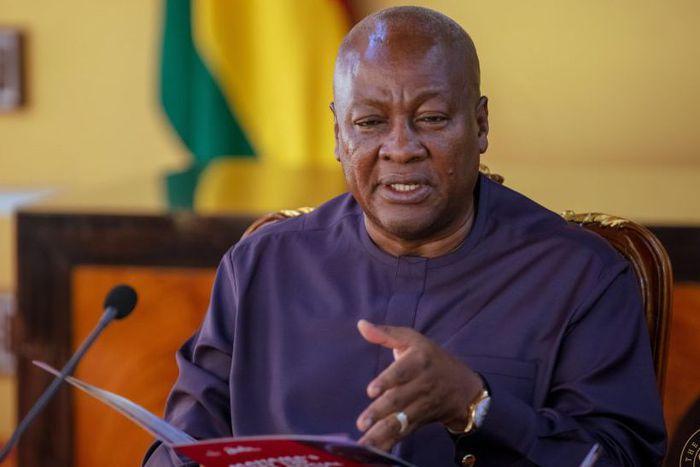
President John Dramani Mahama says Ghana’s anti-galamsey operations have resulted in the seizure of more than 8,200 pieces of equipment, including 135 excavators and almost 200 firearms. He disclosed that illegal miners had penetrated 48 of Ghana’s 288 forest reserves, with nine previously classified as dangerous red zones because armed operators prevented forest guards from entering. All nine red zones have now been cleared, and soldiers will remain stationed there to prevent illegal miners from returning. Mahama also said approximately 12,000 acres of land have been destroyed by illegal mining. Government has allocated GH¢200 million to reclaim 5,000 acres of degraded land and has provided GH¢400 million in the 2027 Budget to recruit additional Blue Water Guards and strengthen protection of Ghana’s water bodies.
President John Dramani Mahama has released fresh figures showing the scale of Ghana’s ongoing fight against illegal mining, revealing that security agencies have confiscated more than 8,200 pieces of equipment linked to galamsey operations, including 135 excavators and almost 200 firearms, while illegal miners have penetrated 48 of the country’s 288 forest reserves. Speaking at the Mining in Motion Conference in Accra on Monday, October 19, the President said his administration was combining enforcement, permanent security deployments, excavator tracking and large-scale land reclamation as it attempts to stop the destruction of forests, farmlands and water bodies caused by illegal mining.
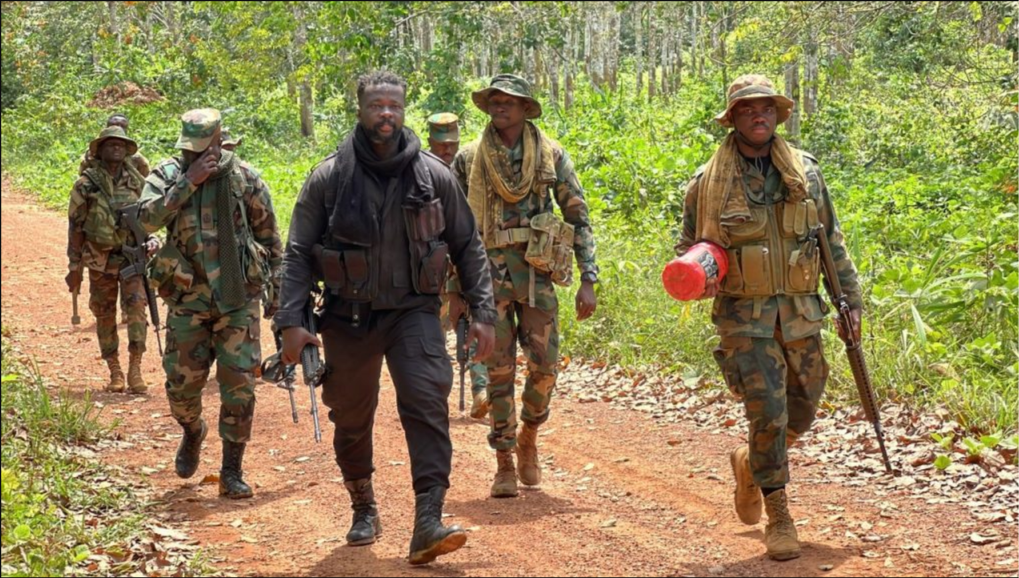
Mahama said the confiscated equipment includes changfang machines, excavators and other machinery used by illegal miners. According to the President, the recovery of almost 200 firearms illustrates the security dimension of the galamsey crisis and explains why some forest reserves became extremely difficult for ordinary forest guards to enter. Armed illegal miners had established themselves in some protected areas, creating situations in which government officers attempting to enforce environmental laws faced direct threats and, in some instances, gunfire.
The President said 48 of Ghana’s 288 forest reserves had been penetrated by illegal miners. Of those 48, nine became so dangerous and extensively damaged that they were classified as red zones because Forestry Commission personnel could not safely enter them. Mahama said all nine of those red-zone reserves have now been cleared of illegal miners and are being prepared for reclamation, with soldiers remaining in the affected areas to prevent operators from returning after military operations end.
The decision to keep troops permanently stationed in the nine red zones follows previous experiences in which illegal miners returned to forests after soldiers had completed clearance operations and withdrawn. Mahama said government had learned from those failures and would no longer simply deploy the military, clear an area and hand it back to forest guards without providing continued security. The presence of troops is therefore intended to protect the reclaimed territory while restoration work begins and to prevent heavily armed mining groups from re-establishing operations.
The President’s latest figures provide a more detailed picture of the scale of the government’s anti-galamsey campaign. Beyond the 135 excavators and almost 200 firearms, he said more than 8,200 items associated with illegal mining had been seized. Those confiscations indicate that the crackdown is targeting not only individual miners but also the machinery and logistical systems that make large-scale illegal mining possible.
Excavators have become one of the most important issues in the galamsey debate because modern illegal mining operations can destroy large areas of land far more quickly than traditional small-scale methods. Heavy machinery allows miners to dig deep pits, redirect waterways and remove enormous amounts of soil within a short period. Controlling where excavators are operating has therefore become a major part of the government’s enforcement strategy.
Mahama said 6,060 excavators had been registered and detained at the ports as part of tighter monitoring measures, while 2,059 had been fitted with tracking devices. The tracking programme is intended to allow authorities to determine where registered machines are being used and make it more difficult for excavators imported for legitimate construction or mining purposes to disappear into illegal mining sites.
The effectiveness of that system will depend heavily on enforcement and monitoring. Registering a machine provides authorities with information about ownership, but tracking devices become meaningful only if agencies respond when equipment is detected in restricted forests, riverbeds or unlicensed mining areas. Government will therefore need effective coordination between customs officials, mining regulators, security agencies and district authorities if the tracking programme is to produce lasting results.
Mahama also disclosed that illegal mining has destroyed approximately 12,000 acres of land nationwide. The figure illustrates the scale of the environmental restoration challenge because stopping illegal mining does not automatically restore damaged land. Abandoned pits, contaminated soil, destroyed vegetation and altered waterways can remain dangerous for years after miners leave unless significant engineering and ecological work is undertaken.
The government is consequently moving from enforcement into reclamation. Mahama said GH¢200 million has been allocated for the reclamation of approximately 5,000 acres of degraded land, with the programme expected to begin next year. The money is intended to support physical restoration of destroyed areas, including reshaping land, filling mining pits and preparing sites for vegetation and productive use.
This reclamation allocation is separate from another major environmental expenditure announced by the President. Mahama said the 2027 Budget contains GH¢400 million for the recruitment of additional Blue Water Guards who will patrol Ghana’s rivers and other water bodies as part of the government’s anti-galamsey programme. The GH¢400 million figure therefore relates primarily to strengthening water-body protection and enforcement, while the President separately cited GH¢200 million for reclaiming 5,000 acres of degraded land.
That distinction is important because the two figures have sometimes been combined in public discussion as though the entire GH¢400 million were dedicated only to land reclamation. Mahama’s statements indicate a broader environmental strategy in which government is funding both enforcement and restoration. One component is aimed at preventing further destruction of rivers, while the other is intended to repair land already damaged by illegal mining.
The Blue Water Guards have been instructed to intensify patrols along river systems and destroy changfang machines whenever they encounter them. These floating or river-based mining machines have become notorious for damaging waterways by disturbing riverbeds and discharging mud, sediment and mining waste directly into water bodies.
Mahama said many changfang machines have already been destroyed and that major channels of some rivers have been cleared. He acknowledged, however, that pollution remains a serious problem because illegal mining also occurs along tributaries that may stretch for hundreds of kilometres. Even after the main river channel has been cleared of machinery, mud and silt from smaller tributaries can continue flowing downstream and keep the water polluted.
This makes water restoration significantly more complicated than simply removing equipment from one visible stretch of river. Government must secure entire catchment areas and tributary systems if improvements in water quality are to last. A river can remain heavily contaminated when illegal mining continues upstream even if security forces have successfully removed machines from a major downstream section.
The challenge has become one of the most important environmental issues facing Ghana. Illegal mining has affected rivers that provide water for households, agriculture and treatment by the Ghana Water Company, creating concerns about the long-term cost of producing safe drinking water. Heavy sediment loads can increase treatment requirements, while chemical contamination associated with mining may create additional health and ecological risks.
Forest destruction is equally serious because forest reserves perform functions beyond preserving trees. They protect watersheds, provide habitats for wildlife, store carbon and support climatic stability. Once illegal miners remove vegetation and dig large pits, restoring a forest involves much more than planting seedlings.
Land first has to be made physically stable. Deep mining pits may need to be drained and filled, contaminated material may have to be managed, and the ground must be reshaped so that rainfall does not immediately wash newly planted soil and vegetation away. Only after this engineering work can long-term reforestation begin.
The ongoing reclamation of the Tano Nimri Forest Reserve in the Western North Region provides an example of the approach government wants to expand. The Ghana Gold Board has committed approximately GH¢35 million to an initial reclamation and reforestation project in the reserve, working with the Ghana Armed Forces and the Forestry Commission.
The first phase covers about 50 hectares, while the broader intervention is intended to rehabilitate approximately 200 hectares of degraded forest. Military engineers have been filling major mining pits, draining waterlogged excavations, mixing unstable material with firmer soil and levelling the ground before the Forestry Commission takes over the ecological restoration phase.
The project illustrates the cost of repairing land after illegal miners have already destroyed it. Preventing damage in the first place is generally cheaper than reconstructing an ecosystem after heavy mining machinery has transformed it, which is one reason the government is placing increased emphasis on keeping soldiers in cleared forest reserves and tracking excavators before they reach sensitive areas.
Mahama said the Ghana Armed Forces had also been contracted through GoldBod to reclaim approximately 253 acres of land destroyed by illegal mining in Tano Nimri. The work forms part of a wider effort to use engineering capacity within the military to repair heavily degraded sites before reforestation can begin.
Newmont was also praised by the President for reclamation work on previously mined land where useful crops had been planted. Mahama used the example to argue that mining and environmental restoration do not have to be incompatible if operators follow proper reclamation procedures and government consistently enforces the law.
The difference between regulated mining and galamsey is therefore central to the government’s message. Ghana is not attempting to eliminate mining as an industry. Mining remains one of the country’s most important sources of export earnings, government revenue and employment. The administration is instead trying to separate legitimate, regulated mineral production from illegal operations that disregard environmental laws and community protections.
That distinction is especially important as Mahama simultaneously pushes Ghana towards greater local mineral processing and industrialisation. At the same Mining in Motion Conference, the President announced a 2030 target to phase out exports of unprocessed mineral ores. Government therefore wants mining to contribute more value to Ghana’s economy while imposing stronger controls on environmental destruction.
The challenge is ensuring that the two objectives reinforce rather than contradict each other. Increasing the economic value of the mining sector without improving environmental enforcement could intensify pressure on land and water resources. Conversely, environmental rules that are unpredictable or poorly administered could discourage legitimate investment while illegal operators continue working outside the law.
Mahama’s administration says it intends to address this through stronger regulation, tracking systems, permanent security presence in sensitive areas and increased investment in reclamation. The latest enforcement figures are being presented as evidence that government has begun moving beyond rhetoric.
The seizure of nearly 200 firearms is particularly significant because it demonstrates why illegal mining has evolved from a purely regulatory challenge into a national security problem. When miners possess weapons capable of confronting forest guards or security personnel, enforcing mining laws becomes significantly more dangerous.
Mahama has previously said forest officers were fired upon in some red-zone reserves and that personnel had lost their lives. That history contributed to the decision to deploy the military in areas where ordinary enforcement agencies could no longer operate safely.
The President has also acknowledged the risks created by armed enforcement itself. During an earlier meeting with chiefs from the Western North Region, Mahama expressed concern about incidents in which soldiers discharged weapons during anti-galamsey operations and people were killed. He argued that stronger community cooperation was necessary to reduce violent confrontation.
This places government in a difficult position. Security forces have to confront armed illegal miners, but overly aggressive operations can create civilian casualties and deepen hostility in mining communities. Mahama has consequently appealed to traditional leaders to support enforcement and help reduce confrontations between communities and anti-galamsey teams.
Chiefs and traditional authorities have significant influence in many mining areas because land access and community relations often involve customary structures. Government believes traditional leaders can help discourage young people from joining illegal operations and prevent communities from resisting security personnel.
At the same time, public debate has included repeated allegations that some traditional authorities, politicians and local elites benefit financially from illegal mining. Mahama has said enforcement must eventually reach financiers and kingpins rather than concentrating only on poor young miners working inside pits.
This focus on financiers is crucial because the machinery involved in modern galamsey requires substantial capital. Excavators, fuel, transport and mineral-processing equipment are expensive. Large operations therefore normally depend on investors and organisers who may never physically appear at the mining site.
Confiscating equipment can disrupt those operations, but prosecutions and financial investigations are necessary if the people funding illegal mining are to face meaningful consequences. Otherwise, machinery may simply be replaced and workers sent back into the same communities.
Government has previously announced plans for specialised courts dealing with galamsey and environmental offences. Faster and more consistent prosecution could strengthen enforcement if suspects currently waiting for trial receive timely hearings and penalties are sufficient to deter future offences.
Mahama has acknowledged that hundreds of people arrested in connection with illegal mining are awaiting trial or have been granted bail while cases proceed. The President has expressed concern about young people ending up in prison while also insisting that laws must be enforced.
This tension has led government to place increasing emphasis on alternative livelihoods. Mahama argues that many young people participate in galamsey because they lack other realistic opportunities to earn income, meaning enforcement alone may temporarily remove them from mining sites without changing the economic pressures that led them there.
He has linked the anti-galamsey campaign to his wider economic programme, which aims to invest in job-rich sectors and provide employment alternatives in mining communities. The logic is that young people are less likely to risk arrest, injury or death in illegal pits if legitimate jobs offer comparable income.
Creating those alternatives will be difficult because galamsey can provide quick cash even when the work is dangerous and unstable. Government programmes must therefore produce real economic opportunities rather than temporary training schemes if they are to change behaviour permanently.
Agriculture, tourism, construction, responsible small-scale mining and environmental restoration could all provide employment in affected regions. Reclamation programmes themselves can create jobs if local residents are trained to participate in land restoration and reforestation.
The government’s reclamation strategy may therefore have both environmental and economic value. Repairing thousands of acres of land requires machinery operators, engineers, forestry workers and local labour. If properly organised, those projects could employ some people who might otherwise return to illegal mining.
Reclaimed land can also potentially be returned to agriculture or forestry production, depending on soil conditions and contamination levels. Mahama has spoken about planting economic trees on restored land, which could create longer-term income while helping rebuild damaged ecosystems.
The Tano Nimri programme is expected to include such ecological restoration after the engineering phase is complete. Forestry officials have emphasised biodiversity conservation and watershed protection, meaning the objective is not simply to make the land visually attractive but to restore some of its environmental function.
Monitoring will be essential because reforestation is a long-term process. Planting trees during a public ceremony does not guarantee that a forest will return. Seedlings need protection, replacement and maintenance over many years before they become mature forest cover.
GoldBod’s Tano Nimri project includes projected afforestation spending over a decade, reflecting the long time frame required for genuine restoration. If government expands the model nationally, reclamation budgets will need to account for years of follow-up rather than only initial earthworks.
The 12,000-acre national damage estimate also shows why prioritisation will be necessary. The GH¢200 million allocation for 5,000 acres would address less than half of the land Mahama says has been destroyed, meaning further funding and several phases of work are likely to be required.
Government may therefore need contributions from mining companies, GoldBod, development partners and other institutions alongside direct budget expenditure. Environmental restoration can become extremely expensive when damage reaches the scale now reported.
The President’s announcement of GH¢400 million for additional Blue Water Guards indicates that prevention is receiving substantial budget attention. If effective, protecting rivers before they are further damaged could reduce future restoration costs.
However, questions will inevitably arise about accountability for these funds. Ghana’s previous anti-galamsey campaigns have sometimes faced criticism over missing equipment, unclear enforcement outcomes and the return of illegal miners after operations ended.
Citizens will therefore expect government to show measurable results from the 2027 expenditure. Those results could include improved water quality, reductions in active illegal mining sites, numbers of machines destroyed or confiscated, prosecutions completed and hectares of land genuinely restored.
Transparent reporting will be important because seizure figures alone cannot show whether the campaign is permanently reducing galamsey. If confiscated excavators are replaced or illegal miners simply relocate to other districts, enforcement activity may appear high while environmental destruction continues.
The tracking programme for excavators could help authorities measure movement more effectively. If every legal excavator is identifiable and its location known, machines found at illegal sites can be linked more easily to owners and financiers.
Government will also need clear rules for what happens to confiscated excavators. Previous controversies over seized machinery have damaged public confidence, particularly when questions arose about whether confiscated equipment disappeared from official custody.
Maintaining a transparent inventory of seized equipment, its location and eventual disposal would strengthen the credibility of the current campaign.
The same applies to firearms. Recovering almost 200 weapons from illegal miners raises questions about their origin, licensing status and whether they can be linked to other criminal activity. Security agencies will need to investigate how armed mining groups obtained the weapons and whether organised criminal networks are involved.
Galamsey can overlap with other crimes, including smuggling, money laundering, corruption and violent intimidation. Treating it solely as an environmental violation may therefore underestimate the complexity of the networks behind larger operations.
Gold itself is highly portable and can be moved across borders or sold through informal networks. Government’s creation of GoldBod was partly intended to formalise gold trading and reduce smuggling, giving authorities better oversight of where gold originates and how it enters export markets.
If GoldBod and mining regulators can create stronger traceability, illegally mined gold could become harder to sell into formal channels. That would attack the economic incentive behind illegal mining rather than focusing exclusively on machines and workers.
The effectiveness of such reforms will depend on whether unofficial buyers continue offering attractive prices and whether border enforcement prevents smuggled gold from leaving the country through neighbouring states.
The galamsey crisis has persisted through multiple administrations partly because it is tied deeply to economic incentives. Gold prices can make illegal mining extremely profitable, while weak enforcement and political interference can reduce the risks faced by financiers.
Mahama’s latest figures therefore represent only one stage of a much larger test. Confiscating machinery and clearing forests demonstrates enforcement capability, but the real measure will be whether illegal miners remain out of those areas over time.
This is why the decision to keep soldiers in the nine cleared red-zone forests is significant. It acknowledges directly that previous clearance operations failed because government did not maintain control after the initial security intervention.
Permanent or long-term military deployment brings its own challenges, including cost and the risk that soldiers become responsible for roles normally performed by civilian agencies. The long-term objective should therefore be to restore enough security that Forestry Commission officers can eventually resume normal management without armed confrontation.
Successful reclamation could support that transition by removing abandoned pits, restoring roads and re-establishing clearly managed forest boundaries. Communities surrounding reserves must also see benefits from preserving the forest if government wants local support for enforcement.
Alternative livelihoods and community forestry could therefore become as important as soldiers and excavator tracking.
The President has repeatedly appealed to chiefs for cooperation because central government cannot monitor every mining community continuously. Local information can help authorities identify new operations before they grow large enough to cause extensive damage.
Traditional leaders can also help enforce social pressure against landowners who allow illegal miners onto community land. However, government must apply the law consistently where influential people themselves are implicated.
Public confidence in the campaign will depend heavily on whether enforcement reaches politically connected actors. One of the strongest criticisms of previous anti-galamsey efforts has been the perception that small miners are arrested while financiers remain protected.
Mahama has said his government intends to target the people financing and organising illegal mining. Whether prosecutions eventually demonstrate that commitment will be one of the most important questions surrounding the crackdown.
The scale of firearms recovered makes that accountability even more important. Organisers capable of arming operations represent a greater security threat than individual miners working manually for daily income.
The Mining in Motion Conference gave Mahama an opportunity to place these enforcement figures within his broader vision for Ghana’s mineral sector. His administration wants the country to earn more from legitimate mining, process more minerals locally and simultaneously reduce environmental destruction.
That combination reflects an attempt to change the national conversation from whether mining should exist to what kind of mining Ghana should permit.
Responsible mining can generate export revenue, jobs and industrial inputs while operating under environmental rules. Illegal mining, particularly in forests and rivers, imposes costs on communities and future generations that may exceed the short-term value of the gold extracted.
Mahama’s reclamation programme recognises that those costs are already being paid. Thousands of acres now require public or institutional money to repair damage created by illegal private activity.
This creates an important policy question about whether perpetrators should bear more of the cost of reclamation. Fines, asset seizures and financial penalties could potentially be used to support restoration rather than leaving taxpayers responsible for the entire bill.
Strengthening environmental liability could therefore become part of future mining reforms.
The government is already reviewing Ghana’s mining law, with Cabinet endorsing an overhaul of the Minerals and Mining Act, 2006. A revised legal framework could tighten regulation, strengthen penalties and update rules that were written before some of the current forms of mechanised illegal mining became widespread.
Legislation alone, however, will not solve the crisis if enforcement remains inconsistent. The 135 seized excavators, approximately 200 firearms and 8,200 total confiscated items indicate significant operational activity, but long-term success will depend on maintaining pressure.
The 48 affected forest reserves will also require continued monitoring. Although the nine most dangerous red zones have reportedly been cleared, government must prevent illegal miners from simply moving into other reserves that are less heavily guarded.
A national monitoring system using satellite imagery, drones, community reporting and excavator tracking could help detect new disturbances before they expand.
Technology is increasingly important because Ghana’s forest estate is too large for guards to physically patrol every area continuously. Changes in forest cover can be detected remotely, allowing enforcement teams to focus on locations where new excavation appears.
Water monitoring can play a similar role. Sudden changes in turbidity and water quality may indicate renewed mining upstream, helping authorities identify areas requiring investigation.
Such systems would complement rather than replace local intelligence. Residents often know where equipment is entering communities and who is financing operations long before national agencies receive formal reports.
Protecting whistleblowers and community informants will therefore be important, especially where illegal mining groups are armed.
The government’s latest approach appears to recognise that galamsey is simultaneously an environmental, economic and security problem. The response includes soldiers for dangerous forest zones, Blue Water Guards for rivers, tracking devices for excavators, GoldBod for gold trading and reclamation funding for destroyed land.
The strength of this model is its broad scope. The risk is that responsibility becomes fragmented among too many agencies unless coordination remains strong.
Clear leadership and public reporting will be essential if citizens are to understand which institution is responsible for each part of the campaign.
For the 2027 Budget, Parliament will also have an opportunity to scrutinise the GH¢400 million provision for additional Blue Water Guards and related water-body protection. Lawmakers can demand details on recruitment numbers, equipment, deployment areas and performance targets.
The GH¢200 million reclamation allocation similarly requires clear implementation plans showing where the first 5,000 acres will be restored and what standards will determine whether reclamation has succeeded.
Environmental restoration should be measurable. Government can publish before-and-after maps, water-quality data, survival rates for planted trees and independent assessments of reclaimed land.
Such transparency would make it easier to distinguish genuine long-term restoration from short-term political announcements.
Mahama’s comments suggest the administration wants reclamation to become a major national programme rather than a collection of isolated projects. If that happens, Ghana may eventually develop a specialised restoration sector involving environmental engineers, foresters, universities and local businesses.
The scale of destruction could justify that development. Thousands of acres of mining-damaged land represent both a national liability and a potential source of specialised employment.
Universities and research institutions could also help determine which reclamation methods work best under Ghanaian conditions. Different types of mining damage may require different soil treatment, drainage and reforestation methods.
Heavy metal contamination, for example, may require more specialised remediation than simply filling pits and planting trees.
Communities should also be involved in deciding how reclaimed land is used. Some sites may return to forest, others to agriculture and others may require permanent protection because of contamination or ecological sensitivity.
Local participation can help ensure that restoration produces benefits residents value, strengthening incentives to protect the land from renewed mining.
The government will ultimately be judged not by the number of announcements but by visible changes in rivers and landscapes. Ghanaians living along polluted water bodies want to see water quality improve, while farming communities want damaged land restored to productive use.
The new figures provide a baseline against which that progress can be measured. Mahama says 48 forest reserves have been penetrated, nine severe red zones have been cleared, approximately 12,000 acres of land have been destroyed, 135 excavators have been seized and almost 200 firearms recovered.
He also says more than 8,200 mining-related items have been confiscated, thousands of excavators have entered the registration and tracking system, and new funding is being directed towards reclamation and water protection.
These numbers indicate that government is confronting a problem of considerable scale. They also make it possible for the public to demand future updates showing whether the situation is improving.
If the number of affected reserves continues rising, if illegal machines return to cleared rivers or if reclaimed land is invaded again, the strategy will require further adjustment.
If forests remain secure, water quality begins recovering and reclaimed areas become productive again, government will have stronger evidence that the crackdown is producing lasting results.
For now, Mahama is presenting the seizure of machinery and weapons as evidence that the state is regaining control of areas previously dominated by armed illegal miners. The decision to leave soldiers in the nine red-zone forest reserves shows that government does not yet believe those gains are secure without continued protection.
The 2027 funding commitments are intended to move the campaign into a second stage in which protection and reclamation operate alongside enforcement.
That next phase may prove even more difficult than clearing illegal miners because rebuilding destroyed ecosystems takes years and requires sustained funding after public attention moves elsewhere.
Ghana’s galamsey crisis developed over many years, and there is no realistic possibility of repairing all of the damage in a single budget cycle. The significance of the latest announcements is that government is now attaching specific figures, acreage targets and expenditure commitments to the restoration effort.
The challenge will be ensuring that those commitments translate into functioning programmes on the ground.
For communities living beside polluted rivers and destroyed forests, the success of the anti-galamsey campaign will ultimately be measured in clean water, restored farmland, safer forests and legitimate jobs rather than the number of excavators displayed as seized equipment.
Mahama’s latest message is that enforcement will continue, soldiers will remain in the most dangerous forest reserves, equipment will increasingly be tracked and substantial public resources will be committed to repairing the environmental damage already done.
Whether Ghana can finally break the cycle in which illegal miners are removed only to return later will depend on how consistently those measures are implemented and whether the government is prepared to pursue not only the miners in the pits but also the financiers, equipment owners and networks that keep the illegal gold economy alive.