
MAHAMA ORDERS NATIONAL TALKS ON HATE SPEECH AND HARMFUL SOCIAL MEDIA CONTENT
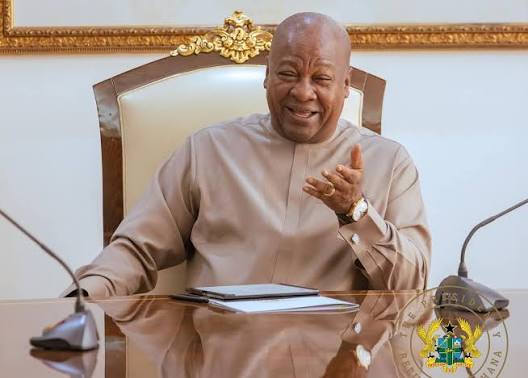
President John Dramani Mahama has asked the Ghana Journalists Association and Media Foundation for West Africa to lead a national stakeholder process on hate speech, abusive online content and responsible digital communication, while warning against disproportionate arrests over legitimate criticism and political commentary.
President John Dramani Mahama has directed two of Ghana's leading media organizations to convene a national stakeholder process aimed at developing a clearer framework for dealing with hate speech, threats and harmful online content without undermining freedom of expression.
The directive asks the Ghana Journalists Association and the Media Foundation for West Africa to jointly lead discussions involving journalists, bloggers, social media creators, law enforcement agencies, civil society groups, legal experts and other stakeholders.
In a letter from the Office of the President dated September 22, Mahama said Ghana's rapidly changing digital media environment had created a difficult public policy challenge.
Public debate is increasingly shaped not only by established media organizations operating under professional and regulatory structures but also by bloggers, influencers, TikTok creators and other individuals capable of reaching large audiences without necessarily being subject to similar editorial standards.
The President said there was a need to confront genuine threats, incitement and other unlawful conduct online while ensuring that legitimate criticism of public officials, political commentary, satire and dissent are not criminalized.
Mahama also raised concerns about what he described as disproportionate arrests over criticism or politically charged commentary.
He warned that such actions could be counterproductive, create what he described as "undeserving martyrs" and weaken public confidence in state institutions.
The intervention comes amid an increasingly intense national debate over how Ghana's existing laws are being applied to speech on social media.
In recent months, several bloggers, TikTok creators, political activists and other social media users have faced arrest or prosecution over online publications.
Some cases have involved alleged threats or incitement, while others have generated criticism from media freedom organization's over whether criminal sanctions were proportionate to the speech involved.
The Media Foundation for West Africa has itself repeatedly raised concerns about the use of Ghana's false news laws.
Earlier this year, the organization said it had documented 14 arrests linked to the application of false news provisions during the first 16 months of Mahama's current administration. The government has maintained that freedom of expression remains protected but argues that direct threats and other unlawful conduct cannot be treated as legitimate speech.
The new stakeholder process is expected to examine that difficult boundary.
Participants are expected to include the National Media Commission, Ghana Police Service, civil society organizations, religious bodies, traditional media organizations, bloggers, influencers and social media content creators.
Legal and human rights experts, representatives of digital platforms where possible, and relevant state regulatory and security institutions are also expected to participate.
The discussions will examine whether Ghana's existing legal and regulatory framework remains appropriate for the country's changing digital environment.
Participants will also be expected to develop clearer distinctions between lawful criticism and unlawful speech and consider practical guidelines for law enforcement agencies dealing with online content.
Other issues expected to form part of the discussions include media and digital literacy, ethical standards for online creators, accessible complaints and redress mechanisms and alternatives to arrest and prosecution in cases that do not involve threats, incitement, violence or other clearly criminal conduct.
The debate presents policymakers with competing concerns.
Social media has dramatically expanded the ability of Ghanaians to participate in national conversations and hold public officials accountable. At the same time, authorities and media organizations have raised concerns about misinformation, threats, abusive content and inflammatory speech spreading rapidly across digital platforms.
Mahama's directive calls for a national roadmap intended to address both sides of that challenge.
The GJA and MFWA have been asked to develop a proposed framework and timetable for the stakeholder engagement and submit recommendations arising from the process to the President for consideration.
Any resulting proposals could influence how Ghana approaches online speech, law enforcement and digital accountability while attempting to preserve constitutional protections for freedom of expression.