JAPAN’S KOZO TASHIMA CHALLENGES INFANTINO FOR FIFA PRESIDENCY, PROMISING TO RESTORE INTEGRITY TO WORLD FOOTBALL
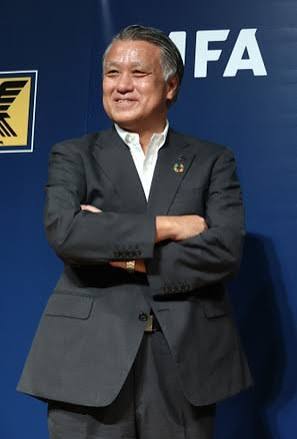
Kozo Tashima, the 68-year-old honorary president of the Japan Football Association and a member of FIFA’s Council since 2015, has announced that he intends to challenge Gianni Infantino in the March 2027 FIFA presidential election. Tashima says he wants to promote integrity, fairness and stronger ethical standards in world football. He has criticized FIFA’s handling of the Folarin Balogun disciplinary case, its response to travel restrictions affecting Iran’s national team and Infantino’s failure to respond to questions he raised. His candidacy has JFA backing, but he must secure nominations from at least five of FIFA’s 211 member associations by November 18 and pass an eligibility assessment. Infantino remains the favorite, with backing from the Asian Football Confederation.
VNTV | SPORTS | NOVEMBER 6, 2026
Japan Football Association honorary president Kozo Tashima has announced his intention to challenge Gianni Infantino for the FIFA presidency in March 2027, positioning himself as the first Japanese candidate to seek control of world football’s governing body and presenting his campaign as an effort to restore fairness, integrity and accountability to an organization facing renewed criticism over its leadership. The 68-year-old former Japan international and experienced football administrator announced his decision on Thursday, November 5, with the backing of the Japan Football Association (JFA), becoming the second challenger to publicly declare an intention to contest the election against the incumbent.
Tashima’s announcement introduces a new dimension to an election in which Infantino remains the favorite, despite criticism over governance decisions, commercial arrangements and his relationship with powerful political figures. The Japanese official has made clear that his campaign is not simply about replacing the current president but about challenging what he sees as a need for stronger ethical standards within FIFA. Speaking after a JFA board meeting in Tokyo, he said he wanted to communicate the honesty, integrity and high moral standards that Japanese football had developed over the years to the wider international game. He also argued that FIFA needed to regain fairness and that the organization should not continue under its current leadership without a meaningful electoral challenge.
Tashima has the support of the Japanese football federation, whose board members reportedly backed his decision unanimously. That endorsement gives his campaign an important national foundation, but it does not automatically secure his place on the ballot. Under FIFA’s presidential election rules, candidates must receive nominations from at least five of the organization’s 211 member associations and pass an eligibility assessment. The deadline for submitting nominations is November 18, leaving Tashima with less than two weeks to secure the required support from other national football federations.
The election is scheduled for March 18, 2027, at the FIFA Congress in Rabat, Morocco, where representatives of FIFA’s 211 member associations will vote. Tashima will face a difficult political challenge because Infantino has spent years building relationships with national associations and confederations across the football world. The incumbent has also received public backing from the president of the Asian Football Confederation, a development that could complicate efforts to assemble a strong coalition behind the Japanese challenger, particularly because Japan is a member of the Asian confederation.
Although Tashima is widely regarded as an experienced and diplomatic football administrator, his candidacy will be judged not only on his record in Japan but also on his ability to persuade associations across different continents that he can offer a credible alternative to Infantino. His announcement has already brought questions about FIFA’s governance back into the election debate, particularly following controversy over a proposed commercial investment arrangement that drew opposition from several influential football organizations.
Who is Kozo Tashima?
Kozo Tashima was born on November 21, 1957, in Kumamoto Prefecture in southern Japan. His interest in football began after watching the 1964 Tokyo Olympics as a young child, an experience that helped shape a career spanning playing, coaching, youth development and football administration. He later became captain of his high school team, leading it to victory in Japan’s national high school football championship, one of the country's major competitions at that level.
He attended the University of Tsukuba, where he pursued his interest in physical education and football. During his university years, he was selected for Japan’s senior national team and played as a forward. The Japan Football Association records seven international appearances for him, while his subsequent playing career included a spell with Furukawa Electric, a club competing in Japan’s amateur-era football system before the establishment of the modern professional J.League.
Tashima’s playing career was relatively brief, but it provided the foundation for a longer involvement in the development of Japanese football. After retiring as a player, he travelled to Germany to study coaching at the German Sport University Cologne. The experience exposed him to a more systematic approach to football training and development, which he later sought to apply in Japan. He has spoken about the difference between the football environment he encountered in Germany and the systems then available in Japan, describing the experience as a major influence on his understanding of the sport.
After returning to Japan, Tashima worked as a coach and became involved in university football before joining the Japan Football Association. He took on responsibilities involving development programs and national youth teams, gradually moving into senior administrative positions. His work included coaching Japan’s youth national sides, including the under-17 team, giving him experience in both the technical and organizational aspects of the game.
His rise through the JFA came during a period in which Japanese football was expanding its international profile. The country had established a professional league in the 1990s, developed stronger youth structures and become a regular participant in major international competitions. Tashima was part of the administrative leadership involved in this wider development, eventually becoming one of the most influential figures in Japanese football.
In 2016, he was elected president of the Japan Football Association, a position he held for eight years before Tsuneyasu Miyamoto succeeded him in 2024. During his presidency, Tashima also served on the executive structures of the Asian Football Confederation and became a member of the FIFA Council in 2015. His presence on FIFA’s governing body gave him direct experience of international football politics during the final period of Sepp Blatter’s presidency and throughout Infantino’s leadership.
Tashima’s time at the JFA was not without difficult decisions. One of the most notable came in 2018, when he dismissed national team coach Vahid Halilhodzic only two months before the World Cup in Russia. Halilhodzic had helped Japan qualify for the tournament, but tensions had developed between the coach and some players. Tashima accepted responsibility for the decision as federation president, and Japan appointed Akira Nishino, who led the team to the round of 16 before it was eliminated by Belgium.
The episode illustrated the responsibilities that come with leading a national football association, where decisions involving coaching appointments, player relationships and tournament preparation can have significant consequences. Tashima has previously said that the responsibility for the national team ultimately rested with him as president, even when he was not the person who had originally appointed the coach. His supporters may present that approach as evidence of accountability, although his record will inevitably be examined more closely if he becomes an official FIFA presidential candidate.
After leaving the JFA presidency in 2024, Tashima was appointed honorary president. He has remained involved in international football through his FIFA Council position and his connections across the sport. His background as a former player, coach and administrator gives him a different profile from Infantino, whose career was built primarily through football administration and legal work rather than professional playing experience.
Why Tashima wants to challenge Infantino
Tashima has framed his decision to run around the need for fairness and integrity within FIFA. His public comments suggest that he believes the governing body must demonstrate that its decisions are based on consistent principles rather than political influence or commercial considerations. He has also raised concerns about specific decisions made under Infantino’s leadership, including FIFA’s handling of disciplinary matters during the 2026 World Cup and the treatment of Iran’s national team in connection with travel restrictions imposed by US authorities.
One issue that particularly troubled Tashima involved the case of United States forward Folarin Balogun, who received a red card during the 2026 World Cup. FIFA subsequently suspended for one year the one-match ban that had been imposed on the player, a decision that attracted criticism because it was viewed by opponents as an unusual intervention in the disciplinary process. Tashima questioned the decision and reportedly raised concerns about the circumstances surrounding it, including the influence of US President Donald Trump.
The issue became politically sensitive because the United States was one of the co-hosts of the 2026 World Cup, alongside Canada and Mexico. The tournament placed FIFA in the position of managing football operations in a country whose government was also making decisions affecting international travel and diplomatic relations. Tashima has questioned FIFA’s response to the restrictions affecting Iran’s national team, arguing that the governing body should have been more forceful in defending the principles of fairness and equal treatment.
His criticism is connected to a broader question about how FIFA responds when political decisions affect football participants. International football regularly brings together national teams whose governments have serious diplomatic disagreements, and the governing body has long presented itself as an organization committed to keeping the sport accessible across political and geographical boundaries. However, applying those principles can become difficult when host governments impose travel restrictions, security measures or other policies that affect participating teams and officials.
Tashima has also said that Infantino did not respond to questions he had sent to the FIFA president. The lack of a response, as described by Tashima, contributed to his dissatisfaction with the current leadership. He has argued that the election is an opportunity to test whether FIFA is capable of addressing its governance problems and restoring confidence in its decision-making.
His comments about the need for an election are particularly pointed. Tashima has said that the worst outcome would be for Infantino to continue without facing a meaningful contest, describing the election as a test of FIFA’s ability to examine itself and improve its credibility. The statement indicates that Tashima wants the campaign to become a debate about the institution’s direction, rather than simply a contest between two individuals seeking the same office.
The Japanese official has not yet presented a fully detailed public manifesto covering the changes he would introduce if elected. His announcement has focused primarily on integrity, fairness and the values he associates with Japanese football. That leaves questions about the specific reforms he would pursue, including how he would change FIFA’s commercial decision-making, strengthen oversight, address conflicts of interest and improve the relationship between the governing body and national associations.
Those details will be important if his campaign progresses. FIFA is a vast international organization responsible for the World Cup, other major competitions, development funding and the administration of global football. Its president exercises considerable influence over the institution’s priorities and relationships, but major decisions also involve the FIFA Council, Congress, confederations and member associations. A candidate promising reform will need to explain not only what should change but how those changes could be implemented within the organization’s existing structures.
The controversy surrounding Infantino’s leadership
Tashima’s candidacy comes at a time when Infantino is facing criticism over a proposed FIFA commercial venture that would have allowed private investors to acquire a stake in an entity holding commercial rights connected to major football competitions, including the World Cup. The proposal, which became known as the FIFA Forward Enterprise plan, was intended to create a new commercial structure through which FIFA could raise investment and potentially expand the value of its commercial operations.
The plan provoked opposition from several parts of the football establishment. Critics raised concerns about transparency, governance, the valuation of FIFA’s commercial rights and the possibility that private investors could gain influence over revenue streams associated with the sport’s most valuable competitions. The proposal also raised questions about the process through which such a significant commercial arrangement had been developed and presented.
The proposed investment structure involved a fund linked to Joshua Kushner, the American financier and brother of Jared Kushner, who is married to Ivanka Trump. That connection added political sensitivity to the debate, particularly because Infantino has developed a public relationship with Donald Trump and has appeared alongside the US president at major events. Critics questioned whether FIFA’s leadership was maintaining sufficient distance between the organization’s commercial interests and political relationships.
The proposal was ultimately abandoned after opposition intensified. UEFA and other critics argued that the plan had not been adequately explained and called for greater transparency over FIFA’s commercial decision-making. UEFA also sought access to documents connected to the proposal through legal action in the United States, while some officials called for Infantino to resign.
The dispute has become one of the main issues facing Infantino as he seeks another term. His supporters argue that FIFA has increased its financial resources under his leadership and expanded development funding for national associations. Critics counter that financial growth does not remove the need for accountability, particularly when decisions involve the commercial rights and future revenues of the sport.
Infantino became FIFA president in 2016 after the corruption crisis that led to the departure of Blatter. He was elected on a promise to restore confidence in the organization, strengthen governance and distribute more money to football development. During his tenure, FIFA has increased revenue, expanded the men's World Cup from 32 to 48 teams for the 2026 tournament and introduced a 32-team Club World Cup. The organization has also increased financial distributions to member associations through its development programs.
Those changes have generated support among national associations that benefit from FIFA funding and expanded opportunities to participate in international competitions. For smaller federations, FIFA development money can be an important source of investment in facilities, youth programs, coaching and administration. Infantino has used the expansion of funding and competition opportunities as evidence that his leadership has delivered practical benefits to football around the world.
However, the same expansion has also produced criticism about the commercial direction of the sport, the growing international calendar and the concentration of decision-making power. Some players, coaches and domestic leagues have raised concerns about the physical demands of an increasingly crowded schedule. The expanded Club World Cup, for example, has intensified debate about how FIFA balances commercial growth with player welfare and the interests of domestic competitions.
Tashima’s campaign will therefore enter an election in which Infantino can point to financial and competitive expansion, while his opponents can focus on questions about governance, transparency and the relationship between FIFA and political power.
The challenge of winning support across FIFA
Although Tashima has secured backing from the JFA, the most difficult part of his campaign may be building a coalition among the 211 national associations that make up FIFA. The presidential election is decided through votes from member associations, each of which has a vote regardless of the size of its country or the strength of its domestic football economy. This structure gives smaller football nations a significant role in determining the organization’s leadership.
To qualify, Tashima must obtain nominations from at least five member associations before the November 18 deadline and pass FIFA’s eligibility assessment. Those requirements are separate from the eventual voting process. Securing the nominations would allow him to become an official candidate, but it would not guarantee that the associations supporting his entry would vote for him in March.
The political challenge is complicated by the strength of Infantino’s relationships with football leaders across the confederations. Since becoming president, he has travelled extensively, met national association officials and promoted funding and development programs that have strengthened his position among many member federations. His administration has also expanded the financial resources available to associations through FIFA’s development framework, giving national leaders practical reasons to support continuity.
Infantino received a significant boost when Asian Football Confederation president Sheikh Salman bin Ibrahim Al Khalifa publicly backed his bid for another term. The endorsement is particularly relevant because Tashima is Japanese and would ordinarily be expected to draw support from at least some Asian football associations. The AFC president’s position could make it harder for Tashima to assemble a unified regional bloc, although individual national associations retain the right to make their own decisions.
European football politics may offer Tashima another opportunity. UEFA has been among the organizations most critical of Infantino’s proposed commercial investment arrangement and has been involved in efforts to identify a credible challenger. Some European associations are expected to consider supporting Tashima if he becomes the main alternative to the incumbent. However, UEFA does not control the votes of its member associations, and opposition to Infantino’s commercial proposal does not automatically translate into support for a particular candidate.
Former Tottenham Hotspur defender Ramon Vega has also announced his intention to contest the presidency. The former Switzerland international has presented himself as a candidate for reform, saying he wants to reunite the global football community, modernize FIFA and rebuild trust. His presence introduces the possibility of more than one challenger competing for support from associations that want a change in leadership.
If Tashima and Vega both qualify, they could divide the opposition to Infantino. That would be politically advantageous for the incumbent if the challengers cannot agree on a common platform or persuade one another to withdraw. On the other hand, a crowded field could increase pressure on Infantino by forcing a wider discussion about the administration’s record and the direction of FIFA.
The final candidate list will depend on the nominations submitted before November 18 and the results of the eligibility process. Until then, Tashima’s campaign remains an announced intention to run rather than a confirmed place on the ballot. His immediate priority is to secure the necessary endorsements and demonstrate that his candidacy can attract support beyond Japan.
What is at stake in the March election?
The FIFA presidency is one of the most influential positions in international sport. The organization oversees the men's and women's World Cups, the Club World Cup, youth competitions and a broad network of development programs. Its decisions influence competition formats, international calendars, commercial rights, disciplinary rules and the distribution of funding to national associations.
The president also plays a major role in shaping FIFA’s relationships with governments, sponsors, broadcasters and regional football confederations. The position carries significant influence over how the organization responds to political disputes that affect tournaments and national teams. The controversies raised by Tashima, including the treatment of Iran during the 2026 World Cup and the disciplinary decision involving Balogun, demonstrate how football administration can become entangled with international politics.
A change in leadership could therefore affect more than the public image of FIFA. It could influence how the organization approaches commercial partnerships, the balance between revenue growth and sporting priorities, the demands placed on players and clubs, and the degree of transparency expected from senior officials.
Tashima’s strongest public argument so far is that FIFA must demonstrate that fairness and integrity apply consistently, regardless of the country involved or the political influence surrounding a particular decision. His background in Japanese football gives him an established record in national administration, while his years on the FIFA Council provide experience of the organization’s internal structures. However, he will need to explain how his principles would translate into specific reforms and persuade national associations that he can manage FIFA’s commercial and political responsibilities.
Infantino, meanwhile, will campaign on the expansion of the World Cup, increased development funding and the financial growth of the organization. His administration can point to a larger tournament, broader participation and greater financial distributions to member associations. Those achievements may carry considerable weight among federations that have benefited from FIFA’s programs, particularly in regions where development funding has helped sustain domestic football.
The election will also test the influence of the confederations. The Asian Football Confederation’s endorsement of Infantino is a major political advantage, while UEFA’s criticism of his leadership gives challengers an opportunity to appeal to European associations. Support from African, South American, North American, Central American, Caribbean and Oceanian associations will also be important because the final result depends on the combined votes of all member federations.
For Tashima, the challenge is to turn a campaign based on integrity and institutional reform into a practical international coalition. His Japanese nationality and the JFA’s support make his candidacy historic, but the election will not be decided by geography or symbolism. He must demonstrate that associations across different football cultures and economic circumstances believe his leadership would serve their interests better than another Infantino term.
The next major test comes before the November 18 nomination deadline, when Tashima must secure the five endorsements required to enter the contest officially. If he qualifies, the months leading to the March 18 Congress in Rabat will determine whether his message attracts enough support to challenge Infantino seriously. For now, the Japanese official has succeeded in bringing governance and integrity back into the FIFA presidential debate, but the incumbent remains strongly positioned after years of building support among the organization’s member associations. The outcome will depend on whether Tashima can persuade those associations that the need for a different approach outweighs the financial and political advantages of continuity.