Jesús de Miguel Dies at 30 After Cardiac Arrest Following On-Pitch Collision During Tenerife Match
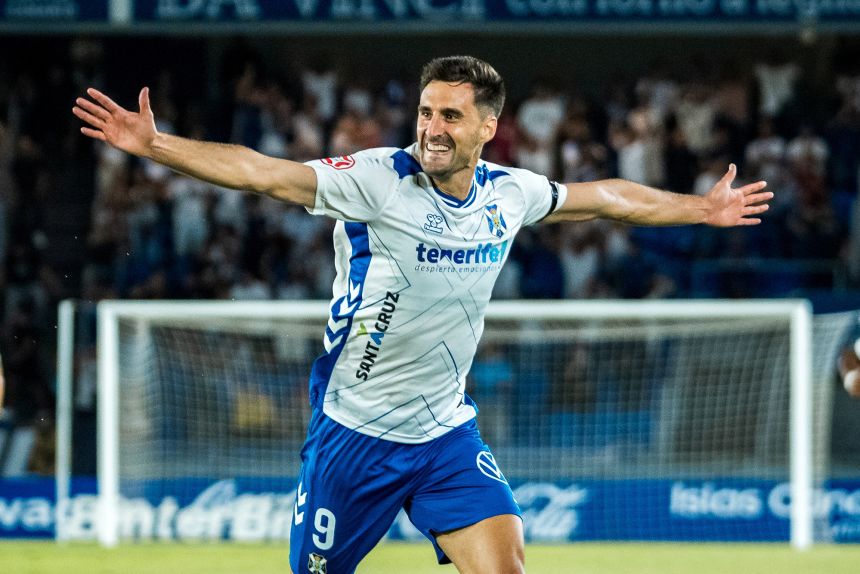
CD Tenerife striker Jesús de Miguel has died aged 30 after suffering a cardiac arrest following a collision with FC Andorra goalkeeper Jesús Owono during a Spanish second-division match. The game was abandoned, Spanish police opened an investigation into possible involuntary manslaughter, and football authorities across Spain and Europe announced tributes.
Spanish football has been plunged into mourning following the death of CD Tenerife striker Jesús de Miguel, who passed away at the age of 30 on Tuesday, November 3, 2026, after suffering a cardiac arrest following a collision with FC Andorra goalkeeper Jesús Owono during a Segunda División match.
The tragedy occurred in the closing moments of Monday's encounter at the Estadio Heliodoro Rodríguez López in Tenerife, where both sides were competing in a closely contested fixture. De Miguel collapsed after colliding with Owono, who had rushed out of his penalty area in an attempt to clear a long ball. The goalkeeper's knee appeared to strike the forward in the chest, leaving him on the pitch and prompting an immediate emergency response from players and medical personnel.
The match was abandoned after the incident, with players from both teams visibly distressed as they called for medical assistance. Medical staff attended to De Miguel on the field for several minutes before he was taken away by ambulance and transported to the Hospital Universitario Nuestra Señora de Candelaria in Santa Cruz de Tenerife. He was admitted to the intensive care unit, where his condition initially appeared stable despite the seriousness of the incident.
However, his medical condition subsequently deteriorated. CD Tenerife confirmed on Tuesday morning that the striker had died at 8:00 a.m. local time, less than a day after the collision. The announcement sent shockwaves through Spanish football, triggering tributes from clubs, players, football authorities and supporters across Europe.
The Royal Spanish Football Federation postponed scheduled matches as a mark of respect, while UEFA announced that moments of silence would be observed before European fixtures during the week. Police have also opened an investigation into the circumstances surrounding the incident, including possible involuntary manslaughter, although no finding of criminal responsibility has been established.
The Collision That Turned a Football Match Into a Tragedy
The incident happened during the final stages of the Segunda División fixture between CD Tenerife and FC Andorra on Monday, November 2. The match was being played at Tenerife's home ground, the Estadio Heliodoro Rodríguez López, with the score level at 2-2 as the game entered stoppage time.
De Miguel had entered the match as a substitute in the 59th minute. Reports indicate that Tenerife had been leading 2-0 before Andorra fought back to level the score, setting up a tense finish. Neither side had secured victory when the decisive and ultimately tragic incident occurred seven minutes into added time.
A long ball was played towards the middle of the pitch after the ball had been cleared from Tenerife's defensive area. Owono, Andorra's goalkeeper, moved far beyond his penalty area to intercept the ball before De Miguel could reach it. The two players converged at speed, and the goalkeeper's knee appeared to make forceful contact with the Tenerife striker's chest.
The impact sent De Miguel to the ground. The seriousness of the collision became apparent almost immediately as players from both teams stopped competing and began signalling urgently towards the medical staff. The referee also halted the game while the emergency response was organised.
Owono was shown a straight red card for the challenge. Although the goalkeeper initially began leaving the field following his dismissal, reports said he turned back towards the incident and joined the players who had gathered around De Miguel.
The atmosphere inside the stadium changed dramatically. Players who had moments earlier been focused on securing a result were now watching anxiously as medical personnel worked to assist their colleague. The match was subsequently abandoned, with the score remaining 2-2.
There would be no final whistle in the ordinary sense and no opportunity for either team to complete the remaining minutes. The priority had become the condition of a player who had suffered a serious medical emergency in front of teammates, opponents and supporters.
Emergency Treatment and Hospital Admission
Medical personnel rushed onto the pitch after players raised the alarm. De Miguel received treatment on the field for more than five minutes before being transported by ambulance to the Hospital Universitario Nuestra Señora de Candelaria in Santa Cruz de Tenerife.
Reports from Spanish media said the striker suffered a cardiac arrest following the collision. He was admitted to intensive care, where medical teams continued treating him.
CD Tenerife initially provided an update indicating that De Miguel was stable despite the severity of his condition. That announcement offered some reassurance to supporters and the wider football community, many of whom had begun following developments after footage and reports of the incident circulated.
The situation, however, remained extremely serious. In a later update, the club said his neurological condition had worsened, raising further concern about his prospects of recovery. The update came as players, officials and supporters continued sending messages of encouragement and support to his family.
On Tuesday morning, Tenerife confirmed the news that the football community had been desperately hoping to avoid. The club announced that De Miguel had died at 8:00 a.m., expressing profound sorrow over the loss of the forward.
The announcement confirmed that the medical emergency had ended in a devastating outcome despite the intervention of medical personnel at the stadium and the subsequent treatment in hospital.
The club did not provide further private medical details beyond its public announcement, and the family requested that its privacy be respected during the difficult period. The precise medical circumstances surrounding the cardiac arrest and subsequent deterioration should therefore be understood only through information officially released by the club and relevant authorities.
CD Tenerife Announces His Death in Emotional Statement
CD Tenerife issued a deeply emotional statement confirming the striker's death, describing the club as heartbroken and struggling to accept the reality of what had happened.
The statement announced the passing of Jesús de Miguel Alameda at 8:00 a.m. on Tuesday, November 3, 2026, and expressed solidarity with his devastated family, loved ones and the entire Tenerife football community.
The club's message reflected the shock and grief felt by those who had followed the events from the moment of the collision. It said there were no words of comfort capable of easing the sadness and acknowledged the painful loss suffered by everyone close to the player.
Tenerife also conveyed the family's appreciation for the many messages of support received from across the football world. At the same time, the family made a heartfelt request for privacy as relatives and friends came to terms with the death.
The announcement was particularly painful for a club that had welcomed De Miguel ahead of the 2025-26 season as part of its plans following promotion to Spain's second division. He had joined from Castellón and was continuing his professional career with the Tenerife side.
For teammates who had shared the dressing room with him, the loss was not simply the departure of a fellow professional. The incident had taken place during a match in which they were competing alongside him, and many had witnessed the emergency response at close range.
The circumstances also left players from FC Andorra dealing with the emotional consequences of an incident involving one of their opponents. The tragedy extended beyond the two clubs, touching supporters and professionals throughout Spanish football.
Spanish Police Open Investigation Into Possible Involuntary Manslaughter
Spanish police have opened an investigation into possible involuntary manslaughter following De Miguel's death. The inquiry is intended to establish the circumstances surrounding the collision and determine whether any criminal responsibility may arise from the incident.
The investigation does not mean that Owono has been found guilty of an offence. The goalkeeper was sent off during the match, but a sporting disciplinary decision and a criminal investigation are separate processes with different standards and purposes.
According to the Associated Press, the National Police confirmed that an investigation had been opened, with prosecutors also expected to be involved. Judicial authorities indicated that an inquiry is a routine procedure when a death is considered non-natural under Spanish law.
The circumstances of the collision will therefore be examined through the appropriate legal process. Any assessment of responsibility must take account of the available evidence, including the movements of the players, the nature of the challenge and the events leading to the medical emergency.
The fact that the collision occurred during a competitive football match is an important part of the context. Goalkeepers sometimes leave their penalty areas to intercept long balls, while forwards attempt to reach or control the same ball. These situations can involve high-speed challenges and physical contact, but the precise circumstances of each incident must be established rather than assumed.
Owono, an Equatorial Guinea international, has also reportedly faced abusive messages on social media following the incident and deactivated his Instagram account, according to Reuters. The online reaction has added another dimension to an already painful situation.
The investigation should be allowed to proceed without harassment, speculation or attempts to reach conclusions through social media. The death of De Miguel is a profound tragedy, but the circumstances surrounding it require careful examination and a fair process for everyone involved.
FC Andorra and Gerard Piqué Pay Tribute
FC Andorra responded to the news with a message of condolence to De Miguel's family, teammates, friends and everyone associated with CD Tenerife.
The club expressed its sympathy following the death of the forward, recognising the devastating impact of the tragedy on the Tenerife community. Its response came despite the fact that the collision involved its own goalkeeper, underlining the human dimension of an incident that had overshadowed the football result.
Former Barcelona defender Gerard Piqué, who is the majority shareholder of FC Andorra, also expressed his sorrow. Piqué shared a message of condolence, wishing De Miguel rest in peace and extending sympathy to those affected by the loss.
The response from Andorra was significant because the match had ended in an emergency involving players from both sides. The clubs were no longer simply opponents competing for points; they were organisations connected by a tragedy that had taken place on the same pitch.
Messages of sympathy also came from other Spanish clubs and prominent figures in football. Real Madrid, Barcelona, Atlético Madrid and other institutions expressed their condolences, while players and officials shared messages acknowledging the loss.
Real Madrid players observed a minute of silence during training, while Espanyol postponed the presentation of its new coach, Eder Sarabia, until Wednesday. The decision reflected the sombre mood across the Spanish game following the announcement.
Kylian Mbappé was among the players who publicly expressed sadness. The Real Madrid forward shared a brief message conveying his condolences, while English clubs Manchester United and Liverpool also joined the tributes.
The messages came from different levels of the game, demonstrating how news of the death had travelled beyond Tenerife and Spain. For many supporters, the tragedy was a reminder that footballers are people whose lives and families exist beyond the stadium and the results recorded on the pitch.
Spanish Football Federation Postpones Matches
The Royal Spanish Football Federation responded to De Miguel's death by postponing matches scheduled for Tuesday, November 3, as a mark of respect and solidarity.
The postponements included fixtures in the Copa del Rey and Copa de la Reina. The federation also cancelled the official presentation of Spain's Under-21 international fixture against Japan.
In its statement, the federation expressed profound sorrow over the player's death and extended its condolences to his family, friends, loved ones, CD Tenerife and the club's supporters.
The decision to postpone fixtures reflected the seriousness of the tragedy and the widespread shock within Spanish football. Match schedules are normally maintained despite difficult circumstances, but the federation's response acknowledged the need to allow the football community to mourn.
The postponements also ensured that the immediate response to the incident would not be overshadowed by the routine demands of competition. Clubs, players and supporters were given an opportunity to recognise the loss and express solidarity with Tenerife.
UEFA separately announced that a minute of silence would be observed before European matches during the week in memory of De Miguel. UEFA president Aleksander Čeferin expressed condolences, saying the organisation was heartbroken by the death and that its thoughts were with the player's family, teammates and everyone at CD Tenerife.
The tributes from the Spanish federation and UEFA ensured that De Miguel would be remembered across domestic and international football, including competitions in which Tenerife was not directly involved.
Who Was Jesús de Miguel?
Jesús de Miguel Alameda was born in Madrid in 1996 and developed his football career through Spain's lower divisions before joining CD Tenerife.
His career was built through several clubs, reflecting the demanding route taken by many professional footballers who work their way through regional and lower-tier competitions before reaching the higher levels of the sport.
He made his debut with Leganés B in 2015 and subsequently played for several Spanish clubs. His journey included spells at teams such as Uniónistas de Salamanca and Castellón, where he developed his reputation as a forward capable of contributing goals.
His time at Castellón proved particularly important. He was part of the side that achieved promotion to the second division in the 2023-24 season, having scored 16 goals during that campaign, according to reports on his career.
De Miguel joined Tenerife from Castellón ahead of the 2025-26 season on a three-year deal. The move brought him to a club competing in the Segunda División after securing promotion the previous season.
He scored 11 goals during the previous campaign, making a contribution to Tenerife's efforts as the club adjusted to life in the second tier. His role as a forward placed him among the players expected to provide attacking options and help the team compete against established sides in the division.
At 30, De Miguel was an experienced professional whose career had developed over more than a decade in Spanish football. He had worked through different clubs, competitions and stages of the game, and his move to Tenerife represented another opportunity to establish himself at a higher level.
His death has therefore brought an abrupt end to a career that was still active and progressing. He was not simply a name on a team sheet; he was a teammate, a colleague and a family member whose life extended far beyond football.
For those who watched him play, his contribution will be remembered through the matches and goals he produced. For his family and close friends, the loss is immeasurably greater than any sporting statistic.
The Wider Issue of Player Safety in Professional Football
De Miguel's death has also brought renewed attention to the risks associated with serious collisions during football matches. Although life-threatening injuries on the pitch are rare, the incident illustrates how quickly a routine sporting contest can become a medical emergency.
Football requires players to make rapid decisions while moving at speed, often in crowded areas where several individuals are competing for possession. Goalkeepers may leave their penalty areas to intercept long passes, while forwards and defenders attempt to reach the same ball.
Aerial challenges, tackles and collisions are part of the physical nature of the sport. Most result in minor injuries or no injury at all, but certain impacts can have serious consequences, particularly when the chest or head is involved.
Professional clubs and competition organisers have medical arrangements for matchday emergencies, including access to trained medical personnel and ambulance services. The speed of the response can be critical when a player collapses or suffers a suspected cardiac emergency.
In De Miguel's case, medical staff attended to him on the pitch and he was transported to hospital. Despite those interventions, he died the following morning.
The tragedy should not automatically be used to draw conclusions about the adequacy of the medical response or the precise cause of the deterioration. Those questions require reliable medical information and, where appropriate, findings from the relevant authorities.
Previous incidents have also demonstrated the devastating consequences of serious on-field injuries. In Spain, 19-year-old goalkeeper Raúl Ramírez died last year after suffering head injuries in a collision during a fifth-division match. He reportedly experienced cardiorespiratory arrests before being taken to hospital and was later declared brain dead.
Another widely remembered case involved Ukrainian goalkeeper Serhiy Perkhun, who died in 2001 after suffering head injuries in a collision while playing for CSKA Moscow.
Those incidents involved different players and medical circumstances, and they should not be treated as identical to De Miguel's case. However, they demonstrate that even in a sport with established medical procedures, rare and catastrophic emergencies can occur.
The latest tragedy may lead to further discussion about emergency readiness, collision management and the support available to players following serious incidents. Any changes to football's safety procedures, however, should be guided by medical expertise and evidence rather than reactions driven solely by the shock of an individual event.
A Football Community United in Mourning
The death of Jesús de Miguel has left CD Tenerife facing one of the most painful moments in its recent history. A match that began as an ordinary league fixture ended with the loss of a player, the abandonment of the game and an investigation into the circumstances surrounding the collision.
For Tenerife supporters, the striker's death will be associated with a season in which he had been expected to contribute to the club's progress in the second division. His 11 goals in the previous campaign and his experience with Castellón were part of the footballing contribution he brought to the team.
For his teammates, the memory of the incident will be particularly difficult. They were present when he collapsed and when medical personnel attempted to assist him. Players from both clubs were confronted with a situation that no sporting result could make easier.
FC Andorra has also been affected by the tragedy, while the goalkeeper involved in the collision has become the subject of intense public attention. The police inquiry will determine the circumstances that require legal examination, and it is important that conclusions are not reached before that process is complete.
Across Spain and Europe, clubs and governing bodies have responded with condolences, postponed fixtures and moments of silence. The gestures reflect a shared recognition that football is ultimately a human activity, and that the people who take part in it remain more important than the competition itself.
As the investigation proceeds, CD Tenerife and De Miguel's family are left to confront a loss that has shocked the sporting world. The club has asked for privacy, while supporters continue to express sympathy and remember the forward who represented their team.
Jesús de Miguel was 30 years old. Born in Madrid, he built his career through Spanish football, joined Tenerife from Castellón ahead of the 2025-26 season and contributed 11 goals during the previous campaign. His life ended following a collision in the closing minutes of a match, despite emergency treatment and hospital care.
The 2-2 scoreline against FC Andorra will be of little importance in the days ahead. What will remain is the memory of a player whose career was still unfolding, the grief of a family that has lost a loved one and the sadness of a football community united in mourning.