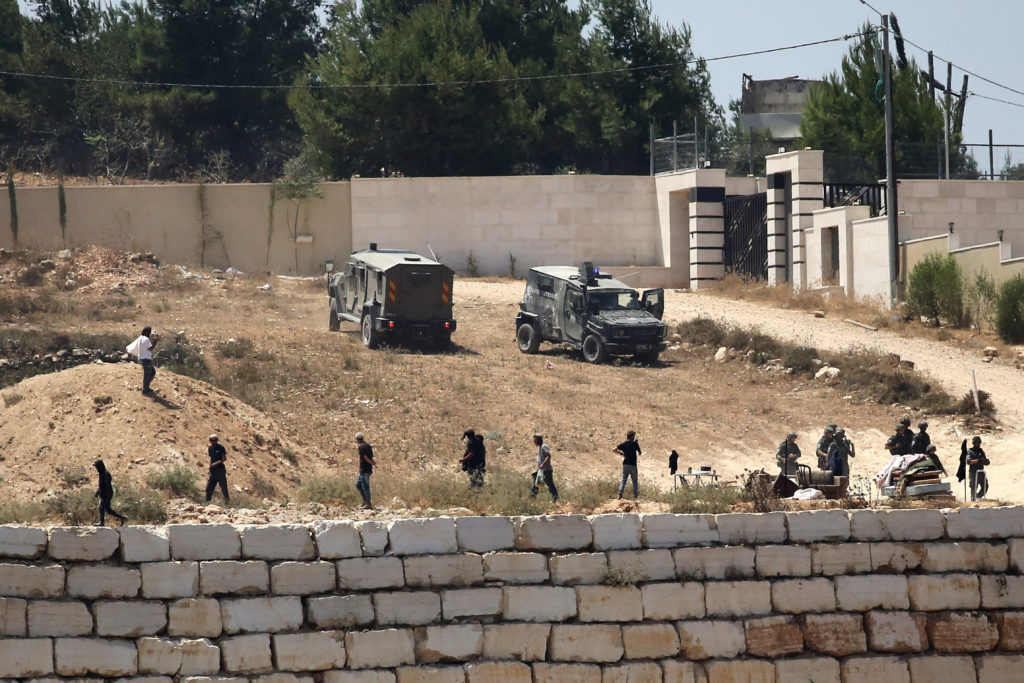
IRAN STRIKES BACK AT AMERICA THROUGH ITS GULF NEIGHBORS: KUWAIT AND BAHRAIN CAUGHT IN THE CROSSFIRE AS TRUMP INSISTS A WAR THAT WON'T STOP IS "EFFECTIVELY OVER"
Iran has launched fresh missile and drone attacks on Kuwait and Bahrain after the United States struck an Islamic Revolutionary Guard Corps (IRGC) missile launch site on Qeshm Island in the Strait of Hormuz. The IRGC said it targeted the US Ali Al-Salem Air Base in Kuwait and the headquarters of the US Fifth Fleet in Bahrain. Both Gulf states said they repelled the attacks, and no US casualties or major damage have been reported. American strikes have also hit the Iranian coastal sites of Sirik and Bandar-e Lengeh. President Donald Trump insists the conflict is "effectively over," but retired US naval officer Harlan Ullman warns that the tit-for-tat strikes risk "getting out of hand." Democratic Congressman Ro Khanna has called the US strikes a "blatant violation" of the War Powers Resolution. Oman, Qatar and the United Arab Emirates have condemned the attacks. The exchange ends a quiet period of about two months. It puts the world's most important oil route back at the center of a dangerous standoff, with consequences that could reach fuel prices and economies far beyond the Gulf, including Nigeria.
The guns had mostly gone quiet. For roughly two months, Washington and Tehran had largely held off on striking each other while diplomats searched for a way to end a war that began on February 28. That fragile calm has now cracked. Iran has launched new attacks on Kuwait and Bahrain, two small Gulf kingdoms that host major American military bases, after the United States struck an Iranian missile launch site on Qeshm Island in the Strait of Hormuz.
Iran's Islamic Revolutionary Guard Corps (IRGC) said it fired ballistic missiles and drones at the US Ali Al-Salem Air Base in Kuwait and at the headquarters of the US Fifth Fleet in Bahrain. Iranian state television said its drones targeted Patriot air defense systems and drone and missile launch platforms at the Kuwaiti base. In Bahrain, air raid sirens sounded and residents were urged to move to the nearest safe place. Kuwait said its air defenses were responding to "hostile missile and drone threats."
Both countries say they repelled the attacks. So far, there are no reported US casualties and no major damage. A US defense official said there was no impact on American interests and referred further questions to the governments of Kuwait and Bahrain.
That detail matters more than it first appears. Iran says it is fighting America. But the missiles and drones flew toward the territory of two Arab nations that are not formally at war with anyone. The people who ran for shelter when the sirens sounded were Bahraini families, migrant workers and residents going about their day. That is the uncomfortable reality of this conflict. The war between Washington and Tehran is being fought, in part, over the heads of their neighbors.
The latest chain of events began with an American strike on Qeshm Island. Qeshm is the largest island in the Persian Gulf and sits at the narrow mouth of the Strait of Hormuz, just off Iran's southern coast. According to a US official, a fighter aircraft used precision munitions to hit an IRGC missile launch site on the island "in self-defense." The official described the strike as a response to "IRGC aggression targeting US personnel and assets."
Qeshm was not the only target. American strikes have also hit Sirik and Bandar-e Lengeh, two other sites along Iran's coastline facing the strait. Each location sits close to the shipping lanes that make Hormuz one of the most closely watched waterways on Earth. By striking there, Washington is sending a clear message that it will not allow Iran to use the coast as a launchpad against US forces. Tehran's answer has been equally clear. It will hit back, and it will do so where America is most exposed in the region.
This did not come out of nowhere. In the days before the Qeshm strike, Iran had already stepped up its attacks. It targeted an American early warning radar facility in Bahrain on one day and a radar system at a US helicopter base in the country on another. Tehran said those attacks were retaliation for reported US strikes on Iranian communications towers and for American drone surveillance. Washington said all of those attacks were intercepted. Still, the pattern was unmistakable. The quiet period was ending, one strike at a time.
Behind the renewed fighting sits a heavy economic weight. Since the summer, the United States has enforced a blockade on Iran's ports in the Strait of Hormuz. For a country that depends heavily on oil exports and sea trade, that blockade has been crushing. Prices rise, goods run short and the government's income shrinks. Many analysts believe Iran's renewed attacks are partly a way of pushing back against that pressure and showing that it still has the power to hurt its enemies.
Tehran sees the strait itself as its strongest card. Iranian officials and analysts have long argued that their ability to threaten shipping in Hormuz acts as a shield against American attacks. Any attempt to change the situation there by force, they say, is unacceptable. In other words, Iran is telling the world that if it is squeezed, it can squeeze back, and the whole global economy may feel it.
Yet in Washington, the official message sounds very different. President Donald Trump insists the conflict is "effectively over." He has repeatedly suggested that Iran's military power has been badly broken. At the same time, he has not ruled out restarting major combat operations. He has also warned that the US could be forced to "complete the job" if Iran keeps attacking.
That gap between words and events is now impossible to ignore. A war that is "effectively over" does not usually involve fighter jets striking missile sites, ballistic missiles flying toward American bases and sirens sounding across a Gulf capital. Critics argue that the president's language is designed to calm voters at home while the fighting quietly continues abroad. Supporters say it reflects a real belief that Iran is too weak to change the outcome, and that these attacks are the desperate moves of a cornered regime. Both views will be tested in the coming weeks.
US Central Command, which oversees American forces in the Middle East, struck a more cautious tone. It said it remains "highly vigilant and fully postured to protect Americans across the region." That is not the language of a military that thinks the fight is finished.
Experts are worried. Retired US naval officer Harlan Ullman has warned that the latest "tit-for-tat" attacks between Washington and Tehran risk "getting out of hand." Every strike invites a response. Every response invites another strike. One misjudged missile, one drone that gets through, one strike that kills American troops or Gulf civilians, and the cycle could spin far beyond what either side intends. Ullman has also pointed out that a surge in oil prices could pressure President Trump to return to negotiations. In this war, the price of crude may prove as powerful as any weapon.
At home, the president faces a growing political fight over who has the right to wage this war at all. Democratic Congressman Ro Khanna has condemned the renewed US attacks on Iran as a "blatant violation" of the War Powers Resolution passed by Congress. His warning was blunt: "Trump must stop this war now, or we will take him to court."
The War Powers dispute goes to the heart of how America goes to war. Under the US Constitution, Congress holds the power to declare war, while the president commands the armed forces. The War Powers Resolution was designed to stop presidents from dragging the country into long conflicts without approval from lawmakers. The White House describes its strikes as acts of self-defense, which presidents have often argued fall within their authority. Critics like Khanna say that excuse wears thin when the strikes keep coming, month after month, in a war that began in February. The argument is now spilling into budget battles in Washington, where some Democrats want to use spending deadlines to force a debate on the war.
Across the Gulf, the reaction has been swift and angry. Oman, Qatar and the United Arab Emirates have condemned the Iranian attacks. Oman expressed full solidarity with Bahrain and rejected any actions that threaten regional security. Kuwait, a direct target, has also condemned the attacks on its neighbor.
Oman's stance stands out. The sultanate has a long history of acting as a quiet go-between for Iran and the West. It has hosted sensitive talks and kept lines open to Tehran when others would not. When even Oman speaks out firmly, it signals how deeply the Gulf states resent being dragged into a fight that is not of their making.
That resentment has a long backstory. Countries like Kuwait, Bahrain, Qatar and the UAE host American troops, ships and aircraft because they see the US as a guarantor of their security. In normal times, those bases are meant to deter attacks. In wartime, they can become magnets for them. Gulf leaders now face an uncomfortable question. Does hosting American power make them safer, or does it make them targets? So far, their air defenses, often working alongside US systems, have held. But every attack raises the stakes and tests the patience of governments that want stability above everything else.
For ordinary people in the region, the fear is real. Bahrain is a small island nation with a dense population. Kuwait sits at the northern tip of the Gulf, close to both Iraq and Iran. Millions of foreign workers live and work across the Gulf states, including large numbers from Africa and Asia. When missiles fly, they are not only aimed at soldiers. They hang over shopping malls, schools, oil facilities and homes.
That is one reason why this story matters to Nigerians. Many Nigerians live, study and work in the Gulf, and families back home watch every escalation with worry. But the impact goes even further. The Strait of Hormuz carries roughly a fifth of the world's oil supply. When fighting flares near those waters, oil markets react within hours.
For Nigeria, higher oil prices are a double-edged sword. On one hand, Africa's largest oil producer can earn more from every barrel it sells abroad. That could ease pressure on government finances and the naira. On the other hand, rising global prices push up the cost of petrol, diesel, aviation fuel and shipping. Those costs flow into transport fares, food prices and the everyday expenses that already stretch Nigerian households to their limit. A war thousands of kilometers away can show up quickly at the fuel pump in Lagos or the market in Kano.
Shipping is another concern. Many goods Nigeria imports pass through routes affected by tension in the Gulf. When insurers see higher risk, they raise premiums. When ships take longer routes, delivery costs rise. Over time, those costs reach consumers. That is why every missile fired near Hormuz carries a hidden price tag for countries far from the battlefield.
So what happens next? Much depends on choices made in Washington and Tehran in the coming days.
If Iran keeps up its attacks and one finally gets through, killing American service members or Gulf civilians, pressure on the White House to respond with force will be enormous. President Trump has already hinted that he is prepared to "complete the job." A major new round of strikes could pull the region back into full-scale fighting.
If Washington keeps up its strikes along Iran's coast, Tehran is likely to keep hitting back at US bases in neighboring countries. That would leave Kuwait, Bahrain and other Gulf states trapped in the middle, absorbing the risk of a fight they did not start.
There is also a path toward calm. The two months of relative quiet before this latest flare-up showed that both sides can hold back when they choose to. Rising oil prices, pressure from Gulf allies, legal challenges in Congress and the economic pain of the blockade could all push the two sides back toward talks. Diplomacy has been tried before in this war. It could be tried again.
For now, the facts on the ground tell a story that clashes sharply with the official line. An American jet has struck an Iranian missile site. Iranian missiles and drones have flown toward two Gulf nations. Sirens have sounded in Bahrain. Air defenses have fired over Kuwait. Regional governments are condemning the violence and warning about the threat to their security. And the president of the United States says the war is effectively over.
Both things cannot be fully true at the same time. Either the war is ending, and these are its final sparks, or it is simply changing shape, becoming a slow, grinding conflict of strikes and counterstrikes with no clear end. The people of Kuwait and Bahrain, the sailors in the Gulf, the oil traders watching their screens and the families in Nigeria paying more for fuel all have a stake in which version turns out to be right.
The world is watching the Strait of Hormuz again. And this time, no one can say with confidence how the next chapter will end.