BOMBED AT SEA AND THEN LOCKED UP? 17 ECUADORIAN FISHERMEN SUE WASHINGTON, ACCUSING US DRONES OF BLOWING THEIR BOAT APART IN INTERNATIONAL WATERS AND PUTTING TRUMP'S DEADLY WAR ON DRUG BOATS ON TRIAL
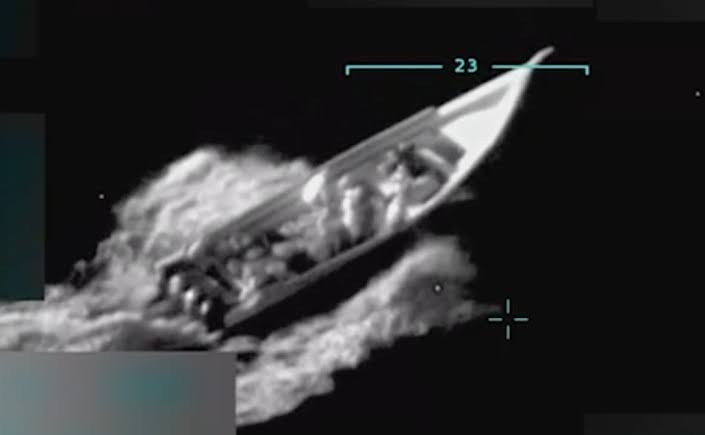
Seventeen Ecuadorian fishermen have filed a lawsuit against the United States government. They allege that a US drone strike destroyed their fishing vessel, La Negra Francisca Duarte II, in international waters of the Pacific Ocean on March 17, 2026. According to the lawsuit, crew members were injured in the attack and were then unlawfully detained. The case was filed this week in federal court in Pennsylvania. The lawsuit directly challenges one of the most controversial security policies of President Donald Trump's administration. Since 2025, the US military has carried out a campaign of lethal strikes against boats it says are smuggling drugs in the Caribbean and the eastern Pacific. The administration has described the targets as narco terrorists. The fishermen say they were nothing of the kind. Some reports describe the attack as involving small explosive laden drones. The US government has not yet responded publicly to the lawsuit. The case raises hard questions about how targets are chosen, what evidence is required before force is used and what happens when the military gets it wrong. It also tests long standing principles of international law, which give every vessel freedom of navigation on the high seas and treat drug smuggling as a crime to be prosecuted, not a battlefield to be bombed. Winning will not be easy. Foreign nationals who sue the US government over military action abroad face steep legal barriers, including sovereign immunity, national security secrecy and courts that are often reluctant to second guess the military. Still, the lawsuit may become the first serious courtroom test of a strike campaign that has so far operated with little outside scrutiny. All allegations in the case remain unproven.
For months, the Trump administration has announced its strikes on suspected drug boats the same way. A short statement appears, sometimes with grainy video of a small vessel exploding on open water. The people aboard are described as narco terrorists. The boat is said to have been carrying drugs toward the United States. Then the news moves on. Almost nobody who was on those boats has ever been able to tell their side of the story in an American court. This week, seventeen Ecuadorian fishermen set out to change that.
In a lawsuit filed in federal court in Pennsylvania, the fishermen allege that US drones attacked their vessel, La Negra Francisca Duarte II, in the Pacific Ocean on March 17, 2026. According to the filing, the boat was in international waters when it was struck. The lawsuit alleges that the attack destroyed the vessel and left members of the crew injured. It further alleges that, after surviving the strike, the fishermen were unlawfully detained. Their case takes aim not only at what happened to them but at the entire US campaign of strikes on alleged drug trafficking boats in the Caribbean and the eastern Pacific.
The core of the fishermen's account is simple and stark. According to the lawsuit, they were working men on a fishing trip, not smugglers. They say they were attacked without justification, wounded and then held against their will. Some reports describe the attack as a mysterious assault involving small explosive laden drones, a detail that, if confirmed, would set it apart from the larger missile strikes the military has publicized in other cases. Many key details remain unclear in public reporting, including who detained the men, where they were held, for how long and under what authority. Those questions are likely to sit at the center of the case as it moves forward.
The United States government has not yet responded publicly to the lawsuit. Neither the Pentagon nor the Justice Department, which typically defends the federal government in court, has offered a public account of the March 17 incident. That silence leaves the fishermen's allegations as the only detailed public version of events so far. It also means none of their claims have been tested. The government will have every opportunity to dispute them, to present its own evidence and to argue that the strike, if it was carried out by US forces, was lawful.
There is some confusion in early reports about the size of the group. Some accounts describe sixteen fishermen as plaintiffs, while others put the number at seventeen. The difference may reflect how the plaintiffs are counted in the filing, or a discrepancy in early coverage, and it is likely to be clarified as court documents become more widely available. The spelling of the vessel's name has also varied slightly between reports. What is consistent across every account is the central allegation. A fishing boat crewed by Ecuadorians was attacked at sea, and the men on board say the United States was responsible.
To understand why this lawsuit matters, it helps to understand the campaign it challenges. In September 2025, the US military began striking small boats in the southern Caribbean that the administration said were carrying drugs from Venezuela. The first strikes were announced with dramatic videos posted online by senior officials. Within weeks, the operations expanded to the eastern Pacific, a major route for cocaine leaving South America. Strike followed strike. By the administration's own public announcements, the campaign has killed scores of people over its course. Very few survivors have been reported, and the evidence supporting the claim that each boat was carrying drugs has rarely been made public.
The administration has defended the strikes as a necessary response to a deadly threat. President Trump and his senior officials have argued that drug cartels are waging a kind of war on the United States by flooding its communities with narcotics that kill tens of thousands of Americans every year. The administration designated several cartels and criminal groups as foreign terrorist organizations. It also informed Congress that it considered the United States to be in an armed conflict with drug cartels, a legal position that, in its view, allows the military to treat smugglers as enemy combatants rather than criminal suspects. Supporters of the policy say decades of traditional interdiction failed to stop the flow of drugs and that only overwhelming force will change the cartels' calculations.
That reasoning marks a sharp break with how the United States has fought drug smuggling at sea for generations. For decades, the job fell mainly to the US Coast Guard, often supported by Navy ships and partner nations. The standard approach was interdiction. Ships would track a suspect vessel, stop it, board it, search it and arrest the crew if drugs were found. Suspects were brought to the United States and prosecuted under laws such as the Maritime Drug Law Enforcement Act, which gives US courts broad reach over drug trafficking on stateless vessels and on foreign ships with the consent of their flag countries. The US also built a network of agreements with countries across Latin America and the Caribbean that allow American officers to board and search vessels flying their flags.
That system was far from perfect, and critics argued it caught only a fraction of the drugs moving north. But it had one essential feature. People accused of smuggling went before a judge. Evidence was presented. Defendants had lawyers. Mistaken identity could be uncovered, and innocent people could walk free. The strike campaign removes that step entirely. A boat is identified as a target, and the decision is carried out with lethal force. If the intelligence is wrong, there may be no one left alive to say so.
That is why the fishermen's account is so significant. Critics of the campaign have long warned that the line between a fishing boat and a smuggling boat can be thin from the air. In the eastern Pacific, thousands of small fishing vessels from Ecuador, Colombia, Peru and Central America work far from shore, often for days or weeks at a time. Many are fast, open boats with powerful outboard engines and extra fuel drums, which is exactly the profile of the go fast boats smugglers favor. A drone operator or analyst watching from far away may struggle to tell the difference. If the lawsuit's allegations are proven, the fishermen's experience would be precisely the kind of error critics have warned about.
Ecuador sits at the heart of this story. Once considered one of the more peaceful countries in South America, it has been transformed over the past several years into a major transit hub for cocaine produced in neighboring Colombia and Peru. Its Pacific ports and long coastline have made it a prime route for drugs heading to North America and Europe. Powerful criminal gangs, many linked to international cartels, have fought for control of that trade, driving a dramatic surge in violence. The government of President Daniel Noboa has declared an internal armed conflict against these groups and has positioned itself as a close partner of Washington in the fight against organized crime.
That partnership makes this lawsuit politically delicate. Ecuador's government has generally backed a tough approach to drug trafficking and has welcomed closer security ties with the United States. Yet the plaintiffs are Ecuadorian citizens who say they were harmed by American forces. The case puts Quito in an awkward position, caught between its alliance with Washington and its duty to protect its own people. How Ecuadorian officials respond, publicly or quietly, could shape both the course of the lawsuit and wider public opinion in Ecuador about the US strike campaign.
Ecuador's fishing communities also carry their own complicated reality. Fishermen from coastal towns such as Manta and Esmeraldas have, in some cases, been pressured, threatened or paid by criminal groups to carry drugs or supplies at sea. That fact has been cited by supporters of the strikes as evidence that fishing boats can be smuggling boats. But it cuts the other way too. If honest fishermen and coerced smugglers work the same waters in similar boats, then the risk of killing or wounding innocent people is very real. That is exactly the kind of distinction that a courtroom, rather than a targeting screen, is designed to make.
The location of the alleged attack adds another layer. According to the lawsuit, La Negra Francisca Duarte II was in international waters when it was struck. Under the law of the sea, the high seas belong to no single country. The United Nations Convention on the Law of the Sea, which sets out the modern rules for the world's oceans, guarantees freedom of navigation and fishing on the high seas to vessels of all nations. As a general rule, a ship on the high seas falls under the exclusive authority of the country whose flag it flies. Other states may stop and board a foreign vessel only in limited situations, such as suspected piracy, slave trading or when the ship has no nationality.
The United States has never ratified that convention, but it has long said that it accepts most of its provisions as reflecting customary international law that binds all nations. The treaty does address drug trafficking at sea. It calls on states to cooperate in suppressing illicit drug traffic and allows a country that suspects a ship flying its own flag of smuggling to request help from others. What it does not do is authorize any country to destroy a foreign civilian vessel on the high seas because it suspects drugs are on board. Drug smuggling, in the traditional understanding of international law, is a crime. Crimes are handled by arrest and prosecution, not by military attack.
The administration's armed conflict theory is an attempt to move the strikes out of that framework and into the laws of war, which allow lethal force against enemy fighters. Many international lawyers reject that move. They argue that drug cartels, however violent, are criminal enterprises motivated by profit rather than armed groups engaged in hostilities against the United States in the legal sense. They also point out that even under the laws of war, attacks must target only lawful military objectives, must take feasible precautions to avoid harming civilians and must not deliberately target people who are wounded or out of the fight. United Nations human rights officials have publicly said the strikes violate international law and amount to extrajudicial killings. Several governments in the region have also voiced concern, while others have quietly supported the operations.
Inside the United States, the campaign has stirred fierce debate. Members of Congress from both parties have questioned the legal basis for the strikes and pressed for the evidence behind them. Reports of a follow up strike in one of the earliest operations, which allegedly targeted survivors in the water, triggered particular alarm and calls for investigation. Efforts in Congress to restrict the strikes through war powers votes have so far fallen short. The administration has insisted that its targeting is careful and that every boat struck was engaged in trafficking. Critics reply that the public has been asked to accept those assurances on trust alone.
That is part of what makes the lawsuit so consequential. Courts are one of the few places where the government can be forced to explain itself under oath and in detail. If the case survives early challenges, the fishermen's lawyers may seek documents, intelligence assessments and testimony about how their boat was chosen as a target. That prospect alone is likely to draw a forceful response from the government.
The path to that point is steep. Suing the United States government is never simple, and suing it over military action abroad is among the hardest legal tasks there is. The starting point is sovereign immunity, the principle that the federal government cannot be sued unless Congress has explicitly allowed it. Congress has created several exceptions, but each comes with limits that are especially hard on foreign plaintiffs harmed overseas.
The best known exception is the Federal Tort Claims Act, which allows people to sue the government for harm caused by the negligence or wrongful acts of federal employees. But the law contains a foreign country exception that bars claims arising abroad. It also contains a combatant activities exception that bars claims arising from the activities of the military during time of war. The government is likely to argue that a strike on the high seas, carried out as part of what it calls an armed conflict, falls squarely within those limits. Courts have not always agreed on how the foreign country exception applies to events in international waters, which could become an important point in this case.
Maritime law offers other possible routes. The Suits in Admiralty Act and the Public Vessels Act allow certain claims against the United States for harm involving ships and maritime activities. These laws have been used in cases involving collisions and damage at sea. The Public Vessels Act, however, contains a reciprocity rule. Foreign nationals may bring claims only if their own country allows Americans to sue its government in similar circumstances. Whether Ecuador's laws meet that test could become a technical but decisive question. It is also unclear whether a drone strike would fit within these maritime statutes at all.
Other legal avenues carry their own obstacles. The Alien Tort Statute, an old law that allows foreign nationals to sue in US courts for certain violations of international law, has been sharply narrowed by the Supreme Court in recent years and generally does not allow suits against the United States itself. Claims brought directly against individual officials for constitutional violations have also been severely limited. In 2020, the Supreme Court refused to allow a lawsuit by the family of a Mexican teenager who was shot and killed by a US Border Patrol agent firing across the border, citing concerns about foreign relations and national security. That decision signaled that courts are deeply reluctant to extend constitutional protections to foreigners harmed by US agents outside the country.
The government also has powerful procedural tools. It may argue that the case raises political questions about war and foreign policy that courts should leave to Congress and the president. It may invoke the state secrets privilege, which allows the government to block the use of evidence it says would harm national security if revealed. In the past, that privilege has ended lawsuits over rendition, torture and surveillance before any court reached the facts. Lawsuits involving drone strikes overseas, including cases brought by families of people killed in Yemen, have often been dismissed on these grounds.
The detention allegation may offer the fishermen a somewhat different footing. Claims of unlawful detention can raise questions about where the men were held, by which authority and whether they were given access to lawyers, consular officials or a judge. The lawsuit's account of the detention, which has not been detailed fully in public reporting, may prove important. If US personnel held the men, the conditions and legal basis of that detention could become a central issue, separate from the debate over the strike itself.
The choice to file in federal court in Pennsylvania may also draw early scrutiny. The government could challenge whether the case belongs there, and venue fights are a common opening move in lawsuits against federal agencies. The fishermen's legal team has not been reported to have publicly explained the full reasoning behind the venue, and that issue may be settled in the first round of motions.
None of these hurdles means the case is doomed. Lawsuits that seem unlikely to win can still have major effects. They can force the government to put its legal theories in writing. They can bring facts into public view. They can prompt settlements, internal reviews or changes in policy. They can also give a human face to a campaign that has so far been presented mostly through official statements and aerial footage. For the fishermen, the lawsuit is a chance to be seen as people rather than targets.
For supporters of the strike campaign, the case is likely to be viewed with suspicion. They may argue that people caught up in drug trafficking have every incentive to claim they were simply fishing, and that the military's intelligence is far better than anything available to the public. They may warn that lawsuits like this one could tie the hands of commanders and give cartels a legal weapon against American forces. Those arguments carry weight with many Americans who see drugs as a national emergency and want aggressive action.
For critics, the case confirms their deepest fears. They argue that a policy built on secrecy and lethal force was always bound to harm innocent people, and that the absence of public evidence makes it impossible to know how often that has already happened. They see the fishermen's lawsuit as a test of whether any check remains on the government's power to kill people at sea based on suspicion alone.
Between those positions lies a basic question that the case brings into sharp focus. When a government decides that someone on a boat far from its shores is an enemy, who checks that decision, and what happens when it is wrong? On land, in the United States, the answer would involve police, prosecutors, judges and juries. On the high seas, under the current campaign, the answer appears to be no one outside the chain of command.
For the seventeen men of La Negra Francisca Duarte II, the question is not abstract. According to their lawsuit, they lost their boat, their livelihoods and their freedom, and some of them were wounded in the attack. Fishing boats in Ecuador are often the main asset of entire families, and their loss can push households into debt and poverty. Behind the legal arguments over immunity, jurisdiction and the laws of war are men who say they went to sea to work and came back broken.
The road ahead will be long. The government will respond, likely with motions to dismiss. Judges will decide which claims, if any, can go forward. Evidence may or may not come to light. The allegations will remain unproven until a court weighs them, and the United States will have its full say. But the lawsuit has already done something that months of official statements did not. It has put the people on the receiving end of America's war on drug boats inside an American courtroom, demanding answers.