Hoax Bomb Threats, a Raised UK Threat Level and a Continent-Wide Alert: Europe Enters a Tense Holiday Season
The United States has issued a security alert warning American citizens of possible terrorist attacks across Europe. In an alert dated November 16, 2026, the US Embassy in Madrid said terrorists, including lone actors, may attack with little or no warning. Likely targets include tourist locations such as markets and transportation hubs. Similar messaging has been shared through US diplomatic missions across the continent, and it comes as Europe enters its busiest holiday season, when Christmas markets, airports, train stations and public celebrations draw large crowds. The warning follows a month of disruption. In November, hoax bomb threats targeted civil aviation in numerous European countries and disrupted flights. Britain has also raised its terrorism threat level, signaling that an attack is considered highly likely, and the US has cautioned Americans in the UK to stay alert. The alert does not point to a specific plot, a named group or a single country. Instead, it reflects a threat environment shaped by self-radicalized individuals, low-tech attack methods and crowded seasonal targets. Europe has seen this pattern before, from the 2016 Berlin Christmas market attack to the 2024 car-ramming attack at a Christmas market in Magdeburg. For travelers, the message is not to cancel plans. It is to stay aware, stay informed and know what to do if something goes wrong.
Europe in late November is a continent preparing to celebrate.
Christmas markets are opening in town squares from Vienna to Strasbourg. Airports are filling with holiday travelers. Train stations in Paris, London, Madrid and Berlin are packed with commuters and tourists. Ice rinks, light displays and outdoor concerts are drawing crowds into the streets after dark.
That is exactly the picture that worries security officials.
The United States has issued a security alert warning Americans of possible terrorist attacks across Europe. In an alert dated November 16, 2026, the US Embassy in Madrid said terrorists, including lone actors, may attack with little or no warning. The alert named tourist locations such as markets and transportation hubs as possible targets.
The wording is careful and broad. It does not name a city, a date or a group. It does not describe a known plot. What it does describe is a threat that is spread across the continent, difficult to detect in advance and focused on the places where people gather most.
For the millions of Americans who live in, work in or travel to Europe, the alert is a reminder that the holiday season brings both celebration and risk.
What the Alert Says
US embassy security alerts tend to follow a standard format. They describe the threat, list likely targets and set out practical steps for American citizens.
The Madrid alert follows that pattern. Its central message is that terrorists, including lone actors, may strike with little or no warning. That phrase matters. It tells readers that authorities may not be able to issue a specific warning before an attack happens.
The alert lists tourist locations as possible targets, including markets and transportation hubs. In the context of the holiday season, the reference to markets carries obvious weight. Europe's Christmas markets attract enormous crowds, often in open public squares with many entry points.
Transportation hubs, including airports, train stations and metro systems, are also high on the list. They combine dense crowds with predictable schedules, making them attractive to attackers seeking maximum disruption.
Alerts of this kind usually encourage Americans to stay alert in tourist areas, monitor local media, follow instructions from local authorities and enroll in the State Department's Smart Traveler Enrollment Program (STEP) to receive updates.
Why a Continent-Wide Warning
Most embassy alerts focus on a single country. This one reflects a broader concern.
The threat facing Europe does not stop at national borders. The Schengen Area allows people to move between most European Union countries without routine passport checks. Extremist propaganda circulates online in many languages. Attacks in one country can inspire copycats in another.
The seasonal calendar is also shared. Christmas markets, New Year's Eve celebrations and holiday travel peaks happen at roughly the same time across the continent. A warning that applies in Madrid applies equally to crowded squares in Germany, France, Belgium, Austria or the Netherlands.
That is why the alert speaks to Europe as a whole. Washington is not signaling that one country is more dangerous than the rest. It is signaling that the risk is spread widely and that Americans should apply the same caution wherever they are.
A November of Disruption in the Skies
The alert arrives after a turbulent month for European aviation.
In November, hoax bomb threats targeted civil aviation in numerous European countries, disrupting flights. Hoax threats do not cause physical harm, but they still carry real costs. Aircraft are diverted or held on the ground. Terminals are searched. Passengers miss connections. Security teams are pulled away from other duties.
Hoaxes also create a difficult problem for authorities. Every threat has to be treated seriously until it is ruled out. A wave of false alarms can strain resources and wear down vigilance at exactly the moment when a genuine threat could emerge.
For travelers, the practical result has been delays, extra screening and uncertainty. For security officials, the hoaxes are another sign of an environment in which disruption itself can be a goal.
Britain Raises Its Threat Level
The United Kingdom has added to the sense of heightened risk.
Britain has raised its national terrorism threat level, a step that indicates an extremist attack is considered highly likely. The UK's threat levels are set by the Joint Terrorism Analysis Centre, which assesses intelligence on terrorist intent and capability.
In response, the United States cautioned Americans in the UK to stay alert. That advice mirrors the broader European message: remain aware in crowded places, follow official guidance and be ready to act quickly if an incident occurs.
A raised threat level does not mean an attack is certain or that daily life should stop. In Britain, it usually means a more visible police presence, tighter security at major venues and greater public awareness. But it does show that British authorities see the danger as serious enough to act on.
The Rise of the Lone Actor
The phrase "lone actors" sits at the heart of the US alert, and for good reason.
Over the past decade, much of the terrorist threat in Europe has shifted away from large, organized cells toward individuals acting alone or in very small groups. Many are radicalized online. Some have no direct contact with a terrorist organization. Others are inspired by propaganda but plan and carry out attacks on their own.
Lone actors are especially difficult to stop. They may not communicate their plans to anyone. They may not travel abroad, buy weapons through known channels or appear on intelligence watch lists. Their attacks often use simple tools such as knives or vehicles, which require little planning and are hard to restrict.
That is why the alert warns of attacks with "little or no warning." When a plot exists only in one person's mind, intelligence services may have nothing to intercept.
Security officials across Europe have also warned that the people being radicalized are getting younger. Teenagers drawn in through social media and messaging apps have featured in a growing number of arrests in several countries. That trend adds another layer of difficulty for authorities trying to spot threats early.
Lessons From Past Attacks on Europe's Crowds
Europe's recent history explains why markets and transport hubs feature so prominently in the alert.
In March 2004, coordinated bombings on commuter trains in Madrid killed 193 people. In July 2005, suicide bombers struck London's transport network, killing 52. In March 2016, attacks on Brussels Airport and a metro station killed 32 people.
Holiday gatherings have also been targeted. In December 2016, an attacker drove a truck into a Christmas market at Breitscheidplatz in Berlin, killing 12 people at the scene. In December 2018, a gunman attacked people near the Christmas market in Strasbourg, France, killing five. In December 2024, a driver plowed into crowds at a Christmas market in Magdeburg, Germany, killing six people and injuring hundreds.
Other attacks have struck public celebrations and tourist areas. In July 2016, a truck attack on Bastille Day crowds in Nice killed 86 people. In August 2017, a van attack on Las Ramblas in Barcelona killed 13 people, with another victim killed in a related attack. In November 2015, coordinated attacks in Paris killed 130 people at a concert hall, restaurants and a stadium.
These attacks varied in method and motive. What they shared was a focus on ordinary people in public places. That pattern is the reason Europe's holiday season brings heightened security every year.
How European Security Has Adapted
European governments have responded to these attacks with significant changes.
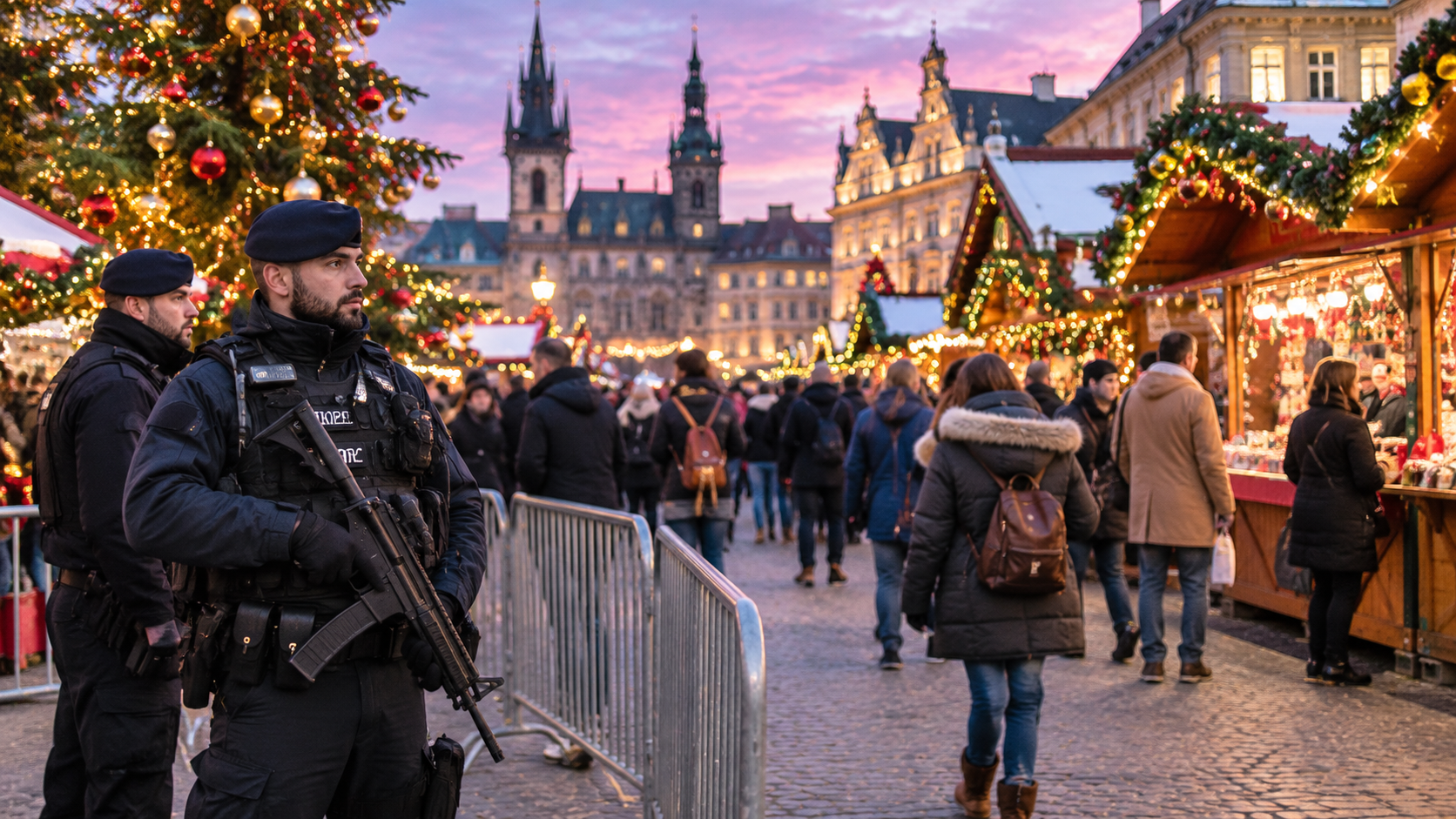
Many cities now install concrete barriers, bollards and vehicle blocks around Christmas markets and pedestrian zones. Armed police patrols are more common at major transport hubs and public events. Bag checks and controlled entry points have become standard at large gatherings.
Intelligence sharing between European countries has also expanded through bodies such as Europol. National security services have increased monitoring of online extremist content and stepped up efforts to identify people at risk of radicalization.
These measures have helped. Security agencies across Europe regularly report foiled plots, many of which never become public in detail. But no system can stop every attack, especially those carried out by individuals using everyday tools. The goal is to reduce the risk and limit the harm, not to remove danger entirely.
What the Alert Does Not Say
It is important to read the alert carefully and avoid overstating it.
The alert does not identify a specific plot. It does not name a terrorist group. It does not tell Americans to avoid Europe or leave any particular country. It does not change travel advisory levels for European nations on its own.
US embassies issue holiday season alerts regularly, and similar warnings have been released in past years. Their purpose is to remind citizens of known risks during a period when crowds are larger and targets are more attractive.
That context matters. The alert is a call for awareness, not a forecast of a specific attack. Travelers who understand that difference can make sensible decisions without fear driving their plans.
Practical Guidance for Travelers
For Americans in Europe, and for anyone traveling there this season, the alert's message can be turned into simple habits.
Stay alert in crowded places. Markets, stations, airports, shopping areas and public events deserve extra attention. Put the phone away from time to time and notice what is happening around you.
Know your exits. When you enter a busy space, take a moment to identify the nearest exits and a safe place to move toward if something goes wrong.
Follow local news and official channels. Local authorities and transport operators will share updates about closures, delays and security incidents. Monitor them, especially when traveling between cities.
Enroll in STEP. The State Department's Smart Traveler Enrollment Program allows US citizens to receive alerts from the nearest embassy and helps officials reach you in an emergency.
Follow instructions from authorities. If police or security staff direct crowds to move, leave or shelter, follow their guidance quickly.
Report suspicious behavior. Unattended bags, unusual activity or concerning behavior should be reported to local police or security staff rather than ignored.
Plan for delays. With hoax threats disrupting flights in November, travelers should allow extra time at airports and keep an eye on flight status.
Keep loved ones informed. Share your itinerary with family or friends, and agree on a way to check in if there is an incident in the area where you are traveling.
None of these steps requires canceling a trip. They simply make it easier to react calmly and quickly if something unexpected happens.
Balancing Caution and Normal Life
Security warnings always carry a tension. Officials want people to take risks seriously without giving terrorists the fear and disruption they seek.
Millions of people will visit Europe's Christmas markets, airports and city centers this season without incident. The statistical risk to any one traveler remains low. Yet the impact of a single attack can be devastating, and the busiest weeks of the year offer attackers the largest crowds.
The sensible response sits between panic and complacency. Travelers can enjoy the season while staying aware of their surroundings. Cities can keep their markets open while protecting them. Governments can share warnings without spreading alarm.
Europe has lived with this balance for years. Its holiday traditions have continued through repeated attacks and threats, often with greater security but with the same spirit. That resilience is part of the response to terrorism.
What Comes Next
The weeks ahead will bring the peak of Europe's holiday season, and with it heightened security across the continent.
Travelers can expect more visible police patrols, extra barriers around public spaces and tighter checks at airports and major events. Further alerts from US embassies are possible if the threat picture changes. European governments may also adjust their own threat levels as intelligence develops.
Aviation authorities will continue responding to any new hoax threats, and travelers may face more delays if disruptions continue. In the UK, the raised threat level is likely to remain in place until security officials judge that the risk has eased.
For American travelers, the most useful step is preparation. Knowing the risks, staying informed and planning ahead will matter far more than any single headline.
The Bottom Line
The US Embassy's security alert, dated November 16, 2026, warns that terrorists, including lone actors, may attack across Europe with little or no warning. Tourist locations such as markets and transportation hubs are named as possible targets as the continent enters its busiest holiday season.
The warning comes after a month in which hoax bomb threats disrupted flights in numerous European countries, and as Britain has raised its threat level and the US has urged Americans in the UK to stay alert. Europe's history shows why these concerns are real. Attacks in Berlin, Strasbourg, Magdeburg, Nice, Barcelona, Brussels, London and Madrid have all targeted crowds in public places.
Yet the alert is a warning, not a prediction. It names no specific plot and does not tell travelers to stay home. Its message is simpler: stay aware, stay informed and know what to do if something goes wrong.
Europe's holiday season will go on. The best way to enjoy it this year is with open eyes, a clear plan and a steady sense of calm.