IMF MISSION ARRIVES IN ACCRA FOR GHANA’S FIRST POST BAILOUT POLICY REVIEW AS 2027 BUDGET, ENERGY DEBTS AND BANKING REFORMS COME UNDER SCRUTINY
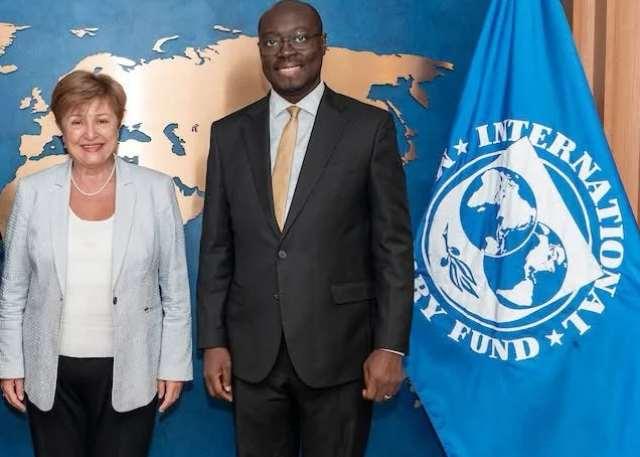
An International Monetary Fund mission led by Dr Ruben Atoyan is in Accra for Ghana’s first review under the non financing Policy Coordination Instrument. The two week engagement will assess the proposed 2027 Budget, fiscal performance through September 2026, revenue mobilization, energy sector legacy debts, Bank of Ghana recapitalization and reforms across the financial sector. The review marks Ghana’s transition from the previous US$3 billion Extended Credit Facility programme to a new framework that provides no direct IMF funding but allows the Fund to monitor economic reforms and assess whether Ghana is maintaining macroeconomic stability.
An International Monetary Fund mission led by Ghana Mission Chief Dr Ruben Atoyan is in Accra this week for the country’s first review under the Policy Coordination Instrument, marking the beginning of a new phase in Ghana’s relationship with the Fund after the completion of the previous US$3 billion Extended Credit Facility programme. The two week engagement is expected to examine the government’s fiscal performance through September 2026, the assumptions and expenditure plans contained in the proposed 2027 Budget, domestic revenue mobilisation, energy sector liabilities, Bank of Ghana recapitalization and reforms across the wider financial system. Unlike the previous ECF arrangement, the PCI does not provide Ghana with direct IMF financing, meaning the central purpose of the review is to determine whether the country is maintaining the economic discipline and structural reforms required to preserve macroeconomic stability after leaving the lending programme.
The review is particularly significant because Ghana is now attempting to demonstrate that the improvements recorded during the three year ECF programme can be sustained without relying on another direct IMF bailout. Ghana entered the previous programme after facing a severe economic crisis characterised by high inflation, rapid depreciation of the cedi, rising debt distress, weakened international reserves and the loss of access to international capital markets. The programme was accompanied by domestic and external debt restructuring, expenditure controls, monetary tightening and reforms intended to restore confidence in the economy. With that financing programme now completed, the Policy Coordination Instrument is expected to serve as a policy anchor that allows the IMF to continue monitoring Ghana’s reforms without providing additional loan disbursements.
Dr Atoyan and his team are expected to hold extensive discussions with officials from the Ministry of Finance, the Bank of Ghana and other key public institutions during the mission. Their assessment will go beyond headline indicators such as inflation and economic growth and will examine whether the government is meeting specific policy commitments agreed under the PCI. The IMF team is expected to review revenue performance, expenditure management, debt sustainability, monetary policy, foreign exchange conditions, financial sector stability and the government’s progress in addressing structural weaknesses that could create renewed pressure on the national budget.
The proposed 2027 Budget will be one of the most important documents examined during the review. Government is preparing the spending plan at a time when it wants to protect the progress achieved under the previous IMF programme while also responding to public pressure for jobs, infrastructure, better social services and improved household living conditions. The Fund is therefore expected to examine whether the government’s revenue projections are realistic, whether planned expenditure is affordable and whether the budget remains consistent with the fiscal commitments Ghana accepted when it entered the PCI.
Fiscal performance through September 2026 will provide a crucial basis for that assessment because it will show whether government revenue and spending have remained broadly in line with targets during most of the year. Strong revenue performance could give government greater room to support development priorities, while weaker collections or unexpected spending pressures could force adjustments before the final 2027 Budget is presented. The IMF will therefore be looking closely at how much revenue has actually been collected, how effectively expenditure has been controlled and whether government has accumulated any new arrears or liabilities outside the formal budget.
Domestic revenue mobilization remains one of Ghana’s biggest long term economic challenges. Governments have repeatedly struggled to raise enough revenue to finance public services without relying excessively on borrowing, partly because of weak tax compliance, a large informal economy, exemptions and inefficiencies in tax administration. The current review is expected to examine whether reforms aimed at improving digital tax administration, customs enforcement, compliance monitoring and collection efficiency are producing measurable results.
The challenge is politically sensitive because businesses and households have repeatedly complained about the burden of taxes and the cost of doing business. Government therefore has to increase revenue without placing excessive pressure on the same taxpayers who are already contributing heavily to the system. The broader objective is to expand the tax base, reduce leakages and improve compliance so that the burden is spread more evenly rather than simply increasing rates on existing taxpayers.
Energy sector debts are expected to feature prominently in the discussions because the electricity sector continues to represent one of the largest risks to Ghana’s public finances. Persistent revenue shortfalls, technical and commercial losses, unpaid bills, power purchase commitments and debts owed to independent power producers and fuel suppliers have repeatedly created financial pressure for government. When energy companies cannot meet their obligations, those liabilities can eventually return to the national budget, undermining fiscal targets even when other areas of government spending are being controlled.
The IMF has repeatedly identified the power sector as one of Ghana’s most important structural fiscal risks. Government has introduced measures including periodic tariff adjustments, implementation of the Cash Waterfall Mechanism and reforms intended to improve revenue collection, but large legacy debts and operational inefficiencies remain. The current mission will therefore examine whether the sector is actually moving towards financial sustainability or whether government continues to absorb costs that should ideally be covered through improved operational performance.
The Electricity Company of Ghana is likely to remain central to this discussion because its ability to collect and transfer revenue affects the entire electricity value chain. Power producers, fuel suppliers and transmission companies rely on payments generated through the distribution system, meaning revenue shortfalls at ECG can create arrears throughout the sector. The IMF is therefore expected to look at collection efficiency, system losses, outstanding obligations and whether reforms are reducing the need for government financial support.
The Fund has previously encouraged stronger governance and private sector participation in parts of the electricity distribution system as a possible way of improving efficiency. Decisions on the structure of ECG and the wider power sector remain the responsibility of the Ghanaian government, but the IMF will assess whether current reforms are sufficiently strong to prevent the continued accumulation of liabilities that eventually become public debt.
Energy sector stability is important far beyond the national budget because reliable and financially sustainable electricity is essential for businesses, manufacturers, mines, schools, hospitals and households. A power sector that regularly accumulates debts can eventually affect electricity reliability, investment and economic growth. Government therefore has to solve the financial problems of the sector without making electricity so expensive that businesses and households cannot afford it.
The Bank of Ghana’s financial position will be another major focus of the review. The central bank recorded substantial losses during Ghana’s domestic debt restructuring and broader economic crisis, weakening its capital position and creating the need for a recapitalization plan. Government and the IMF have previously agreed on measures designed to rebuild the Bank of Ghana’s balance sheet over time while ensuring that the institution retains the operational independence required to conduct monetary policy effectively.
Recapitalizing the central bank matters because the Bank of Ghana plays a central role in maintaining price stability, supervising financial institutions, managing foreign reserves and supporting confidence in the cedi. A central bank can continue to perform its statutory responsibilities even while carrying negative equity, but prolonged weakness in its balance sheet can affect credibility and operational flexibility. The IMF therefore wants to see a clear and credible path for rebuilding capital without creating excessive additional fiscal pressure.
The banking sector will also be examined because Ghanaian financial institutions are still dealing with the effects of the domestic debt exchange. Banks held large quantities of government securities before the restructuring, and changes to the value and maturity of those instruments weakened the capital position of some institutions. Regulators have therefore required banks to rebuild capital buffers and strengthen balance sheets to ensure that the financial system remains stable.
The IMF is expected to assess whether weaker banks are making sufficient progress and whether the Bank of Ghana is enforcing prudential standards effectively. Financial sector weakness can become a public finance problem if government is eventually forced to rescue institutions that are unable to meet their obligations, making early supervision and recapitalization essential.
At the same time, the banking system must remain capable of supporting economic activity. Businesses need access to affordable credit if Ghana is to move from economic stabilization into stronger private sector growth. Banks that remain too weak or too cautious may restrict lending, while extremely high interest rates can make borrowing too expensive for companies seeking to invest and expand.
The first PCI review comes shortly after Ghana completed the sixth and final review of its Extended Credit Facility arrangement. The IMF Executive Board concluded the programme in July 2026 and simultaneously approved Ghana’s transition to a 36 month Policy Coordination Instrument. That decision marked an important shift because Ghana moved away from a lending programme that provided regular disbursements towards a framework focused on policy monitoring, structural reforms and international credibility.
Under the ECF, Ghana received approximately US$3 billion over three years to support the balance of payments and strengthen reserves while implementing economic reforms and restructuring public debt. Each successful programme review allowed the IMF to release an additional portion of the approved financing. Those funds were particularly important during a period when Ghana had lost access to international bond markets and faced severe foreign exchange pressures.
The Policy Coordination Instrument works differently because there is no money attached directly to the successful completion of a review. Instead, the IMF provides an assessment of whether Ghana’s policies remain broadly consistent with the agreed programme objectives. That judgment still matters because international investors, development partners and credit rating agencies often use IMF assessments as one of several indicators when evaluating a country’s economic direction and financial credibility.
A positive first review would therefore allow the government to argue that the economic discipline established under the ECF has continued even after direct IMF lending ended. It could help reinforce investor confidence and support Ghana’s broader effort to rebuild credibility following the debt restructuring. A weak review, on the other hand, could raise questions about whether fiscal or structural pressures are beginning to reappear after the conclusion of the bailout programme.
Finance Minister Dr Cassiel Ato Forson has described the PCI as a framework for preserving Ghana’s macroeconomic gains while allowing the country to concentrate increasingly on economic growth, employment and private sector investment. Government wants to show that it is moving beyond crisis management and into a period in which economic policy can focus more heavily on improving living standards.
That transition will not be simple because stronger macroeconomic indicators do not automatically translate into immediate improvements in household incomes. Inflation may fall, foreign reserves may increase and the currency may become more stable while citizens still experience unemployment, high borrowing costs and pressure from the cost of living. The government therefore faces the difficult task of maintaining the fiscal discipline demanded by the PCI while responding to public expectations for faster development.
This creates a natural tension between fiscal consolidation and increased public spending. Government wants to invest in roads, education, healthcare, agriculture, industrialization and employment programmes, but the IMF will want assurance that such spending is backed by sustainable revenue and does not recreate the large deficits that contributed to the previous economic crisis.
The quality of spending will therefore matter as much as the total amount spent. Investment in infrastructure and productive sectors can support long term growth and eventually increase government revenue, while poorly targeted recurrent spending can create permanent obligations without generating enough economic return. The 2027 Budget will be closely examined to determine whether major programmes are properly financed and whether their costs are consistent with Ghana’s medium term fiscal framework.
Debt sustainability also remains central to the review because Ghana’s restructuring reduced immediate repayment pressures but did not eliminate the need for careful debt management. Government must avoid rapidly rebuilding unsustainable debt levels as economic conditions improve, particularly if access to international capital markets gradually returns.
Ghana is expected to remain cautious about issuing new Eurobonds in the immediate period after restructuring. Returning too quickly to expensive external commercial borrowing could recreate the same vulnerabilities that contributed to the earlier debt crisis. Government has therefore signaled that it wants to consolidate stability and rebuild credibility before significantly increasing international market borrowing.
The PCI can support that strategy by providing investors with regular external assessments of fiscal and debt policy. However, market confidence will ultimately depend more on actual government behavior than IMF statements. Investors will watch whether Ghana stays within budget targets, manages debt transparently and avoids accumulating new off budget liabilities.
Arrears management will be particularly important because unpaid government obligations can hide the true scale of public expenditure. Ministries and state owned enterprises may receive goods or services without paying immediately, creating liabilities that eventually emerge as additional claims on the budget. The IMF is therefore expected to examine whether government is preventing new arrears while gradually dealing with existing obligations.
State owned enterprises beyond the energy sector may also receive attention if their financial position creates risks for government. Loss making public companies can become hidden sources of debt when government guarantees loans or provides emergency financial support. Stronger governance and more transparent financial reporting are therefore expected to remain part of the reform agenda.
Monetary policy will form another major component of the review. The Bank of Ghana has been working to reduce inflation while maintaining currency stability and rebuilding international reserves. The central bank must now decide how quickly interest rates can be reduced without allowing inflationary pressures or renewed depreciation of the cedi to return.
High interest rates can limit private sector borrowing and investment, but cutting rates too quickly could weaken confidence and increase demand for foreign exchange. The IMF is therefore expected to examine whether monetary policy remains consistent with the inflation outlook and whether the Bank of Ghana is maintaining sufficient independence to make decisions based on economic conditions rather than political pressure.
The performance of the cedi will remain an important indicator because currency stability affects inflation, business planning and public confidence. Ghana imports significant quantities of fuel, machinery, medicine and other essential goods, meaning sharp depreciation can quickly increase the cost of living and business operations.
Foreign exchange reserves provide the central bank with protection against temporary external shocks. Ghana’s previous ECF disbursements supported reserve accumulation, but the end of direct IMF financing means future reserve growth will depend increasingly on exports, foreign investment and other external inflows.
Gold, cocoa and oil therefore remain central to the country’s external position. Government initiatives intended to formalize gold purchases, reduce smuggling and improve export receipts could help strengthen reserves if they result in more foreign exchange flowing through official channels.
The review will also consider Ghana’s growth prospects because stronger economic expansion can make fiscal adjustment easier. A growing economy generates more tax revenue, improves employment prospects and reduces the debt burden relative to national income.
However, the government wants growth to become more inclusive and employment intensive. Expansion concentrated mainly in mining or other capital intensive sectors may improve national output figures without creating enough jobs. Government therefore continues to emphasize agriculture, manufacturing, infrastructure and private sector investment as areas capable of generating broader employment.
The PCI is intended to allow Ghana to pursue those priorities while maintaining economic discipline. The government argues that the current phase should not be seen as another austerity programme but as an attempt to protect stability while gradually increasing productive investment.
The IMF has similarly indicated that Ghana needs to consolidate the gains of the previous programme while creating conditions for sustainable growth. The challenge will be deciding how much fiscal space exists for development spending without weakening the improvements achieved in debt, inflation and reserves.
The first PCI review is therefore more than a routine technical exercise. It is the first major assessment of whether Ghana can maintain the policy discipline established under the ECF after direct Fund financing has ended. The result will provide an early indication of whether the transition from emergency support to a non financing policy framework is working as intended.
The review is expected to last approximately two weeks, during which the IMF mission will continue discussions with government officials, central bank representatives and other stakeholders before issuing a concluding statement. That statement should indicate whether the Fund believes Ghana is broadly on track and whether additional policy adjustments are required before the first formal PCI review is completed.
Because the instrument is non financing, there will be no new IMF loan tranche attached to the outcome. The value of a successful review instead lies in the signal it sends that Ghana’s fiscal, monetary and structural policies remain consistent with the objectives agreed under the programme.
That signal matters to international investors considering Ghanaian assets, development partners providing support and businesses deciding whether to make long term investments in the economy. It also matters domestically because it gives Parliament, businesses and citizens another benchmark against which government performance can be assessed.
The 2027 Budget will therefore become one of the most important tests of Ghana’s post bailout economic strategy. Government must show that it can support growth and development while maintaining the fiscal discipline required to keep debt sustainable and inflation under control.
Energy sector reform will be equally important because continued accumulation of power sector debts could undermine otherwise strong fiscal performance. If government continues absorbing large electricity related liabilities, expenditure targets could deteriorate even if ministries remain within their approved budgets.
The same principle applies to banking reforms and the Bank of Ghana’s recapitalization. Financial sector weaknesses that are not addressed early can later become expensive public liabilities, meaning the IMF will want to see credible progress before problems become more difficult to manage.
Ultimately, the first PCI review is a test of whether Ghana has moved beyond temporary economic stabilization and established stronger institutions capable of preventing another crisis. The previous ECF programme helped the country manage a severe period of debt distress, inflation and currency instability, but the long term success of those reforms will depend on what happens after the programme rather than what happened during it.
The government wants to demonstrate that Ghana can now maintain economic stability largely through domestic policy discipline rather than repeated emergency borrowing from the IMF. The Fund, investors and Ghanaian citizens will be watching whether the 2027 Budget, energy sector reforms, banking reforms and fiscal performance support that claim.
The coming two weeks will therefore be closely watched because the IMF mission’s findings will provide the clearest indication yet of whether Ghana’s post bailout economic framework is holding. A strong first review would strengthen the argument that Ghana has successfully moved from crisis management to policy consolidation, while a more critical assessment would signal that additional reforms are still necessary before the country can confidently say the difficult economic adjustment of recent years is firmly behind it.