GHANA HIGH COMMISSION ADMITS CLERICAL ERRORS IN SOUTH AFRICA EVACUATION RECORDS AFTER FUTURE BIRTH DATES RAISE QUESTIONS OVER ALLOWANCE PAYMENTS
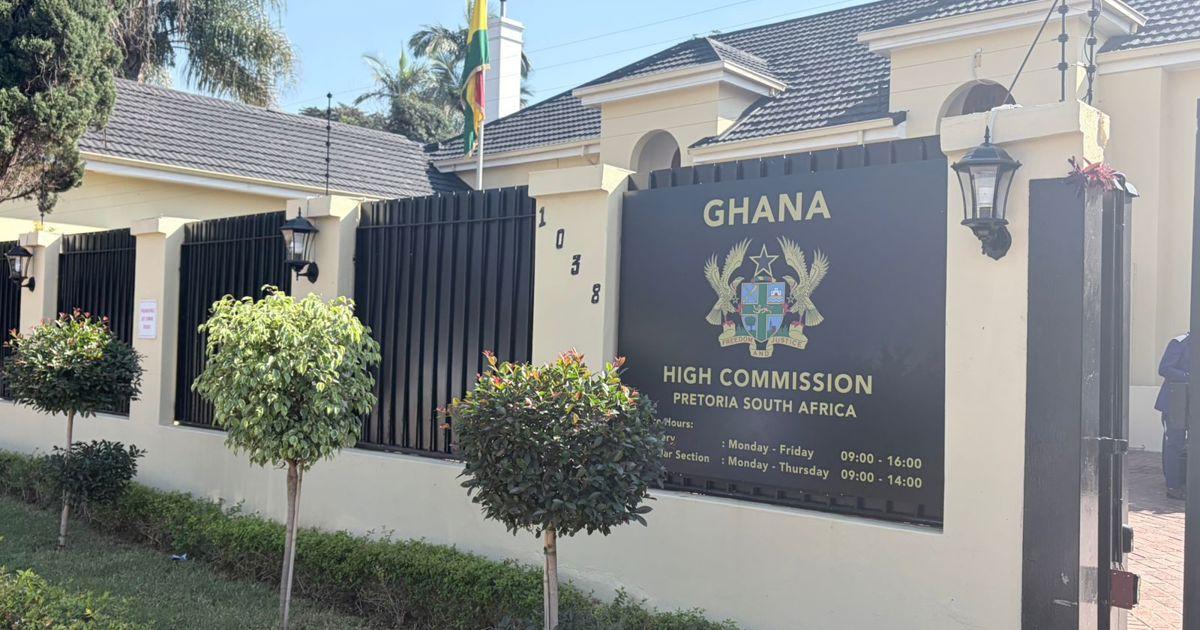
Ghana’s High Commission in Pretoria has accepted responsibility for clerical mistakes affecting the records of 15 of the 1,964 Ghanaians evacuated from South Africa. The mission said dates that appeared to show some beneficiaries being born in the future were actually passport expiry dates mistakenly entered as dates of birth during the transcription of travel-document information. It said the errors did not affect the identities of the evacuees, their eligibility to participate in the evacuation or the reintegration and transportation allowances they received. Corrected records have now been issued, while the High Commission has urged the media and public to rely on the amended information.
Ghana’s High Commission in Pretoria has accepted responsibility for clerical errors affecting the records of 15 people among the 1,964 Ghanaians evacuated from South Africa, explaining that dates which appeared to show some beneficiaries being born in the future were actually passport expiry dates mistakenly entered into the date-of-birth fields. The clarification follows public scrutiny of records connected to the government-funded evacuation exercise and questions over how reintegration and transportation allowances were paid to some beneficiaries whose documented dates initially appeared impossible. In a statement issued on Monday, October 19, the High Commission said its verification established that the affected people were genuine evacuees whose identities and travel documentation had been checked before departure, insisting that the transcription mistakes did not invalidate their eligibility for the evacuation or the allowances they received.
The controversy emerged after a JoyNews analysis of records provided in connection with the evacuation identified entries containing dates that appeared impossible as dates of birth, including years that had not yet arrived. That immediately raised questions about the accuracy of the government’s beneficiary list and whether public funds may have been paid using unreliable information. The High Commission responded after examining the records and said the dates interpreted as future birth dates were in fact passport expiry dates that had been entered incorrectly when officials were transferring information from travel documents into administrative records.
The mission acknowledged that the mistakes occurred on its side and described them as minor clerical errors involving only 15 people out of the 1,964 citizens evacuated. It said the records had been reviewed individually and that corrected information had now been provided so the affected entries could be amended. The High Commission also stressed that the errors were found in the transcription of passport details rather than in the underlying identity of the people who travelled, meaning the mistakes did not create fictitious evacuees or establish that money had been paid to non-existent beneficiaries.
According to the High Commission, every person who left South Africa under the evacuation programme went through identification, data processing and departure formalities before being allowed to travel. Officials therefore argue that the incorrect dates in the administrative list should be understood as data-entry problems that occurred after information from passports was being transcribed rather than as evidence that the evacuees themselves had false identities. The mission said the corrected records confirm the names, actual dates of birth, occupations, passport numbers and passport expiry dates of those affected.
Among the individuals whose records were corrected were James Akoto Baffour, Precious Sekyiwaa, Philip Oduro, Victoria Eduaquah, Prince Obeng Boateng and Ebenezer Losu. Other names included Akua Brifoh, Philimon Opoku Nsiah, Rebecca Agyiwaa Opoku, Emmanuel Ampomah, Rose Pokua, Thomas Nkrumah, Rita Acouah, Rashid Abubakar and David Botwey. The High Commission published the corrected information in an amended list in an effort to demonstrate that each of the 15 people could be matched to valid travel documentation despite the earlier transcription mistakes.
The mission also addressed questions surrounding the Jibril family, explaining that six members of that family, consisting of a mother and five children, travelled using Emergency Travel Certificates rather than conventional passports. The High Commission said those travel arrangements were properly documented in the amended list and should not be interpreted as evidence that the family had travelled without authorised identification. Emergency Travel Certificates are commonly issued by diplomatic missions in circumstances where citizens need to return home but do not possess valid passports or cannot obtain them within the required period.
The distinction between a wrong administrative entry and an invalid identity has become central to the High Commission’s defence because the original records were being used to question whether reintegration and transportation allowances had been paid legitimately. The mission said the 15 affected evacuees were entitled to participate in the evacuation and did receive the approved allowances, arguing that a passport expiry date accidentally placed in the birth-date column does not change the fact that the individual concerned was identified, processed and transported to Ghana.
The explanation does not erase the need for accurate record-keeping, particularly when public funds are involved. Government agencies handling emergency operations are still expected to maintain reliable beneficiary lists because those documents may later be used for financial audits, parliamentary scrutiny and verification of expenditure. Even relatively small transcription mistakes can create significant questions when the affected information includes dates of birth, passport numbers and payments made to individuals.
The High Commission itself appears to recognise that responsibility. Rather than denying that errors occurred, the mission expressly accepted responsibility for the mistakes and provided corrected data. It attributed the errors partly to the emergency and traumatic circumstances under which officials were processing large numbers of distressed Ghanaians who wanted to leave South Africa, but it did not suggest that the pressure surrounding the operation eliminated the need to correct the records once discrepancies were identified.
The evacuation was organised after heightened tensions in South Africa involving undocumented migrants and growing concern for the safety of Ghanaian nationals. Ghana’s diplomatic mission began processing citizens who had requested assistance to return home, with immigration and South African authorities involved in clearing groups for departure. The operation eventually resulted in 1,964 Ghanaians being brought back to Ghana, making it a substantial diplomatic and logistical exercise involving travel documentation, transportation, accommodation, feeding and other emergency costs.
The financial side of the evacuation has since become the subject of political and public scrutiny. Parliamentary figures associated with the opposition have questioned parts of the expenditure and documentation, while government representatives and members of the Majority have maintained that the money used for the exercise is supported by records and can be accounted for. The dispute has included questions about chartered flights, beneficiary numbers, allowances, duplicated entries and other details contained in documents produced by the Ministry of Foreign Affairs.
Earlier this month, the Majority side of Parliament’s Foreign Affairs Committee said it had reviewed documentation supplied by the Ministry covering all 1,964 evacuees and maintained that every beneficiary had been accounted for. According to that account, the Ministry submitted names, dates of birth, passport numbers, occupations, contact information, payment details and signatures, together with supporting documents for chartered flights, commercial airline tickets, transportation, accommodation, feeding and other costs connected with the evacuation.
The same records subsequently came under further scrutiny when analysts identified the apparently impossible birth dates. Those entries became particularly sensitive because an administrative record showing a beneficiary supposedly born years in the future could reasonably prompt questions about whether the underlying person or payment was genuine. The High Commission’s latest statement attempts to answer that specific issue by showing that the dates belonged to passport-expiry fields and were mistakenly placed under birth dates during transcription.
This clarification should therefore be understood narrowly. It addresses the 15 disputed date entries and explains why they appeared impossible, but it does not by itself resolve every separate political or financial allegation that has been raised about the wider evacuation expenditure. Other questions involving flight costs, beneficiary documentation or the overall financial management of the exercise would require their own supporting records and, where necessary, independent audit or parliamentary examination.
That distinction is important because accepting the High Commission’s explanation for the date errors does not require the public to stop scrutinising the evacuation expenditure, just as the discovery of clerical errors does not automatically prove financial wrongdoing. Accurate reporting requires separating confirmed administrative mistakes from broader allegations that remain contested. The High Commission has produced a specific explanation for the future-date problem, while wider claims concerning expenditure continue to form part of a separate public and political debate.
The mission said it respects the role of the media in promoting transparency and accountability and encouraged journalists to contact appropriate official sources when apparent discrepancies emerge. That response follows the publication of the data analysis that originally exposed the questionable entries, meaning the scrutiny itself directly resulted in the records being reviewed and corrected. The High Commission’s position is that verification should accompany such reporting so that errors in official documents are distinguished from evidence of fraud or fabricated beneficiaries.
From an accountability perspective, the episode demonstrates why publishing detailed information about publicly funded emergency operations can be valuable. When beneficiary data and expenditure records are available for examination, inconsistencies can be identified and government institutions can be required to explain or correct them. In this case, the public challenge resulted in an admission that some data had been transcribed incorrectly and the publication of an amended list.
At the same time, the case illustrates why administrative mistakes can become politically significant when large public expenditures are already disputed. A wrong date in an internal document may appear minor when considered on its own, but when the same document is being used as proof that hundreds or thousands of people received public money, errors can undermine confidence in the wider dataset. This makes strong quality-control procedures particularly important before government agencies release lists intended to demonstrate accountability.
The High Commission’s explanation also provides an important technical clue to how the error occurred. Passports normally contain both a holder’s date of birth and a separate expiry date, and officials manually transferring those details into spreadsheets or beneficiary forms can place information in the wrong column if entries are processed quickly. The fact that the questionable dates corresponded with passport expiry dates is consistent with that type of transcription error and gives the mission’s explanation a documentary basis that can be checked against the original passports.
For the 15 individuals concerned, the correction is also important because publication of impossible dates could create the impression that their identities were questionable when the problem was reportedly caused by the administrative process rather than by anything they submitted. The High Commission’s amended records are intended to ensure that their actual personal information is now reflected accurately while preserving confirmation that they participated in the evacuation.
The mission further maintained that the payment of reintegration and transportation allowances to those individuals remains valid. According to its explanation, the allowances were paid to people who had already been identified and processed for evacuation, and the incorrect birth-date fields did not determine whether they qualified for assistance. The High Commission therefore rejects the suggestion that the date discrepancies alone demonstrate that money was given to persons who did not exist or had not travelled.
That defence will likely remain subject to scrutiny because the wider evacuation has become a politically contested issue. Opposition figures have demanded more documentation relating to the use of funds, while government representatives have accused critics of misrepresenting the records. In such an environment, official institutions face additional pressure to ensure that every figure and beneficiary detail released publicly can withstand independent verification.
The total evacuation involved 1,964 citizens, meaning the 15 corrected records account for less than one per cent of all beneficiaries. The High Commission has used that comparison to characterise the problem as limited rather than systemic, but the small proportion does not remove the need for correction. Public institutions are expected to maintain accurate records regardless of whether errors affect a handful of entries or hundreds, particularly where those records relate directly to government spending.
The emergency conditions surrounding the repatriation may help explain why mistakes occurred. Diplomatic officials were processing distressed nationals, coordinating with South African authorities, preparing travel documentation and arranging movement for large groups under time pressure. Some evacuees may also have lacked ordinary passports or required emergency documents, adding another layer of administrative complexity.
However, emergency circumstances and accountability are not mutually exclusive. Governments may need to move quickly to protect citizens during crises, but they must still preserve enough documentation to show who received assistance, what money was spent and whether the expenditure complied with approved procedures. The current controversy is therefore as much about the quality of post-operation documentation as it is about the evacuation itself.
The High Commission has attempted to address that concern by releasing corrected details instead of simply asking the public to accept its explanation without evidence. Providing the actual dates of birth, passport details and expiry dates allows journalists, auditors and other authorised reviewers to compare the corrected records with the underlying travel documents. That approach gives the clarification greater evidential value than a general denial would have provided.
There is also a broader lesson for government data management. Large emergency operations often involve several institutions collecting and exchanging information, which can lead to inconsistencies if each organisation uses different templates or if data are manually re-entered multiple times. Digital systems that transfer information directly from verified identification documents could reduce the risk of dates, passport numbers or names being placed in the wrong fields.
Better data validation could also automatically flag impossible entries before records are finalised. A system designed to recognise that a date of birth cannot be several years in the future, for example, could require an official to review the field before a list is approved. Simple controls of that kind can prevent small clerical mistakes from becoming major public controversies later.
The controversy also highlights the important difference between record integrity and beneficiary eligibility. An inaccurate spreadsheet entry can weaken confidence in administration, but it does not automatically prove that the underlying beneficiary was ineligible. Establishing whether someone legitimately received an allowance requires checking identity, travel records, payment documentation and the rules governing the assistance rather than relying on one incorrect field.
The High Commission says that verification has now been done for the 15 affected cases and that those checks confirmed the individuals were legitimate evacuees. If the underlying passports, Emergency Travel Certificates, flight manifests and payment records correspond with the corrected list, that would support the mission’s argument that the problem was clerical rather than substantive.
Questions about the broader GH¢49.7 million evacuation expenditure remain a separate matter. Government representatives have said the spending is supported by documentation, while opposition figures have continued to demand further scrutiny. Because those competing claims involve a much wider body of records than the 15 corrected birth dates, they should be evaluated independently rather than treating the High Commission’s statement as a final answer to every financial issue surrounding the operation.
The Auditor-General and parliamentary oversight mechanisms may therefore remain important in determining whether the overall expenditure complied with financial rules. An independent review can examine original invoices, payment vouchers, passenger manifests, allowance sheets and supporting documents without relying solely on the political arguments made by either government or opposition representatives.
For the Ministry of Foreign Affairs, the episode creates an opportunity to strengthen confidence by ensuring that amended records are integrated consistently across all versions of the evacuation data. If one official list is corrected while older versions continue circulating, the same discrepancies could repeatedly resurface and create unnecessary confusion. A clearly dated and verified master list would help avoid that problem.
For the media, the case also demonstrates the value of detailed data analysis. The future dates were not discovered because an official volunteered the information but because records were examined closely enough for anomalies to become visible. The resulting questions compelled the diplomatic mission to check its own records and provide a more complete explanation.
The High Commission’s response is therefore not simply a rebuttal of media reporting. It is also confirmation that the original dataset contained genuine mistakes that needed correction. The dispute concerns what those mistakes mean, and the mission’s position is that they arose from transcription rather than fraud, false identities or improper eligibility.
The statement’s acknowledgement of responsibility is significant in that context. Rather than blaming the evacuees or denying that the discrepancies existed, the High Commission said officials may have entered passport expiry dates into the wrong fields. That places responsibility for the inaccurate entries within the administrative process and removes suspicion from the affected individuals unless separate evidence emerges.
The Jibril family clarification follows the same approach. Because the mother and five children travelled on Emergency Travel Certificates, their documentation naturally differed from people using ordinary passports. Recording that distinction accurately matters because an absence of conventional passport numbers could otherwise be misinterpreted as evidence that the travellers were not properly documented.
Emergency Travel Certificates are specifically designed for situations in which citizens need to return home but cannot use normal passports, making their use during an evacuation neither unusual nor inherently suspicious. What matters is whether the certificates were properly issued, linked to the individuals concerned and reflected in the travel records, which the High Commission says was done.
The Pretoria mission has now urged both the media and the public to rely on the verified amended records. It said the corrected information confirms the identity and corresponding travel documents of the affected evacuees and reaffirmed that it remains available to provide additional clarification where necessary.
The mission also defended the broader humanitarian purpose of the evacuation, saying officials were proud of the efforts and sacrifices made to bring distressed Ghanaian citizens home safely. That argument addresses an important part of the context because diplomatic missions have a responsibility to assist nationals facing serious danger abroad, and emergency repatriation operations can involve difficult decisions under rapidly changing conditions.
Humanitarian urgency, however, does not remove the need for financial accountability after the immediate crisis has passed. Once citizens have been brought to safety, authorities must still demonstrate how public resources were used and correct any errors discovered in official records. The High Commission’s acknowledgement is therefore best understood as part of that post-operation accountability process rather than as an attack on the legitimacy of the evacuation itself.
The immediate issue involving the 15 future dates now has a clearer explanation. The High Commission says they were passport expiry dates mistakenly transcribed as dates of birth, has provided corrected details and insists the mistakes had no effect on the identities or eligibility of the evacuees or the allowances they received. That explanation can be checked against the amended records and underlying travel documents, providing a concrete basis on which the specific discrepancy can be assessed.
What remains important is ensuring that the corrected information is incorporated into the official record and that any other discrepancies identified in the larger evacuation dataset are treated with the same level of verification. The credibility of public expenditure records depends not on pretending mistakes never occur but on identifying them quickly, explaining how they happened and correcting them transparently.
For now, the Pretoria mission has accepted that errors were made and has drawn a firm distinction between clerical mistakes and invalid beneficiaries. The 15 affected entries represented passport expiry dates placed in the wrong data fields, according to the mission, while all 1,964 evacuees were subjected to identification and departure procedures before travelling. The wider debate over the financing of the South Africa evacuation will continue, but on the specific question of the impossible future birth dates, the High Commission says the mystery was caused by transcription errors rather than people being paid before they were born.