

GOVERNMENT SUSPENDS ENFORCEMENT OF RULE RESTRICTING PREACHING AND HAWKING IN MOVING VEHICLES AFTER PUBLIC BACKLASH
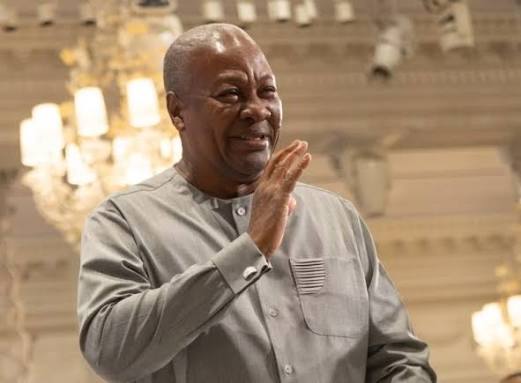
Government has suspended enforcement of Ghana’s rule restricting preaching and hawking in moving public vehicles following public backlash. President John Mahama says there is no blanket ban on preaching in buses: the restriction applies only while the vehicle is moving, and preaching or selling may take place when it is stationary. The regulation remains legally in place while government consultations continue.
The government has suspended enforcement of the controversial road traffic provision restricting preaching and hawking inside moving public and commercial vehicles, following days of public criticism from religious leaders, politicians and sections of the public, even as President John Dramani Mahama insists the regulation has been widely misunderstood. Mahama said the government has not imposed a general ban on preaching in buses or trotros and stressed that the law applies specifically when a vehicle is in motion, meaning religious preaching and selling may still take place when the vehicle is stationary. The suspension pauses implementation while the government holds further consultations, but it does not repeal the underlying regulation, which remains part of Ghana’s road traffic framework.
Speaking publicly on the controversy on Friday, Mahama said the purpose of the restriction was road safety rather than an attempt to suppress religion. He explained that preaching or selling inside a moving vehicle could distract a driver, create unnecessary movement inside the vehicle or expose passengers and the people carrying out those activities to danger. His intervention followed intense debate over Regulation 141 of the Road Traffic Regulations, 2026, L.I. 2519, which classifies certain conduct, including preaching and hawking inside public or commercial vehicles while they are moving, as a nuisance punishable under the regulations.
The president rejected suggestions that his administration had outlawed evangelism in public transport altogether. He said people remain free to preach when buses and trotros are stationary, including at terminals and other appropriate locations, but argued that the same activity should not take place while a vehicle is travelling. The distinction is important because much of the public debate had increasingly described the provision simply as a “ban on preaching in buses,” creating an impression that religious speech had been prohibited regardless of whether a vehicle was moving or parked. The language of the regulation is narrower, applying specifically to public and commercial vehicles while they are in motion.
The government’s decision to suspend enforcement came earlier on Friday after strong public reaction to the renewed attention surrounding the regulation. A senior government source confirmed that implementation had been paused to allow further consideration of the concerns raised by religious bodies and other stakeholders. No date has yet been announced for enforcement to resume, and the government has not indicated whether it intends to amend the wording, reduce the penalties or simply undertake a wider public education campaign before bringing the rule back into active use.
The controversy escalated after attention turned to the penalties contained in the 2026 road traffic regulations. Under Regulation 141, a person who causes or permits a nuisance, including preaching or hawking, on a public or commercial vehicle while it is moving can face a fine of between 10 and 50 penalty units, imprisonment for up to eight months, or both. With a penalty unit currently valued at GH¢12, the fine translates to between GH¢120 and GH¢600. The possibility of imprisonment for an activity that is deeply embedded in Ghana’s public transport culture quickly transformed what had initially been discussed as a road-safety rule into a politically and religiously sensitive national issue.
However, the restriction itself is not entirely new. Ghana’s Road Traffic Regulations, 2012, L.I. 2180, already contained a provision prohibiting a person from causing or permitting a nuisance, including preaching and hawking, on a public or commercial vehicle while it was in motion. The major change under the 2026 regulations is the penalty structure, particularly the increase in the maximum possible custodial sentence. The older regime allowed punishment including a fine and a shorter term of imprisonment, while the revised regulation increases the maximum jail term to eight months. That tougher sanction appears to have brought renewed attention to a restriction that had existed for years but had generally been weakly enforced.
Public preaching in trotros and buses is a familiar part of daily life in Ghana, particularly in Accra, Kumasi and other major cities as well as on intercity routes. Evangelists frequently board buses at terminals, pray for passengers and continue preaching after the vehicle begins its journey, sometimes collecting voluntary offerings before getting off at another stop. Hawkers similarly enter buses or approach passengers with food, medicines, household items and other products. For supporters of these practices, they form part of Ghana’s religious and informal commercial culture, while critics argue that passengers trapped inside moving vehicles should not be forced to endure loud preaching, sales presentations or potentially distracting activity.
Religious opposition became particularly vocal after several pastors portrayed the regulation as a threat to Christian evangelism. Reverend Dr Kwadwo Boateng Bempah of Holy Hill Chapel argued that attempts to prevent preaching inside buses amounted to an effort to silence the church. He insisted that Christians had a responsibility to spread their faith wherever people gathered and questioned why public transport should be treated differently. His comments circulated widely and helped intensify a debate that quickly moved beyond road safety into questions of religious freedom and the role of Christianity in Ghanaian public life.
Assin South Member of Parliament Reverend John Ntim Fordjour also appealed directly to Mahama to abandon the restriction. Fordjour said he had preached in commercial vehicles for years and questioned why evangelists should risk imprisonment for continuing a long-standing form of ministry. He argued that preaching Jesus Christ in buses should not be classified as a nuisance and said he would continue evangelizing in public spaces despite the regulation. His intervention added an explicitly political dimension to the controversy because he is both a legislator and an ordained minister, allowing critics of the government to frame the matter as an unnecessary confrontation with religious communities.
Mahama’s response appears aimed at separating those religious concerns from the actual wording of the regulation. By stressing repeatedly that preaching is permitted when a vehicle is stationary, the president sought to counter claims that the government had introduced a general anti-preaching policy. His position is that the relevant factor is movement rather than the religious content of the message. Under that interpretation, the same rule applies to Christian preaching, Islamic preaching, commercial hawking or other activities identified as nuisances if they occur while a public vehicle is moving.
That explanation also highlights the government’s road-safety rationale. A person standing or moving through the aisle of a trotro or bus can be thrown forward during sudden braking or a collision, particularly where passengers are not using seat belts. Loud preaching or sales pitches may also distract drivers, while hawkers entering and leaving vehicles around congested intersections can expose themselves and passengers to additional danger. Government officials argue that the regulation should therefore be understood alongside wider measures intended to reduce indiscipline and fatalities on Ghana’s roads rather than primarily as a restriction on religious expression.
The revised Road Traffic Regulations form part of a broader attempt to strengthen enforcement across Ghana’s transport system. Authorities have introduced or expanded measures covering speeding, traffic-light violations, vehicle standards, driver conduct and automated enforcement through the TRAFFITECH-GH system. The Motor Traffic and Transport Department recently postponed full implementation of the automated system until November 1 to allow more public education, demonstrating that the government is already adjusting implementation timelines where authorities believe road users need more time to understand new enforcement mechanisms.
The sudden suspension of the preaching and hawking provision has nevertheless raised questions about how government handled public communication before the controversy erupted. Because the underlying restriction has existed since 2012, the issue was not necessarily the creation of a completely new prohibition but the stronger penalties and renewed expectation of enforcement. A more extensive sensitization campaign explaining that distinction may have prevented some of the public reaction, particularly the widespread impression that the Mahama administration had suddenly criminalized preaching in all commercial vehicles.
The government now faces a difficult balance between religious sensitivity, passenger rights and road safety. Ghana’s Constitution strongly protects freedom of religion and expression, and public evangelism is common throughout the country. Those freedoms, however, are not unlimited and can be regulated where legitimate considerations such as safety, public order and the rights of others are involved. The legal question is therefore not simply whether people have a right to preach, but whether the state may reasonably regulate the circumstances in which preaching occurs inside a confined moving vehicle.
Passenger choice is another dimension of the debate that has received less attention. Unlike someone attending a church service voluntarily, passengers travelling to work, school or another destination cannot easily leave a moving vehicle if they do not wish to listen to a sermon or sales presentation. Some passengers welcome the prayers and preaching, while others view them as intrusive. The regulation’s classification of such activity as a potential nuisance reflects that tension, although critics argue that the threat of imprisonment is disproportionate and unnecessarily severe.
Hawking presents similar issues without the same religious dimension. Traders routinely board public vehicles or sell products through windows, particularly in congested areas where vehicles move slowly. For many, this activity provides essential income in an economy where informal employment remains widespread. A strict interpretation of the regulation could therefore affect livelihoods as well as passenger comfort, particularly if enforcement extends to people selling goods while buses move through traffic.
The government’s decision to suspend enforcement gives policymakers time to determine whether the same rule should cover preaching and hawking under identical penalties. Although both may involve movement and distraction, the constitutional and economic considerations differ considerably. Religious preaching raises questions of worship and expression, while hawking is more directly connected to commerce and informal employment. Stakeholders may now press the government to clarify those distinctions when consultations begin.
Transport operators have reacted differently from religious leaders. The Commercial Transport Operators of Ghana criticized the suspension and said operators intended to maintain restrictions against preaching and hawking inside vehicles run by their members. They argue that drivers and transport owners carry responsibility for passengers’ safety and comfort and should therefore be able to prevent conduct they consider disruptive while vehicles are travelling. Their opposition to the government’s retreat demonstrates that the controversy does not divide neatly between the state and the public; significant groups within the transport industry actually favor stricter enforcement.
That position creates a separate issue concerning the rights of vehicle owners and operators. Even if government enforcement remains suspended, a transport company or union may establish its own passenger rules provided those rules are lawful and properly communicated. A bus operator could therefore prohibit preaching or hawking as a condition of travelling on its vehicles even without criminal enforcement under Regulation 141. The government’s suspension does not automatically compel transport operators to allow those activities.
For passengers, the immediate practical effect is less clear. The government has announced that enforcement of the provision is suspended, meaning people should not presently be prosecuted under the newly emphasized rule while consultations continue. At the same time, Mahama’s explanation suggests the administration still believes the underlying safety principle is valid and has not abandoned the idea that preaching and selling should be restricted in moving vehicles. The suspension therefore appears to be a pause for reconsideration rather than a complete policy reversal.
The president’s intervention may also reduce religious tension by clarifying that stationary vehicles remain outside the restriction. At lorry parks, terminals and other locations where buses are not moving, evangelists can continue speaking to passengers under the government’s stated interpretation. The same principle would apply to sellers. The contested activity begins when the vehicle enters traffic.
Whether that compromise satisfies religious leaders remains uncertain. Some pastors object not merely to where evangelism takes place but to the idea that government should determine when the Gospel can be preached. Others may accept the distinction if enforcement focuses narrowly on safety rather than content. The consultation process will therefore have to involve major Christian organizations, Muslim representatives, transport unions, passenger groups, road-safety authorities and possibly constitutional-law experts if the government wants a durable settlement.
Political debate is also likely to continue. Opposition figures can argue that the suspension shows government introduced or promoted a regulation without fully anticipating its public consequences, while government supporters can point out that the prohibition predates the current administration and that Mahama has responded to public concerns by pausing enforcement. Both claims contain elements of the wider political argument, but the legal record remains straightforward: restrictions on preaching and hawking in moving public transport existed under the 2012 regulations, while the 2026 instrument strengthened the penalties.
The controversy also demonstrates how quickly regulatory issues can become cultural disputes in Ghana. What began as a road traffic provision has touched on religion, livelihoods, public transport etiquette, constitutional freedoms and the relationship between government and churches. That complexity explains why a technically straightforward regulation has generated far more attention than many other provisions contained in the same road traffic framework.
Government will now have to decide whether public education alone is enough. If the administration concludes that the rule is necessary but misunderstood, enforcement could eventually resume after a nationwide sensitization program. If officials determine that the eight-month maximum sentence is excessive, an amendment could be considered. Alternatively, authorities could develop administrative guidance encouraging warnings and lesser sanctions before criminal prosecution.
Whatever approach is chosen, clarity will be essential. The current suspension has removed the immediate threat of enforcement but has not erased Regulation 141 or the older legal principle behind it. Without a clear follow-up announcement, drivers, passengers, preachers, traders and police officers could remain uncertain about what conduct is actually permissible and when enforcement might return.
For now, Mahama’s position is that Ghanaians have not been banned from preaching in vehicles. They can preach or sell when a public or commercial vehicle is stationary, but the government maintains that such activities should not occur while the vehicle is moving because of safety concerns. Enforcement of the regulation has nevertheless been suspended after the backlash, giving the administration space to consult stakeholders and determine how, or whether, the strengthened penalties should eventually be applied.
The controversy is therefore not over. Government has stepped away from immediate enforcement without abandoning the underlying road-safety argument, religious leaders have succeeded in forcing the administration to reconsider its approach, and transport operators are openly questioning the decision to suspend a rule they believe protects passengers. The next phase will depend on whether consultations produce an amended regulation, new enforcement guidelines or a decision to maintain the law while introducing a longer public-education period. Until that clarification arrives, the most accurate description is that the restriction remains on the books, but its enforcement has been paused.