
GHANA NOT SEEKING FULL BRICS MEMBERSHIP AS ABLAKWA CLARIFIES PARTNER COUNTRY BID
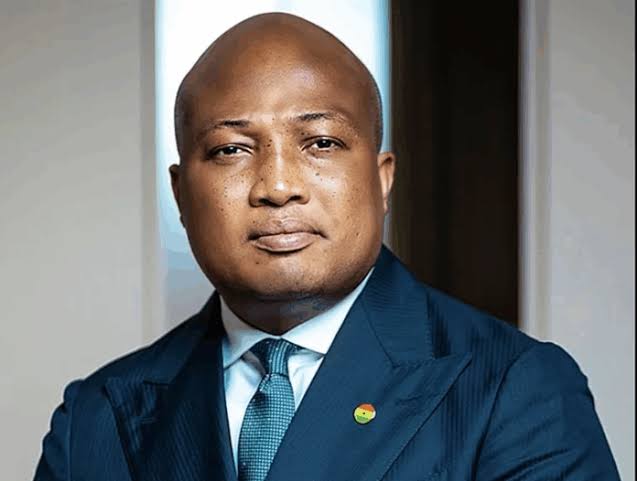
Foreign Affairs Minister Samuel Okudzeto Ablakwa has clarified that Ghana is not seeking full BRICS membership but intends to apply as a Partner Country. He says the move is designed to expand Ghana’s economic and diplomatic options while preserving its non aligned foreign policy and relationships with Western partners. The clarification follows days of domestic debate after earlier government statements were interpreted as a full membership bid.
Ghana is not seeking full membership of BRICS at this stage and will instead apply to join the bloc as a Partner Country, Foreign Affairs Minister Samuel Okudzeto Ablakwa has clarified, drawing an important distinction after several days of political debate over the Mahama administration’s decision to deepen relations with the emerging economies grouping. Ablakwa said the government’s objective is to widen Ghana’s strategic and economic options without committing the country immediately to the responsibilities and political implications associated with full membership.
The clarification comes days after Cabinet approved Ghana’s decision to pursue a closer relationship with BRICS and after Ablakwa initially announced that the country had decided to join the grouping. Those earlier remarks were widely interpreted as meaning Ghana was seeking full membership, prompting concerns from opposition lawmakers, economists and foreign policy analysts who called for Parliament to be briefed on the economic, diplomatic and geopolitical implications. Speaking on TV3 on Saturday, October 10, Ablakwa said the government’s actual intention is to pursue Partner Country status, placing Ghana in a category similar to countries such as Nigeria and Uganda rather than immediately joining the core membership.
Ablakwa said Ghana already maintains strong bilateral relations with several BRICS countries and views the Partner Country arrangement as a practical way of strengthening those ties within a broader multilateral platform. He argued that the decision is rooted in Ghana’s national interest and in the country’s long standing foreign policy tradition of non alignment, which seeks to maintain productive relationships with competing global powers rather than tying Ghana exclusively to one geopolitical bloc.
The BRICS grouping has expanded significantly from its original formation around Brazil, Russia, India, China and South Africa. Its current membership includes major emerging and developing economies such as Egypt, Ethiopia, Iran, Saudi Arabia, the United Arab Emirates and Indonesia, while a separate category of Partner Countries allows additional states to participate in selected BRICS activities without assuming all the obligations associated with full membership.
Partner Country status generally offers access to consultations, meetings and cooperation initiatives involving BRICS members while stopping short of the full political standing enjoyed by core members. For Ghana, that distinction reduces some of the immediate diplomatic risk while still allowing the country to explore opportunities in trade, development finance, technology, agriculture, infrastructure and South South cooperation.
Ablakwa said Ghana’s motivation is not ideological alignment against the West and rejected suggestions that closer engagement with BRICS should be interpreted as a move away from the United States, European Union or other traditional partners. He said Ghana had already engaged some European Union member states before making the decision public and had explained that the move forms part of a broader effort to diversify the country’s international partnerships.
The Foreign Affairs Minister pointed to Ghana’s history of non alignment under former President Kwame Nkrumah as an example of how the country has previously worked with rival global powers while pursuing its own development interests. He noted that Ghana was able to secure American support for the Akosombo Dam while also cooperating with the Soviet Union in developing the country’s early atomic energy programme. The government’s current position is that the same principle should guide Ghana in a more multipolar international environment.
The announcement has nevertheless generated significant political debate. The Minority in Parliament had earlier demanded an urgent briefing from the government after the initial announcement was widely understood to involve full BRICS membership. Ranking Member on Parliament’s Foreign Affairs Committee Samuel Abu Jinapor warned that Ghana should carefully assess both the possible benefits and the potential consequences before committing itself to the bloc.
Jinapor specifically questioned why Ghana could not pursue the Partner Country route used by Nigeria, arguing that the government needed to explain the difference between full membership and alternative forms of engagement. Ablakwa’s latest clarification effectively addresses part of that concern by confirming that the government is in fact seeking the more limited partnership arrangement rather than full membership.
That distinction may reduce some of the immediate political controversy but is unlikely to end debate over the broader strategic direction. Critics have argued that BRICS includes countries whose relationships with the United States and Europe are increasingly confrontational, particularly Russia, China and Iran, and that Ghana must avoid damaging longstanding diplomatic, economic and security partnerships with Western governments.
Supporters of the move argue that Ghana should not limit itself to traditional Western partnerships at a time when global economic power is becoming more dispersed. China and India are already major economic partners for Ghana, while the Gulf states have become increasingly important sources of investment and development financing. Deeper engagement with BRICS could therefore give Accra more options when negotiating trade, infrastructure and development agreements.
The economic attraction is clear. Ghana conducts substantial trade with China and India and continues to seek foreign investment in manufacturing, energy, railways, digital infrastructure, agriculture and pharmaceuticals. The government believes a formal BRICS partnership could provide another platform through which those relationships can be coordinated and expanded.
Ghana has also expressed interest in stronger South South cooperation, particularly in areas where emerging economies have development experiences closer to its own than those of advanced Western economies. Ablakwa has said this could include knowledge transfer, industrial cooperation, agricultural research, digital technology and infrastructure development.
However, Partner Country status does not automatically guarantee investment, financing or access to BRICS institutions such as the New Development Bank. Those opportunities would still require separate negotiations, project approval and compliance with relevant institutional requirements. Ghana would therefore need to convert diplomatic access into concrete economic agreements if the partnership is to deliver measurable benefits.
Economists have also cautioned against treating BRICS engagement as an alternative to domestic reform. Ghana’s debt burden, productivity challenges, foreign exchange pressures and dependence on commodity exports will not disappear simply because the country enters a new diplomatic grouping. Any benefit will depend on whether government can negotiate investments that strengthen production, exports and infrastructure rather than simply adding another source of borrowing.
Professor Godfred Bokpin has argued that Ghana’s engagement with BRICS requires a clear strategy that protects the country’s existing relationships while maximizing the potential gains from emerging partners. His position reflects a wider concern that diversification should expand Ghana’s choices rather than replace one form of dependence with another.
The government appears to share that view publicly. Ablakwa said Ghana is not attempting to choose between East and West and that the country intends to maintain strong relationships with all major partners. He described the BRICS decision as an exercise in strategic diversification rather than a diplomatic realignment.
India is expected to play an important role in Ghana’s application process. Ablakwa announced the BRICS decision during a visit by Indian External Affairs Minister Subrahmanyam Jaishankar and said Accra had sought New Delhi’s support in navigating the process. India is already one of Ghana’s major development and commercial partners, making it a natural bridge between Ghana and the wider BRICS structure.
Ghana may also seek support from South Africa, one of the longest standing members of the group and a major African diplomatic power. Because BRICS decisions are generally made through consensus, successful admission as a Partner Country would require acceptance from the existing members.
The distinction between Partner Country status and full membership is therefore more than a matter of terminology. It changes the level of political commitment Ghana is making and may reduce concerns that the country is entering a bloc often portrayed as a counterweight to Western led institutions. Partner status allows Ghana to participate selectively while preserving greater diplomatic flexibility.
That flexibility is important because Ghana continues to depend heavily on relationships with the United States, European Union, United Kingdom, World Bank and International Monetary Fund. Those partnerships include trade, development support, security cooperation and access to international capital. Any foreign policy shift that unnecessarily damages those relationships could impose significant economic costs.
At the same time, Ghana has legitimate reasons to broaden its options. The rise of China, India, Gulf economies and other emerging powers means international development finance and investment are no longer concentrated entirely in Western institutions. Ghana’s government believes it should be able to engage those newer centers of economic power while maintaining its traditional relationships.
This is the balance Ablakwa is attempting to explain. Ghana is not applying to abandon one geopolitical camp for another. It is seeking a formal partnership with BRICS while remaining outside the bloc’s core membership structure.
The political debate is likely to continue when Parliament resumes because opposition lawmakers have requested a full explanation of the government’s objectives, application process and expected benefits. That scrutiny could focus on whether Ghana will gain access to financing, whether there are conditions attached to partnership status and how the government intends to protect relations with existing partners.
The clarification also corrects an important misunderstanding created by the language used when Cabinet’s decision was first announced. When Ablakwa said Ghana had decided to join BRICS, many reports understandably interpreted that as an application for full membership. His latest statement narrows that position substantially and provides a clearer description of what the government intends to pursue.
For now, Ghana remains outside both the full BRICS membership and Partner Country categories until the application is made and accepted. The government has expressed its intention to apply, but admission is not automatic and will depend on the approval process within BRICS.
The outcome will therefore be determined by diplomacy over the coming months. Ghana will need to convince existing members that its participation strengthens the grouping while also explaining domestically what practical benefits the partnership will deliver.
Ablakwa’s clarification may calm some of the fears surrounding full membership, but it also raises a different standard by which the policy will be judged. If Ghana enters as a Partner Country, the government will need to show that the arrangement produces real trade, investment and development opportunities rather than simply another international label.
The central development is now clear. Ghana is not seeking full BRICS membership at this stage. The Mahama administration intends to pursue Partner Country status as part of a broader foreign policy strategy based on non alignment, diversified partnerships and stronger cooperation with emerging economies, while maintaining relations with the country’s established Western partners.