

GHANA TO PURSUE $393 MILLION TULLOW TAX REVENUE WHILE PROTECTING JUBILEE AND TEN INVESTMENTS
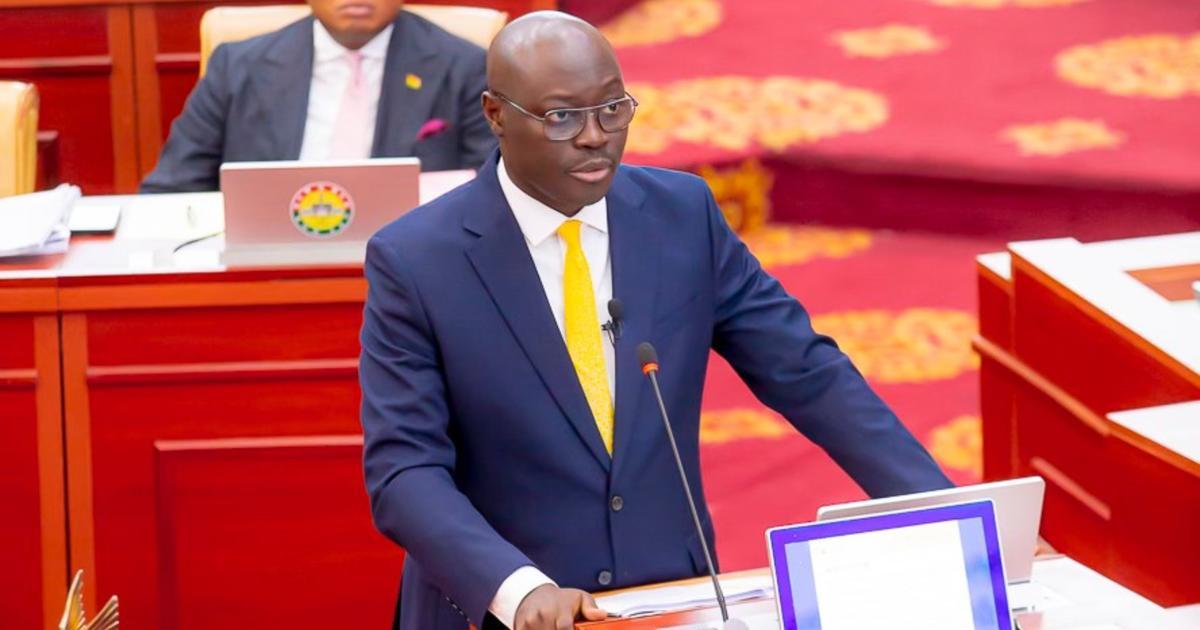
The Government of Ghana says it will move to secure revenues due from Tullow Ghana following its victory in a $393.09 million international tax arbitration while ensuring enforcement does not undermine continued investment and production at the Jubilee and TEN oil fields. Finance Minister Cassiel Ato Forson says the government will work with Tullow to implement the arbitration award under Ghanaian law, balancing the country's revenue interests with the need to preserve the oil producer's ability to continue operating and investing in two of Ghana's most important offshore petroleum assets.
The Government of Ghana says it will pursue revenues due from Tullow Ghana following its landmark victory in a $393.09 million international tax arbitration while seeking to protect continued investment and production at the Jubilee and TEN oil fields.
Finance Minister Cassiel Ato Forson outlined the government's position on Wednesday, September 30, following an International Chamber of Commerce arbitration tribunal's decision to dismiss Tullow's challenge to a Ghana Revenue Authority tax assessment involving business interruption insurance proceeds.
The ruling has shifted attention from whether Ghana's tax assessment was legally valid to a potentially more complicated question: how the government will collect the money while preserving the financial and operational stability of one of the country's most important petroleum producers.
Forson said Tullow remains an important partner to Ghana and acknowledged the company's central position in the country's upstream petroleum industry.
The government, he said, intends to work closely with the company to give effect to the arbitration award in accordance with Ghanaian law.
At the same time, authorities will consider the need to maintain uninterrupted operations at Jubilee and TEN and Tullow's ability to finance the investments required to sustain those fields.
The approach signals that Accra does not intend to treat the arbitration victory simply as an aggressive tax collection exercise.
Instead, the government is attempting to balance two significant national interests: collecting revenue legally due to the state and maintaining investment in petroleum assets that contribute to production, domestic gas supply, employment and government revenue.

GOVERNMENT WANTS THE MONEY BUT ALSO WANTS TULLOW INVESTING
The government's position is particularly important because Tullow is Ghana's largest petroleum producer.
Its operations at the Jubilee and TEN fields form a major part of Ghana's upstream petroleum industry.
The fields contribute crude oil production and gas to the domestic economy while supporting thousands of direct and indirect livelihoods.
That means a substantial deterioration in Tullow's financial ability to invest could have consequences extending beyond the company itself.
Forson said the government intends to ensure that implementation of the arbitration award secures revenue due to Ghanaians while preserving Tullow's ability to remain operational and continue investing in Ghana.
That balancing act could shape how the Ghana Revenue Authority approaches collection of the assessment.
The government says Ghanaian law provides the Revenue Authority with powers to determine the time and manner in which assessed tax liabilities are settled.
That potentially provides flexibility over implementation.
The Finance Ministry has not announced a payment timetable or said whether the entire liability will be collected immediately.
TRIBUNAL UPHELD $393.09 MILLION ASSESSMENT
The government's latest position follows Ghana's victory in arbitration proceedings initiated by Tullow.
The dispute centered on the taxation of business interruption insurance proceeds received by the company.
An arbitral tribunal constituted under the Rules of Arbitration of the International Chamber of Commerce delivered its decision on Tuesday, September 29.
The tribunal dismissed Tullow's claims and upheld in full the Ghana Revenue Authority's assessment of $393,091,993.70.
According to the Finance Ministry, the tribunal determined that the assessment did not breach the Petroleum Agreements governing Tullow's operations.
It also found that the penalty applied by the Ghana Revenue Authority was properly imposed, that the assessment had not been made outside the permitted time period and that enforcement action taken by the authority was lawful.
The decision represented a significant victory for Ghana in a dispute involving one of the country's biggest foreign investors.
Forson said the ruling supported Ghana's longstanding position that companies operating in the country are subject to Ghanaian law regardless of their size.
TALKS WITH TULLOW HAD ALREADY STARTED
Despite the legal confrontation, Ghana and Tullow were already attempting to resolve their outstanding tax disagreements through negotiations before the tribunal announced its decision.
Forson disclosed that discussions between the government and Tullow had begun before the arbitration award was delivered.
Those negotiations are expected to continue.
They will cover the tax issue decided by the tribunal as well as a separate dispute involving the disallowance of loan interest.
The existence of those discussions is important because it suggests both sides are attempting to prevent the tax disputes from damaging their broader commercial relationship.
Tullow has previously stated that it wants to resolve its Ghanaian tax disputes on a mutually acceptable basis.
The government is now indicating that the arbitration victory has not changed its willingness to continue those discussions.
JUBILEE AND TEN REMAIN CRITICAL TO GHANA
The timing of the arbitration ruling is particularly sensitive because Ghana and its petroleum partners are planning further investment in Jubilee and TEN.
The petroleum agreements covering the fields have been extended until the end of 2040 following parliamentary ratification earlier this year.
The extensions provide Tullow and its partners with a longer investment horizon for developing the remaining petroleum resources.
They are also intended to support further drilling and production enhancement.
Tullow has outlined additional investment plans for the fields, including new wells at Jubilee and measures aimed at improving production.
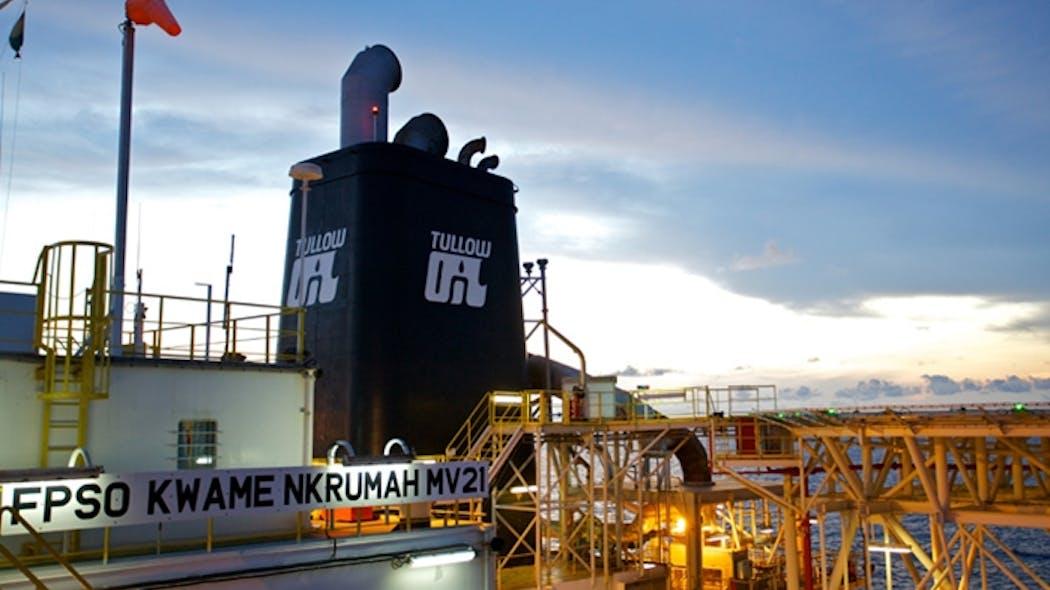
The company is also preparing for the acquisition of the Floating Production Storage and Offloading vessel serving the TEN fields on behalf of the joint venture.
That transaction is expected to involve gross consideration of approximately $205 million, with Tullow's share expected to be funded from TEN cash flow.
The company has argued that taking greater control of the vessel should reduce operating costs over the longer term.
Those investment requirements help explain why the government is emphasizing Tullow's ability to continue operating as a going concern.
Collecting a substantial tax liability while simultaneously expecting the company to finance additional drilling, infrastructure and production enhancement requires careful management.
GHANA HAS A STRONG REVENUE INTEREST
The government's caution over investment does not mean it intends to abandon the tax revenue.
Forson's statement makes clear that Ghana expects the arbitration award to be implemented.
The amount involved is significant.
At $393.09 million, the assessment represents a substantial potential revenue recovery for the state.
The government is under continuing pressure to increase domestic revenue mobilization while managing expenditure and maintaining fiscal stability.
Recovering legally assessed taxes from major corporations therefore carries both financial and political significance.
The arbitration decision also has implications beyond Tullow.
It reinforces the authority of the Ghana Revenue Authority to enforce tax obligations against companies operating under petroleum agreements where those assessments are consistent with Ghanaian law and contractual obligations.
For other companies operating in the country's natural resources sector, the ruling is likely to be studied closely.
WHY GHANA CANNOT IGNORE TULLOW'S FINANCIAL HEALTH
At the same time, the government has strong reasons to avoid creating financial problems severe enough to disrupt Tullow's operations.
Jubilee is one of Ghana's most important producing oil fields.
TEN, which stands for Tweneboa, Enyenra and Ntomme, represents another major offshore petroleum development.
Beyond crude production, the fields are connected to Ghana's domestic gas supply.
Natural gas produced from offshore fields supports electricity generation and reduces the country's dependence on imported fuel.
A serious interruption to production could therefore create consequences for energy supply as well as petroleum revenue.
The government's challenge is to collect what the tribunal has determined is legally due without undermining the assets that are expected to generate additional government revenue for years to come.
That explains the Finance Minister's emphasis on continuity.

GHANA AND TULLOW HAVE RECENTLY DEEPENED THEIR LONG TERM RELATIONSHIP
The arbitration dispute is unfolding alongside a broader effort by Ghana and Tullow to strengthen their long term commercial relationship.
The petroleum agreements covering Jubilee and TEN were recently extended to December 31, 2040.
Revised terms were also agreed for gas supplied from Jubilee.
Tullow and its joint venture partners secured an escalating price beginning at $2.50 per million British thermal units for Jubilee gas through the extended agreement period.
The government and the partners also agreed on a payment security mechanism for gas supplied to Ghana.
Heads of terms have additionally been reached for potential long term gas supplies from TEN.
These agreements demonstrate why neither side is treating the tax dispute as the entirety of the Ghana Tullow relationship.
Ghana wants investment and production.
Tullow wants regulatory certainty and commercially sustainable operations.
But the government also insists that taxes legally due must be paid.
ANOTHER TAX DISPUTE REMAINS
The $393.09 million arbitration does not completely resolve the tax disagreements between Ghana and Tullow.
Separate proceedings involving the disallowance of loan interest remain relevant.
Tullow had previously disclosed a corporate income tax assessment connected to loan interest expenses covering several financial years.
The company challenged that assessment under the arbitration provisions governing its petroleum agreements.
Forson says discussions between the government and Tullow will include both the newly decided business interruption insurance dispute and the separate loan interest matter.
That means the relationship between the parties will continue to involve legal, tax and commercial negotiations even after Ghana's latest arbitration victory.

WHAT HAPPENS NEXT
The most important question now is how the $393.09 million assessment will actually be settled.
The government has not announced an immediate payment deadline or detailed collection schedule.
Instead, it has emphasized cooperation with Tullow and the authority available to the Ghana Revenue Authority to determine how assessed liabilities are settled.
That creates room for a negotiated implementation process.
The eventual structure could prove almost as important as the arbitration decision itself.
Ghana wants to secure the revenue that the tribunal has determined is lawfully due.
But it also wants Tullow to continue financing drilling, production improvements and other investments necessary to maximize the value of Jubilee and TEN.
The government therefore faces a delicate commercial and fiscal calculation.
Collect too slowly and Ghana delays access to substantial public revenue.
Apply financial pressure without regard to Tullow's investment capacity and the country could potentially weaken one of the companies responsible for operating its most valuable petroleum assets.
Forson's statement indicates the government intends to pursue a middle path.
The arbitration has established Ghana's legal position.
The next phase will determine how that legal victory translates into government revenue without undermining the petroleum investments expected to generate additional value for Ghana through 2040.