
GHANA ARMED FORCES CHIEF WARNS GENERALS TO PREPARE FOR EMERGING SECURITY THREATS
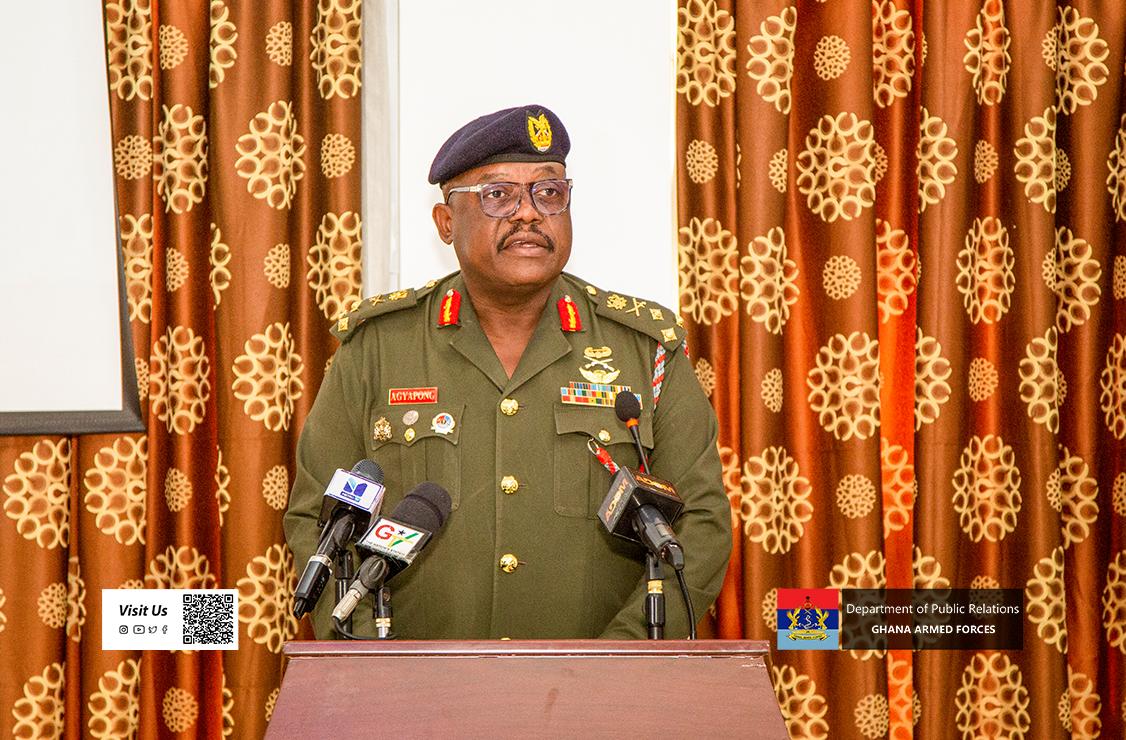
Ghana's Chief of the Defence Staff, Lieutenant General William Agyapong, has urged senior military commanders to anticipate emerging security threats rather than wait to react after they occur, warning that Ghana and the wider West African subregion face an increasingly complex security environment. The warning comes as the Ghana Armed Forces strengthens strategic planning, intelligence coordination and surveillance, including plans for an electronic warfare department in the northern sector as violent extremism, cyber threats, organized crime and instability across parts of the Sahel continue to shape Ghana's security planning.
Ghana's Chief of the Defence Staff, Lieutenant General William Agyapong, has called on the country's senior military commanders to strengthen strategic leadership and prepare for emerging security threats before they develop into crises, as the Ghana Armed Forces reassesses its readiness in an increasingly unstable regional security environment.
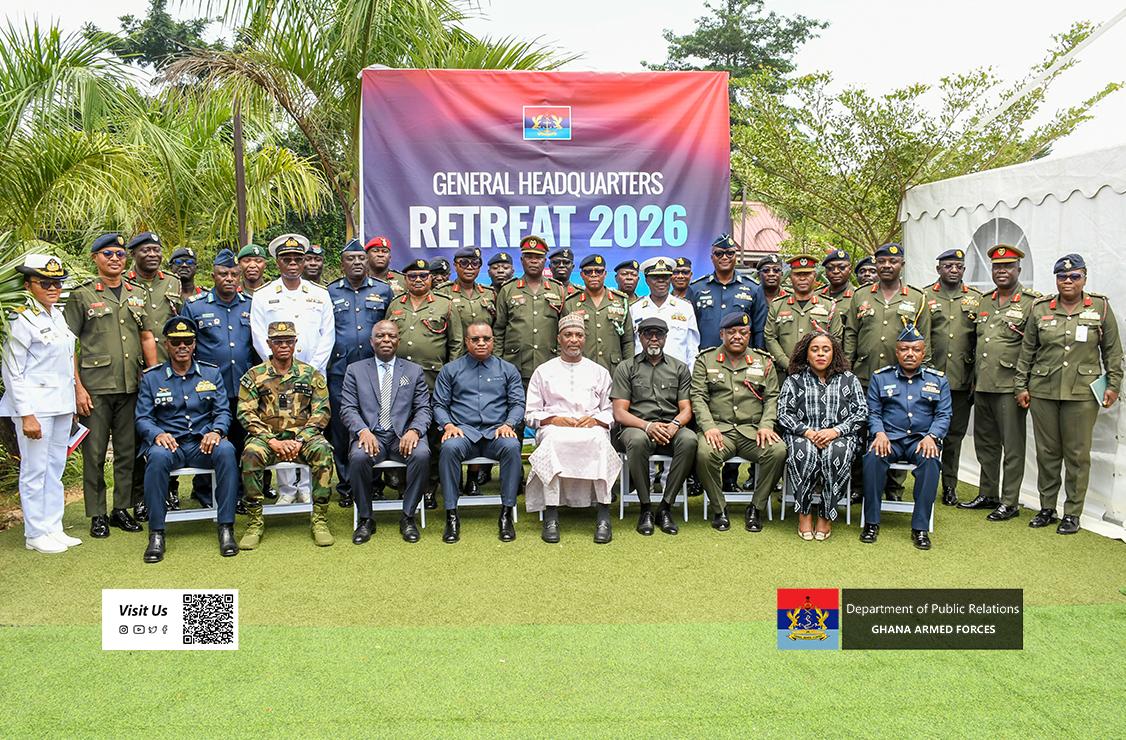
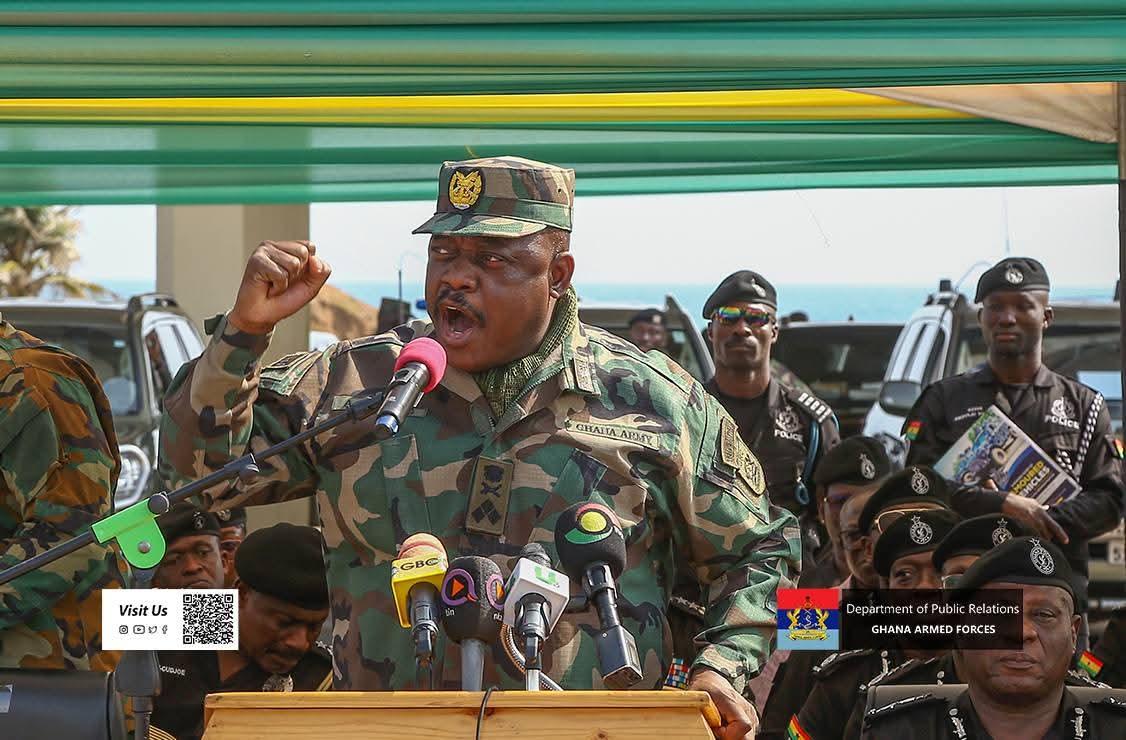
Speaking at the maiden Ghana Armed Forces Generals' Convention in Accra, Lieutenant General Agyapong said the changing nature of security threats confronting Ghana and the wider West African subregion requires military leaders to move beyond reactive approaches and continuously review the strategies used to protect the country.
The convention is being held under the theme, “Adaptive Leadership in a Complex Security Environment: The Role of Generals in Shaping Ghana's Future.”
It brings together some of the most senior officers in the Ghana Armed Forces to examine the country's security environment, assess existing military practices and consider how the armed forces should adapt to emerging challenges.
Lieutenant General Agyapong said military experience remains important but warned that experience alone cannot prepare commanders for threats that are changing in character, technology and geographical reach.
He stressed the importance of learning, adaptation, strategic foresight and cooperation among the Army, Navy and Air Force.
The warning comes at a time when security developments across West Africa are increasingly influencing Ghana's defense planning.
Although Ghana remains relatively stable, violent extremist organizations operating across parts of the Sahel have expanded their activities in recent years, while military authorities are also preparing for cyber threats, transnational organized crime, misinformation, hybrid warfare and maritime insecurity.
COMMANDERS TOLD TO ANTICIPATE RATHER THAN REACT
At the center of Lieutenant General Agyapong's message was a call for military commanders to think ahead.
He said the increasingly dynamic security environment requires the Ghana Armed Forces to continuously examine its policies, strategies and operational approaches to ensure they remain relevant.
The objective is not simply to respond effectively after a threat emerges but to identify potential vulnerabilities early enough for preventive measures to be taken.
That approach is becoming increasingly important for countries along the Gulf of Guinea as insecurity in parts of the Sahel continues to test regional borders and security institutions.
Ghana shares its northern border with Burkina Faso, where armed extremist groups have carried out attacks and expanded their operations.
That geographical reality has made Ghana's northern regions particularly important to the country's national security planning.
The Ghana Armed Forces has repeatedly emphasized the need for vigilance despite the country's relative stability.
ELECTRONIC WARFARE DEPARTMENT PLANNED FOR NORTHERN GHANA
One of the most significant developments disclosed during the convention was a plan to establish an electronic warfare department in Ghana's northern sector.
Chief of the Naval Staff Rear Admiral Godwin Livinus Bessing said the department is intended to strengthen surveillance and provide the military with better capabilities to detect potential threats.
The objective is to improve the Armed Forces' ability to identify suspicious activities early rather than waiting until threats have developed into active security incidents.
Electronic warfare generally involves the use and management of the electromagnetic spectrum for military purposes, including detecting, monitoring and disrupting hostile communications or electronic systems.
Modern conflicts have demonstrated how communications, drones, satellite systems, electronic surveillance and digital networks have become increasingly important alongside conventional military weapons.
For Ghana, strengthening those capabilities could become particularly important in monitoring remote border areas where conventional physical patrols alone may not provide sufficient early warning.
The northern sector has already become an important part of Ghana's security infrastructure.
The government has previously announced the construction of forward operating bases and other measures intended to improve the Armed Forces' ability to respond rapidly to security developments near the country's northern borders.
SAHEL INSTABILITY REMAINS A MAJOR CONCERN
The latest warning from Ghana's military leadership comes against a broader regional backdrop.
Large parts of the Sahel have experienced persistent insecurity involving armed extremist organizations, political instability and weakened state control in some areas.
Burkina Faso, Mali and Niger have faced particularly serious security challenges.
For Ghana and other coastal West African states, the concern is that extremist organizations could expand their networks southward or exploit border communities, illegal trade routes and local grievances.
Ghanaian military authorities have consequently placed increasing emphasis on intelligence, border security and cooperation with neighboring countries.
Lieutenant General Agyapong has previously warned that violent extremist groups operating in the Sahel have become increasingly adaptive and persistent.
Speaking at the Ghana Armed Forces Command and Staff College in July, he said Ghana's security environment had changed significantly and highlighted both violent extremism from the Sahel and maritime criminal activity in the Gulf of Guinea as challenges requiring coordinated responses.
The latest Generals' Convention therefore forms part of a broader effort by the Armed Forces to adapt to those changes rather than an isolated warning.
SECURITY THREATS ARE NO LONGER ONLY CONVENTIONAL
Another important element of the military's changing approach is recognition that future threats may not resemble traditional warfare.
Ghana's security planners are increasingly considering cyberattacks, disinformation, transnational organized crime, terrorism and hybrid warfare alongside conventional military threats.
Earlier this year, Lieutenant General Agyapong warned that the global and regional security environment was becoming increasingly complex.
He identified violent extremism, cyber threats, hybrid warfare, disinformation and transnational organized crime among the challenges requiring the Ghana Armed Forces to remain proactive and forward looking.
The shift reflects developments occurring across militaries worldwide.
Modern national security threats can involve attacks on communications networks, financial systems, government infrastructure and information systems without conventional forces crossing national borders.
Disinformation can also be used to exploit political or social divisions, while criminal networks can operate across several countries simultaneously.
For Ghana's military leadership, preparing for that environment requires changes not only in equipment but also in how commanders think and make decisions.
ARMY, NAVY AND AIR FORCE MUST WORK TOGETHER
Lieutenant General Agyapong also emphasized greater cooperation between the different branches of the Ghana Armed Forces.
He said the modern battlefield increasingly makes purely single service solutions inadequate.
That means the Army, Navy and Air Force must be capable of planning and conducting operations through a coordinated strategic framework.
Integrated military operations allow intelligence and capabilities gathered by one service to support another.
For example, aerial surveillance could provide information to ground forces, while naval intelligence could contribute to identifying transnational networks operating between maritime and land routes.
The Armed Forces has increasingly emphasized such joint planning as security threats become more complex.
The Generals' Convention provides senior commanders with an opportunity to examine how effectively that cooperation is functioning and identify weaknesses before they become operational problems.
INTELLIGENCE AND CLASSIFIED INFORMATION AMONG KEY ISSUES
The convention is also examining how the Ghana Armed Forces manages intelligence and classified information.
Other areas under discussion include military justice, ethical leadership, command experience, retirement and release procedures and contemporary military administration.
The discussions are designed to allow senior officers to assess whether existing military systems remain appropriate for the security challenges Ghana may face in the coming years.
Lieutenant General Agyapong said the gathering was not intended to teach experienced generals subjects they already understand.
Instead, it provides a forum where senior commanders can exchange experiences, challenge existing assumptions and consider whether current military practices remain effective.
The Director General of Training of the Ghana Armed Forces, Brigadier General William Kwabiah, also stressed the importance of cooperation among senior commanders.
He said interaction through the convention could strengthen teamwork while exposing military leaders to perspectives from outside the Armed Forces.
That civilian perspective is particularly important because Ghana's military operates under civilian constitutional authority.
GHANA HAS BEEN STRENGTHENING NORTHERN DEFENSES
The military's focus on emerging threats is also reflected in investments already underway.
Earlier this year, President John Dramani Mahama announced that two forward operating bases in Ghana's northern sector had been completed, with funding provided for four additional facilities.
Forward operating bases can provide military units with positions closer to areas of potential concern, reducing the time required to deploy personnel and equipment when an incident occurs.
The government has also pledged to modernize and better equip the Ghana Armed Forces.
Those investments are particularly relevant as the country seeks to prevent instability elsewhere in the region from spreading across its borders.
The emphasis remains prevention rather than responding after an attack.
GHANA REMAINS STABLE BUT MILITARY WARNS AGAINST COMPLACENCY
Ghana has not experienced the scale of extremist violence affecting several countries farther north.
That relative stability is significant.
However, Ghanaian military commanders have repeatedly warned that stability should not lead to complacency.
At an Army Unit Commanders' Convention in August, senior commanders were similarly urged to adopt a proactive approach to security and strengthen operational readiness.
The military identified terrorism, violent extremism, organized crime, cyber threats, misinformation and other transnational challenges as issues requiring continuous vigilance.
The message from the Generals' Convention extends that responsibility to the Armed Forces' highest levels of command.
Senior military leaders are being asked not only to manage the forces currently under their authority but also to anticipate the types of threats Ghana could face in the future.
WHAT HAPPENS NEXT
The immediate focus will be on how the strategic discussions at the Generals' Convention translate into operational changes.
The proposed electronic warfare department in the northern sector will be particularly important to watch because it represents a concrete attempt to improve early warning and surveillance capabilities.
Further development of forward operating bases, intelligence sharing, technology acquisition and cooperation between the Army, Navy and Air Force will also provide indications of how Ghana is adjusting its security posture.
The challenge for military planners is to strengthen preparedness without assuming that instability elsewhere will inevitably reach Ghana.
Security conditions vary considerably across West Africa, and Ghana continues to maintain functioning state institutions and a relatively stable internal environment.
But the country's proximity to areas experiencing violent extremism means developments beyond its borders cannot be ignored.
Lieutenant General Agyapong's message to Ghana's generals is therefore centered on preparation.
The Ghana Armed Forces does not want its senior commanders waiting for a crisis before deciding how to respond.
It wants them considering the threat before it arrives.