GHANA HEALTH SERVICE LAUNCHES NATIONWIDE SCHOOL HPV VACCINATION DRIVE AS TWO INTENSIFIED ROUNDS TARGET GIRLS AGED 9 TO 14
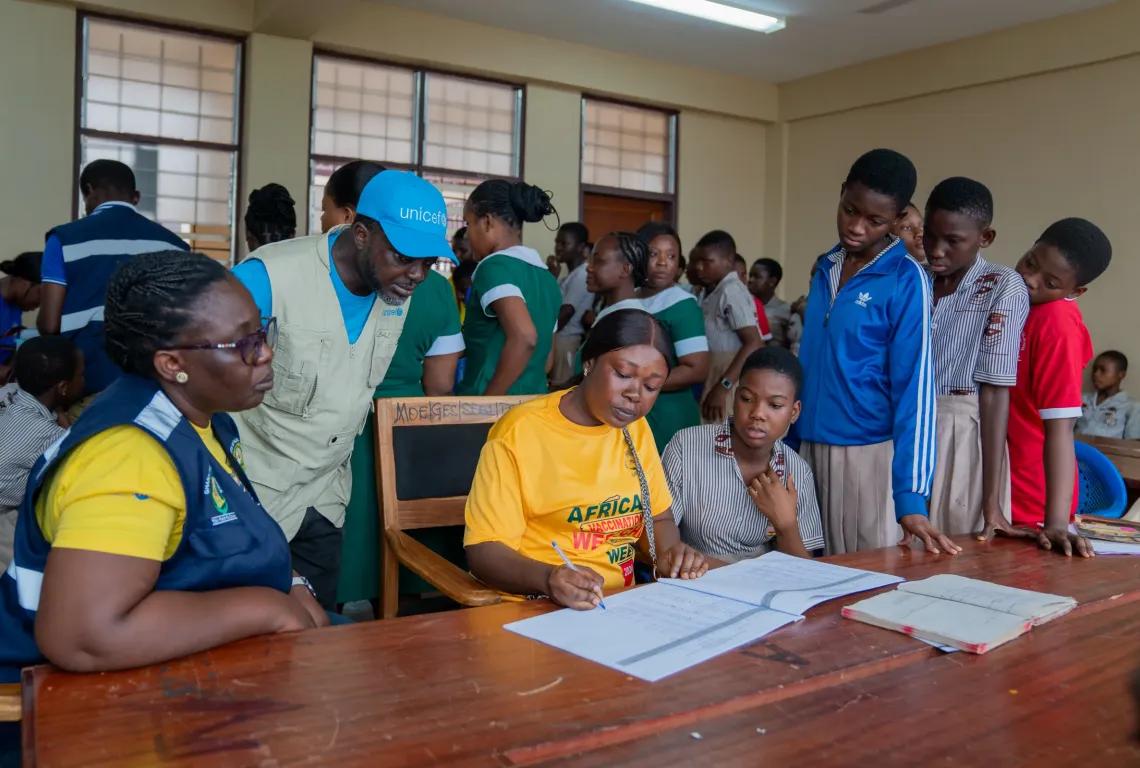
The Ghana Health Service, in collaboration with the Ghana Education Service and its partners, has launched two intensified nationwide rounds of HPV vaccination in schools to improve routine immunisation coverage. Health workers will visit schools from October 19 to October 23 and again from November 30 to December 4, targeting eligible girls aged nine to 14 who have not yet received the vaccine. The exercise is intended to reach children missed during previous vaccination activities and strengthen Ghana’s long-term cervical cancer prevention programme.
The Ghana Health Service, working in partnership with the Ghana Education Service and other health partners, has launched two rounds of intensified Human Papillomavirus vaccination in schools across the country as part of a renewed effort to improve routine immunisation coverage and protect more girls against cervical cancer and other diseases linked to HPV infection. The exercise forms part of the Periodic Intensification of Routine Immunisation programme and will focus on eligible girls aged nine to 14 who have not yet received the HPV vaccine.
The first round of the nationwide school vaccination exercise is scheduled to run from Monday, October 19, to Friday, October 23, 2026, while a second round will take place from Monday, November 30, to Friday, December 4, 2026. During those periods, health workers are expected to visit schools across Ghana to identify eligible girls, provide information about the vaccine and administer doses to those who have not previously been vaccinated.
The initiative is not the introduction of a completely new vaccine campaign. Ghana already incorporated the HPV vaccine into its national immunisation strategy after a major nationwide rollout in 2025, when millions of girls aged nine to 14 were targeted. The current 2026 exercise is designed to strengthen routine uptake, reach girls who were missed during previous campaigns and prevent gaps in protection as new children enter the eligible age group.
The Ghana Health Service says the intensified school-based approach is necessary because routine vaccination programmes can lose coverage when children miss appointments, change schools, move between communities or are absent when health teams visit. By conducting concentrated vaccination rounds in schools, health officials hope to reach larger numbers of eligible girls within a short period while also using teachers and school administrators to help identify those who have not yet been vaccinated.
The exercise is being implemented through collaboration with the Ghana Education Service and the School Health Education Programme. This allows health teams to work directly through schools rather than depending entirely on parents and guardians to take children to health facilities. School-based vaccination has become an important public health strategy because a large proportion of girls in the nine-to-14 age group can be reached in a structured environment where attendance records and class lists are available.
The Ghana Health Service is also encouraging parents, guardians, teachers, school heads, community leaders and other stakeholders to cooperate with vaccination teams. Health authorities say public participation will be important because misinformation and uncertainty about the HPV vaccine can reduce uptake even when vaccines are physically available in schools and health facilities.
HPV vaccination is primarily intended to protect girls before they are exposed to the human papillomavirus later in life. HPV is a common group of viruses, and some high-risk types can cause changes in cervical cells that may eventually develop into cervical cancer. Vaccinating girls before exposure significantly reduces the risk of infection from the HPV types most strongly associated with cervical cancer.
The public health importance of the vaccine is considerable because cervical cancer remains one of the major cancers affecting women globally and in many African countries. Prevention strategies usually combine HPV vaccination, cervical screening and early treatment of abnormal cells. Vaccination is particularly important because it can prevent infection before the chain of disease begins.
Ghana’s decision to target girls aged nine to 14 follows international recommendations that HPV vaccination should be delivered before most girls become exposed to the virus. The school system therefore provides one of the most practical routes for reaching the target population at the appropriate age.
The Ghana Health Service has emphasised that the current campaign is focused on girls who have not yet received the vaccine. This means the intensified rounds are not intended to unnecessarily repeat vaccination for those who have already been properly immunised under the routine programme. Health teams are expected to use available vaccination records and school information to determine eligibility.
Parents who are uncertain about whether their daughters have previously received the vaccine are expected to work with health workers and school authorities to confirm their status. Vaccination cards and health records can help prevent duplication and ensure that children who were genuinely missed are prioritised.
The two-round structure is also intended to reduce the chances that eligible girls remain unvaccinated because they happened to be absent during one particular school visit. A child who misses the October round may still be reached during the November and December exercise, while district health teams can continue routine vaccination outside the concentrated campaign periods.
The Ghana Health Service says the exercise should strengthen routine immunisation rather than replace it. That distinction is important because the long-term objective is to make HPV vaccination a normal part of adolescent preventive health care instead of relying only on occasional mass campaigns.
Routine integration means health facilities and school health programmes will continue identifying eligible girls after the intensified rounds have ended. The October and November campaigns are therefore meant to close existing gaps and accelerate coverage while the broader vaccination programme continues throughout the year.
The current exercise follows Ghana’s major HPV vaccine introduction in October 2025. At that time, approximately 2.5 million girls aged nine to 14 were targeted for vaccination nationwide. The rollout represented one of the country’s largest adolescent vaccination campaigns and marked an important expansion of Ghana’s preventive health programme.
The 2025 introduction also brought significant public education efforts because HPV vaccination differs from many childhood vaccines that parents are already familiar with. Health officials had to explain why the vaccine is given before adulthood, how it prevents cervical cancer and why vaccinating girls at a young age does not relate to encouraging sexual activity.
Misinformation became one of the major challenges surrounding the rollout. Some parents expressed fears that the vaccine could cause infertility or other serious health problems. Ghanaian health officials repeatedly rejected those claims and explained that HPV vaccines have been used internationally for many years with extensive safety monitoring.
The World Health Organization has continued reviewing HPV vaccine safety as countries expand access. In its 2026 global safety update, the organisation reported that no new safety concerns had emerged from large studies and ongoing monitoring. That evidence supports the continued use of HPV vaccines as an important cancer-prevention measure.
Health workers in Ghana have also been working directly with communities to address misinformation. Public health nurses, community health officers and vaccination teams have used schools, health facilities, radio discussions, community meetings and engagements with traditional and religious leaders to explain how the vaccine works.
The Western North Region provides a useful example of why intensified outreach remains necessary. Between May and August 2026, 1,823 girls received the HPV vaccine in the region, representing only 14.3 per cent of the annual regional target of 12,721 girls during that period. Health authorities found that reaching children outside the school system was particularly important because hundreds of vaccinated girls were identified through community outreach rather than school visits.
That experience demonstrates both the strength and limitation of a school-based strategy. Schools make it easier to reach large numbers of children efficiently, but not every girl aged nine to 14 is enrolled or attends regularly. Girls who have dropped out of school, live in remote communities or are temporarily absent can still be missed if vaccination depends entirely on classrooms.
For that reason, Ghana Health Service teams are expected to continue community-level outreach alongside school visits. Health facilities, mobile teams and local health workers can help identify girls who are outside the formal education system and ensure that vaccination coverage does not depend solely on school enrolment.
This equity issue is important because children who are hardest to reach often face other disadvantages as well. Rural families may live far from clinics, some communities may have limited transport, and certain households may not receive health information as quickly as families in urban areas. A successful nationwide programme therefore has to combine school access with community outreach.
The Ghana Health Service’s partnership with the Ghana Education Service is intended to improve coordination. Teachers can help identify girls within the correct age group, distribute information to parents and guardians and organise students when vaccination teams arrive. School heads can also help ensure that health workers have appropriate spaces to conduct the exercise safely and with privacy.
School Health Education Programme structures are expected to play an important role because they already operate at the intersection of education and public health. SHEP has experience supporting health education, disease prevention and student wellbeing within schools, making it a practical channel for HPV vaccination mobilisation.
Health officials are also expected to monitor uptake during the campaign. Data from schools and districts can identify areas where vaccination numbers remain low and allow teams to concentrate follow-up efforts in those communities during the second round.
This data-driven approach is particularly useful because national averages can hide large differences between districts. One region may achieve high vaccination coverage while another remains far behind because of access barriers, misinformation or weak mobilisation.
The government’s broader immunisation strategy is increasingly focused on maintaining coverage while vaccine programmes expand. Ghana already administers vaccines against multiple childhood diseases, and the addition of adolescent vaccines such as HPV increases the complexity of the system.
That complexity is one reason Ghana, with support from the World Health Organization and UNICEF, has been reviewing how vaccines are prioritised, scheduled and financed. As more vaccines become available, health authorities must ensure that new programmes do not weaken existing immunisation services or create unsustainable financial pressure.
The HPV programme is especially significant because it represents a shift beyond the traditional infant vaccination model. Many national immunisation systems were originally designed around babies and very young children. Reaching adolescents requires different strategies because older children are less likely to visit health facilities regularly for routine vaccination.
Schools therefore become a critical health-delivery platform. They allow vaccination teams to reach an age group that may otherwise have little regular contact with the health system.
The campaign also provides opportunities for broader health education. Nurses and health educators can explain cervical cancer prevention, personal hygiene, healthy behaviour and the importance of seeking reliable medical information rather than depending on rumours circulating online.
For young girls, the conversation can also help normalise preventive health care. Instead of waiting until illness develops, vaccination teaches the importance of taking steps early to reduce future disease risk.
Parents remain central to that process. Even when vaccination is offered at school, parents and guardians often influence whether children participate. Health authorities therefore need to provide clear information about the benefits, possible side effects and purpose of the vaccine.
Common short-term reactions to vaccination can include pain or swelling at the injection site, headache, tiredness or mild fever. Health workers generally observe students after vaccination and advise families to seek medical assistance if any unusual or severe reaction occurs.
Fear of side effects can sometimes spread faster than accurate medical information, particularly when isolated personal stories circulate on social media without clinical verification. Public health officials therefore have to respond quickly and transparently whenever concerns arise.
Trust is especially important in a nationwide school programme. Parents are more likely to cooperate when they understand which vaccine is being administered, who is eligible and why health authorities recommend it.
The Ghana Health Service’s statement therefore called on school authorities, parents, guardians, teachers and community leaders to support the exercise. The Service said cooperation with health teams would help ensure the campaign succeeds and that eligible girls receive protection.
Health authorities have also stressed that HPV vaccination does not replace cervical cancer screening later in life. Women should still participate in appropriate screening programmes because vaccination greatly reduces risk but does not eliminate every possible cause of cervical cancer.
The combination of vaccination and screening offers the strongest prevention strategy. Vaccination reduces the likelihood of infection with high-risk HPV types, while screening can detect abnormal cells before they develop into advanced cancer.
For Ghana, expanding vaccination could have significant long-term implications for the health system. Treating advanced cancer is expensive and places pressure on hospitals, families and patients. Prevention can reduce future treatment costs while avoiding deaths and disability.
Cervical cancer can also affect women during economically and socially productive years, meaning the consequences extend beyond individual health. Families can lose income, children may lose caregivers and health facilities may face demands for specialised cancer treatment.
This is why global health agencies increasingly describe HPV vaccination as an investment rather than simply another immunisation expense. The cost of vaccinating girls today can prevent much larger medical, social and economic costs decades later.
Ghana’s programme also supports the World Health Organization’s global strategy to eliminate cervical cancer as a public health problem. That strategy depends heavily on high HPV vaccination coverage among girls, improved screening among adult women and access to treatment for people diagnosed with precancerous or cancerous disease.
Reaching high national coverage will require sustained effort beyond the two 2026 vaccination rounds. Girls age into the target group every year, meaning the health system must continue vaccinating new cohorts even after the initial catch-up population has been reached.
The long-term success of the programme will therefore depend on whether HPV vaccination becomes a normal and trusted part of Ghana’s routine health system.
Health workers will need reliable vaccine supply, cold-chain equipment, transport, trained personnel and accurate record keeping. Schools will need continued cooperation, and communities will need regular health education.
Funding will also remain important. Vaccination programmes can be supported by international partners during introduction, but governments eventually need sustainable systems capable of financing routine delivery.
Ghana has been strengthening its national vaccine decision-making process partly because international health financing is changing. As countries develop economically, some external support may decline, requiring governments to assume a larger share of vaccine costs.
Sustainability therefore matters just as much as successful campaign days. A country can achieve high coverage during a heavily funded national launch and then lose progress if routine services weaken afterwards.
The 2026 intensified rounds are intended to prevent that kind of decline by identifying missed girls and restoring momentum where routine uptake remains below target.
Monitoring after the campaign will show whether the strategy works. Health officials will be able to compare coverage before and after the October and November rounds and determine which regions still require additional outreach.
If some districts remain far behind, targeted community campaigns may be needed instead of repeating identical nationwide strategies.
Community leaders can help in areas where vaccine hesitancy remains strong. Chiefs, religious leaders, assembly members and respected local figures can influence public confidence, particularly when misinformation is rooted in fear rather than evidence.
Teachers can also become trusted messengers because parents already rely on schools for information about their children. However, teachers should not be expected to answer specialised medical questions beyond their training. Health professionals must remain available to provide accurate clinical guidance.
The role of the media is equally important. Responsible reporting should explain what the HPV vaccine prevents, who is eligible and where the campaign is taking place without exaggerating risks or repeating unsupported claims.
Stories about vaccination should also avoid stigmatising parents who ask questions. Hesitation can often be reduced through respectful information rather than confrontation.
The Ghana Health Service’s current campaign is therefore as much an information exercise as a vaccination exercise. Increasing awareness is one of the stated objectives alongside improving uptake.
Health teams are expected to explain that HPV infection is common, that certain strains can cause cervical cancer and that vaccination works best when given before exposure.
The campaign also offers an opportunity to correct the misconception that HPV vaccination is relevant only to people who are already sexually active. The entire purpose of targeting younger girls is to provide protection in advance.
The government’s decision to use two concentrated rounds gives schools and families another opportunity to participate if they miss the first period. The October 19 to October 23 round begins immediately, while the November 30 to December 4 round provides a second nationwide opportunity before the end of the year.
Parents should therefore pay attention to communication from their daughters’ schools and local health authorities during both periods.
Girls who are not currently enrolled in school should not be assumed to be excluded from the national programme. Community health teams and health facilities remain important channels for reaching eligible children outside the classroom.
The success of the campaign will ultimately depend on whether Ghana can reach those girls who are easiest to miss. Vaccinating students in well-organised urban schools may be relatively straightforward, but national protection requires reaching children in remote communities, informal settlements and households with limited access to health information.
This is where district-level planning becomes critical. Local health teams understand which schools have low participation, which communities are difficult to access and which populations may require additional engagement.
The national campaign provides the framework, but implementation will depend heavily on regional and district health directorates working with education officials.
Accurate records will also be essential because routine vaccination programmes rely on knowing who has already received the vaccine. Poor documentation can result in missed children or unnecessary confusion over eligibility.
Digital health records may eventually strengthen tracking, but paper vaccination cards and school registers remain important in many communities.
Parents should therefore keep vaccination documentation safely and make it available when health workers request confirmation.
The intensified HPV vaccination campaign also demonstrates how Ghana’s education system is increasingly being used to support public health objectives. Schools already participate in nutrition programmes, health education, deworming and disease-prevention initiatives.
Adding routine adolescent vaccination strengthens that relationship between the education and health sectors.
That cooperation can deliver significant benefits because children spend a large portion of their time in school. Health interventions delivered through schools can reach families that might otherwise have limited interaction with formal health services.
However, school-based health programmes must be carefully organised to avoid disrupting learning. Vaccination teams need to work efficiently with teachers so that eligible students are identified, vaccinated and monitored without creating unnecessary interruption to classes.
The Ghana Education Service’s participation should help coordinate schedules and communication between schools and health workers.
The programme also comes at a time when global immunisation authorities are warning that vaccine coverage cannot be taken for granted. Conflict, misinformation, health-system pressure and funding constraints have caused gaps in childhood immunisation in several countries.
WHO and UNICEF reported in 2026 that global vaccination coverage had improved only gradually and that millions of children still miss essential vaccines.
Ghana’s decision to conduct periodic intensified vaccination can therefore be seen as a preventive strategy against similar coverage gaps.
Rather than waiting for low uptake to become a major national problem, health authorities are attempting to identify missed children and catch them up through targeted campaigns.
The approach is particularly appropriate for HPV vaccination because the health benefits may not become visible for many years. A successful programme today may reduce cervical cancer cases decades from now.
That long time horizon can make prevention politically and socially challenging because the benefits are less immediately visible than treating an outbreak or responding to an emergency.
Public health authorities must therefore communicate the value clearly. The absence of disease later in life is itself the result the programme is designed to produce.
For Ghanaian families, the immediate decision is much simpler. Girls aged nine to 14 who have not yet received the HPV vaccine are the target of the current exercise, and health workers will be visiting schools nationwide during the announced campaign periods.
Parents who have concerns should speak directly with qualified health professionals rather than relying on unverified social media messages.
School authorities are also being encouraged to cooperate fully with the visiting teams and help ensure that eligible girls are available when vaccinations are administered.
The October and November rounds will provide an important test of how well Ghana has transitioned from its initial HPV vaccine introduction into sustained routine delivery.
If participation improves significantly, the country will move closer to establishing strong population-level protection against the HPV types that cause most cervical cancer cases.
If large numbers of girls remain unvaccinated, health officials will need to investigate whether the main barriers are misinformation, access, weak school mobilisation or gaps in routine health services.
Either way, the campaign will generate information that can shape future policy.
For the Ghana Health Service, the goal extends beyond completing two five-day vaccination rounds. The larger objective is to ensure that HPV vaccination becomes dependable, routine and accessible to every eligible girl regardless of where she lives or whether she attends school regularly.
That ambition will require continued partnership between the health and education sectors, local communities, parents and international health organisations.
The October 2026 campaign therefore represents another stage in Ghana’s longer-term cervical cancer prevention strategy. The country has moved from initial nationwide introduction to routine vaccination and is now using intensified school outreach to identify and protect girls who may have been missed.
The immediate message from health authorities is clear. Eligible girls aged nine to 14 who have not yet received the HPV vaccine should be reached during the October 19 to 23 exercise or the second round from November 30 to December 4, while schools, parents and communities are being asked to support health teams throughout the nationwide rollout.
If Ghana succeeds in maintaining high vaccination coverage across successive generations of girls, the impact will extend far beyond the classrooms where the injections are given. It could reduce cervical cancer deaths, lower future treatment costs and protect thousands of women from a disease that public health officials increasingly believe can be prevented on a large scale through vaccination, screening and early intervention.