
GHANA CUTS FUEL EXPORTS TO BURKINA FASO AND MALI TO PROTECT DOMESTIC SUPPLY
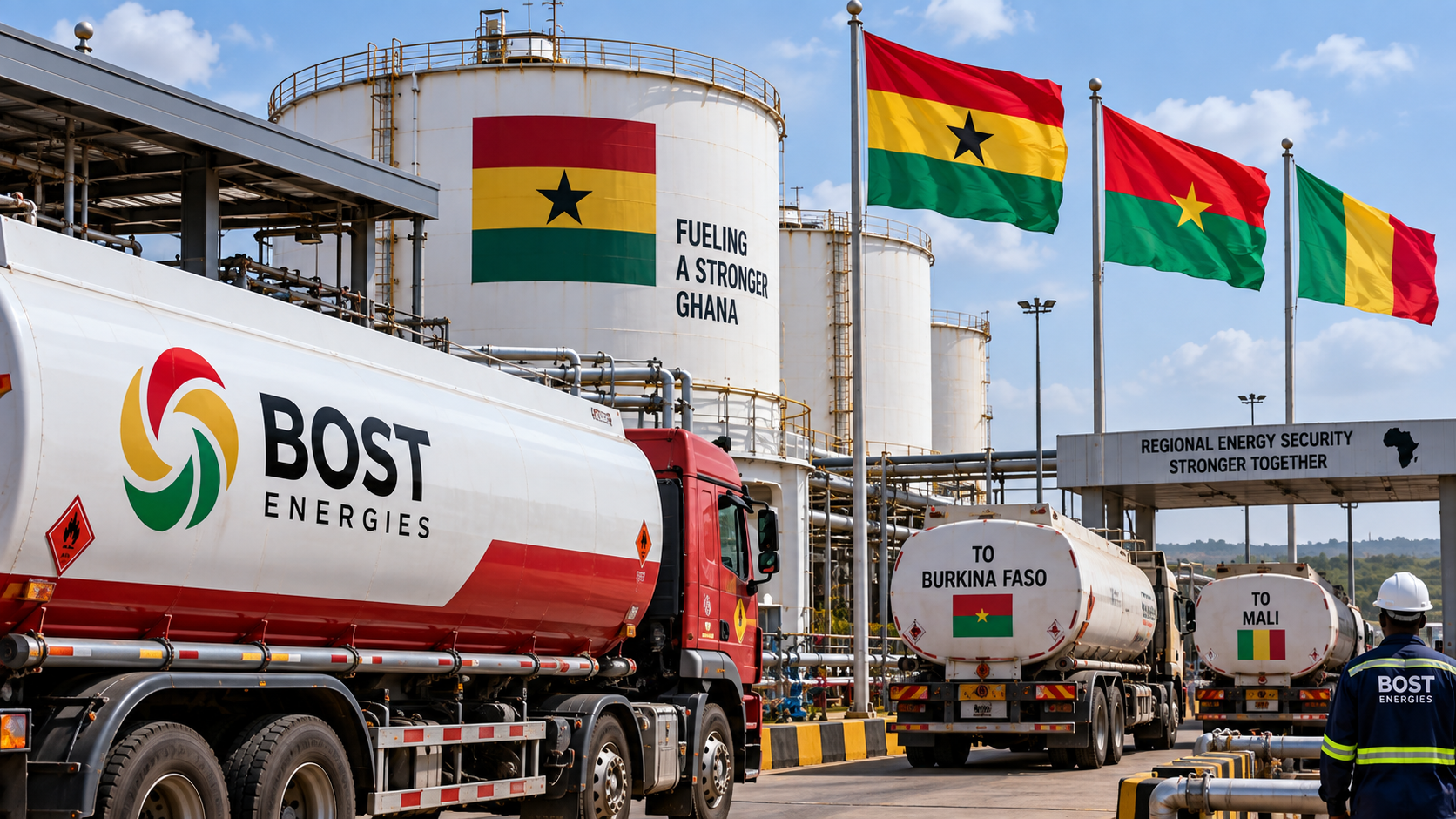
Ghana's state owned BOST Energies has reduced diesel and gasoline exports to Burkina Faso and Mali as it prioritises domestic fuel supply. Burkina Faso received about 40,000 metric tonnes from an 80,000 tonne request for July and August, while Mali received 10,000 tonnes as tighter global markets and rising Ghanaian demand put pressure on supplies.
Ghana's state owned fuel distributor BOST Energies has reduced diesel and gasoline exports to Burkina Faso and Mali as it prioritises domestic supply amid rising local demand and tighter global energy markets.
BOST Managing Director Afetsi Awoonor said the company has reduced shipments to the two neighbouring countries since August as higher international fuel costs and growing consumption place additional pressure on supplies in Ghana.
The decision is significant for Burkina Faso and Mali because both landlocked Sahel countries rely heavily on fuel transported through coastal West African countries including Ghana and Côte d'Ivoire.
BURKINA FASO RECEIVES HALF OF REQUESTED SUPPLY
Burkina Faso requested 80,000 metric tonnes of fuel from BOST for July and August, but the Ghanaian company was able to supply approximately 40,000 tonnes.
Mali received about 10,000 tonnes during the same period. Awoonor said Mali had also requested an additional 40,000 tonnes for August and September.
The figures relate specifically to supplies requested from BOST and do not represent the total national fuel imports of Burkina Faso or Mali.
BOST has also not announced a complete suspension of fuel exports to either country. Instead, the company is reducing the volumes it supplies as it gives greater priority to Ghana's domestic market.
GHANA FACES RISING DOMESTIC DEMAND
Awoonor said diesel consumption in Ghana continues to increase as economic activity expands.
BOST accounts for about 30 percent of Ghana's fuel import and distribution market, while diesel represents approximately two thirds of the company's fuel supplies.
The company says fuel remains available internationally, but acquiring it has become increasingly expensive.
Higher demand has consequently placed pressure on supplies and complicated efforts to maintain stable prices for Ghanaian consumers.
Global oil and gas markets have tightened amid conflicts in Ukraine and the Middle East, increasing pressure on energy importing countries.
SAHEL COUNTRIES DEPEND ON COASTAL SUPPLY ROUTES
The reduction highlights the vulnerability of landlocked economies such as Burkina Faso, Mali and Niger.
Without direct access to seaports, significant quantities of petroleum products consumed in the three countries must enter through neighbouring coastal states before being transported by road and other routes into the Sahel.
Ghana and Côte d'Ivoire are among the countries serving those regional supply routes.
Any prolonged reduction in available fuel from coastal suppliers could therefore increase procurement and transportation pressures for the Sahel states, although BOST's decision alone does not mean either Burkina Faso or Mali has exhausted its fuel supplies.
BOST PLANS NEW ENERGY INFRASTRUCTURE
BOST is also planning investments intended to strengthen Ghana's domestic fuel infrastructure.
Awoonor said the company plans to construct a liquefied petroleum gas import terminal in Tema by the fourth quarter of 2027 and begin importing cooking gas.
BOST also intends to develop an LPG storage facility in Kumasi, with additional terminals planned across six locations in phases.
The projects are expected to strengthen storage and distribution capacity as Ghana attempts to improve its resilience against disruptions in international energy markets.
For Burkina Faso and Mali, however, the reduced shipments demonstrate how changes in supply priorities among coastal neighbours can quickly affect landlocked countries dependent on regional energy corridors.