
GAMBIA BANS PROTESTS WITHOUT PERMITS AFTER UNREST OVER POWER CUTS
Gambian authorities have banned protests without official permits following several nights of unrest over prolonged electricity outages. President Adama Barrow has promised additional generating capacity and improved electricity supply by the end of October as political pressure grows ahead of December's presidential election.
Gambian authorities have announced that protests will no longer be allowed without official permits following several nights of unrest over prolonged electricity outages, as frustration with President Adama Barrow's government grows ahead of December's presidential election.
Police Inspector General Seedy Mukhtar Touray announced the restriction after security forces used tear gas to disperse demonstrators protesting electricity shortages during one of the hottest periods of the year.
"From this very moment, nobody is allowed to protest without an approved permit," Touray said.
He warned against gatherings that disrupt public order, particularly at night, saying violations would be met with what police described as necessary force.
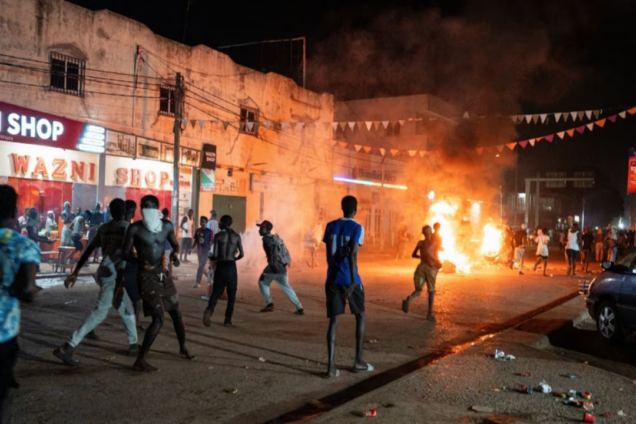
The demonstrations erupted across several areas of the country as residents complained about persistent electricity shortages, with some reporting blackouts lasting as long as 48 hours.
Protesters burned tyres, erected barricades and, in some demonstrations, called for Barrow to leave office.
11 ARRESTED AFTER UNREST
Authorities said 11 people had been arrested in connection with vandalism during the unrest.
Touray said a police post was vandalised and detainees were unlawfully released from custody.
The National Water and Electricity Company, NAWEC, also reported damage to its facilities and temporarily closed three branches after buildings, infrastructure and office equipment were attacked.
NAWEC previously attributed the electricity shortages partly to an unexpected surge in demand during high temperatures.
The utility also reported technical problems affecting power generation.
BARROW PROMISES MORE POWER
Barrow has acknowledged the hardship caused by the outages and promised measures to improve electricity supply.
The president said new generators would arrive in the country and pledged that electricity supply would be stabilised by the end of October.
His government is also completing the installation of an additional 24 megawatt generation unit and has awarded a contract for a 50 megawatt solar power plant.
Barrow said record electricity demand, equipment failures and seasonal reductions in hydropower generation had contributed to the crisis.
The power shortages have nevertheless become another political challenge for his government ahead of the December presidential election.
BENSOUDA SAYS YOUTH FRUSTRATION GOES BEYOND ELECTRICITY
Talib Ahmed Bensouda, mayor of Kanifing Municipality and a planned challenger to Barrow in the presidential election, said he understood the frustration driving people onto the streets, while making clear that he did not support unrest.
Bensouda argued that the country's problems extended beyond electricity.
He criticised the government's dependence on imported energy, saying it had left Gambia vulnerable to disruptions in international supply.
Bensouda also linked growing youth frustration to limited economic opportunities and irregular migration to Europe.
"Youths are frustrated, and I think not just about energy, they're frustrated about a lot of things," he told Reuters.
The political significance of the electricity crisis is likely to increase as Gambia approaches the December election, with power supply, employment and economic opportunities emerging as major concerns.
For Barrow's government, restoring reliable electricity could now become an important test as it seeks to calm public anger and prevent further unrest.