FG EVACUATES ANOTHER 111 NIGERIANS FROM SOUTH AFRICA AS TOTAL RETURNED RISES TO 2,037
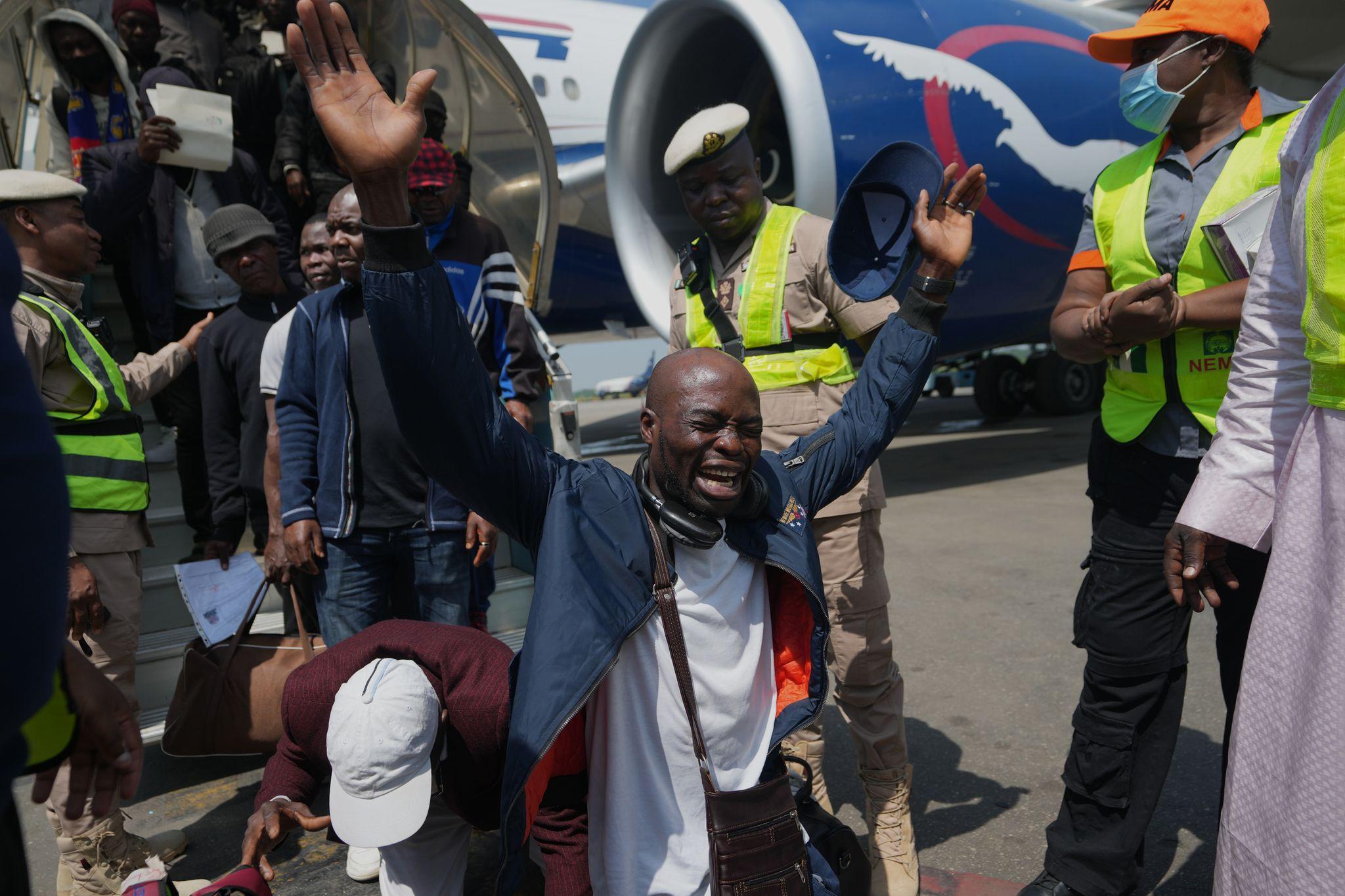
The Federal Government has evacuated another 111 distressed Nigerians from South Africa, including 44 men, 23 women and 44 children, bringing the total number returned since June 10 to 2,037. The October 8 flight was fully funded through a $265,854 donation from the Redeemed Christian Church of God, which committed to paying for 500 one way tickets. So far, 318 Nigerians have returned under the RCCG initiative, leaving 182 more tickets to be funded.
The Federal Government has evacuated another 111 distressed Nigerians from South Africa amid continuing concerns over xenophobic and Afrophobic hostility, bringing the total number of citizens repatriated under the ongoing consular operation to 2,037 since the evacuation exercise began in June.
The latest group, made up of 44 men, 23 women and 44 children, arrived in Lagos on Thursday, October 8, aboard South African Airways Flight SA060. The returnees were received by officials from the Ministry of Foreign Affairs, the Nigerians in Diaspora Commission, the National Agency for the Prohibition of Trafficking in Persons, the National Emergency Management Agency and other federal agencies involved in the reception and reintegration process.
The Ministry of Foreign Affairs said the latest evacuation was fully funded by the Redeemed Christian Church of God through a $265,854 donation made to support the repatriation of 500 distressed Nigerians from South Africa. The church intervention has become an important part of the wider evacuation effort as the government continues responding to the concerns of Nigerians who have registered to return home because of insecurity, anti immigrant hostility or other conditions affecting their ability to remain safely in South Africa.
According to the ministry, the latest arrival brings to 15 the number of consular evacuation operations conducted since June 10. Of the 2,037 Nigerians evacuated so far, the Federal Government directly covered the repatriation costs of 1,388 people, while the RCCG funded initiative has now paid for one way tickets for 318 returnees.
That leaves another 182 Nigerians expected to benefit from the church commitment to finance a total of 500 return journeys. The government has publicly thanked RCCG General Overseer Pastor Enoch Adeboye and the church for supporting the evacuation at a time when the scale and duration of the exercise have placed additional pressure on public resources.
The latest flight comes against the background of renewed concern over violence and hostility directed at foreign nationals in parts of South Africa. Nigerian authorities have repeatedly referred to xenophobia and Afrophobia when explaining the evacuation program, while South African officials have maintained that the government condemns attacks on foreign nationals and does not support collective punishment or vigilantism against migrants.
The evacuation program began after reports of attacks, intimidation and growing pressure on foreign communities created fear among Nigerians living in parts of the country. The first group returned in June, and subsequent flights have continued as more distressed citizens registered with Nigerian diplomatic missions for voluntary repatriation.
The composition of the latest group highlights the family dimension of the crisis. Children accounted for 44 of the 111 passengers, equal to the number of adult men on the flight and almost twice the number of women. Their presence underscores that the evacuation is not limited to individual workers or migrants but also involves families who had established lives in South Africa and are now returning to Nigeria under difficult circumstances.
For many returnees, the journey home represents relief from immediate safety concerns but creates a new set of economic and social challenges. Nigerians leaving South Africa may be abandoning jobs, businesses, rented accommodation, schools and communities they had built over several years, and returning home does not automatically resolve the financial problems that originally drove some of them to migrate.
The government has therefore faced pressure to ensure that evacuation does not end at the airport. Reception agencies including NiDCOM, NEMA and NAPTIP have roles that can include documentation, welfare checks, referrals and assistance where particular vulnerabilities are identified. The long term question is whether returnees receive enough support to restart their lives after repatriation, particularly those returning with children or with limited financial resources.
The Ministry of Foreign Affairs has continued urging Nigerians in South Africa to comply with local laws, remain vigilant and prioritize their personal safety. Citizens have also been advised to remain in contact with the Nigerian High Commission in Pretoria and the Consulate General in Johannesburg if they require consular assistance or believe their safety is at risk.
That advice reflects the fact that thousands of Nigerians remain in South Africa and have no intention of leaving. The evacuation program is voluntary and does not amount to a general government directive for Nigerians to abandon the country. Many continue to operate businesses, pursue education, work in professional sectors and live with their families across South African cities.
The policy challenge for Abuja is therefore divided between two responsibilities. The government must provide an exit route for distressed citizens who want to return home while also pressing South African authorities to protect Nigerians who remain and to prosecute people responsible for attacks or intimidation.
Relations between Nigeria and South Africa have long carried special political and historical significance. Nigeria supported the anti apartheid struggle and played an active diplomatic role in opposing white minority rule, creating an enduring expectation among many Nigerians that their citizens should be treated with particular solidarity in post apartheid South Africa.
That history has made recurring attacks on Nigerians and other African migrants especially sensitive. Each new incident revives frustration over what many see as a contradiction between the ideals of African solidarity and the hostility experienced by migrants in some communities.
South Africa has struggled with periodic waves of anti immigrant violence for years. Foreign nationals from Nigeria, Zimbabwe, Mozambique, Malawi, Somalia and several other African countries have at different times faced attacks, looting, intimidation and demands that they leave particular communities.
The causes of those tensions are complex and include high unemployment, inequality, pressure on public services, crime and political rhetoric around migration. Foreign nationals are sometimes accused of taking jobs or being involved in criminal activity, although human rights groups have repeatedly warned against blaming entire communities for offenses committed by individuals.
Nigerian authorities have consistently argued that allegations of crime must be handled through normal policing and judicial processes rather than used as justification for collective attacks on migrants. Abuja has called on South African authorities to ensure that foreign nationals are protected under the law regardless of nationality.
The latest evacuation also follows earlier deaths involving Nigerians in South Africa that drew official concern from the Federal Government. Abuja has previously demanded investigations into killings and has called for accountability where Nigerian nationals are harmed in circumstances involving violence or alleged discrimination.
Those incidents intensified public pressure for stronger diplomatic engagement and added momentum to the evacuation program. Nigerian officials have said their priority is the safety and dignity of citizens abroad while maintaining dialogue with Pretoria to prevent tensions from damaging wider bilateral relations.
The relationship between Africa's two major economies extends far beyond migration. Nigerian companies operate in South Africa and South African businesses have major investments in Nigeria in sectors including telecommunications, retail, banking and entertainment.
That economic interdependence has repeatedly encouraged both governments to prevent migration disputes from developing into broader diplomatic confrontation. Previous periods of xenophobic violence have triggered protests and threats of retaliation against South African businesses in Nigeria, creating fears that violence in one country could generate retaliatory hostility in the other.
Both governments therefore have an interest in containing inflammatory rhetoric and ensuring that grievances are addressed through diplomatic and legal channels. Nigerian officials have continued emphasizing that anger over the treatment of citizens abroad should not translate into attacks against South Africans or South African owned businesses operating in Nigeria.
The latest 111 returnees arrived while those diplomatic conversations continue. Their evacuation demonstrates that the government still considers conditions serious enough to maintain an active repatriation mechanism several months after the first flights began.
The funding model has also evolved as the exercise continued. The Federal Government financed the majority of the 2,037 returnees, but the RCCG contribution has reduced some of the financial burden by covering tickets for hundreds of citizens.
The $265,854 contribution was specifically intended to fund 500 one way tickets. With 318 people now evacuated under that arrangement, the remaining commitment covers another 182 Nigerians, although the timing of their return will depend on registration, travel arrangements and other logistical considerations.
The involvement of a major religious organization also demonstrates how civil society and private institutions can supplement government consular efforts during a prolonged evacuation. It does not replace the government's responsibility to protect citizens abroad, but it provides additional financial capacity at a time when evacuation costs can increase rapidly across multiple flights.
The use of commercial flights including South African Airways has also allowed the government to combine chartered and scheduled transport depending on passenger numbers and availability. That approach can reduce costs compared with organizing a dedicated aircraft for every group, particularly as the number of people ready to travel changes from one evacuation window to another.
The latest batch arrived aboard a normal South African Airways service rather than an exclusively Nigerian carrier, reflecting the practical nature of the operation. The focus has remained on moving registered citizens safely rather than relying on a single airline or transport model.
The return of 2,037 citizens since June also gives a clearer indication of the scale of concern within the Nigerian community. While that number represents only a fraction of Nigerians living in South Africa, it is large enough to show that the current wave of anxiety has had consequences beyond isolated individuals.
Each evacuation requires coordination between Nigerian diplomatic missions, South African immigration authorities, airlines and agencies in Nigeria responsible for receiving returnees. Documents must be verified, passengers must be cleared for travel and welfare arrangements must be made for people arriving with limited resources.
Children and other vulnerable returnees may require additional assistance. Families who leave quickly because of safety concerns may arrive without complete plans for accommodation, schooling or employment, creating pressure on relatives and government agencies after the immediate evacuation is completed.
NAPTIP involvement is also relevant because migration crises can expose people to trafficking and exploitation. Individuals who lose income, housing or legal status may become more vulnerable to recruiters promising jobs or travel opportunities, making screening and public awareness important during the reintegration process.
The government has not indicated that all members of the latest group were direct victims of physical attacks. The term distressed Nigerians covers a wider category that can include citizens who fear for their safety, have been economically affected by unrest or believe remaining in South Africa has become untenable.
That distinction matters because evacuation figures should not automatically be interpreted as a count of people physically assaulted. The broader picture is one of insecurity and uncertainty strong enough to persuade thousands of Nigerians to register for government assisted return.
South African authorities have repeatedly rejected generalized descriptions that portray the country as uniformly hostile to Africans. Officials have said the government condemns xenophobia and Afrophobia and has security and legal mechanisms for addressing violence.
At the same time, the recurrence of attacks and anti migrant campaigns has kept the issue alive. Community groups and political organizations in some areas have organized protests around undocumented migration and access to jobs and public services, occasionally creating environments in which legal migrants and asylum seekers also feel threatened.
Nigeria has argued that immigration enforcement must remain the responsibility of state authorities rather than private groups or mobs. Individuals suspected of violating immigration or criminal laws should be dealt with through official procedures rather than intimidation or collective expulsions.
The Federal Government has also taken the issue to wider African forums. Nigerian leaders have warned that hostility between citizens of African countries undermines continental integration and contradicts efforts to promote free movement, trade and closer economic cooperation across the continent.
That continental dimension has become increasingly important as the African Continental Free Trade Area and other integration projects encourage greater movement of people, capital and businesses. Persistent hostility toward African migrants could weaken those ambitions even where governments formally support regional integration.
For the returnees arriving in Lagos, those diplomatic debates are secondary to the practical task of rebuilding their lives. Many will return to communities and families they left years earlier, and some children may have spent most or all of their lives in South Africa before being brought back to Nigeria.
Reintegration is therefore likely to remain an important part of the evacuation story after the flights themselves end. Without sustainable economic opportunities, some returnees may consider migrating again, particularly if they originally left Nigeria because of unemployment or financial hardship.
The government has not released a detailed long term reintegration program specifically covering all 2,037 returnees, although agencies receiving evacuees can provide support and referrals. The effectiveness of that assistance will determine whether the evacuation achieves more than immediate physical relocation.
The next phase of the RCCG supported initiative is expected to bring home another 182 Nigerians, completing the church's commitment to finance 500 tickets. Additional government funded evacuations could also continue if more citizens register and security concerns remain.
The Ministry of Foreign Affairs has indicated that engagement with South African authorities will continue alongside the repatriation program. That dual approach reflects the reality that evacuation can protect individuals who want to leave but cannot address the underlying causes of hostility affecting those who remain.
The broader test for both governments will be whether they can reduce the conditions that repeatedly produce diplomatic crises. South Africa must balance legitimate immigration enforcement with protection against violence and discrimination, while Nigeria must continue providing credible consular support without encouraging retaliatory hostility.
For now, the arrival of another 111 Nigerians pushes the evacuation total beyond 2,000 and confirms that the operation remains active months after it began. The RCCG funding has extended the government's capacity to bring distressed citizens home, but hundreds more remain covered by the church commitment and potentially more may seek assistance if insecurity continues.
The immediate development is therefore one of continued repatriation rather than closure. Nigeria has succeeded in returning another group safely and has established funding for additional flights, but the wider problem that made those evacuations necessary remains unresolved. The safety of Nigerians still living in South Africa and the ability of returnees to rebuild their lives at home will determine whether the current response produces lasting relief beyond the airport arrivals.