
FALANA DRAGS FEDERAL GOVERNMENT TO ECOWAS COURT, DEMANDS $10 MILLION OVER DECADES OF ALLEGED RIGHTS VIOLATIONS
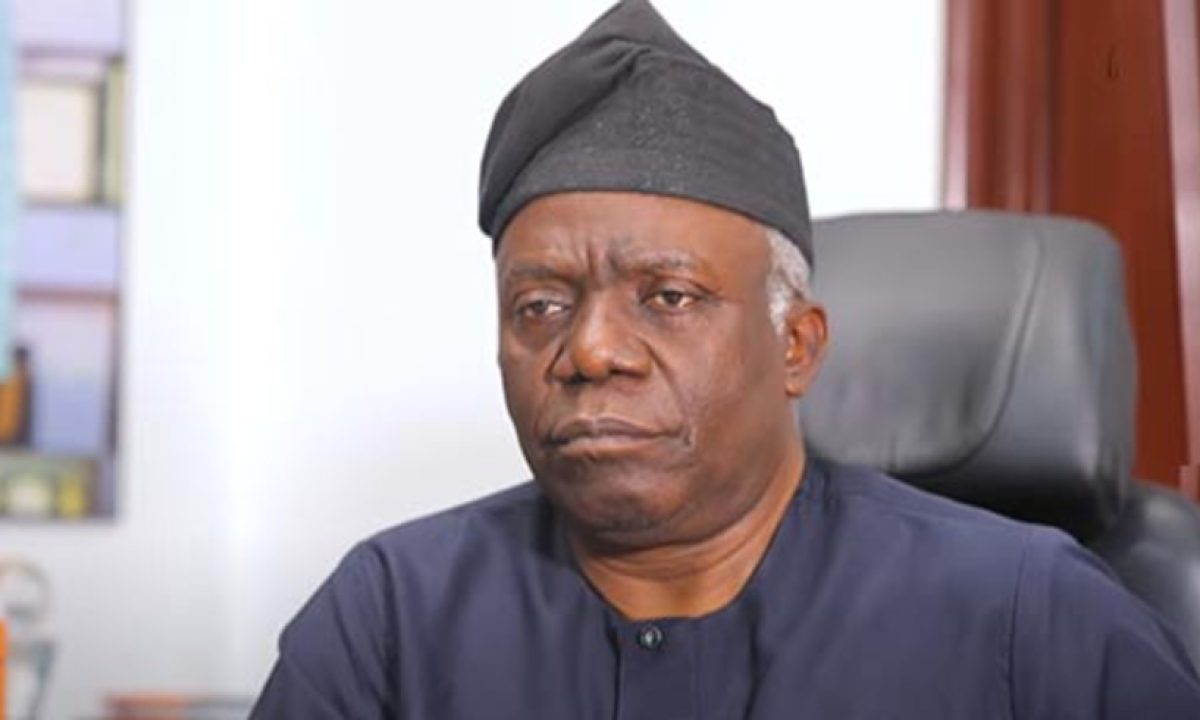
Human rights lawyer Femi Falana has taken the Federal Republic of Nigeria before the ECOWAS Court of Justice, seeking $10 million in damages over alleged unlawful arrests, prolonged detention, travel restrictions and other human rights violations dating back to Nigeria's military era. The allegations have not been determined by the court.
Human rights lawyer and Senior Advocate of Nigeria Femi Falana has filed a case against the Federal Republic of Nigeria before the ECOWAS Community Court of Justice, seeking $10 million in damages over alleged human rights violations spanning several decades.
The newly surfaced case, numbered ECW/CCJ/APP/30/2026, accuses Nigerian authorities of subjecting Falana to unlawful arrests, detention, restrictions on his movement and other alleged violations at different periods during the country's military era.
Falana is asking the regional court to find that his rights to personal liberty, dignity, fair hearing, property and freedom of movement were violated.
He is seeking declarations against Nigeria as well as $10 million in damages.
The allegations have not been determined by the ECOWAS Court, and the filing represents Falana's case against the Nigerian government rather than a judicial finding that the government is liable.
FALANA REVISITS DECADES OF CONFRONTATIONS WITH THE STATE
Falana's application reaches back to the early years of his legal career and recounts several confrontations he says he had with Nigerian authorities.
The senior lawyer was called to the Nigerian Bar in 1982 and subsequently became one of the country's prominent human rights lawyers.
According to the application, one of his earliest disputes with authorities occurred during his National Youth Service Corps service in Oyo State between 1982 and 1983.
Falana says he represented University of Ibadan students who had been charged with conspiracy and attempted murder following a dispute involving the university's vice chancellor.
His application alleges that although he completed his national service, authorities seized his NYSC discharge certificate because he represented the students without obtaining official permission.
1985 ARREST AND SEVEN-WEEK DETENTION
Another major allegation concerns Falana's arrest on June 8, 1985.
According to the suit, armed officers of the then National Security Organization arrested him at the Lagos State High Court.
Falana alleges that the officers subsequently took him to his law office and searched the premises without a warrant.
He claims nothing incriminating was discovered.
The lawyer alleges that he was then detained without trial for approximately seven weeks at the security agency's facility on Awolowo Road in Ikoyi, Lagos.
He further alleges that he was held in degrading conditions alongside other political detainees.
Falana says he was eventually released on August 30, 1985, following the military coup that removed Major General Muhammadu Buhari from power and brought General Ibrahim Babangida into office.
These accounts form part of Falana's allegations before the ECOWAS Court and have not been established as findings in the present case.
DISPUTE OVER WHY HE WAS DETAINED
Falana's filing also challenges the official explanation reportedly given for his detention.
Following the change of government in 1985, the Babangida administration reorganized Nigeria's security structure and established a panel headed by Justice Samson Uwaifo to investigate detentions.
Falana says he appeared before that panel.
According to his application, the subsequent government white paper linked his detention to his involvement in the legal defense of musician Fela Anikulapo-Kuti, who had faced a foreign exchange-related prosecution.
Falana disputes that explanation.
His suit alleges that the State Security Service deliberately misled the panel about the circumstances surrounding his detention.
TRAVEL RESTRICTIONS ALSO PART OF THE CASE
Falana's complaint is not limited to arrests and detention.
The application also alleges restrictions on his freedom of movement during periods of military rule.
Such restrictions were frequently used against activists, journalists, lawyers and political opponents during different periods of Nigeria's military history.
Falana is asking the ECOWAS Court to determine whether the treatment he describes violated rights protected under the African Charter on Human and Peoples' Rights and other applicable ECOWAS legal instruments.
WHY THE CASE IS BEING BROUGHT NOW
The filing raises an important legal question because many of the events described allegedly occurred decades ago.
The ECOWAS Court will ultimately determine issues concerning its jurisdiction, the admissibility of Falana's claims and the substance of the alleged violations if the case proceeds to consideration on the merits.
Nigeria will also have an opportunity to respond to the allegations and present its legal arguments before the regional court.
The filing itself does not establish liability.
$10 MILLION DAMAGES CLAIM
Falana is asking the court to award him $10 million as compensation.
The amount is a request contained in his case, not money that has been awarded.
For Falana to receive compensation, the court would first have to consider the legal arguments and evidence placed before it and determine whether Nigeria bears responsibility for the alleged violations.
The Federal Government's response to the newly surfaced suit was not immediately reflected in the reporting reviewed by VNTV.
A CAREER BUILT AROUND HUMAN RIGHTS LITIGATION
Falana has spent decades representing activists, labor organizations, journalists and other individuals in cases involving government power and civil liberties.
He has also frequently taken governments and public institutions to court over constitutional and human rights disputes.
This case, however, is personal.
Rather than representing another applicant, Falana is asking the regional court to examine alleged violations he says were committed against him over several decades.
The case could therefore revisit some of the most contentious periods of Nigeria's military history through the personal experiences of one of the country's best-known human rights lawyers.
For now, however, there has been no ruling on the allegations.
Falana has presented his case.
Nigeria is the respondent.
And it will be for the ECOWAS Court to determine whether the allegations establish violations for which the Nigerian state can be held legally responsible.