
ANOTHER 105 NIGERIANS EVACUATED FROM SOUTH AFRICA AS FEARS GROW AHEAD OF ANTI-MIGRANT PROTESTS
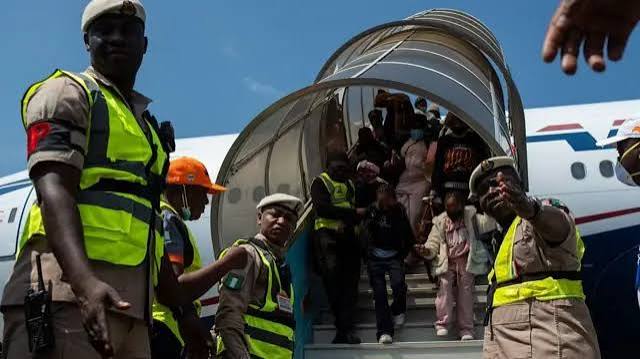
Another 105 Nigerians, including 23 children, have been evacuated from South Africa under Nigeria's ongoing voluntary return program, bringing the total number returned since June to 1,821. The development comes as the Nigerian Union South Africa warns citizens to avoid potential protest areas ahead of nationwide demonstrations planned for September 30 over undocumented migration.
Another 105 Nigerians have been evacuated from South Africa as concerns over anti-migrant sentiment continue, with Nigerian community leaders separately warning citizens to exercise caution ahead of demonstrations planned across the country on September 30.
Nigeria's Ministry of Foreign Affairs says the latest group consists of 82 adults and 23 children.
Their return brings the total number of Nigerians evacuated from South Africa since the voluntary evacuation exercise began in June to 1,821.
The latest group arrived in Nigeria as authorities continue efforts to assist citizens who have chosen to leave South Africa.
The evacuation comes against the backdrop of renewed tensions surrounding migration in South Africa, where groups campaigning against undocumented immigration have become increasingly visible.
Separately, the Nigerian Union South Africa, NUSA, has issued an advisory urging Nigerians to stay away from locations where demonstrations are expected to take place on September 30.
105 MORE NIGERIANS RETURN HOME
Nigeria's Foreign Affairs Ministry says the latest evacuation involved 105 citizens.
Of that number, 82 are adults and 23 are children.
The ministry says the evacuation forms part of an ongoing effort to facilitate the voluntary return of Nigerians from South Africa.
With the latest arrivals, 1,821 Nigerians have now returned since the exercise began in June.
The operation has involved coordination between Nigerian diplomatic authorities and other agencies responsible for receiving and supporting returning citizens.
The government has not characterized every returnee as a victim of xenophobic violence.
That distinction is important.
Some Nigerians may choose voluntary evacuation because of concerns about security, economic circumstances or the wider atmosphere surrounding immigration.
WARNING AHEAD OF SEPTEMBER 30 PROTESTS
The latest evacuation coincides with a separate security warning from the Nigerian Union South Africa.
NUSA has advised Nigerians living in South Africa to avoid areas where demonstrations are expected on September 30.
The planned nationwide protests are focused on undocumented migration and are expected to draw participants in several locations.
Nigerian community leaders are concerned that demonstrations centered on immigration could create potentially dangerous situations for foreign nationals even if the protests begin peacefully.
NUSA therefore wants Nigerians to exercise caution, avoid confrontations and stay away from protest hotspots.
The warning does not mean violence is certain to occur.
But South Africa's history of attacks targeting African migrants means migrant communities often treat large anti-immigration demonstrations seriously.
SOUTH AFRICA'S MIGRATION DEBATE IS INTENSIFYING
Immigration has become one of South Africa's most contentious political and social issues.
The country hosts migrants from Nigeria, Zimbabwe, Mozambique, Malawi, the Democratic Republic of Congo and numerous other African countries.
Economic pressures, unemployment, crime and pressure on public services have all become intertwined with the migration debate.
Anti-immigration organizations argue that undocumented migrants place additional strain on jobs, housing, healthcare and other public resources.
Migrant rights groups counter that foreigners are frequently blamed for structural economic and social problems they did not create.
Those competing arguments have created an increasingly heated national conversation.
The situation becomes particularly sensitive when political rhetoric or demonstrations shift from criticism of immigration policy toward hostility against foreign nationals themselves.
NIGERIANS HAVE FACED XENOPHOBIC VIOLENCE BEFORE
Concerns among Nigerians are shaped by previous outbreaks of xenophobic violence in South Africa.
Over the years, foreign-owned businesses have been attacked and looted during periods of unrest.
Migrants from several African countries have also been assaulted and, in some cases, killed.
Nigerians have been among those affected.
Previous outbreaks of violence have strained diplomatic relations between Abuja and Pretoria and led Nigeria to demand stronger protection for its citizens.
South African authorities have repeatedly condemned xenophobic violence and maintained that criminal attacks against foreign nationals should not be tolerated.
But fear remains within migrant communities whenever large anti-immigration demonstrations are announced.
UNDOCUMENTED MIGRATION AND XENOPHOBIA ARE NOT THE SAME THING
There is also an important distinction between opposition to undocumented immigration and xenophobia.
South Africans have the right to debate their country's immigration laws and demand enforcement of those laws.
Governments also have the authority to determine immigration requirements and take lawful action against people who do not have legal status.
Xenophobia involves hostility, discrimination or violence directed at people because they are foreigners or are perceived to be foreigners.
The September 30 demonstrations should therefore not automatically be described as xenophobic solely because organizers oppose undocumented immigration.
What matters will be how protesters conduct themselves, what messages are promoted and whether foreign nationals are threatened or targeted.
NIGERIANS URGED TO AVOID CONFRONTATIONS
For Nigerians living in South Africa, NUSA's immediate message is caution.
Citizens are being advised to avoid protest areas rather than engage demonstrators.
They are also being encouraged to remain alert to developments in their communities.
That advice could become particularly important in areas where immigration tensions are already high.
Large demonstrations can change rapidly, and confrontations involving protesters, police or counter-protesters can create risks for people who are not participating.
1,821 HAVE NOW RETURNED
The number of Nigerians evacuated since June demonstrates the scale of the ongoing return operation.
With another 105 people now back in Nigeria, the cumulative figure has reached 1,821.
That includes adults as well as children whose families decided to return.
But thousands of Nigerians continue to live, work, study and operate businesses across South Africa.
For them, September 30 will be closely watched.
The planned demonstrations are centered on undocumented migration.
Whether they remain peaceful demonstrations about immigration policy or develop into confrontations affecting foreign communities will be critical.
For now, Nigerian community leaders are not waiting to find out.
Their message to Nigerians is straightforward.
Stay alert, avoid protest areas and do not become caught in a confrontation.