
DR CONGO SUMMONS UGANDAN ENVOY AFTER MUSEVENI’S SON BACKS REBEL ADVANCE IN MINERAL-RICH WALIKALE
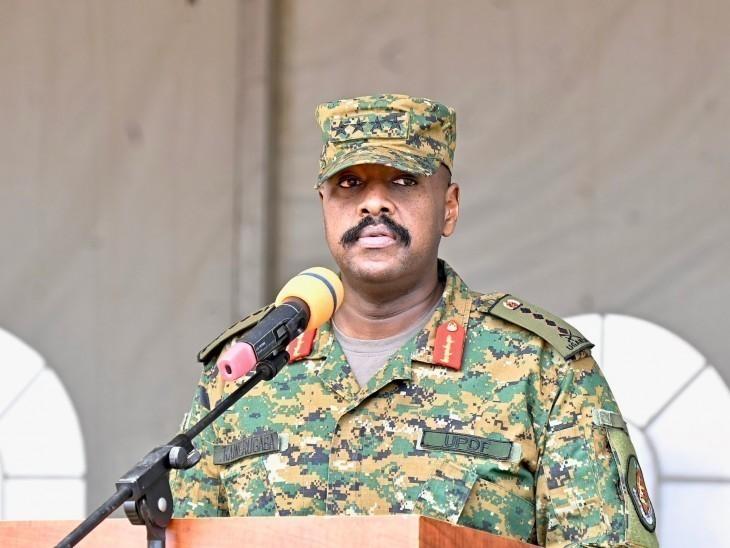
The Democratic Republic of Congo has summoned Uganda's top diplomatic representative in Kinshasa following controversial social media statements by General Muhoozi Kainerugaba, Uganda's military chief and son of President Yoweri Museveni, expressing support for a potential rebel takeover of the mineral-rich Walikale territory in North Kivu province. Kainerugaba indicated that Ugandan forces would not oppose an advance by the Front for the Refoundation of the Nation, led by former Congolese President Joseph Kabila, and suggested that Uganda could capture the area itself. Congo's Foreign Ministry condemned the remarks and demanded an official explanation from Kampala. The controversy threatens to strain relations between the neighboring countries, which have conducted joint military operations against the Allied Democratic Forces since November 2021. Uganda's government has yet to formally respond to the diplomatic protest.
The Democratic Republic of Congo has summoned Uganda's top diplomatic representative in Kinshasa following controversial remarks by General Muhoozi Kainerugaba, Uganda's Chief of Defence Forces and son of President Yoweri Museveni, expressing support for a potential rebel takeover of Walikale, a strategically important mining area in eastern Congo. The Congolese Ministry of Foreign Affairs issued a formal diplomatic protest after Kainerugaba published a series of messages on X indicating that Ugandan troops would not oppose an advance by the Front for the Refoundation of the Nation, known by its French abbreviation FRN, a rebel movement led by former Congolese President Joseph Kabila. The ministry described the statements as particularly serious, warning that they undermined the diplomatic restraint expected between sovereign nations. The controversy threatens to complicate relations between two neighboring countries that have maintained extensive military cooperation against armed groups operating in eastern Congo despite longstanding regional tensions.
The diplomatic summons took place on Tuesday, November 24, 2026, according to the Congolese Press Agency and other regional publications citing a statement from the Foreign Ministry. Kinshasa demanded an explanation from Kampala regarding the general's remarks and called on Ugandan authorities to clarify their government's official position concerning the conflict in eastern Congo. The Congolese government also requested measures to prevent similar incidents, reflecting its concern that public statements by a serving foreign military commander could undermine existing security arrangements. Uganda's government had not issued a formal response to the diplomatic protest in the latest BBC reporting published on Thursday, November 26.
The controversy emerged after Kainerugaba indicated in a series of social media posts that the Uganda People's Defence Forces would not obstruct an attempt by the FRN to seize Walikale in North Kivu province. He went further by suggesting that Uganda could take control of the area itself if the rebel movement failed to advance quickly enough. The statements represented a striking departure from the language ordinarily associated with Uganda's publicly stated military cooperation with the Congolese government. Although Kainerugaba's X account was subsequently deactivated, the disappearance of the original posts did not eliminate their diplomatic consequences, as Congolese authorities continued demanding clarification through official channels.
Kainerugaba also defended Uganda's military involvement in eastern Congo, presenting the deployment of Ugandan forces as a response to security threats affecting his country and communities within the wider region. He expressed opposition to the presence of foreign mercenaries in the Democratic Republic of Congo and accused the Democratic Forces for the Liberation of Rwanda, commonly known as the FDLR, of attacking members of the Hema community around Walikale. Those accusations have not been independently established in the context of the latest statements. Nevertheless, his remarks introduced additional ethnic and regional dimensions into a conflict already characterized by competing armed organizations, cross-border security concerns and disputes over territorial control.
For Kinshasa, the significance of the statements extends beyond the controversial views expressed by an individual on social media. Kainerugaba occupies the most senior military position within Uganda's armed forces, giving his public comments considerable importance when they concern the potential movement of Ugandan troops or the territorial integrity of a neighboring country. His relationship with President Museveni further increases the political attention attached to his statements, even when they have not been formally endorsed by the Ugandan government. The Congolese authorities' decision to summon Uganda's diplomatic representative reflects their demand for a distinction between the general's personal declarations and the official policies guiding Kampala's military activities.
The latest dispute is particularly sensitive because Uganda and the Democratic Republic of Congo have been conducting joint military operations against the Allied Democratic Forces, or ADF, since November 2021. The bilateral campaign, known as Operation Shujaa, was established to address the threat posed by an armed organization that originated in Uganda before establishing itself in eastern Congo. The group has been associated with numerous attacks against civilians and has developed links with the Islamic State organization. Cooperation between the Ugandan and Congolese armed forces has consequently become an important component of regional efforts to address an insurgency whose activities have affected communities on both sides of their shared border.
The existence of that military partnership makes Kainerugaba's apparent support for a separate rebel advance especially controversial. Ugandan forces are operating inside Congo under arrangements intended to support the country's security objectives, while Congolese troops are simultaneously confronting armed groups seeking to expand their territorial control. Publicly indicating that Uganda would tolerate or welcome a rebel offensive against territory claimed by the Congolese government raises questions about whether the two countries continue to share the same understanding of their military cooperation. However, the general's statements alone do not establish that Uganda has formally changed its military objectives or begun providing operational assistance to the FRN.
Walikale occupies a significant position within the complex geography of eastern Congo's conflict because of its mineral resources and connections to surrounding communities. The territory contains substantial deposits of tin, gold and other commercially valuable minerals, supporting economic activities that extend from local mining operations to international supply chains. Among its most prominent industrial operations is the Bisie tin mine, which has become an important source of mineral production within the Democratic Republic of Congo. Instability around Walikale can therefore have consequences extending beyond the immediate military confrontation, affecting employment, commercial transportation and the livelihoods of communities dependent on mining and associated industries.
The competition for control of mineral-producing regions has long been an important element of the conflict in eastern Congo, although the violence cannot be explained exclusively through access to natural resources. Political grievances, disputes over citizenship, ethnic tensions, weak state institutions and the involvement of neighboring countries have also contributed to decades of insecurity. Armed organizations operating in mineral-rich areas may obtain revenue through taxation, control of commercial activities or involvement in illicit trade, creating additional incentives for maintaining territorial influence. The potential expansion of rebel control into Walikale consequently carries significance for both national security and the management of Congo's natural resources.
The FRN has emerged from a changing political and military landscape in eastern Congo involving the Alliance Fleuve Congo and the March 23 Movement, widely known as AFC/M23. Recent regional reporting identifies the FRN as the successor movement associated with those organizations and led by former President Joseph Kabila. The involvement of a former head of state has added another dimension to the confrontation, connecting developments on the battlefield with wider disputes concerning Congo's political leadership. However, the movement's political claims and the responsibilities of individual commanders must be distinguished from allegations concerning the conduct of foreign governments operating within the region.
Kabila governed the Democratic Republic of Congo from 2001 until 2019, assuming office following the assassination of his father, Laurent-Désiré Kabila. His presidency encompassed efforts to reunify a country devastated by war, alongside persistent criticism concerning democratic governance, human rights and the management of natural resources. His departure from office following the disputed 2018 presidential election brought Félix Tshisekedi to power, initially through a political arrangement involving competing factions within the Congolese establishment. Relations between the two political camps subsequently deteriorated, with their disagreements increasingly influencing discussions concerning the country's governance and security.
The association of Kabila with the rebel movement has consequently intensified the political significance of Kainerugaba's remarks. Expressing approval for a movement led by a former Congolese president carries implications that extend beyond ordinary military commentary, particularly when that movement is confronting forces loyal to the current government. Kinshasa's response reflects its determination to establish whether Uganda recognizes and respects the authority of the Congolese state within its internationally recognized borders. No formal announcement from Kampala has established that the Ugandan government recognizes the FRN as an alternative governing authority or endorses Kabila's political objectives.
The diplomatic dispute also arises against the background of longstanding allegations concerning Rwanda's involvement in eastern Congo. The Congolese government, United Nations experts and several international partners have accused Rwanda of supporting the M23 movement, while Kigali has repeatedly emphasized threats posed by armed organizations operating near its borders, particularly the FDLR. Rwanda has disputed aspects of the accusations directed against it and has presented its regional security policies within the context of threats originating from Congolese territory. The competing positions have complicated attempts to establish durable peace arrangements and have contributed to recurring diplomatic confrontations between Kinshasa and neighboring capitals.
Kainerugaba's public statements have introduced further uncertainty into that environment because Uganda has attempted to maintain security cooperation with Congo while also managing its relationship with Rwanda. The interests of these three countries intersect across a region where armed organizations frequently operate beyond national boundaries and where historical conflicts continue to influence contemporary political decisions. Maintaining effective cooperation requires clarity regarding military objectives, respect for agreed operational arrangements and mechanisms for resolving disagreements. Public declarations suggesting support for an armed movement confronting one of the participating governments can undermine those requirements even when they do not immediately result in changes on the battlefield.
This is not the first time Kainerugaba's social media activity has generated diplomatic controversy. In 2022, his posts about Kenya attracted international attention after he suggested that Ugandan forces could capture Nairobi, prompting President Museveni to apologize to Kenya and address the consequences of his son's comments. The episode established an earlier example of how statements made through Kainerugaba's personal social media account could create diplomatic responsibilities for the Ugandan government. His subsequent appointment as Chief of Defence Forces in 2024 increased the official significance attached to his public commentary, particularly when it concerns Uganda's relationships with neighboring countries.
Kainerugaba has also previously generated controversy through statements concerning military developments in Congo, demonstrating the recurring challenge of separating his personal communications from official government policy. His position requires regular interaction with military commanders, political authorities and foreign security partners, giving his declarations a significance different from comments made by private individuals. Although Ugandan officials have previously distanced their government from some of his controversial posts, Kinshasa's latest demands indicate that such distinctions cannot simply be assumed. Congolese authorities are seeking an explicit clarification concerning Uganda's position on the FRN and the territorial dispute involving Walikale.
The latest diplomatic protest carries additional significance for civilians living in eastern Congo, many of whom have experienced repeated displacement as armed organizations expand or lose control of different territories. Fighting can interrupt access to farmland, markets, schools and healthcare facilities, while insecurity frequently prevents humanitarian organizations from reaching communities requiring assistance. Families living near areas of military confrontation may be forced to leave their homes with limited possessions and uncertain prospects of returning. Any deterioration in cooperation between the governments responsible for regional security could introduce further complications into an already difficult humanitarian environment.
The possibility of renewed military escalation around mineral-producing areas also creates uncertainty for businesses and workers whose livelihoods depend on stable commercial operations. Mining activities require functioning transportation networks, reliable access to equipment and sufficient security to allow employees to carry out their responsibilities. Conflict can disrupt those arrangements, leading to temporary suspensions of production, loss of income and difficulties maintaining essential supplies. However, the general's remarks should not be interpreted as confirmation that Walikale's industrial mining operations have been seized or that a specific company has suspended production as a result of the latest diplomatic dispute.
As of Thursday, fighting had been reported around Walikale involving Congolese government forces and the FRN. The available reporting does not independently establish that the rebel movement has completed a takeover of the entire territory or that Ugandan forces have acted upon Kainerugaba's threat. Those distinctions remain important because statements about military intentions do not necessarily reflect subsequent operational developments. Establishing the actual position of the various armed forces will require reliable information from the affected areas rather than assumptions based on social media declarations.
The diplomatic summons provides Uganda with an opportunity to explain its official position and clarify whether Kainerugaba's statements reflect any change in its existing military arrangements with the Democratic Republic of Congo. Kinshasa has not announced the termination of Operation Shujaa or the immediate withdrawal of Ugandan forces in response to the controversy. The two countries therefore remain confronted with the practical necessity of addressing the security threat posed by the ADF while managing a dispute that could undermine their broader relationship. Whether existing military cooperation continues without significant interruption will depend partly on the assurances and actions that follow the diplomatic engagement.
For the Congolese government, the central issue remains the protection of national sovereignty and the authority of its institutions over territory affected by armed conflict. Uganda, meanwhile, has consistently presented its cross-border military involvement as necessary to address security threats capable of affecting its own population. Those interests have previously provided a foundation for cooperation, but the latest controversy demonstrates how quickly disagreements can emerge when military leaders publicly express positions concerning groups opposed to their partners. Reconciling those interests requires clear communication and adherence to the arrangements under which foreign forces operate on Congolese soil.
The controversy surrounding General Muhoozi Kainerugaba has therefore become more than another dispute involving the outspoken son of Uganda's president. It has exposed the delicate relationship between regional military cooperation, national sovereignty and the competing political interests shaping eastern Congo's prolonged conflict. Kinshasa is demanding an explanation for remarks that appeared to endorse a rebel advance, while Kampala has yet to publicly clarify whether those statements represent its official position. With fighting continuing around Walikale and civilians facing persistent insecurity, the diplomatic response from Uganda will be an important development in determining whether the two neighbors can preserve their security partnership without allowing the latest disagreement to deepen regional instability.