DANGOTE CEMENT SHELVES LONDON STOCK EXCHANGE LISTING PLAN AS MARKET CONDITIONS TURN VOLATILE
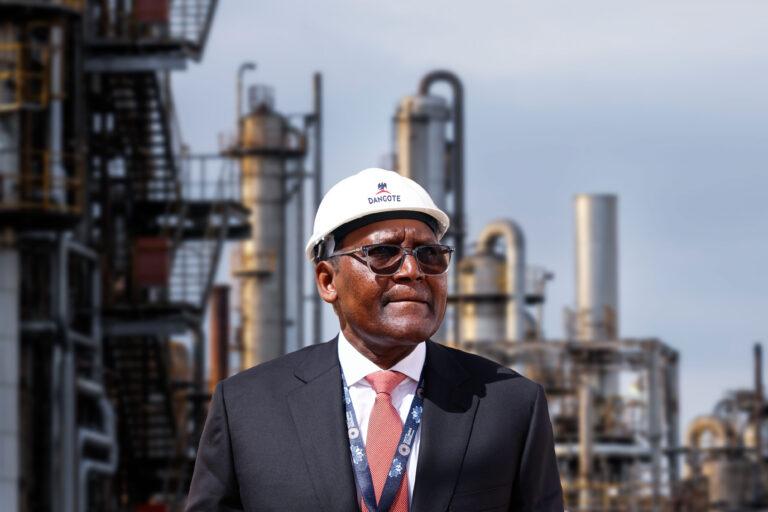
Dangote Cement Plc has shelved its planned secondary listing and share offering on the London Stock Exchange after reviewing current market conditions and its strategic priorities. Dangote Industries Limited, which was expected to sell part of its holding in the transaction, will also not proceed with the offering at this time. The company says its shares will remain listed on the Nigerian Exchange and that its operations and existing business plans are unaffected. Reuters reports that the London plan could be reconsidered when global market conditions become more stable.
Dangote Cement Plc has put its planned secondary listing on the London Stock Exchange on hold, stepping back from a closely watched international share offering that was expected to give more foreign investors direct access to one of Africa’s largest cement producers and deepen the company’s presence in global capital markets.
The decision was announced on Tuesday, November 10, in a regulatory notice filed with the Nigerian Exchange Limited after a meeting of the company’s board. The notice was signed by Company Secretary Edward Imoedemhe and said Dangote Cement and its parent company and selling shareholder Dangote Industries Limited would no longer proceed with the proposed London transaction at this time.
The company said the decision followed a review of current market conditions and its strategic priorities. It did not identify any problem with its underlying operations and stressed that its ordinary shares would remain listed on the Nigerian Exchange. Dangote Cement also said the decision would not affect its existing business plans or day to day operations.
The move brings an abrupt pause to a process that had gathered significant momentum during 2026 and had been presented as an important step in the company’s effort to broaden its international investor base. Dangote Cement had spent months preparing for the proposed London listing, engaging advisers and speaking with institutional investors in major financial centers.
The company first disclosed in May that it was in early discussions over a possible London listing. The proposal was later approved by shareholders, giving the board authority to move ahead with preparations for a secondary listing of the company’s shares in the United Kingdom.
By September, the process had advanced further. Dangote Cement announced that it would hold a Capital Markets Day in London on September 21, providing investors and analysts with an opportunity to hear directly from senior management about the company’s strategy, operations and growth plans. The event was designed to build interest among international investors ahead of the proposed transaction.
The London plan was important because it would have given global institutional investors a more direct route into Dangote Cement while allowing the company to maintain its primary Nigerian listing. For many international fund managers, buying shares through London can be easier because of deeper market liquidity, familiar regulatory structures and easier access to foreign currency settlement.
Dangote Cement had also been looking to widen the pool of investors able to trade its shares beyond Nigeria. Although the company is already one of the most valuable businesses listed on the Nigerian Exchange, foreign investors can face challenges linked to liquidity, currency movements and the practical difficulties of investing directly in some frontier markets.
A London listing was expected to address some of those concerns by making the company’s shares available through one of the world’s best known financial markets. It would also have placed Dangote Cement alongside a small group of major Nigerian linked companies with a presence on the London market.
The proposed deal was structured as a secondary listing and share offering rather than a traditional fundraising exercise centered on issuing new shares. Dangote Industries Limited, the controlling shareholder, was expected to sell part of its existing holding, increasing the amount of stock available to outside investors while Aliko Dangote’s business group remained the dominant shareholder.
Reports surrounding the proposed transaction indicated that the sale could have involved more than 10 percent of the company’s shares and potentially attracted significant international investment. Dangote Cement had brought in major global financial institutions to advise on the process as preparations accelerated.
The decision to stop the transaction comes during a period of renewed volatility across international stock markets. Global equities have faced sharp swings following political developments in the United States and concerns about valuations in technology and artificial intelligence related companies.
Those movements have affected investor appetite for new listings and large share sales, particularly transactions involving companies from emerging markets. When markets become unstable, companies frequently postpone listings because uncertainty can make it more difficult to achieve the valuation they want or attract enough long term institutional investors.
Reuters reported that a person familiar with the decision linked Dangote Cement’s move to the recent market turbulence and said the company could reconsider a London listing if conditions become more stable. The company itself has not announced a new timetable and its official notice only says it will not proceed with the transaction at this time.
That language leaves open the possibility that the plan could return, although any future attempt would depend on market conditions and the company’s own strategic priorities.
The decision is also significant for the London Stock Exchange, which has been trying to attract more large international companies at a time when London’s market has struggled with a weak pipeline of major new listings.
Several prominent businesses have moved their primary listings away from London in recent years or have been acquired, while other companies have chosen New York and other financial centers when seeking deeper pools of international capital.
Dangote Cement would have represented one of London’s most prominent African corporate additions in years. The company’s scale, geographic footprint and position inside the wider Dangote industrial group would have given the exchange a major emerging market name at a time when competition between global financial centers for large listings has become more intense.
For Dangote Cement, however, the immediate calculation appears to have been more straightforward. A company can spend months preparing a transaction and still decide not to proceed if market conditions make the timing unattractive.
The decision does not change the fact that Dangote Cement remains one of Africa’s largest cement producers. The company operates across multiple countries and has built an extensive manufacturing network that reaches beyond Nigeria into several African markets.
Its operations include major production facilities in Nigeria as well as businesses in countries including Ethiopia, Senegal, Tanzania, South Africa, Zambia and Cameroon. The group has spent years expanding capacity with the aim of reducing Africa’s reliance on imported cement while building a regional industrial platform.
Nigeria remains the center of the company’s business. Dangote Cement operates some of the country’s largest cement plants, including its massive Obajana facility in Kogi State and other operations in Ibese and Gboko.
The company has also pushed increasingly into cement and clinker exports from Nigeria, reflecting a wider strategy by the Dangote Group to use large scale domestic manufacturing to serve markets across West and Central Africa.
That expansion has helped turn Nigeria from a country that once depended heavily on imported cement into a significant producer and exporter. The company has repeatedly argued that the growth of domestic cement manufacturing demonstrates the potential for African economies to substitute imports with locally produced industrial goods.
Dangote Cement’s broader growth plan remains intact despite the decision on London. Management has outlined ambitions to increase production capacity significantly over the coming years while continuing to invest in efficiency, logistics and cleaner energy.
The company has also been increasing the use of compressed natural gas vehicles and alternative fuels as part of efforts to reduce transport and energy costs. Cement manufacturing is highly energy intensive, meaning changes in fuel prices, electricity availability and transportation costs can have a major effect on margins.
Those pressures are particularly important in Nigeria, where businesses have faced sharp changes in fuel prices, exchange rates and financing costs in recent years.
Dangote Cement has nevertheless remained one of the most heavily capitalized companies on the Nigerian Exchange. Its size means that major changes in its share price can have a significant effect on the broader stock market.
The company’s decision to maintain its Nigerian listing also means domestic shareholders will continue trading the same security through the NGX without any immediate change to the existing structure.
For investors who had expected the London transaction, the postponement removes one potential source of increased liquidity in the short term. A secondary listing could have brought a wider group of international institutions into the shareholder base and potentially increased trading activity around the company.
It could also have helped establish a clearer international valuation benchmark for Dangote Cement by allowing its shares to trade in a market with a much larger pool of global funds.
At the same time, withdrawing from the process before completing the transaction allows the company to avoid selling shares into a market it considers unfavorable. Large shareholders generally prefer to conduct offerings when demand is strong because weak conditions can force sellers to accept lower prices or reduce the size of a transaction.
For Dangote Industries Limited, which was expected to be the selling shareholder, timing would therefore have been particularly important.
The company’s decision also underlines how quickly international capital market plans can change. Dangote Cement had moved from preliminary discussions in May to formal shareholder approval and investor engagement in London within months, suggesting that the company had been seriously preparing for the transaction.
Yet a listing that takes months or years to prepare can be postponed within days if market volatility shifts the balance between risk and reward.
That does not necessarily mean the original strategy has been abandoned permanently. Dangote Cement’s official use of the words at this time suggests the company is keeping its options open, while reporting from people familiar with the process indicates that London could return to consideration when markets settle.
Any renewed attempt would likely depend on several factors, including global equity valuations, investor appetite for emerging market companies, the performance of Dangote Cement itself and the wider outlook for Nigeria’s economy and currency.
The company’s international ambitions have been discussed for many years. Aliko Dangote previously considered bringing the cement business to London but earlier plans were delayed as the wider Dangote Group devoted enormous financial and managerial resources to projects including the Dangote Petroleum Refinery.
The completion and gradual ramp up of the refinery helped revive attention around other major capital market plans within the group. Dangote has spoken repeatedly about creating African companies capable of competing at global scale and accessing international finance on terms similar to large businesses elsewhere in the world.
A London listing for the cement company would have been part of that strategy.
The current pause therefore represents a setback in timing rather than evidence that Dangote Cement is retreating from its core African expansion plans. The company has explicitly told investors that its existing operations and business plans remain unaffected.
That distinction matters because the London transaction involved ownership and market access rather than the physical operations of the cement business.
Factories will continue producing, distribution networks will continue operating and the company’s expansion projects remain separate from the decision about where its shares should trade.
Investors will now watch for any indication of how long the pause could last. Dangote Cement has not given a date for reconsidering the transaction and has not committed itself to returning to London.
The next move is therefore likely to depend more on financial markets than on a fixed corporate timetable.
For the London Stock Exchange, the loss of the transaction will add to concerns over its ability to attract major new international listings at a time of intense competition from New York and other financial centers.
For Nigeria’s capital market, the development means Dangote Cement remains fully centered on the NGX for the time being, keeping one of the exchange’s most valuable companies exclusively within the domestic listing structure.
For Dangote Cement itself, the decision appears to be a judgment that forcing through a major international transaction during unstable market conditions would offer fewer advantages than waiting.
The company has spent much of 2026 preparing investors for a London presence, and the work already done could make it easier to return to the market if conditions improve. Whether that happens in the near future will depend on how quickly global volatility settles and whether management believes a revived offering can deliver the international investor participation and valuation it originally sought.
For now, the London plan has stopped. Dangote Cement remains listed in Lagos, its factories and expansion strategy remain unchanged, and the company has left the door open to reconsidering an international listing when it believes the market can support it.