34 CHILDREN, TEACHER KILLED AS PAKISTAN SCHOOL ROOF COLLAPSES DURING CLASS, OWNER ARRESTED
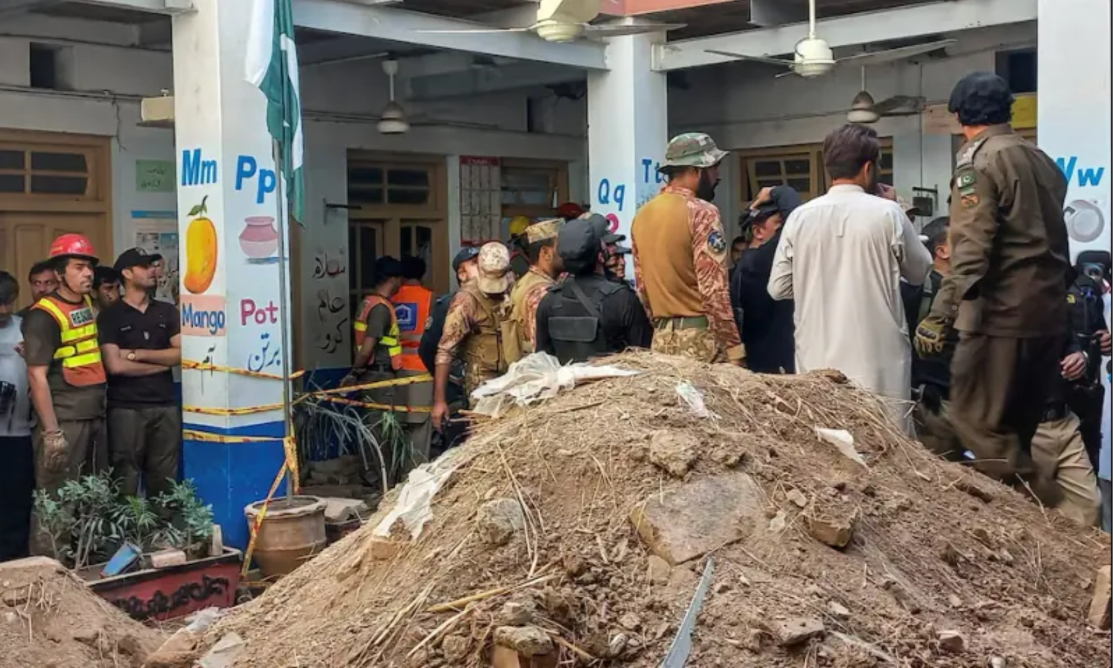
At least 35 people, including 34 children and one female teacher, have been killed after the roof of Al Khair Education Center collapsed during classes in Peshawar, Pakistan. More than 50 people were injured. Police say the building was structurally weak and that excessive construction weight contributed to the collapse. The school owner has been arrested, while authorities have launched an investigation into the building, construction approvals and regulatory oversight.
At least 34 children and a female teacher have been killed after the roof of a private school collapsed during morning classes in Peshawar, northwestern Pakistan, crushing classrooms packed with young pupils and leaving more than 50 people injured in one of the country’s deadliest recent school building disasters. Police have arrested the owner of Al Khair Education Center as investigators examine allegations that the structure was dangerously weak and had been overloaded by additional construction despite being used daily by children.
The collapse happened on Thursday morning, October 15, at the privately operated Al Khair Education Center in the Dir Colony area of Peshawar, the capital of Khyber Pakhtunkhwa province. Emergency officials said an upper section of the building gave way and crashed onto the floor below, causing multiple sections to collapse into classrooms where pupils were attending lessons.
Most of those killed were young children, many under the age of 13. Hospital and rescue officials said the victims included boys and girls between roughly six and 14 years old, along with a female teacher who was inside the school when the roof came down. The casualty figure rose repeatedly during the day as rescuers pulled more victims from the rubble and hospitals updated the number of children who had died.
Lady Reading Hospital in Peshawar declared an emergency as ambulances brought injured children and bodies from the school. Medical officials said dozens of pupils suffered injuries ranging from cuts and fractures to more serious trauma, with several children initially reported in critical condition. Hospital staff, emergency workers and relatives crowded the facility as families desperately searched for information about their children.
Rescue teams reached the school within minutes, but the operation was complicated by the location of the building inside a congested neighborhood with narrow streets. Emergency vehicles struggled to reach the immediate site while residents joined professional rescuers in moving broken concrete, bricks and other debris in an effort to reach children buried underneath.
Television footage and photographs from the scene showed rescue workers, soldiers, police and local residents surrounding the badly damaged school as debris covered sections of the building. Emergency personnel carried children toward ambulances while parents gathered nearby waiting for news.
Authorities initially feared that more pupils remained trapped beneath the rubble. Rescue officials spent hours searching the building, but later said everyone believed to have been trapped had been removed and teams had largely cleared the debris.
Peshawar police chief Mian Saeed Ahmed said the school building was structurally weak and suggested that construction added to the roof had placed excessive weight on an already vulnerable structure. His comments provide the strongest official indication so far of what may have caused the collapse, although a full engineering investigation has not yet been completed.
Police detained the owner of the school as authorities opened an investigation into possible negligence. Officials said a formal police case would be registered as investigators examine the construction of the building, approvals issued to the institution and whether safety requirements were ignored.
The arrest does not by itself establish criminal responsibility. Investigators will still have to determine whether the owner knew the structure was dangerous, whether unauthorized construction had taken place and whether government or regulatory officials failed to identify problems before the disaster.
One of the central questions is how a building alleged by police to be structurally weak was allowed to operate as a school filled with young children. Authorities are expected to examine the institution’s registration, building approvals and inspections, as well as the role of officials responsible for regulating private educational institutions.
Khyber Pakhtunkhwa Governor Faisal Karim Kundi said committees had been established to investigate the collapse and identify anyone responsible. An inquiry report is expected within days, while officials have promised to examine not only those directly involved in operating the school but also the authorities who approved the building for educational use.
Kundi also announced financial assistance for the families affected by the tragedy. Families of children who died are expected to receive one million Pakistani rupees each, while injured pupils are to receive 200,000 rupees. The payments provide immediate assistance but do not resolve the larger questions surrounding responsibility for the collapse.
The provincial government has also ordered wider inspections and structural assessments following the disaster. Officials said school buildings across the province would face renewed scrutiny as authorities attempt to determine whether similar structural risks exist elsewhere.
The tragedy has intensified longstanding concerns about construction standards in Pakistan, where building collapses are frequently linked to weak enforcement of safety regulations, poor quality materials, unauthorized additions and inadequate engineering supervision. Such failures become particularly dangerous when residential buildings or structures designed for other purposes are converted into schools serving large numbers of children.
Private schools play an important role in Pakistan’s education system, especially in urban neighborhoods where government schools may be overcrowded or difficult to access. Many low and middle income families rely on smaller private institutions because they are close to home and comparatively affordable. However, critics have repeatedly raised concerns about whether all such schools meet adequate fire, structural and emergency safety standards.
The Al Khair disaster has renewed questions about the responsibilities of private school regulators. Investigators are expected to determine whether inspections had been carried out, whether the building possessed all necessary permissions and whether any concerns had previously been raised about the roof or overall structural condition.
Some local residents and relatives have accused the school administration of failing to ensure that the building was safe before allowing children inside. Those allegations remain part of the investigation and have not yet been tested in court, but they have increased public anger as images of the collapsed classrooms circulate across Pakistan.
The affected children were attending ordinary morning classes when the structure failed. Emergency officials said the collapse affected classrooms on multiple levels after the upper roof fell onto the floor below. The weight of the debris then caused further structural failure, leaving pupils and teachers trapped.
Police estimates indicated that more than 100 children were inside the affected sections of the school at the time. Authorities said groups of students were distributed across classrooms on different floors, making the collapse particularly destructive when one level fell onto another.
The disaster quickly drew responses from Pakistan’s national leadership. Prime Minister Shehbaz Sharif expressed sorrow over the deaths and directed officials to ensure that injured children received appropriate medical treatment. He also called for a detailed investigation into the circumstances surrounding the collapse.
President Asif Ali Zardari and other national and provincial political leaders also expressed condolences to the families. Officials said accountability would be pursued if negligence or regulatory failures are established.
Funeral prayers for some of the children were held in the local community as families began burying victims only hours after the disaster. Political, military and local officials joined mourners at ceremonies in Dir Colony as the neighborhood struggled with the scale of the loss.
The tragedy is particularly devastating because many of the victims were primary school age children who had simply gone to class that morning. Families who expected their children to return home after school instead gathered at hospitals and morgues as officials attempted to identify victims.
Questions are also being raised about whether additional construction work was taking place on the building before the collapse. Police have said the roof carried excessive structural load, but the precise nature, timing and authorization of any construction work will have to be established by investigators.
Engineering specialists are expected to examine surviving sections of the structure, construction materials and building plans. Investigators may also interview contractors, school administrators and regulatory officials to establish whether safety warnings were ignored or whether required inspections were never carried out.
The case could lead to criminal negligence charges if investigators determine that people responsible for the building knowingly exposed students to serious danger. Pakistan’s legal system allows authorities to pursue criminal cases when deaths result from negligent construction or unsafe buildings, although responsibility can be difficult to establish when multiple owners, contractors and government agencies are involved.
The Peshawar collapse follows other deadly building failures involving educational facilities in Pakistan. Poor construction standards have repeatedly been identified as a risk in rapidly expanding urban areas where enforcement does not always keep pace with development.
Earlier school and tuition center collapses have also prompted temporary inspections and promises of stricter oversight. Families affected by the latest tragedy are now demanding that the response go beyond compensation and expressions of sympathy.
The disaster also raises uncomfortable questions about inequality within Pakistan’s education system. Children from working and lower income families frequently attend small neighborhood schools housed in converted residential buildings or other structures not originally designed for large numbers of students.
These institutions can provide affordable education but may operate with limited resources and weak oversight. When safety regulations are not enforced consistently, families may have little way of knowing whether the building where they leave their children each morning is structurally sound.
Officials have promised that the Peshawar inquiry will examine both the school administration and the regulatory system that allowed the institution to operate. The investigation will be closely watched because focusing responsibility entirely on the owner without examining inspection and approval failures could leave broader structural problems unresolved.
The arrest of the owner is therefore only the first stage of the legal process. Prosecutors will need evidence establishing what construction took place, what permissions existed and whether anyone had prior knowledge that the building was unsafe.
For the families of those killed, however, the immediate issue is not regulatory policy but the loss of children who were sitting in classrooms when the building collapsed around them. More than 30 families are now preparing funerals while others remain beside injured children in hospital.
Authorities have said the search operation has been completed and that no additional students are believed to remain beneath the debris. That marks the end of the rescue phase but the beginning of a potentially lengthy investigation into why the roof failed and whether the deaths could have been prevented.
The official inquiry will now have to establish whether poor materials, excessive structural load, unauthorized construction, inadequate maintenance or a combination of those factors caused the collapse. It must also determine whether regulatory bodies carried out their responsibilities before the school was allowed to operate.
The latest confirmed death toll of 35, including 34 children and one teacher, represents a significant increase from the initial figures reported during the first hours after the collapse. More than 50 people were injured, and authorities have warned that some victims remain under medical care.
For Pakistan, the tragedy is now likely to become a test of whether authorities can translate public outrage into meaningful enforcement of building safety standards. Structural audits promised after major disasters have often produced temporary action, but the deaths in Peshawar are placing renewed pressure on officials to ensure that schools are not operating inside buildings incapable of safely holding children.
The investigation will determine individual legal responsibility, but the wider question already extends beyond one school owner. Authorities must explain how a building now publicly described by police as structurally weak was permitted to function as an educational institution and whether failures of inspection or enforcement contributed to the disaster.
As families bury their children and injured pupils continue recovering, attention will shift toward the inquiry report and any criminal charges that follow. The immediate rescue operation has ended, but the accountability process is only beginning, with investigators facing the task of determining whether the collapse was an unforeseeable structural failure or a preventable disaster caused by negligence and weak oversight.