
VENEZUELA TO REPEAL CONTROVERSIAL LAW BANNING OPPOSITION FIGURES FROM PUBLIC OFFICE AS POLITICAL REFORM TALKS ADVANCE
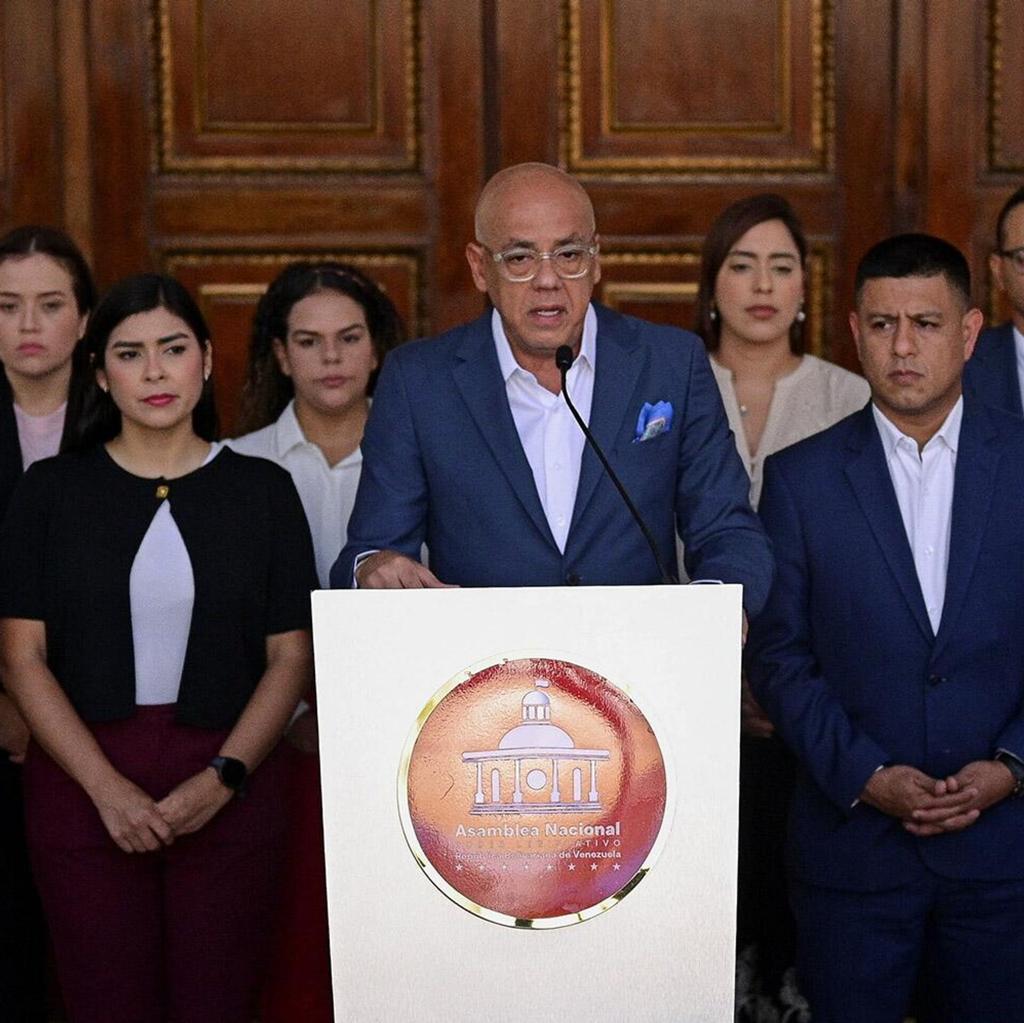
Venezuela's National Assembly President Jorge Rodríguez has announced plans to repeal the controversial 2024 Simón Bolívar Law, which authorizes severe prison sentences, asset confiscation and political disqualifications against individuals accused of supporting international sanctions against the country. The legislative process is scheduled to begin on Tuesday, December 1, 2026, following negotiations between interim President Delcy Rodríguez's administration and sections of the Venezuelan opposition. Although the proposed repeal represents a significant development in the country's political transition following Nicolás Maduro's removal from power, it will not automatically restore the electoral eligibility of opposition leader María Corina Machado, whose disqualification was imposed under separate legislation. The interim government has pledged to hold free and fair elections, but no definitive electoral date has been announced.
Venezuela's National Assembly has announced plans to repeal a controversial law that imposes lengthy prison sentences, property confiscation and extensive restrictions on the political participation of individuals accused of supporting international sanctions against the country, marking a significant development in negotiations between the interim government and sections of the opposition. National Assembly President Jorge Rodríguez announced the proposed repeal on Thursday, November 26, 2026, as Venezuela continues navigating a complicated political transition following the removal of former President Nicolás Maduro from power in January.
The legislation, officially known as the Organic Liberator Simón Bolívar Law Against the Imperialist Blockade and in Defense of the Bolivarian Republic of Venezuela, was enacted in November 2024 following the country's disputed presidential election. Opposition politicians and human rights organizations have criticized the legislation for establishing a legal framework capable of severely restricting political participation and punishing individuals who publicly supported international measures against Maduro's administration.
Rodríguez indicated that the National Assembly would formally initiate the repeal process on Tuesday, December 1, expressing confidence that lawmakers would approve the measure during the following week. The announcement follows negotiations involving the interim administration of President Delcy Rodríguez and representatives of selected opposition organizations, during which participants agreed to review legislation affecting political participation, civil liberties and the operation of democratic institutions.
Although the proposed repeal represents an important development in Venezuela's political transition, it does not automatically restore the electoral eligibility of every opposition politician previously prohibited from holding public office. Prominent opposition leader and 2025 Nobel Peace Prize laureate María Corina Machado remains affected by a separate legal provision, meaning that additional reforms or administrative decisions would be necessary before her eligibility to contest future elections could be restored.
Jorge Rodríguez, who is the older brother of interim President Delcy Rodríguez, explained that the Simón Bolívar legislation had been introduced in response to a particular political environment and that changing national circumstances had created grounds for reconsidering its continued application. His announcement indicated that the interim government was prepared to remove at least some of the restrictive legal provisions established during the Maduro administration as part of its ongoing negotiations with opposition representatives.
The legislation was introduced during a period of intense political confrontation following Venezuela's July 2024 presidential election. Maduro was declared the winner by the country's electoral authorities, but opposition parties disputed the announced outcome and presented voting records that they said demonstrated a victory for their candidate, Edmundo González Urrutia. The electoral dispute generated widespread international criticism and contributed to increased diplomatic pressure on the Venezuelan government.
The passage of the Simón Bolívar Law several months after the election reflected the Maduro administration's determination to confront individuals and organizations it accused of assisting foreign governments in imposing economic and political restrictions against Venezuela. Government supporters presented the legislation as a necessary defense of national sovereignty, arguing that international sanctions had caused substantial economic damage and undermined the welfare of Venezuelan citizens.
Opposition representatives, however, argued that the legislation extended considerably beyond legitimate measures intended to protect national security. They maintained that its provisions could be used to punish political criticism, restrict public debate and prevent prominent government opponents from participating in electoral processes. Human rights advocates also questioned whether the severe penalties established under the legislation were consistent with internationally recognized protections concerning freedom of expression, political participation and due process.
The law authorized prison sentences of up to 30 years for certain offenses associated with promoting or supporting international sanctions against Venezuela. It also provided for extensive political disqualifications and the confiscation of assets belonging to individuals found responsible for conduct prohibited under its provisions. The severity of those potential consequences attracted criticism from organizations concerned with the protection of civil liberties and the ability of opposition movements to operate without fear of disproportionate punishment.
The inclusion of political disqualification provisions was particularly controversial because it created another potential mechanism through which individuals could be prevented from participating in electoral contests or occupying government positions. Such restrictions can have consequences extending beyond the individuals directly affected because they also limit the ability of voters to choose among competing political candidates.
During Thursday's announcement, Rodríguez maintained that no politician had actually been subjected to the provisions of the Simón Bolívar Law. That assertion represents the National Assembly president's account of the legislation's application and does not necessarily resolve the wider concerns raised by human rights organizations about its potential deterrent effect. Even when restrictive legislation is not frequently enforced, individuals may modify their public conduct because of uncertainty concerning whether authorities could initiate proceedings against them.
The proposed repeal therefore carries significance beyond the question of whether particular politicians were formally prosecuted under the legislation. Removing provisions that authorize severe punishment for supporting international sanctions could alter the legal environment in which journalists, activists, political organizations and other members of Venezuelan society participate in discussions concerning the country's international relationships.
However, the practical consequences of the repeal will depend on the final wording of the legislation adopted by the National Assembly and the manner in which other existing laws continue to operate. Venezuela's legal framework contains several provisions affecting political participation and public expression, making it unlikely that repealing a single statute will resolve every outstanding dispute concerning democratic rights.
The announcement follows several months of negotiations that began in August between representatives of the interim government and sections of Venezuela's opposition. The discussions have focused on establishing arrangements for political reconciliation, reviewing restrictive legislation and developing institutional conditions that could eventually support competitive national elections.
Participants in those negotiations have identified reforms involving the judiciary and electoral administration as important components of the transition process. Their discussions have also included consideration of legislation governing civil society organizations and political expression, reflecting concerns that existing legal restrictions could undermine efforts to establish a more open political environment.
The negotiations have acquired particular international significance because of the circumstances under which Venezuela's current interim administration assumed power. Nicolás Maduro was removed from the country following a United States operation in January 2026, after which Delcy Rodríguez assumed the interim presidency. The transition created substantial uncertainty concerning the country's future political direction, the status of its governing institutions and the prospects for establishing a new electoral mandate.
The United States has subsequently supported a political transition process involving negotiations with Venezuelan government representatives and selected opposition figures. Washington's involvement reflects its longstanding interest in Venezuela's political situation, which has been influenced by disagreements concerning democratic governance, economic sanctions, energy resources and regional security.
The interim government has maintained important elements of the institutional structure established during the administrations of Maduro and his predecessor, Hugo Chávez. Consequently, the political transition has involved negotiations with officials who previously occupied prominent positions within Venezuela's governing establishment rather than an immediate and comprehensive transfer of authority to opposition organizations.
Delcy Rodríguez has pledged that Venezuela will eventually hold free and fair elections, although her administration has not announced a definitive date. The absence of an established electoral timetable has become one of the principal issues confronting opposition representatives who argue that political reforms should lead toward a government possessing a renewed democratic mandate.
For opposition groups participating in the negotiations, the proposed repeal of the Simón Bolívar Law represents a potentially meaningful legislative achievement. Nevertheless, its broader significance will depend on whether additional reforms address restrictions imposed under separate legal provisions and create institutional arrangements capable of supporting competitive elections.
Dinorah Figuera, who leads the opposition delegation involved in the negotiations, has identified the restoration of political rights as an important issue requiring further attention. In comments reported by Spanish-language media, she explained that negotiators were pursuing changes to provisions governing administrative disqualifications so that affected individuals could seek restoration of their eligibility through an established legal procedure.
One of the principal provisions under discussion is Article 105 of the organic law governing Venezuela's Comptroller General's Office. This legislation has provided a basis for administrative decisions restricting the ability of certain individuals to occupy public positions, including prominent opposition politicians whose eligibility has become the subject of sustained political controversy.
The distinction between the Simón Bolívar Law and the legislation governing the Comptroller General is particularly important in the case of María Corina Machado. Although the proposed repeal removes one potential mechanism for imposing political restrictions, Machado's existing disqualification originates from a separate legal process that predates the enactment of the 2024 anti-sanctions legislation.
Machado emerged as one of Venezuela's most prominent opposition figures through years of political advocacy and criticism of the governing establishment. Her victory in the opposition's 2023 presidential primary established her as the preferred candidate of a substantial section of the country's opposition movement ahead of the presidential election scheduled for the following year.
However, Venezuelan authorities prevented her from contesting the presidency after an administrative disqualification imposed by the Comptroller General's Office was extended to 15 years. Officials cited alleged administrative misconduct and other accusations connected to her political activities, while Machado and her supporters rejected the restrictions as politically motivated measures intended to prevent her from challenging Maduro.
The Venezuelan government maintained that the disqualification had a legal basis and defended the authority of institutions responsible for determining eligibility for public office. Opposition organizations and international observers questioned the fairness of the process, particularly because the restrictions prevented the winner of an opposition primary from participating directly in the national presidential election.
With Machado unable to contest the election, the opposition eventually nominated former diplomat Edmundo González Urrutia as its presidential candidate. González received the backing of Machado and several opposition organizations, becoming the principal challenger to Maduro during the July 28, 2024, presidential election.
The election became the subject of extensive international controversy after Venezuela's National Electoral Council declared Maduro the winner without immediately publishing comprehensive polling station-level results capable of independently substantiating the announced outcome. Opposition representatives subsequently released copies of voting records that they maintained demonstrated a substantial victory for González.
Several international governments questioned the credibility of the official results, while electoral observers raised concerns about transparency and compliance with democratic standards. Maduro's administration rejected allegations of electoral fraud and defended the validity of the outcome through the country's existing institutional mechanisms.
The dispute contributed to political demonstrations, arrests, diplomatic disagreements and renewed discussions concerning sanctions against Venezuelan government officials. It also reinforced the concerns of opposition representatives who argued that the electoral process could not be regarded as fully competitive while leading candidates remained prohibited from participating.
The Simón Bolívar Law was enacted within that environment, creating additional potential restrictions for individuals associated with campaigns supporting international pressure against Maduro's government. Its adoption consequently became intertwined with the broader dispute concerning the treatment of political opposition and the legitimacy of Venezuela's electoral institutions.
Machado's subsequent international activities further increased her visibility outside Venezuela. Her advocacy for democratic reform and political participation received significant international recognition, culminating in the award of the 2025 Nobel Peace Prize. The recognition elevated her profile within international discussions concerning Venezuela while reinforcing the political significance of her exclusion from the country's electoral process.
She returned to Venezuela on October 25, 2026, following approximately 10 months in exile. Her return represented a notable development because it occurred while the interim administration and selected opposition representatives were pursuing negotiations concerning institutional reforms and the country's future political arrangements.
Despite her prominence, Machado has not been directly included in the formal transition negotiations involving the interim government and the participating opposition delegation. Her exclusion has generated questions concerning the extent to which the negotiations represent the diversity of political views within Venezuela's opposition movement.
Opposition organizations do not constitute a single political institution with uniform positions concerning every aspect of the transition. Different parties and leaders may disagree about the appropriate timetable for elections, the conditions under which negotiations should proceed and the extent of cooperation that should be established with officials associated with the previous administration.
Those differences can influence the credibility and implementation of political agreements. An arrangement negotiated by selected opposition representatives may produce legislative reforms, but its ability to establish broader political confidence can depend on whether other significant political organizations consider the resulting framework legitimate and sufficiently inclusive.
Machado has continued pursuing her own political initiatives following her return. On November 26, the same day Rodríguez announced plans to repeal the Simón Bolívar Law, she launched a nationwide initiative involving neighborhood assemblies designed to collect public proposals concerning Venezuela's future government and democratic transition.
According to her political organization, approximately 2,000 meetings were held across Venezuela and among Venezuelan communities abroad during the initiative's opening day. Her representatives indicated that the broader objective was to involve more than one million people over the coming months, providing a platform through which citizens could contribute to discussions concerning national reforms.
The initiative is expected to address issues including electoral arrangements, judicial independence, healthcare, education, wages and pensions. Those subjects reflect the extensive economic and institutional challenges confronting Venezuelan society following years of political instability, declining public services and substantial population displacement.
Machado's neighborhood assembly programme also demonstrates that political mobilization is continuing outside the formal negotiations involving the interim administration. Her organization is attempting to establish its own mechanisms for public consultation while government and opposition negotiators pursue agreements concerning the country's institutional framework.
The relationship between those parallel political processes remains uncertain. They may identify common priorities concerning democratic participation and public administration, but disagreements over leadership, representation and the timetable for elections could continue influencing Venezuela's political environment.
Machado has previously called for national elections to take place by July 2027, establishing a more specific timetable than the one currently announced by the interim government. Her position reflects the argument that prolonged transitional arrangements without clearly defined electoral deadlines could undermine confidence in the eventual restoration of competitive democratic processes.
The interim administration has not publicly committed itself to that proposed deadline. Government officials have emphasized the importance of political reconciliation, economic stabilization and institutional reforms before establishing a final electoral calendar. The disagreement concerning timing remains one of the principal uncertainties surrounding Venezuela's transition.
Establishing an election date would represent an important procedural development, but the credibility of future elections will also depend on the conditions under which they are conducted. Relevant considerations include the independence of electoral institutions, the eligibility of candidates, access to public media, freedom of political organization and the transparency of voting and result-management procedures.
The treatment of previously disqualified political figures will be particularly important because the existence of an electoral timetable does not guarantee that every prospective candidate will be permitted to participate. If restrictions remain in place against prominent individuals, the resulting election could continue generating disagreements concerning whether voters have been presented with a sufficiently competitive range of political alternatives.
The reforms currently being discussed therefore extend beyond the repeal of the Simón Bolívar Law. Negotiations have also addressed the restructuring of important national institutions, including the Supreme Tribunal of Justice and the National Electoral Council. These bodies possess responsibilities that directly influence the administration of elections, the interpretation of legislation and the resolution of disputes concerning political rights.
The composition and independence of those institutions have remained contentious subjects within Venezuelan politics. Opposition organizations have argued that institutions closely associated with the governing establishment cannot always provide impartial oversight of electoral and constitutional disputes. Government officials have defended the legitimacy of the existing institutions while rejecting accusations that their decisions are necessarily determined by partisan considerations.
Any agreement concerning the selection of new institutional leadership will consequently require procedures capable of establishing confidence among competing political organizations. Transparency in appointments, clearly defined legal qualifications and mechanisms for addressing conflicts of interest could influence how the resulting institutions are perceived by Venezuelan citizens.
The review of Venezuela's legislation concerning public expression has become another important component of the broader reform process. Earlier in November, the National Assembly advanced proposed changes to the Constitutional Law Against Hate, another controversial statute that human rights advocates have criticized for providing authorities with extensive powers to prosecute individuals over certain forms of speech.
The debate concerning that legislation differs from the proposed repeal of the Simón Bolívar Law, although both involve concerns about restrictions on political expression. The former addresses categories of conduct associated with hatred and intolerance, while the latter was established specifically to confront individuals accused of supporting sanctions and other international measures against Venezuela.
Governments possess legitimate responsibilities to address incitement to violence, discriminatory conduct and threats against public safety. However, human rights standards require restrictions on expression to be clearly established by law, proportionate to legitimate objectives and applied in a manner that does not unnecessarily suppress peaceful political discussion.
The controversy surrounding Venezuela's restrictive legislation has frequently centered on whether the relevant provisions are sufficiently precise to distinguish genuine criminal conduct from criticism of government institutions. Broadly worded offenses can create uncertainty concerning the boundaries of permitted expression, particularly where prosecutorial authorities possess considerable discretion in determining whether public statements violate the law.
Removing or amending such legislation could contribute to a more predictable environment for political participation. Nevertheless, meaningful improvements would also require enforcement institutions to respect the revised legal framework and ensure that individuals are not prosecuted under alternative provisions for substantially similar conduct.
Human rights organizations have emphasized that institutional reforms should address both future restrictions and the circumstances of individuals already affected by previous government actions. Their concerns include people who remain subject to criminal proceedings, administrative limitations or other restrictions associated with their political activities.
The proposed repeal has not yet established how any outstanding proceedings connected to the Simón Bolívar Law would be handled. Although Rodríguez maintains that politicians were not sanctioned under its provisions, the final legislative text will be important in determining whether the repeal includes transitional arrangements addressing any existing investigations or administrative consequences.
The question of international sanctions remains particularly sensitive within Venezuela because their economic and political consequences have been debated for years. Successive United States administrations introduced restrictions targeting Venezuelan officials, government institutions and sectors of the country's economy, presenting those measures as responses to allegations involving corruption, human rights violations and democratic governance.
Venezuelan authorities have consistently criticized sanctions, arguing that they restrict the country's access to international financial systems, complicate commercial transactions and undermine economic recovery. They have maintained that foreign restrictions have contributed substantially to difficulties experienced by ordinary Venezuelans, including shortages of essential goods and declining purchasing power.
Critics of the Venezuelan government have argued that domestic policy decisions, corruption, institutional deterioration and economic mismanagement were also major contributors to the country's financial crisis. Venezuela's economic difficulties began before several of the most extensive sectoral sanctions were introduced, although subsequent restrictions affected the environment in which recovery efforts were undertaken.
The relative contribution of sanctions and domestic economic policies remains a subject of disagreement among economists, governments and political organizations. The consequences of particular restrictions vary according to their design, enforcement and interaction with other factors affecting production, investment and public revenue.
The repeal of the Simón Bolívar Law will not automatically remove international sanctions against Venezuela. Those restrictions are established through decisions by foreign governments and international institutions, meaning that Venezuelan legislative action cannot independently terminate measures imposed by external authorities.
However, removing domestic criminal penalties associated with supporting sanctions could change the environment in which Venezuelan political organizations discuss foreign policy and economic pressure. It could also demonstrate a willingness by the interim administration to reconsider aspects of the confrontational legal framework established during the previous government.
Washington has already undertaken certain adjustments to sanctions affecting individual Venezuelan officials. In October 2026, the United States removed sanctions against Jorge Rodríguez, following the development of negotiations involving the interim administration. The decision reflected a changing relationship between Washington and some officials who remained influential within Venezuela's governing institutions.
The removal of restrictions against individual officials should not be interpreted as confirmation that every disagreement between the United States and Venezuela has been resolved. Washington retains significant interests in the country's political transition, energy sector and international relationships, while Venezuelan authorities continue emphasizing the importance of national sovereignty and economic recovery.
The broader political process has involved discussions concerning stabilization, economic reforms, reconciliation and an eventual democratic transition. Those priorities are interconnected because the ability to conduct competitive elections and maintain functioning institutions can be influenced by the country's economic conditions and the availability of resources for essential public services.
Venezuela possesses some of the world's largest proven petroleum reserves, making its energy sector particularly important to international discussions surrounding economic recovery. The country's capacity to attract investment, increase production and generate government revenue could influence the resources available to address public infrastructure, healthcare and other domestic priorities.
However, economic recovery alone would not resolve the political disagreements concerning electoral participation and institutional legitimacy. Opposition representatives maintain that sustainable development requires predictable legal institutions, transparent public administration and a government possessing a credible electoral mandate.
For millions of Venezuelans, the significance of the ongoing transition is closely connected to practical concerns involving household incomes, employment opportunities, access to essential services and personal security. Years of economic instability have contributed to substantial migration, separating families and creating large Venezuelan communities throughout Latin America, North America and Europe.
Political reforms could influence the decisions of some Venezuelans living abroad who are considering whether to return. However, such decisions will also depend on economic opportunities, housing availability, public services and confidence that the country's political environment will remain stable.
The inclusion of Venezuelan communities abroad in Machado's neighborhood assemblies reflects the importance of the diaspora to discussions concerning the country's future. Individuals living outside Venezuela may retain family relationships, economic interests and political connections that influence their participation in national affairs.
Questions concerning the electoral participation of citizens abroad could consequently become relevant as negotiations progress toward future elections. The administration of overseas voter registration and voting arrangements would require clear procedures capable of addressing the geographical distribution of Venezuela's large expatriate population.
The proposed legislative repeal also has implications for broader diplomatic relations across Latin America. Venezuela's political crisis has contributed to disagreements among regional governments concerning democratic recognition, sanctions, migration and diplomatic engagement. Different countries have adopted varying positions toward Maduro's administration and the subsequent political transition.
Some governments have supported international pressure intended to encourage democratic reforms, while others have criticized measures they regard as foreign interference in Venezuela's domestic affairs. Those disagreements reflect broader regional debates concerning sovereignty, human rights and the appropriate role of external governments in addressing political crises.
The continuation of negotiations involving Venezuelan political organizations could provide an opportunity to reduce some of those disagreements if the process produces credible institutional reforms and a mutually accepted electoral framework. Nevertheless, the legitimacy of any transition will depend substantially on whether Venezuelan citizens themselves are able to participate meaningfully in determining their country's political future.
Thursday's announcement has therefore placed renewed attention on the role of the National Assembly in establishing the legal foundations for political reform. The legislature possesses the authority to reconsider existing statutes, but the effectiveness of those decisions will depend on their implementation by electoral, judicial and administrative institutions.
Rodríguez's commitment to introduce the repeal proposal on December 1 provides a specific procedural milestone against which the immediate progress of the reform can be assessed. The subsequent publication of the adopted legislation, if approved, will be necessary to establish its precise legal effects and determine whether it removes all penalties contained within the original law.
The National Assembly's expected consideration of the proposal should not be confused with its final enactment. As of Saturday, November 28, Rodríguez had announced the government's intention to pursue repeal, but the legislative process had not yet been completed. Any subsequent changes to the proposal or its implementation timetable will require confirmation through official parliamentary records.
The continuing disqualification of Machado remains one of the most visible examples of the unresolved legal questions confronting the transition. Her return to Venezuela and renewed participation in grassroots political activities have increased attention to the circumstances under which she might eventually be permitted to contest national office.
For the interim administration, addressing existing political restrictions could represent an important component of its stated commitment to establishing free and fair elections. However, any restoration of eligibility will need to be carried out through procedures that clarify the rights of affected individuals and avoid creating uncertainty concerning the validity of future nominations.
For opposition representatives participating in the negotiations, the challenge will be ensuring that proposed reforms address the wider legal environment rather than concentrating exclusively on the removal of one controversial statute. Their ability to secure changes concerning administrative disqualifications, judicial independence and electoral institutions could influence the extent to which other opposition organizations support the transition process.
The treatment of individuals and organizations that remain outside the formal negotiations will also be important. Political reconciliation cannot be assessed solely through agreements reached among selected representatives if other significant groups continue facing restrictions that prevent them from participating freely in public life.
Venezuela's proposed repeal of the Simón Bolívar Law represents a concrete legislative commitment emerging from months of political negotiations, but it remains one element of a considerably broader transition. The announcement has created expectations that additional restrictions could be reconsidered, while the absence of a definitive election date and the continued disqualification of prominent opposition figures demonstrate the extent of the issues that remain unresolved.
As lawmakers prepare to consider the repeal on December 1, attention will increasingly turn toward the final legislative text, the treatment of other restrictive laws and the willingness of Venezuela's interim authorities to establish clear arrangements for competitive elections. For Machado and other previously disqualified political figures, the announcement provides an indication that aspects of the legal framework are being reconsidered, but it does not yet restore their eligibility. The eventual significance of the reform will depend on whether it is accompanied by enforceable protections for political participation, credible institutional changes and an electoral process through which Venezuelans can freely determine their country's future leadership.